

Zero-knowledge proofs (ZKPs) are an exciting breakthrough in applied cryptography that will unlock new use cases across an array of industries, from Web3 to supply chains to the Internet of Things. By verifying the authenticity of information without revealing it, ZKPs can help enhance the privacy, security, and efficiency of digital systems. In this article, we will explore the basics of ZKPs and potential use cases that are emerging.
What Is a Zero-Knowledge Proof?
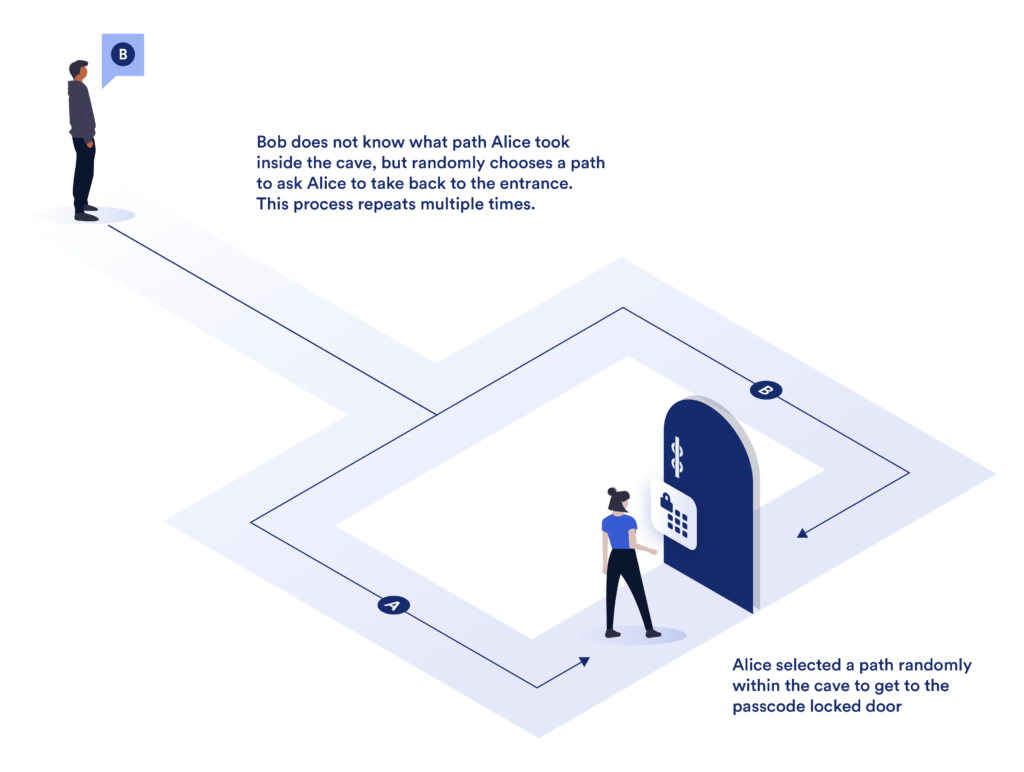
Zero-knowledge proofs (ZKPs) are a cryptographic technique that allows one party (the prover) to prove to another party (the verifier) that a statement is true without revealing any additional information. In other words, using a ZKP is a way to prove that you know something without actually revealing what it is that you know.
For example, imagine that you want to prove to someone that you’re a citizen of a country, without giving them your name or passport number. With a ZKP-based identity solution, you could prove that you’re a citizen without revealing your identity.
Beyond identity, ZKPs can be used across various industries to enhance the privacy, security, and efficiency of various systems.
Zero-Knowledge Proof Applications and Use Cases
Decentralized Identity
Zero-knowledge proofs can be used to verify an individual’s identity, without revealing any sensitive personal information. Instead of supplying identity details, users can simply verify that they meet a certain criteria—such as a decentralized identity that verifies that they’re a citizen of a country without having to share their name or passport number. ZKP-based identity protocols can give individuals more control over their personal data.
For example, a DeFi application may be required to check that a user is from a country within a certain group. Traditionally, users would have to provide a passport or driver’s license to verify their identity and location, often taking days to process. Instead, the application could use a third-party ZKP-based identity protocol that enables users to verify that they’re from an allowlisted country without revealing their personal details or even the specific country they’re from.
This enables users to maintain their privacy, protect against identity theft and fraud, and reduce reliance on passwords, which are vulnerable to attacks such as phishing and credential stuffing. It also relieves organizations of the responsibility of holding and securing valuable user data, which can make them the targets of cyberattacks and introduce the need to comply with stringent privacy laws.
Ultimately ZKPs enable more nuanced identity solutions that better protect user privacy while enabling applications to more easily meet the compliance requirements of governing bodies.
Privacy-Preserving Transactions
Zero-knowledge proofs enable blockchain nodes to validate transactions without needing to access transaction data. This means users can shield their transactions on a privacy-preserving blockchain network.
By posting proofs that transactions are valid but not the actual transaction details, ZKPs can obscure sender and recipient addresses, transaction amounts, and smart contract code from both the validator nodes and public blockchain ledger. Neither external third parties or even the peer a user transacts with will see the full details of a transaction.
Anonymous payments have played an important role for users in oppressive regimes where financial transactions are closely monitored, preventing fraud and identity theft by obscuring personal financial details, privately supporting charities that could otherwise bring a user public backlash, and creating a digital financial experience more similar to transacting with cash.
Secure and Scalable Layer-2 Rollups
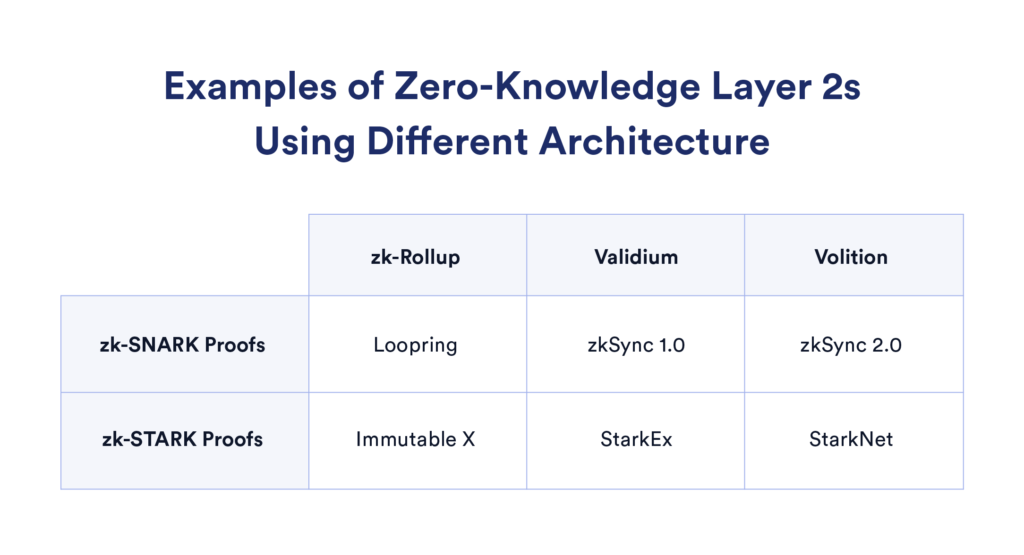
Scaling blockchain networks to support mainstream adoption has historically been a challenge. As demand for block space on layer 1s increased, it led to network congestion and high transaction costs, which then reduced demand and slowed the growth of Web3.
Zero-knowledge rollups, a form of layer-2 scaling solution, can help overcome these challenges by moving computation and state storage off-chain. Zero-knowledge rollups can batch or “roll-up” thousands of transactions and then publish a zero-knowledge proof validating the correctness of transactions on the underlying layer-1 blockchain. These proofs require far less space than the complete transaction data, helping relieve layer-1 network congestion while creating a highly secure environment with high throughput and low transaction costs.
While other layer-2 solutions, such as optimistic rollups, can also increase scalability, zero-knowledge solutions have faster finality. An optimistic rollup may take weeks to ensure a transaction can’t be reversed or canceled, zero-knowledge rollups are finalized as soon as their validity proof is published on the underlying layer-1 blockchain. This enables users to withdraw funds or NFTs from the layer 2 without delay, improving capital efficiency.
Ultimately, zero-knowledge rollups enable developers to build hyper-scalable applications that serve millions of users at low cost while upholding the security guarantees of Web3.
Voting Systems
Zero-knowledge proofs can be used to create highly secure and verifiable voting mechanisms that enable individuals to cast votes without compromising their identity or revealing who they voted for.
In traditional voting systems, users must provide their identity in order to vote, and the administrators are trusted to keep their identity and vote confidential. With a ZKP-based voting protocol, individuals never need to reveal their identity in the first place. They can simply use a ZKP to demonstrate that they have a valid document, such as a government-issued passport.
The integrity of voting systems can also be enhanced with vote verification using ZKPs. This enables voters to independently verify that their vote was recorded in the election tally without revealing their voting preference to anyone else. ZKP verifications also enable independent auditors to verify that the process was conducted fairly and the election outcomes are accurate.
Internet of Things (IoT)
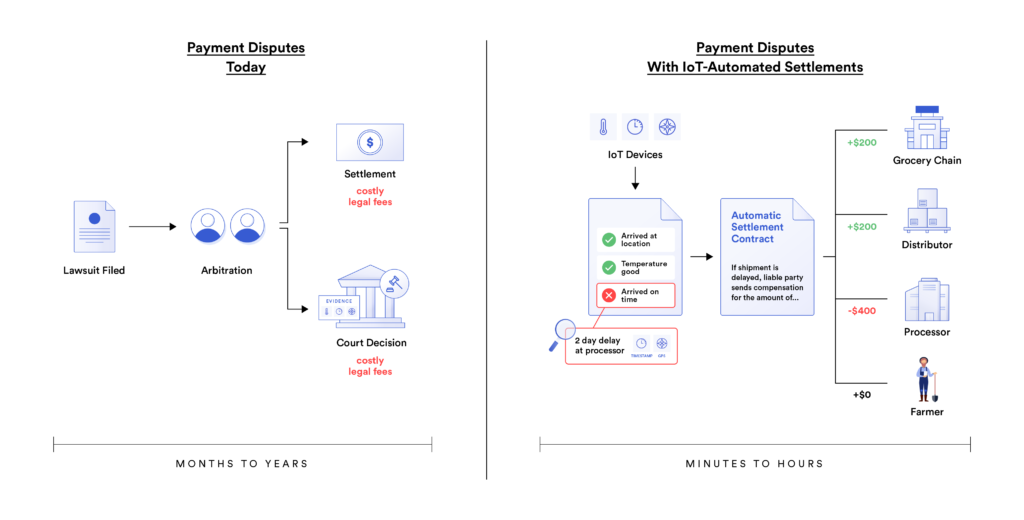
The Internet of Things describes an ever-increasing number of devices being connected to the Internet, empowering them to send and receive data and take autonomous actions. Alarm systems can call the police when they sense a break in, cooling systems can turn on when your phone’s GPS nears your home, and wearables can track your health in real-time. Zero-knowledge technology can play a key role in securing these devices and protecting user privacy.
Zero-knowledge-based protocols can help verify that software updates for IoT devices are from the authorized manufacturer, ensure that only authorized devices can access a network or user data, and enable secure communication between devices. By reducing the amount of data that needs to be transmitted and processed, ZKPs can also significantly reduce the energy demands of IoT devices, improving efficiency and reducing costs.
Supply Chains
Proving the origin and authenticity of goods and materials and meeting compliance standards are critical parts of supply chains within modern economies. However, there are inherent conflicts around these goals as corporations simultaneously want to protect their trade secrets and processes, including the identity of their suppliers and customers.
By enabling corporations to keep certain information private while still verifying its authenticity, zero-knowledge proofs can help provide more transparency around supply chains. For example, ZKPs can enable auditors to verify that a shipment of goods was transported and stored correctly without revealing any additional information, corporations can prove to regulators that they’re complying with environmental or labor standards without revealing any sensitive information about their operation, and end users can verify the origin of inputs without knowing the entire supply chain.
Conclusion
Zero-knowledge proofs will redefine how we think about data management, enabling users to meet compliance requirements or verify specific information without exposing their personal details or trade secrets. We’re already seeing rapid adoption within the blockchain space, with zero-knowledge solutions helping scale the ecosystem and improver user privacy. Ultimately, enhancing the privacy, security, and efficiency of digital systems will have a wide-ranging impact across blockchain networks, voting systems, supply chains, and many other industries.
Read more: https://blog.chain.link/zero-knowledge-proof-use-cases/


All Comments