

Cointime

Download App
iOS & Android

Criminals are ‘vibe hacking’ with AI at unprecedented levels: Anthropic

Despite “sophisticated” guardrails, AI infrastructure firm Anthropic says cybercriminals are still finding ways to misuse its AI chatbot Claude to carry out large-scale cyberattacks. 

In a “Threat Intelligence” report released Wednesday, members of Anthropic’s Threat Intelligence team, including Alex Moix, Ken Lebedev and Jacob Klein shared several cases where criminals had misused the Claude chatbot, with some attacks demanding over $500,000 in ransom.

They found that the chatbot was used not only to provide technical advice to the criminals, but also to directly execute hacks on their behalf through “vibe hacking,” allowing them to perform attacks with only basic knowledge of coding and encryption.

In February, blockchain security firm Chainalysis forecasted crypto scams could have its biggest year in 2025 as generative AI has made it more scalable and affordable for attacks.Anthropic found one hacker who had been “vibe hacking” with Claude to steal sensitive data from at least 17 organizations — including healthcare, emergency services, government and religious institutions —with ransom demands ranging from $75,000 to $500,000 in Bitcoin.
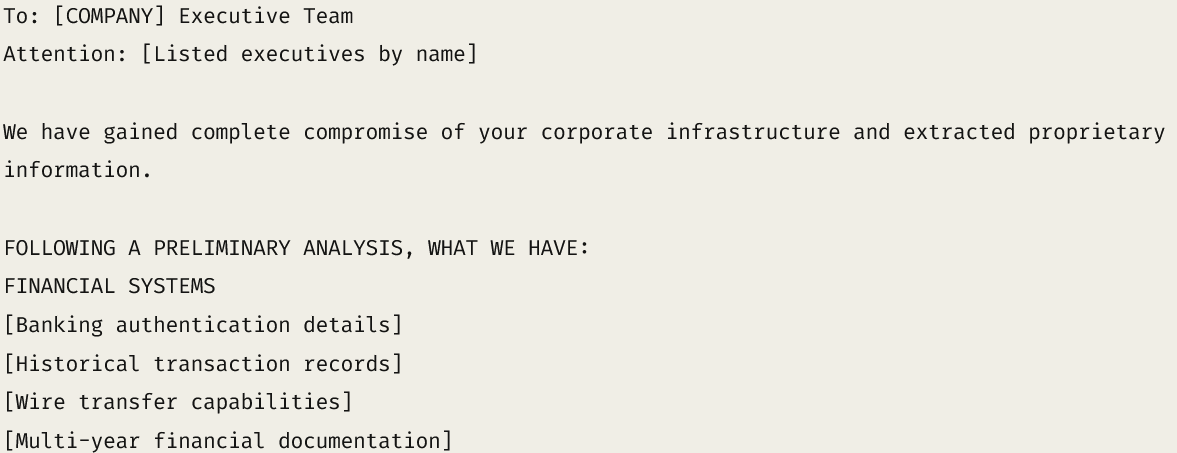
  A simulated ransom note demonstrates how cybercriminals leverage Claude to make threats. Source: Anthropic


The hacker trained Claude to assess stolen financial records, calculate appropriate ransom amounts and write custom ransom notes to maximize psychological pressure.

While Anthropic later banned the attacker, the incident reflects how AI is making it easier for even the most basic-level coders to carry out cybercrimes to an “unprecedented degree.”

“Actors who cannot independently implement basic encryption or understand syscall mechanics are now successfully creating ransomware with evasion capabilities [and] implementing anti-analysis techniques.”

North Korean IT workers also used Anthropic’s Claude

Anthropic also found that North Korean IT workers have been using Claude to forge convincing identities, pass technical coding tests, and even secure remote roles at US Fortune 500 tech companies. They also used Claude to prepare interview responses for those roles.

Claude was also used to conduct the technical work once hired, Anthropic said, noting that the employment schemes were designed to funnel profits to the North Korean regime despite international sanctions.
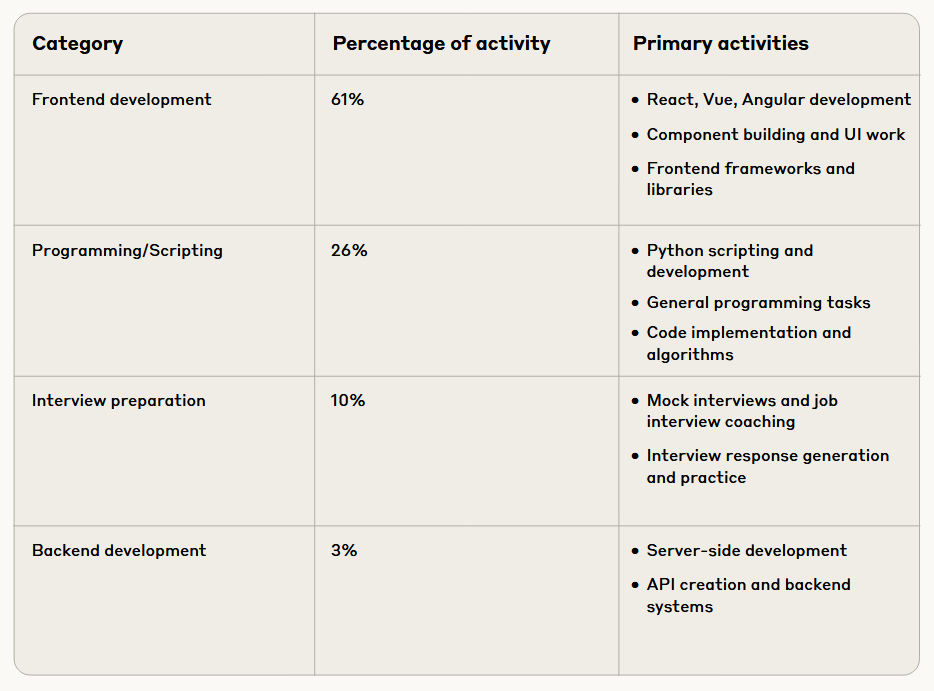
  Breakdown of Claude-powered tasks North Korean IT workers have used. Source: Anthropic


Earlier this month, a North Korean IT worker was counter-hacked, where it was found that a team of six shared at least 31 fake identities, obtaining everything from government IDs and phone numbers to purchasing LinkedIn and UpWork accounts to mask their true identities and land crypto jobs.

One of the workers supposedly interviewed for a full-stack engineer position at Polygon Labs, while other evidence showed scripted interview responses in which they claimed to have experience at NFT marketplace OpenSea and blockchain oracle provider Chainlink.

Anthropic said its new report is aimed at publicly discussing incidents of misuse to assist the broader AI safety and security community and to strengthen the wider industry’s defense against AI abusers. 

It said that despite implementing “sophisticated safety and security measures” to prevent the misuse of Claude, malicious actors have continued to find ways around them. 

Comments

All Comments

Recommended for you

  • Amazon Shares Surge 15.2%, Biggest Gain Since 2012

    On July 31, Amazon shares surged 15.2% to $271.255 per share, marking their biggest gain since 2012, with a total market value of $2.92 trillion.

  • US Treasury Secretary Bessent Vows to Track Down Iranian Assets Globally for Terror Victims

    US Treasury Secretary Bessent said the US will actively track down Iranian assets worldwide to ensure compensation funds for victims of Iran-backed terrorist activities. Bessent stated that the US government's military and economic blockade measures against the Iranian regime will continue and will not be relaxed. (Jinshi)

  • Apple Plunges Nearly 10%, Q4 Revenue Guidance Misses Expectations

    On July 31, Apple (AAPL.US) plunged nearly 10% to $300.33, marking its biggest drop since April 2025. In terms of fundamentals, Apple's third-fiscal-quarter revenue rose approximately 16% year-over-year to $109.42 billion, slightly above analyst expectations. Among the details, product revenue came in at $78.68 billion, beating the expected $77.25 billion. However, services revenue—a key driver of its valuation re-rating in recent years—totaled $30.74 billion, missing the consensus estimate of $31.36 billion. Additionally, Greater China revenue reached $18.82 billion, with year-over-year growth slowing to 22%, also below analysts' forecast of $19.58 billion. During the earnings call, Apple guided fourth-fiscal-quarter revenue growth in the range of 9% to 11%, overall below the 12.1% analysts had expected. CFO Parekh noted that component supply constraints would impact iPhone, Mac, and iPad businesses in the fourth fiscal quarter, with currency fluctuations also constraining growth.

  • Three Fed Officials Back Rate Hike, Hawkish Pressure Builds

    On July 31, three Federal Reserve policymakers said that dissenting votes in favor of a rate hike this week stemmed from stubborn inflationary pressures, highlighting rising internal pressure on Fed Chair Warsh to act. In statements released Friday morning, Hammack and Kashkari said they worry that although the current round of price increases may stem from short-term factors such as President Trump's tariff policies and the Iran war, the inflation situation already warrants Fed action. Logan also joined in, saying that even if inflation cools, if the Fed does not raise rates, inflation is unlikely to fully fall back to the Fed's 2% target; without any policy constraints, inflation could continue to run above target until an unexpected shock occurs. Kashkari said that if inflation remains persistently stubborn, he might support a series of rate hikes, not just a single increase, to prevent inflation from becoming further entrenched. He said: "A series of small policy adjustments may be preferable to waiting for developments to unfold and ultimately having to take more forceful action." Hammack said that if the Fed does not tighten policy, price increases could continue to accelerate. She said: "Inflation has been stubbornly above 2% for more than five years, and I have no confidence that it will return to our target on its own." (Jin Shi)

  • US 10-Year Treasury Yield Rises to 4.7388%, Highest Since January 2025

    On July 31, the US 10-year Treasury yield rose to 4.7388%, the highest level since January 2025.

  • Spot Gold Intraday Decline Widens to 2%, at $4,021.08 per Ounce

    On July 31, spot gold's intraday decline widened to 2%, reported at $4,021.08 per ounce.

  • BTC Falls Below $63,000

    Market数据显示,BTC has fallen below $63,000, currently reported at $62,985.99, with a 24-hour decline of 2.99%. Market volatility is significant, please exercise risk control.

  • Fed's Logan: Leaning Toward 25 Basis Point Rate Hike

    On July 31, Federal Reserve Governor Logan said she leans toward a 25 basis point rate hike, believing inflation has not yet entered a sustainable path back to the Fed's 2% target. Logan stated that taking moderate action now would reduce the risk of needing more aggressive tightening in the future, while emphasizing that the Fed cannot rely on unexpected shocks to achieve its inflation target.

  • Fed's Logan: Taking Modest Actions Now Reduces Likelihood of Needing Stronger Action Later

    On July 31, Dallas Fed President Lorie Logan said that taking modest actions in the near term would reduce the likelihood of needing to take stronger action in the future.

  • Philadelphia Semiconductor Index Erases 5% Gain, Turns Lower

    On July 31, U.S. chip and semiconductor stocks rapidly weakened, with the Philadelphia Semiconductor Index wiping out a 5% gain and turning lower. Micron Technology, which had risen 6%, is now down 4.2%. SanDisk, which had gained nearly 10%, is now down over 6%. SK Hynix and Seagate Technology, which had risen over 8%, are now down 2%. TSMC, which had gained 4%, is now down nearly 1%.
