Cointime

Download App
iOS & Android

GWDC 2026 KOREA: The New Asian Paradigm of Web3 & AI Sets to Debut in Seoul on Sept 29-30, Inviting Global Builders to the Ultimate Developer Summit


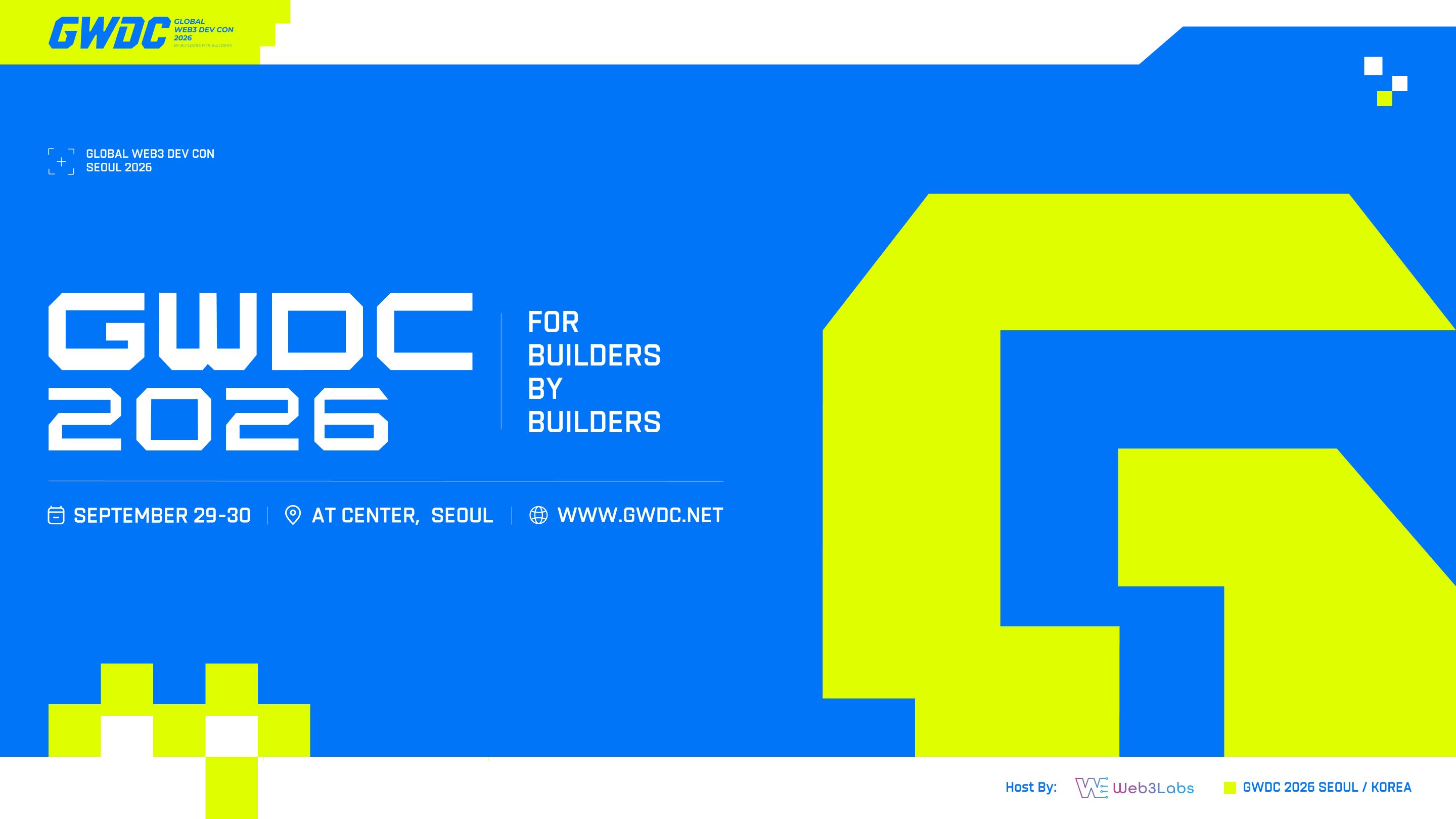
 Following the massive success of the inaugural Global Web3 Developer Conference (GWDC HK) in Hong Kong this February—which ignited a major tech wave in the Asia-Pacific region and gathered over 2,000 industry elites—organizers Web3Labs today officially announced a blockbuster upgrade: The 2nd Global Web3 Developer Conference (GWDC 2026 Korea) will officially take place from September 29 to 30 at the aT Center in Seoul, South Korea.

True to its core, developer-centric ethos of "For Builders, By Builders," GWDC 2026 Korea shifts its spotlight to one of Asia's premier tech hubs, aiming to establish a brand-new paradigm for the global Web3 builder ecosystem and next-generation industrial integration.

According to the latest forecasts from the organizing committee, the Seoul edition will witness an unprecedented scale of growth. The summit is projected to welcome over 8,000 attendees, 500 elite global developers, 100 industry-defining keynote speakers, and 100 top-tier exhibitors in Seoul. Together, they will witness the historic convergence of Web3 and Artificial Intelligence (AI), charting a new course for Web3 development in Asia.

Reimagining Space: Decoupling the Future of Web3 Across Four Core Zones 

Breaking away from traditional, flat exhibitions, GWDC 2026 Korea is restructuring the venue layout at the Seoul aT Center into four multi-dimensional, themed zones—comprehensively covering macro-strategy, hands-on technical deep-dives, hacker competitions, and business matchmaking:

1. Main Stage | Strategic Leadership & Global Dialogue

The intellectual epicenter of the conference, the Main Stage is designed for high-level strategy and vision. The summit will bring together government officials from Hong Kong and South Korea, decision-makers from global tech giants, and Web3 visionaries. Discussions will heavily focus on cross-border "policy synergy" and international cooperation, unpacking real-world AI implementations and next-generation decentralized infrastructure, while defining Asia's tech trajectory.

2. Innovation Stage | Vertical Tech Collisions

Rejecting empty talk, this stage is dedicated to delivering actionable, technical insights. It will feature three specialized sessions:

  • Developer Ecosystem: Centered on open-source culture and the evolution of developer toolchains.
  • Web3 & Financial Infrastructure: Decoding RWA, DeFi, and the latest in cross-border financial innovation.
  • AI & Cloud-Native: Addressing the underlying code behind model training and architectural upgrades.
  • Additionally, the final round and award ceremony of the GWDC Hackathon will culminate here in a high-stakes live pitch.

3. Innovation Booth Zone | An Immersive Tech Bazaar

Featuring over 99 themed booths spanning AI, blockchain, SaaS, and Developer Tools (DevTools), this zone abandons boring, static displays in favor of interactive, live product demos. To amplify global reach, over 30 top KOLs will conduct live roving interviews, high-frequency social media engagement, and flash K-pop dance performances by popular Korean idol groups, generating maximum foot traffic and engagement.

4. Hackathon Zone | 48-Hour Ultimate Coding Challenge

As the soul of GWDC, the Hackathon is gathering over 500 elite hackers from China, South Korea, Japan, India, and Southeast Asia. Breaking the limits of single ecosystems, five leading public chains will simultaneously launch custom developer tracks. Equipped with a cash prize pool exceeding $100,000, along with substantial computing power and resource backing from global cloud service giants, this zone serves as the ultimate testing ground bridging elite capital, public chain ecosystems, and developer talent.
  Unveiling the First Wave of Political, Business Leaders, and Ecosystem Partners 

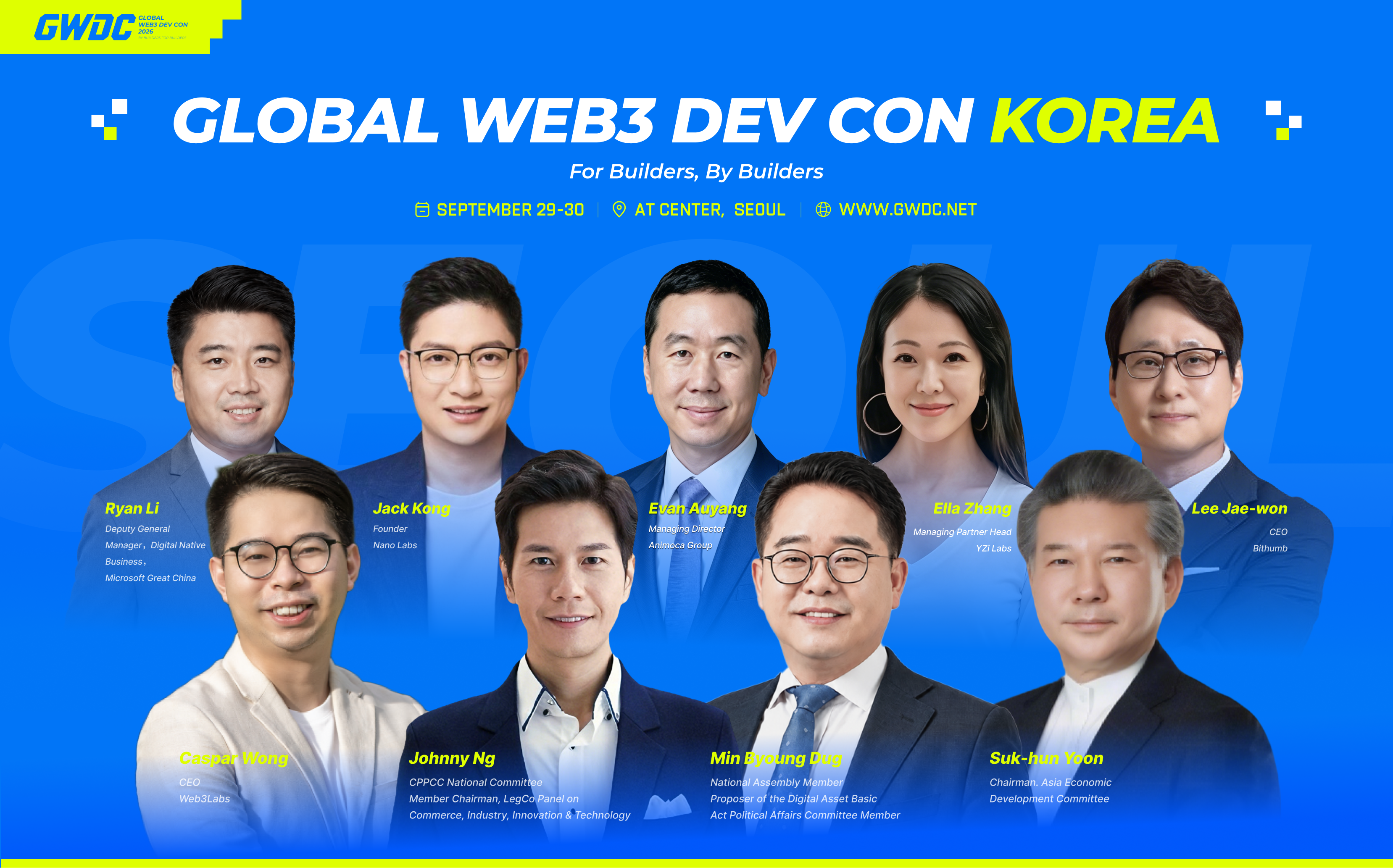
The cross-industry influence of GWDC 2026 Korea continues to grow, attracting an elite global lineup spanning government, industry, finance, and research. We are proud to announce our first wave of confirmed keynote speakers:

  • Johnny Ng: Member of the National Committee of the CPPCC, Legislative Council Member of Hong Kong SAR
  • Min Byoung-dug: Member of the National Assembly of South Korea, Sponsor of the Framework Act on Digital Assets, Member of the National Policy Committee
  • Suk-hun Yoon: Chairman of the Asian Economic Development Committee
  • Caspar Wong: CEO of Web3Labs
  • Jack Kong: Founder of Nano Labs
  • Lee Jae-won: CEO of Bithumb
  • Evan Auyang: President of Animoca Brands
  • Ella Zhang: Managing Partner & Head of YZi Labs
  • Ryan Li: Deputy General Manager of Cloud Native & Digital Transformation Business, Microsoft Greater China 

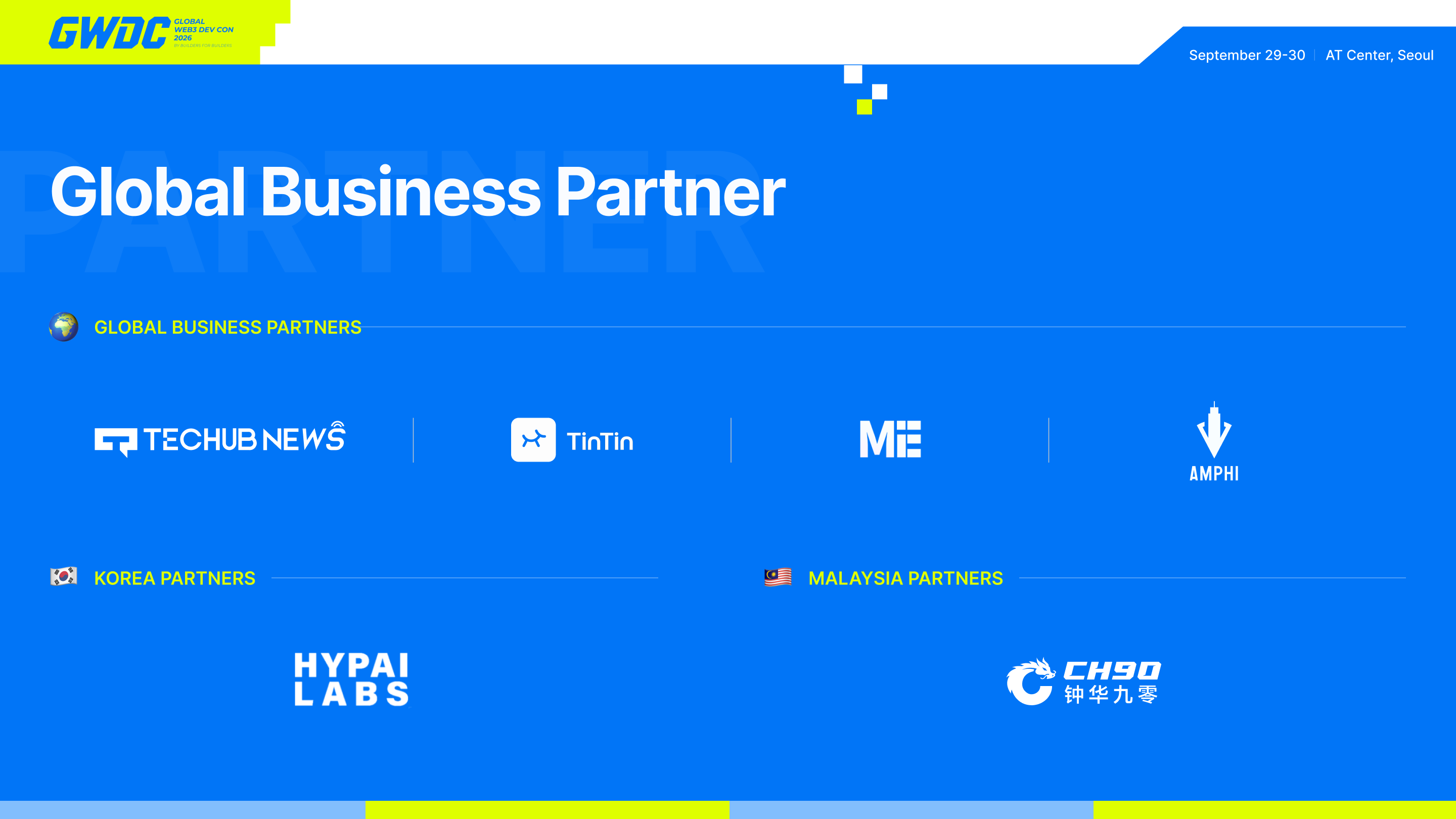
Supporting this world-class lineup, the global preparations of the summit are backed by leading industry partners. Techub News, TinTinLand, ME Group, AMPHI, HypaiLabs, and CH90 are officially introduced as the first wave of strategic business partners.
Join the Paradigm Shift

Global channels for sponsorships, booth bookings, and developer Hackathon registration for GWDC 2026 Korea are now officially open. We invite premium projects and developer communities worldwide to gather in Seoul and co-author the next chapter of Web3 and AI integration.

To learn more, inquire about sponsorships, or register for the event, please contact:

Comments

All Comments

Recommended for you

  • SK Hynix Employees' Average Salary Reaches 144 Million Won in First Half of 2023

    On August 14, SK Hynix reported that the average salary of its employees reached 144 million won (approximately $104,000) in the first half of this year, marking a 23% increase year-on-year. The company significantly increased its capital expenditures and research and development (R&D) investments during this period. Cash outlays for tangible asset purchases exceeded 18 trillion won, a year-on-year increase of over 70%. The number of small shareholders in the company grew more than fivefold within a year, surpassing 3.46 million. In the first half of 2023, SK Hynix generated over 17 trillion won in sales from Nvidia, accounting for approximately 13% of the company's total sales.

  • Strategy and Metaplanet Face Potential Removal from MSCI Index, Results Expected in October

    On August 14, MSCI sought feedback on a new non-operational company identification method, which could lead to the removal of Strategy and Metaplanet from the MSCI Global Investable Market Index. According to a simulation using May 2026 data, Strategy, Metaplanet, and uranium investment company YellowCake would be excluded from the MSCI ACWI IMI, while companies like SharpLink would be placed on a public watchlist. The new method will employ a two-step screening process. Companies will first undergo a test of their operational asset structure; if they fail, they will be assessed based on five indicators: operational asset ratio, expense intensity, operating cash flow, fair value changes, and capital dependency. If a company fails the core test and triggers at least four exclusion conditions, it may be deemed ineligible for the index. For companies already included in the index, MSCI plans to implement a relatively lenient threshold, stating that a company will only be removed after failing the screening for two consecutive reporting periods. After free float adjustments, Strategy's market capitalization in the May 2026 simulation is $23.9 billion, making it the largest company marked for potential removal. MSCI noted that this proposal will not immediately change the index composition, as it is seeking input from market participants until September 30, with results expected to be announced by October 16. Previously, JPMorgan analysts estimated that if Strategy is removed from the MSCI index, it could trigger an outflow of approximately $2.8 billion in passive funds.

  • Morgan Stanley Q2 Holdings: Increased Investment in Micron Technology and AI Hardware, Reduced Exposure to S&P and Traditional Industries

    On August 14, according to disclosures from the U.S. Securities and Exchange Commission (SEC), Morgan Stanley submitted its second-quarter holdings report (13F) for the period ending June 30, 2026. Overall, the changes in Morgan Stanley's holdings reflect a strategy of "maintaining a core technology focus, reducing index exposure, and enhancing active selection capabilities." Statistics show that the total market value of Morgan Stanley's holdings in the second quarter was $1.89 trillion, up 13.9% from $1.66 trillion in the previous quarter. In the second quarter, the fund added 449 new stocks to its portfolio, increased its holdings in 3,850 stocks, reduced its holdings in 3,280 stocks, and completely exited 334 stocks. The top ten holdings accounted for 21.09% of the total market value.

  • Binance to Restrict Trading with Multiple Crypto Asset Platforms

    According to a Binance announcement, in response to recent regulatory changes, Binance will cease processing transactions involving certain crypto asset service providers/platforms starting from the following dates: effective August 7, including Shelbit and Aban Tether Exchange; effective August 13, including A7 Nigeria, A7 Africa, and PilotFinance; effective August 23, including Rapira, Aifory Pro, ABCeX, WhiteBird, NoOnecrypto, Tradex, Monease, BitPapa, Exnode, Exnode Pay, HTX (Huobi Global SA), EXMO, and others. Binance advises users to avoid transferring or receiving assets directly or indirectly to or from the aforementioned entities, or engaging in other transactions with them, as such transactions may require additional compliance review, during which wallets may be restricted, and related activities may involve violations of Binance's Terms of Use.

  • Bank of America’s Hartnett: 2026 Midterm Elections as a Watershed for AI Bull Market, Republican Victory Could Strengthen AI Stocks Until 2027

    On August 14, according to market news, Bank of America’s Chief Investment Strategist Michael Hartnett and his team released a new research report defining the 2026 U.S. midterm elections as a core watershed for the current AI bull market in U.S. stocks. The report presents two scenarios: if the Republican Party retains the Senate and Texas Governor Greg Abbott is re-elected, the market will interpret this as a continuation of AI data center expansion and favorable AI capital expenditure policies, leading to sustained strength in the U.S. AI sector, with a potential bubble forming by 2027. Conversely, if the Democratic Party wins the Senate and the Texas governorship, the U.S. stock market could experience a significant correction of over 10%, which would simultaneously drive down the dollar and U.S. Treasury yields. Currently, the fundamentals of the U.S. stock market remain supportive, with the S&P 500's earnings growth in the second quarter significantly exceeding expectations, and trillion-dollar AI capital expenditures and wealth effects continuing to boost risk appetite. However, the market's bullish positions are extremely crowded, with Bank of America’s bull-bear indicator rising to 9.3, indicating a sell zone, and private client stock allocations reaching historic highs. If election outcomes, interest rates, or AI earnings expectations fall short, these crowded positions could amplify market volatility. Hartnett also cautioned that persistently rising U.S. Treasury yields and the pressure of servicing the country's massive debt are core constraints on market performance, noting that a significant easing of government debt servicing costs would require the 5-year U.S. Treasury yield to fall below 3.25%.

  • LG Signs Agreement with NVIDIA: Humanoid Robot with NVIDIA Chips to Launch in 2027

    On August 14, LG Group Chairman Koo Kwang-mo met with NVIDIA CEO Jensen Huang at NVIDIA's headquarters in Santa Clara, California, on August 13 local time. The two parties signed a strategic cooperation memorandum covering three key areas: robotics, AI factories, and mobile transportation. They plan to jointly launch a bipedal humanoid robot equipped with NVIDIA chips in the first quarter of 2027, marking a significant step in the collaboration between the two tech giants in the field of physical AI. During the meeting, Koo presented Huang with a miniature model of an LG bipedal humanoid robot.

  • SanDisk's Pre-Market Gains Expand to 6%

    On August 14, SanDisk's pre-market gains expanded to 6%, reaching $1620 per share, following a nearly 14% surge in the previous trading session. Micron saw a pre-market increase of 3%. JPMorgan is optimistic about memory demand, assigning SanDisk an 'Overweight' rating with a target price of $2250.

  • July Loan Rates Remain Low

    Since the beginning of this year, China's loan rates have remained at a low level, continuing a downward trend in July. In July, the weighted average interest rate for new corporate loans was slightly below 3%, approximately 0.2 percentage points lower than the same period last year; the weighted average interest rate for new personal housing loans was about 3.1%, roughly unchanged from the same period last year. (Xinhua News Agency)

  • Scholar: Economic Shockwaves from US-Iran Conflict Spread, Trump Faces Internal and External Pressures

    Professor Simon Mabon from Lancaster University stated that as the economic consequences of the Iran war ripple across the globe, US President Trump is facing increasing domestic and international pressure. He pointed out that with the midterm elections approaching and inflation rising, this conflict has created political challenges within the US, while the global economy is also 'feeling the pinch'—affecting not only oil and diesel but also fertilizers and global shipping routes. Mabon noted that any goods transported through the Strait of Hormuz will be impacted, with rising transportation costs and insurance premiums ultimately passed on to end users.

  • Central Bank: M2 Increased by 7.7% Year-on-Year in July

    On August 14, the Central Bank reported that by the end of July, the balance of broad money (M2) was 355.51 trillion yuan, an increase of 7.7% year-on-year. The balance of narrow money (M1) was 115.46 trillion yuan, up 4% year-on-year. The balance of currency in circulation (M0) was 14.82 trillion yuan, a year-on-year increase of 11.6%. In the first seven months, a net cash injection of 725.5 billion yuan was made.