

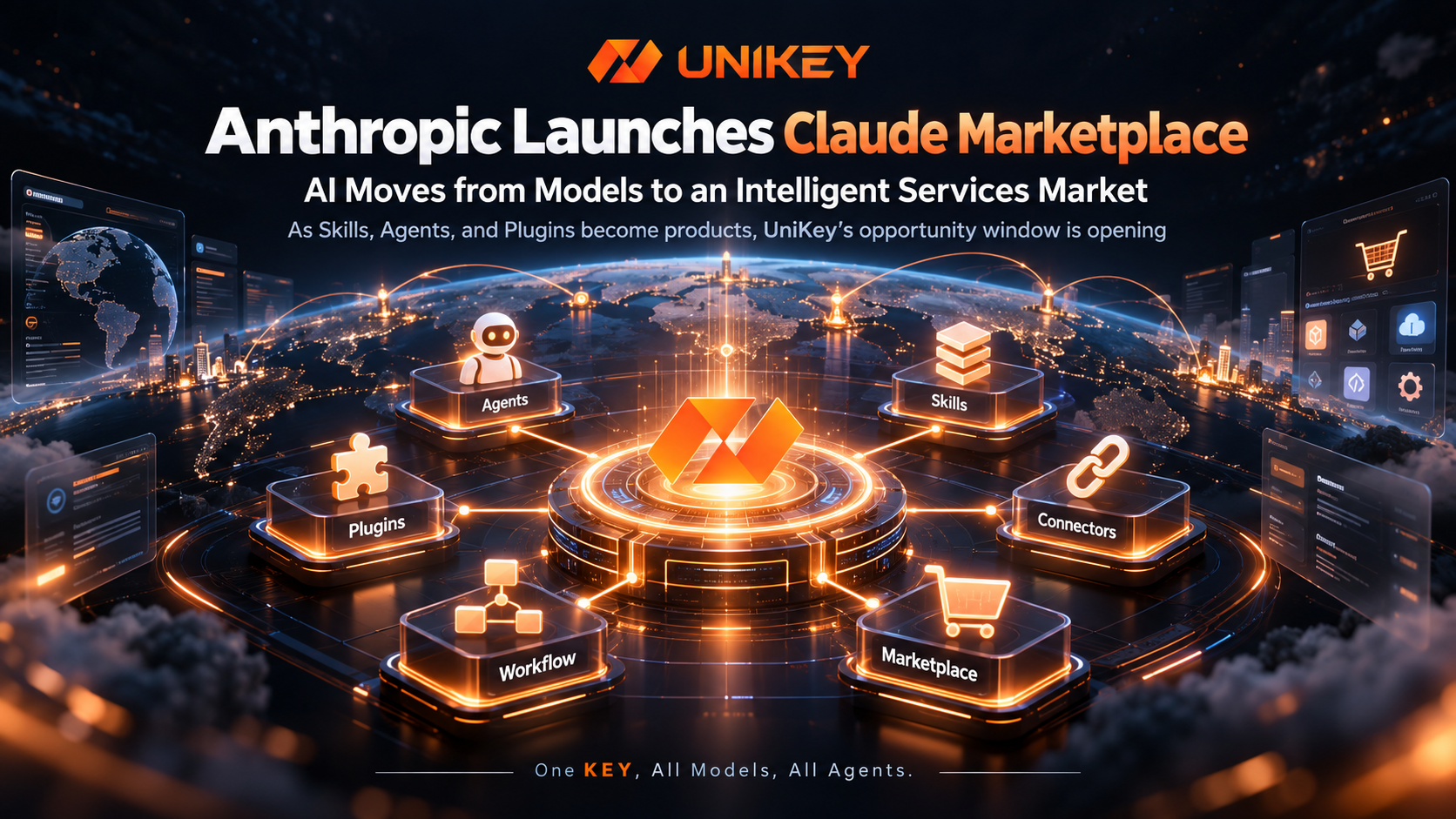
On September 23, Anthropic officially launched Claude Marketplace, bringing plugins, connectors, agents, AI products, and service partners into a single discovery and distribution platform. At launch, Claude Marketplace offered access to more than 2,000 plugins and connectors, including integrations from Atlassian, Google, Microsoft, Notion, Salesforce, and others. Customers can also discover Claude-powered products from companies such as Cursor, Harvey, Lovable, and Snowflake, while enterprise service partners including Accenture, BCG, and Deloitte help organizations deploy AI at scale. Two days later, Anthropic opened a new developer submission portal that allows builders to submit plugins based on MCP connectors, Agent Skills, or a combination of both, and track usage analytics once their products go live.
Taken together, these announcements represent something much larger than “Claude getting a plugin store.” The AI industry is beginning to look like a real software marketplace. Foundation models no longer need to provide every capability themselves. Third-party developers can now supply Skills, connectors, Agents, and professional AI products, while enterprises can assemble intelligent systems from modular capabilities rather than building everything internally.
AI is therefore moving beyond selling model access. It is beginning to sell intelligent capabilities, digital labor, and task outcomes. This shift directly intersects with UniKey’s emerging architecture around Agent & Skill Market, Workflow, AI Credits, and the future Settlement Network.
The Real Importance of Claude Marketplace Is Not Plugins — It Is Distribution
One of the most important infrastructures of the mobile internet was not any single application. It was the App Store. Developers had capabilities but needed users. Users had needs but required a place to discover and purchase software. Once both sides were connected through a marketplace, an enormous software economy emerged.
Claude Marketplace is bringing a similar structure into AI. But this time, the items being distributed are not only applications. They include plugins, connectors, Agents, service providers, and complete AI-powered products.
Anthropic’s structure is particularly significant. Users can install plugins and connectors, purchase third-party Claude-powered software, and work with professional AI service partners. Developers can build extensions using MCP and Agent Skills, enter a unified directory, and reach organizations already using Claude.
A new layer of the AI industry is therefore emerging: models produce foundational intelligence, while marketplaces allow specialized intelligence to be discovered, called, and commercialized. As Agents and Skills become distributable products, the value of AI will gradually extend beyond model providers toward millions of specialized capability builders.
In the Agent Era, the Scarce Resource May Not Be Models — It May Be Specialized Skills
Today’s leading models can already write code, understand images, process long documents, and operate browsers. But real enterprise work often requires highly specific capabilities.
A finance Agent may need access to ERP systems, invoices, accounting data, and tax rules. An e-commerce Agent may need inventory systems, advertising platforms, and customer databases. A marketing Agent may need research, presentation creation, image generation, video production, and publishing tools.
Models provide general intelligence. Real work requires specialized Skills.
That is why Anthropic’s increasing emphasis on Agent Skills matters. Plugins can package MCP connectors and Agent Skills together, turning professional capabilities into reusable components. In the future, a high-quality Skill may be lighter and more scalable than a traditional standalone application. It does not need to recreate an entire software product. It only needs to standardize one valuable capability and make it callable by many different Agents.
This maps directly to UniKey’s architecture. Knowledge Base determines what an Agent knows. Skills determine what it can do. Workflow determines how those capabilities are combined. Agent Factory organizes everything into a working digital unit.
A competitive Agent will not be defined only by the model behind it. It will increasingly be defined by the network of high-quality capabilities it can access.
Anthropic Has Validated the Skill Market — But It Is Still a Claude Market
The launch of Claude Marketplace validates an important idea for UniKey: Agents and Skills can become independent commercial products. Developers can publish capabilities, enterprises can purchase those capabilities, and the platform can handle discovery and distribution.
Until recently, the concept of an Agent Marketplace still sounded like something belonging to the future. Anthropic is now turning it into an actual product.
But Claude Marketplace naturally has one boundary: it is primarily built around the Claude ecosystem. Plugins are designed for Claude, Agents and products are powered by Claude, and enterprise spending is largely circulated within the Anthropic ecosystem.
That is not a weakness. It is the rational strategy for every major model provider. OpenAI will build its ecosystem. Google will build its ecosystem. Anthropic will build its ecosystem.
UniKey’s opportunity is therefore not to simply recreate Claude Marketplace. The larger opportunity is to build a cross-model, cross-Agent, cross-provider intelligent services market above those closed ecosystems.
A Skill should not necessarily remain permanently tied to one model. An Agent should not be limited to one source of intelligence. A single Agent might use GPT for deep reasoning, Claude for long-document processing, Gemini for multimodal work, and third-party search, video, data, or specialized Skills for other tasks.
UniKey’s AI Gateway and AI Router answer one question: Where should intelligence come from?Agent & Skill Market answers another: Where should specialized capabilities come from? Together, they form a much broader market layer.
From Plugin Directory to Skill Economy, Developers Are Becoming a New Class of AI Service Providers
Another important detail in Anthropic’s September 25 announcement is that developers can not only submit plugins, but also track usage analytics after publication. This begins to create a complete developer growth cycle: build a capability, submit it, enter the marketplace, acquire users, analyze usage, and continuously improve the product.
Once this structure matures, a new class of AI developers may emerge. They may never train a foundation model or build a complete SaaS company. Instead, they may specialize entirely in producing Skills.
One developer may build financial analysis Skills. Another may create short-video production capabilities. Others may specialize in cross-border commerce, market research, automated reporting, or enterprise compliance. A single high-quality Skill could potentially serve thousands or millions of Agents.
This is where UniKey’s commercial architecture can become more powerful. Agent Factory allows users and developers to create intelligent workers, while Agent & Skill Market can allow those capabilities to become commercial services.
Developers will eventually care about more than whether their Skill is listed. They will care about how often it is called, how much consumption it generates, and how much economic value their contribution receives.
At that point, Marketplace naturally connects to AI Credits and Settlement Network.
When Skills Become Tradable, AI Credits Become More Than a Billing Tool
Traditional SaaS pricing is relatively simple: one product, one subscription. Agent economics will be fundamentally different. A single task may involve three models, five Skills, one Workflow, and two external APIs—each provided by a different supplier with a different cost structure.
If every service requires its own account, balance, and billing system, the commercial fragmentation of AI will eventually undermine Agent automation itself.
This gives UniKey’s AI Credits a clearer role. AI Credits can become a unified consumption unit for different intelligent services. Model calls can consume Credits. Image and video generation can consume Credits. In the future, Agents, Skills, Workflows, and external AI services can all be measured through the same economic layer.
Users can enter through familiar payment channels, including fiat, acquire AI Credits, and consume different services. Agents can then automatically purchase capabilities while completing tasks. Service providers receive value based on real usage.
KEY can connect broader ecosystem participation, settlement, and value circulation.
The commercial model therefore evolves from “a platform selling AI to users” into a marketplace connecting intelligent supply with intelligent demand.
AI Credits carry consumption.
KEY connects the ecosystem.
Settlement Network distributes value back to the parties that actually provide useful intelligence.
UniKey Should Not Compete to Build the Next App Store — It Should Build the Market for Global Intelligent Productivity
Claude Marketplace sends a very clear signal: the AI industry needs marketplaces. OpenAI, Google, Anthropic, and other major platforms will increasingly build their own capability ecosystems because no company can produce every Skill and every industry solution internally.
Third-party developers will become one of the most important supply layers in the Agent economy.
UniKey can take this logic one step further.The truly massive market may not be a plugin store inside a single model ecosystem. It may be an open global market for intelligent productivity.
Model companies provide intelligence.Developers provide Skills.Agent builders create digital labor.Enterprises provide business demand and proprietary data.
UniKey can connect these participants and use Gateway, Router, Marketplace, Credits, and Settlement to complete the full lifecycle of intelligent services.
This makes UniKey’s emerging positioning increasingly clear:Global AI Gateway + Intelligent Services Market + Agent Collaboration Network + Value Settlement Layer.
Anthropic has now demonstrated that plugins, Agents, and AI services can live inside a real marketplace.
The next question for UniKey is even bigger:How can intelligent capabilities from different models, different developers, and different markets move freely through one global network?
One KEY, All Models, All Agents.
When AI capabilities begin to be discovered, purchased, and called like applications, the largest opportunity may only be beginning.


All Comments