

Cointime

Download App
iOS & Android

Option Flow: Gamma Buying

From Deribit by Tony Stewart

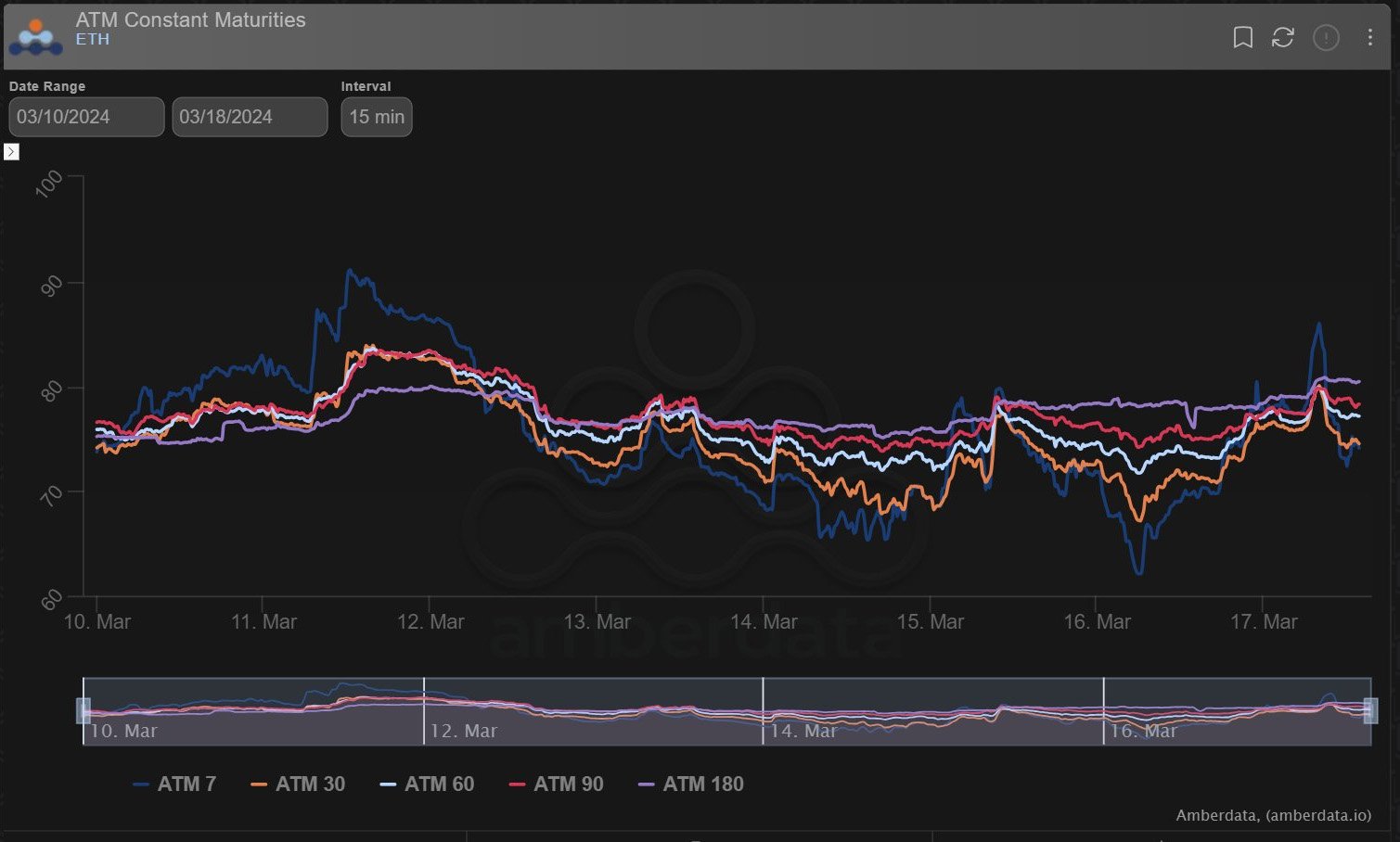
ETH flow continued with Protective/Bearish Mar+Apr Put buying & offloading of ETH Calls, marking the top as ETH plunged 15%.

BTC flows were slow to follow, ostensibly protected by BTC ETF Net inflows.

BTC then turned reactive: Mar Puts(+spreads) on breaks & Calls on bounces.

2) Aside from ETH Mar 3.1-3.4k Puts bought & Mar 4.5+4.6k Calls sold, increasing Put Skew, a dominant trade was covering of ~25k Mar ITM 2.6k Calls (presumably sold as a failed Yield trade against underlying long ETH when Spot was far lower) then rolled to sales of 3.9-4k Calls.
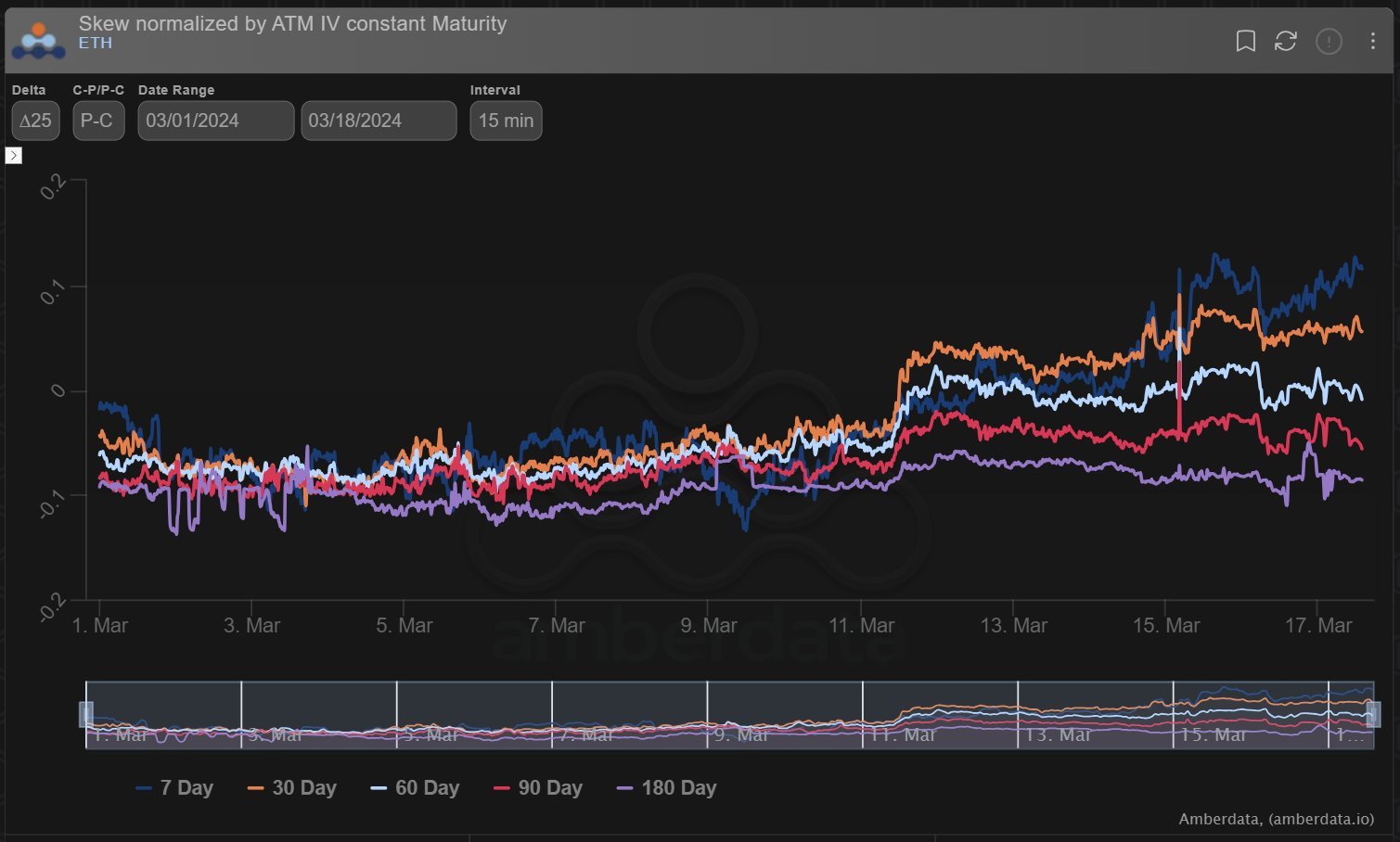
3) This roll-up trade, executed with ETH at ~3.9k on the 14th of March had the impact of unloading ATM Gamma onto LPs, a gift ahead of what was to happen later in the week as ETH then fell another 500 points.
4) BTC Option flow was slow to follow.

The need for protection was side-lined by obtaining enough upside exposure as ETF net inflows hit records.

But as the seemingly improbable happened, the need for protection executed via Mar Puts(+spreads) was hastily added as BTC collapsed.
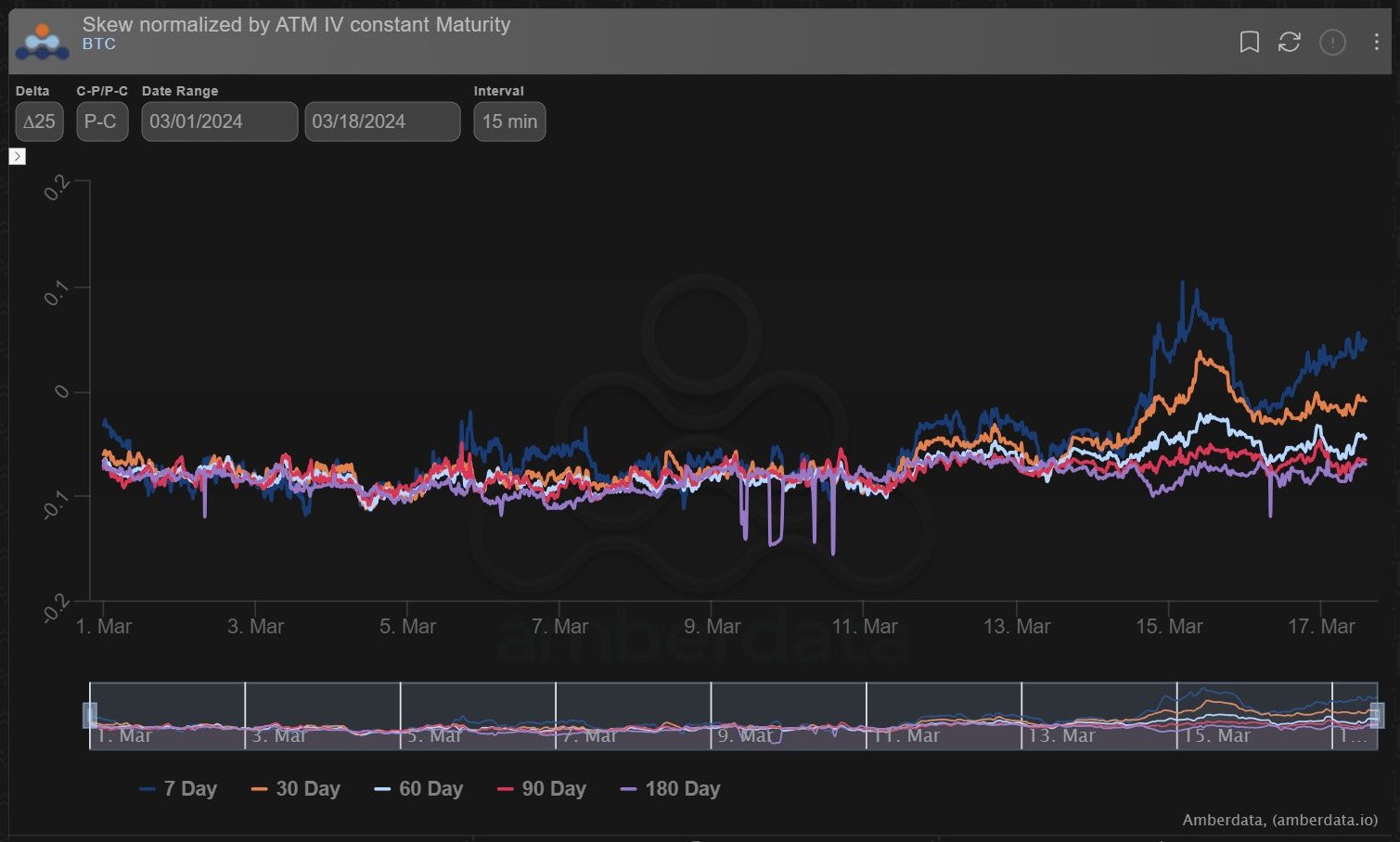
5) But whereas ETH (+Altcoins) sold off heavily, not protected by ETF inflows, there was confusion over BTC’s sell-off.

Ofc funding was elevated, but there appeared to be fundamental demand.

Thus BTC bounces just invigorated near-dated 70-75k Call buyers (not observed on ETH).
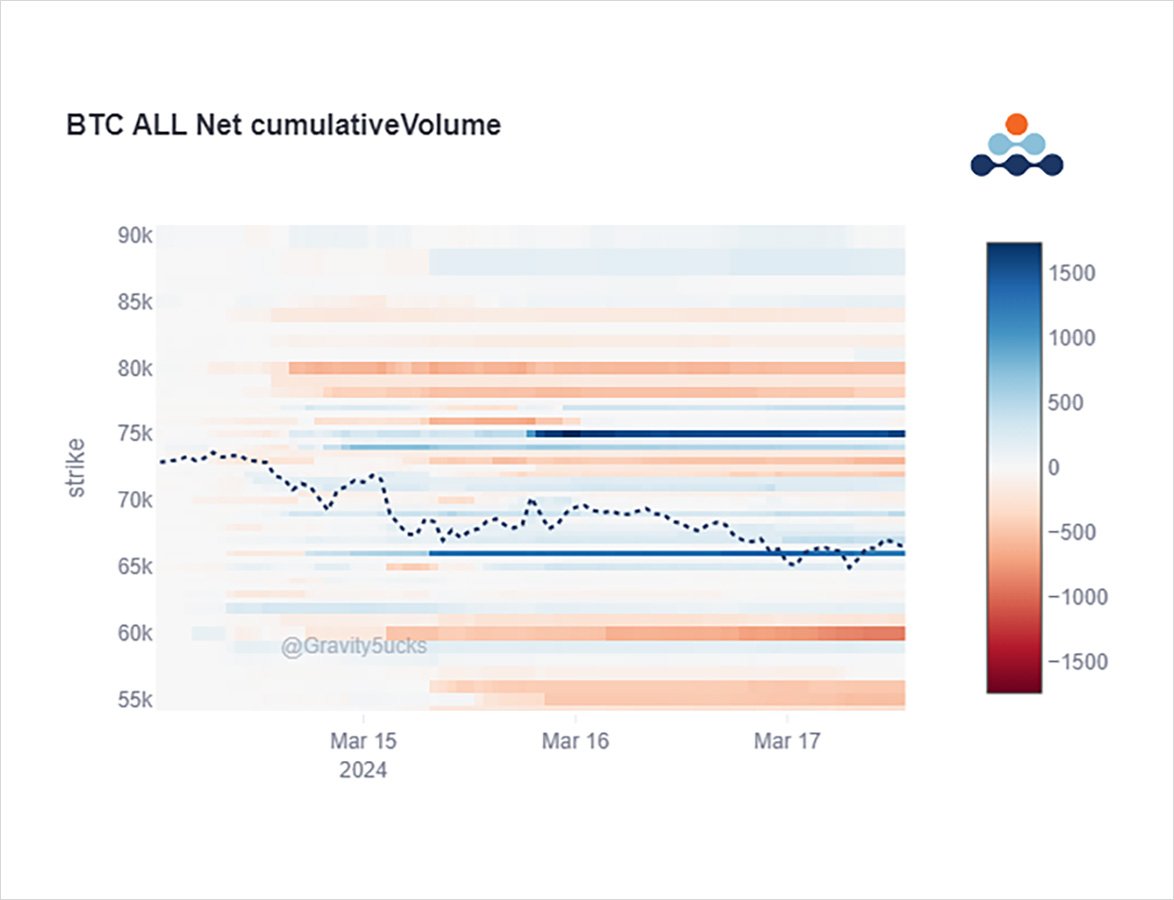
6) BTC Bulls are very keen to hear the Tradfi opening market bell, as they look to a CME gap a few thousand higher, and the ETF flow powerhouse returning after the weekend.

The uncertainty and confusion have led to Gamma being bought on dips, and/or as a reaction to market moves.
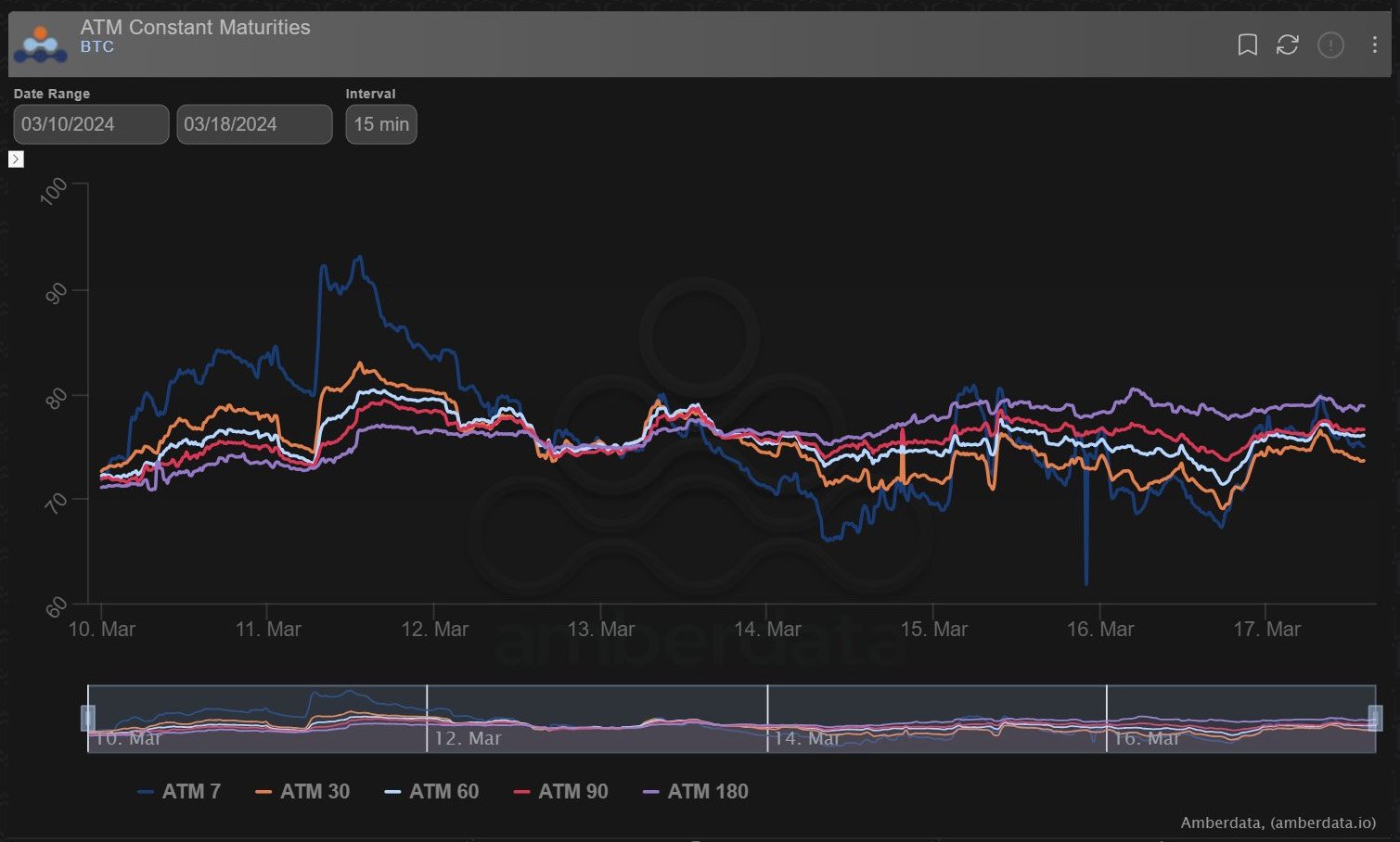
View Twitter thread.

Comments

All Comments

Recommended for you

  • Iranian Parliament's National Security Committee Approves Strait of Hormuz Security Outline

    On August 9, according to Iran's Mehr News Agency, the National Security and Foreign Policy Committee of the Iranian Parliament approved the strategic action plan outline for ensuring the security and development of the Strait of Hormuz. (Xinhua)

  • Saudi Arabia Depletes 86% of Patriot Missile Stockpile

    According to British media reports, within the first 38 days after the outbreak of the war, Saudi Arabia launched approximately 2,400 PAC-3 (Patriot-3) interceptor missiles, accounting for about 86% of the country's total stockpile of 2,800 missiles. By April of last year, Saudi Arabia had only about 400 interceptor missiles remaining. Other Gulf Arab states also consumed missile reserves on a similar scale, highlighting the military crisis facing the region. (Jin Shi)

  • Experts: The Strait of Hormuz 'Will Never' Return to Pre-War Status

    Ali Akbar Dareini, a researcher at the Iranian Strategic Studies Center, stated that Iran and Oman are about to reach an agreement on the future management of the Strait of Hormuz, with the main obstacle being U.S. pressure on Oman to adopt a position more aligned with Washington. Dareini emphasized that Iran considers future control of the strait crucial for its national security. In recent months, the U.S. has conducted strikes against Iran, which Iran claims were launched from bases in the region. Dareini noted that the ongoing negotiations between Iran and Oman present the U.S. with a 'good opportunity to extricate itself from this quagmire' by recognizing Iran and Oman as the countries that will determine the 'future' of the Strait of Hormuz. 'However, the Strait of Hormuz will never return to its pre-war status,' he continued. 'The geopolitical landscape of the region has changed.'

  • Iran: Negotiations with Oman Unrelated to Reopening of Strait of Hormuz

    On August 8, a spokesperson for the Islamic Revolutionary Guard Corps of Iran stated that the reopening of the Strait of Hormuz is unrelated to negotiations between Iran and Oman, but rather depends on whether the United States fully accepts Iran's conditions and ceases interference in regional negotiations. "Once the United States accepts Iran's conditions, the Strait will undoubtedly reopen." (CCTV News)

  • Whale Shorting $102 Million in Bitcoin Faces Partial Liquidation, Remaining Liquidation Price Around $65,300

    On August 8, TheDataNerd reported that a whale using 40x leverage to short $102 million in Bitcoin recently faced partial liquidation, incurring a loss of $1.46 million over the past week. Currently, the margin call has reduced the short position to approximately $60 million, with an opening price of $64,212.5 and a liquidation price of $65,310.2.

  • BTC Falls Below $65,000

    Market data shows BTC has fallen below $65,000, currently reported at $64,999.23, with a 24-hour increase of 1.01%. Market volatility is high, please exercise risk control.

  • Hedge Fund AISituational Awareness's Mysterious $400 Million Investment Targets Chip Startup Source Foundry

    On August 8, sources revealed that the hedge fund Situational Awareness, managed by former OpenAI researcher Leopold Aschenbrenner, made a mysterious $400 million investment in the chip manufacturing startup Source Foundry just days after facing imminent collapse. Previously, Bloomberg reported that the hedge fund invested in a private company backed by Sequoia Capital, but did not disclose the name of the specific company. The Wall Street Journal had earlier reported that the recipient of the investment was Source Foundry, unveiling the target of this mysterious funding deployment by Situational Awareness.

  • US Spot Bitcoin ETF Sees $101.79M Net Inflow Yesterday

    On August 8, according to Trader T's monitoring, US spot bitcoin ETFs saw a net inflow of $101.79 million yesterday.

  • US Official: Ukraine Agrees to Avoid Strikes on Non-Russian Tankers and Black Sea Oil Facilities

    On August 8, according to a US official, Ukraine has agreed not to target certain non-Russian tankers and Black Sea infrastructure vital to Kazakhstan's crude oil exports. This follows ship attacks last month that caused loading disruptions. The US official said Ukraine has set up contact points so commercial shipping companies can communicate information and ensure safe passage. The commitment was reached after meetings between senior US government leaders and Ukrainian leadership, marking a potentially significant step toward increasing regional oil shipments. Previously, activity in the region had cooled significantly due to several recent attacks near the Caspian Pipeline Consortium terminal in Russia's Novorossiysk. (Jin Shi)

  • U.S. July Nonfarm Payrolls Fall by 23,000, Missing Market Expectations

    On August 7, U.S. nonfarm payrolls decreased by 23,000 in July, compared with market expectations of an increase of 80,000, and the previous value was an increase of 57,000.
