

Cointime

Download App
iOS & Android

Dogwifhat ($WIF)

Yesterday I was conflicted. What will I write about tomorrow? I had two topics I was particularly keen on covering, but wasn’t sure which to write about first. They didn’t deserve to be jammed into one combined piece. I left it up to X to decide for me (I also posted on Warpcast but no one replied, not cool enough I guess):
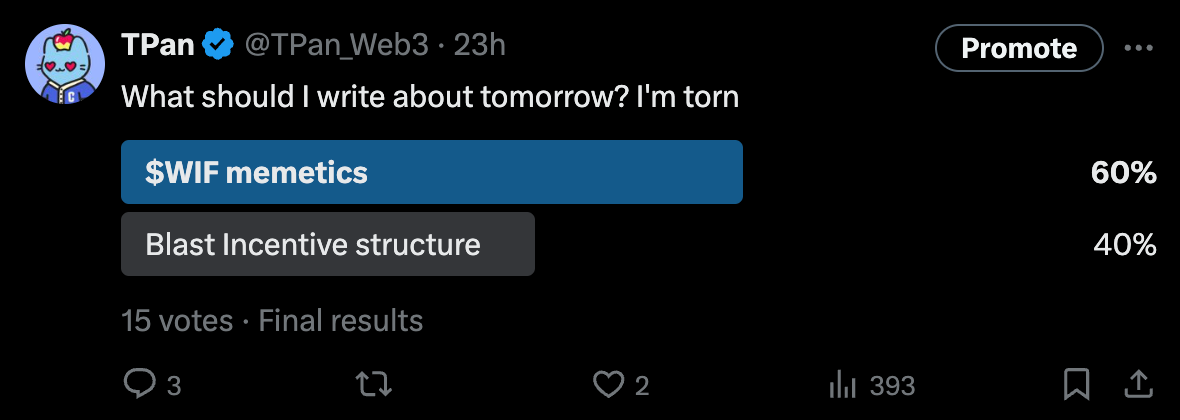
WIF it is! I’ll cover the Blast incentive structure next week.

Before we dive in

I want to set a few things straight so we don’t get it twisted:

  • I purchased WIF a few months ago and still hold it. It’s not a life-changing amount and I don’t expect it to be.
  • I’m writing about WIF because I think there are unique lessons to be learned about the meme behind the memecoin, not because I want you to buy some.
  • I won’t be able to cover everything about WIF and will miss some details. The goal is to cover the meat and potatoes, not the 10-course meal.
  • I’ve covered memes and PEPE before, and I believe that understanding memes is important and will only increase in importance as it pertains to society, culture, and growth/marketing strategies. Memes aren’t for everybody, but it’s helpful to know people who get them.
  • I initially considered writing about WIF over a month ago, but decided to hold off because it didn’t feel compelling enough. As memecoins have blown up over the past couple of weeks and taken up more mindshare in the space, I figured it would be worth covering as a topic that deserves to be understood better vs. looked down upon. It’s ok to have the conflicting views of ‘I think memecoins are dumb and they’ll go to 0’ and ‘a lot of people enjoy owning and buying memecoins’.

With that said, what does the state of memes and memecoins look like? There are currently 6 memecoins in the top 100 coins by market cap, and 3 of them are from this cycle.
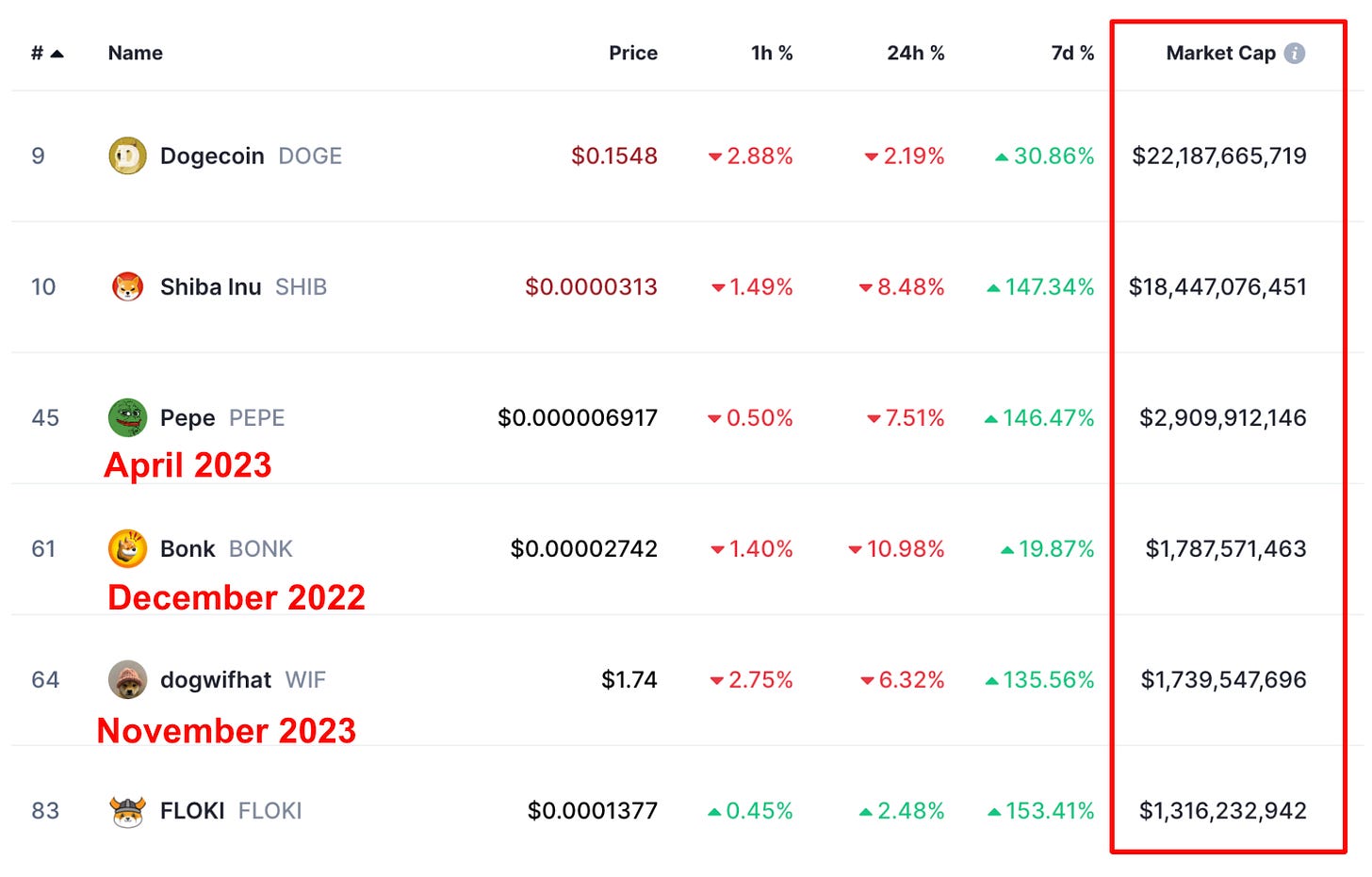
This is remarkable no matter how you slice it. The memecoin darlings of last cycle, DOGE and SHIB, round out the top 10 🤯
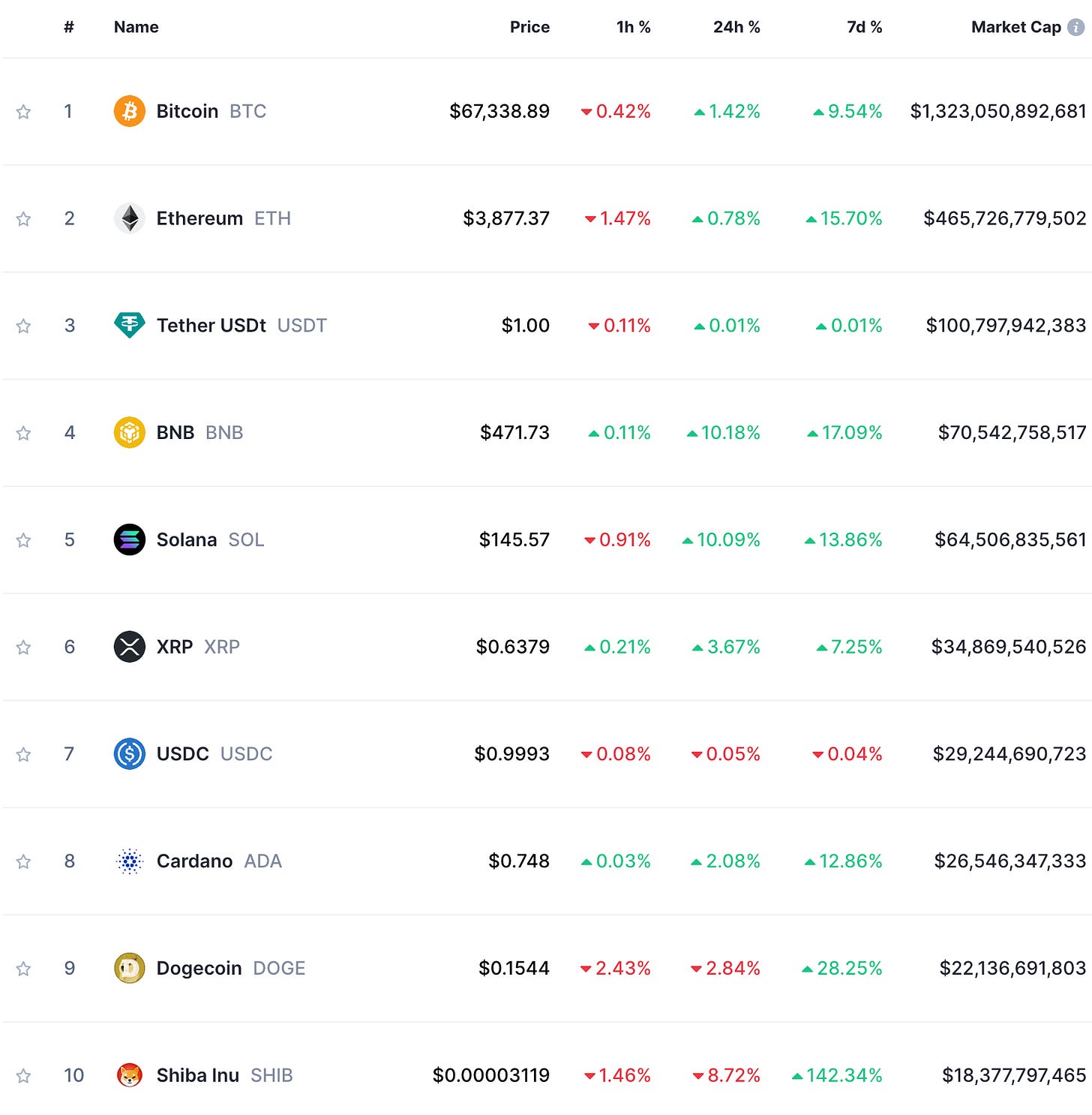
So with the backdrop set, how did WIF get to where it is today?

The origins of WIF and how meme templates work

Dogwifhat started in 2019 from a viral photo of a Shiba Inu wearing a beanie, literally a dog with (or ‘wif’ in dog speak I guess) a hat.

The gaming community adopted the picture and created different variations of the meme template, particularly the hat. We see this with many other popular memes that have become templatized. A simple example of this is Drake’s iconic Hotline Bling music video scene which is a popular meme template still used today:
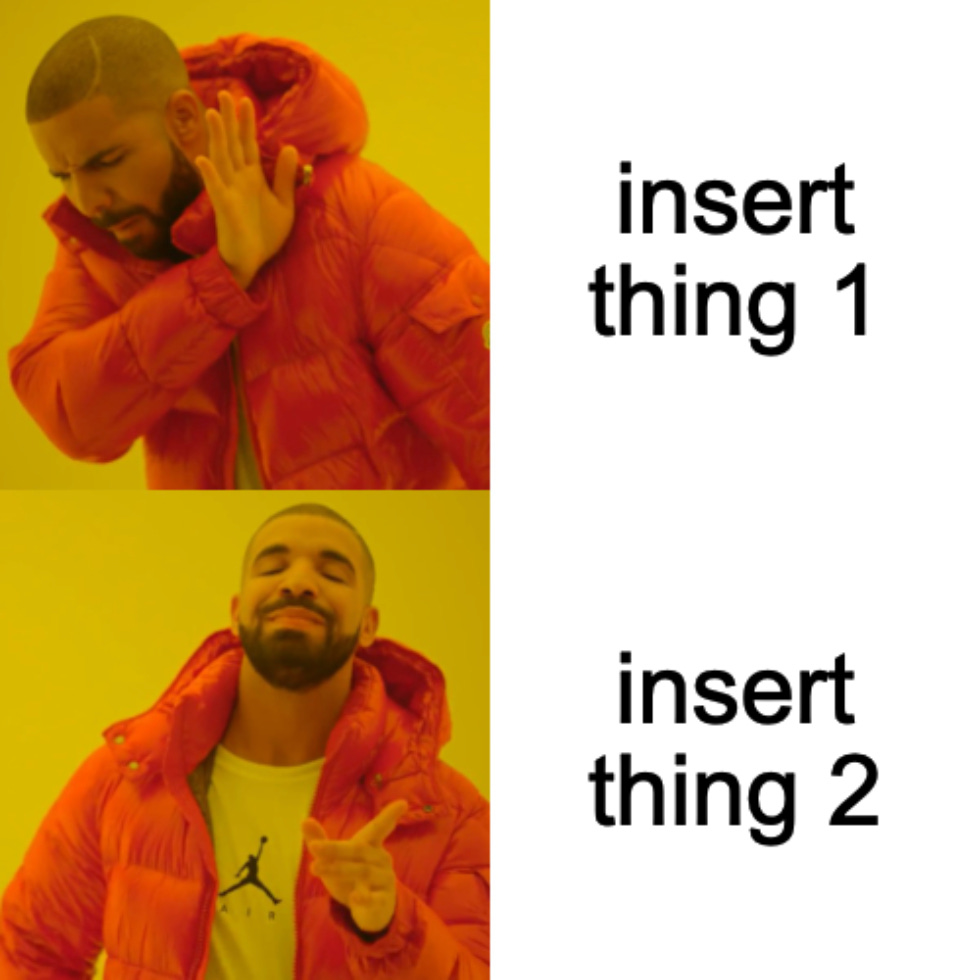
Memes typically have a visual component and/or text component. With the Drake meme, the static component is Drake on the lefthand side. The ‘canvas’ is on the right-hand side, which can be either text or image.
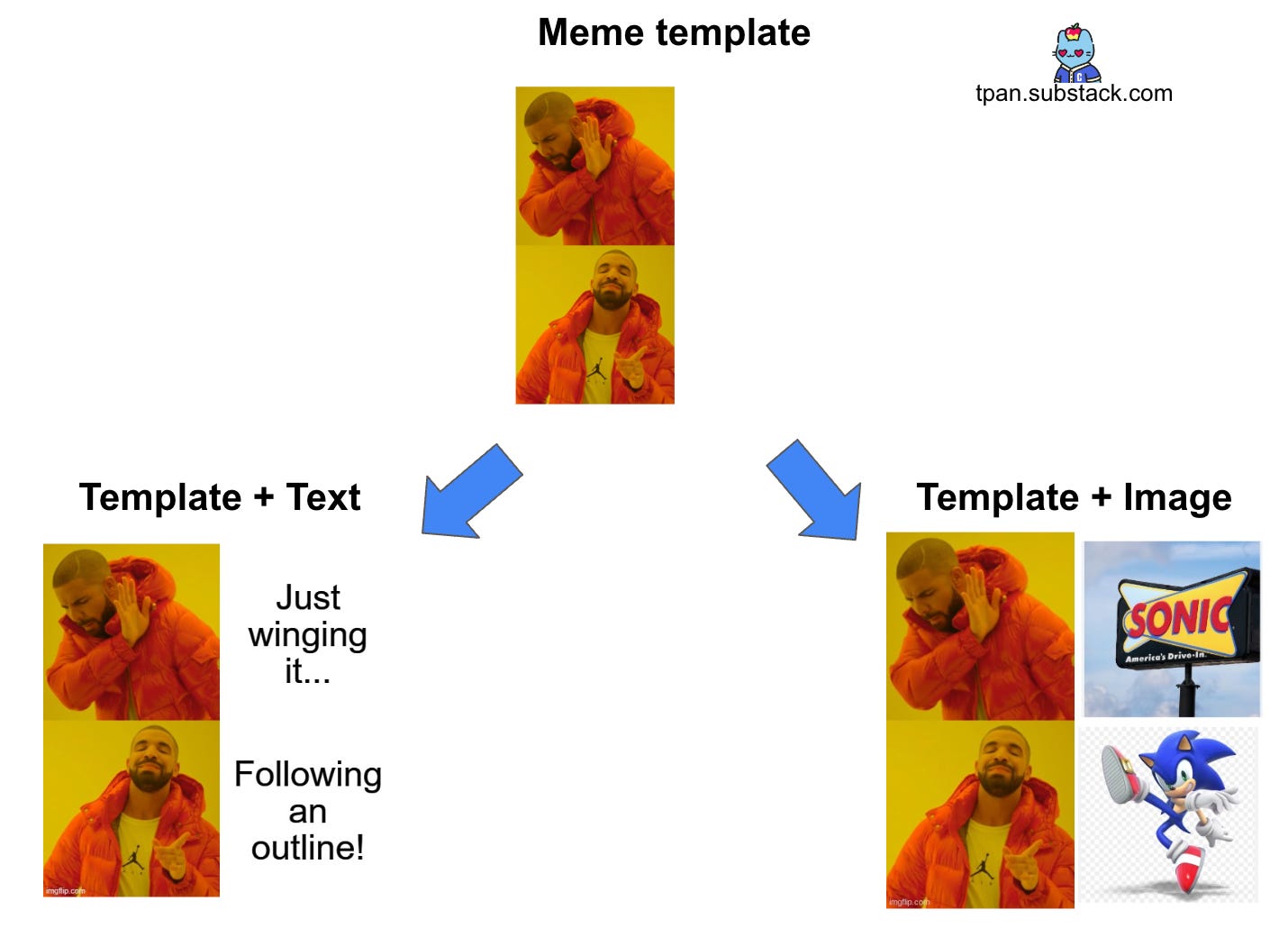
Basic, right? We have seen hundreds if not thousands of memes in our lives at this point.

Why WIF is a unique meme

What makes WIF special? The meme has the same image + text components, but has different layers to it, which are manifested in different ways. Let’s start by literally breaking down dogwifhat into its separate parts:
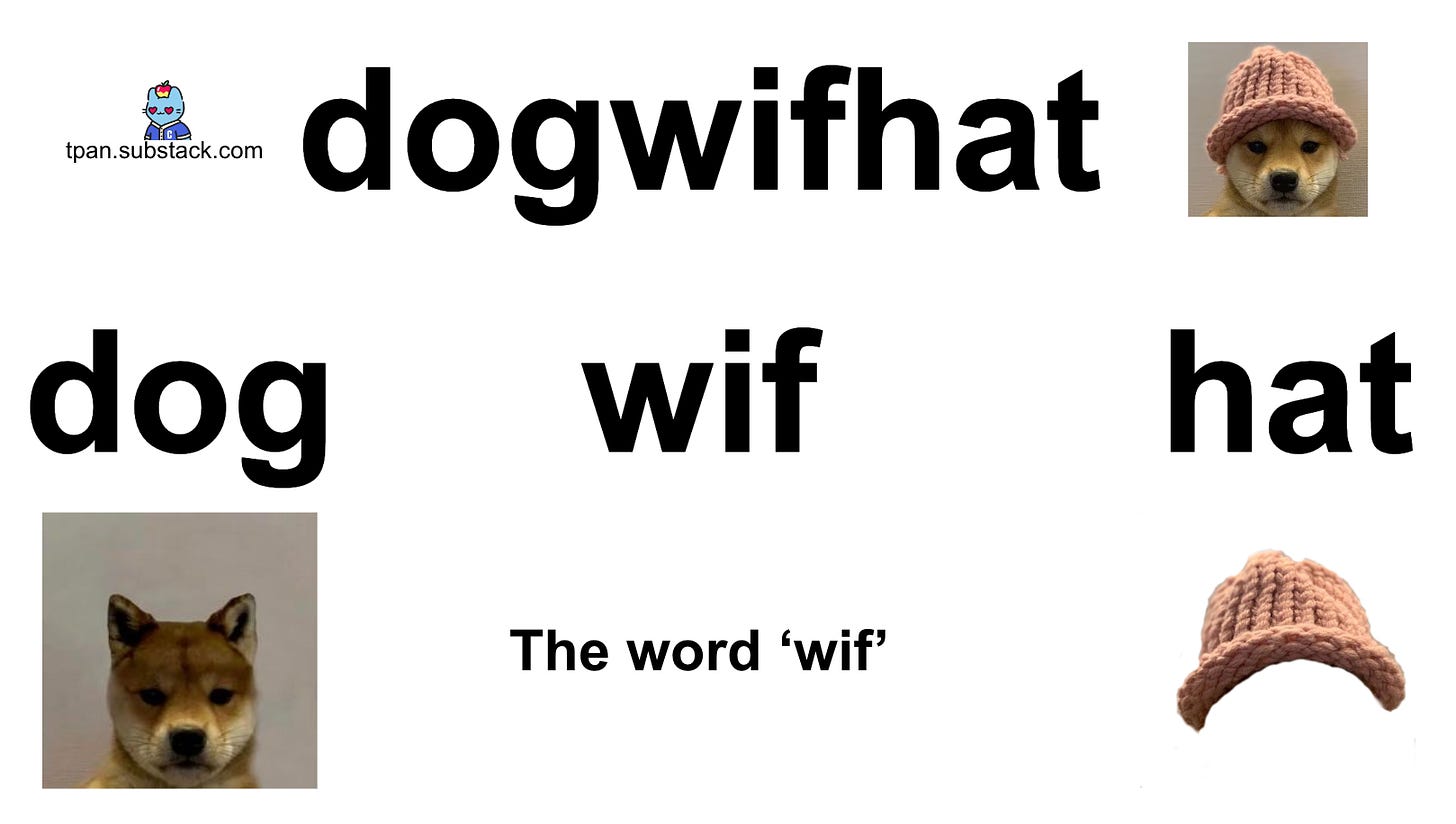
Another way to think about it is the dogwifhat meme is composable…just like tokens! People can reuse and recombine the meme in different contexts, amplifying virality, creativity, and influence. The dog, word, and hat are separate Lego blocks that can be used in various ways.


Comments

All Comments

Recommended for you

  • Trump Shares Op-Ed Claiming He is Winning the War Against Iran

    On August 29, U.S. President Trump shared a commentary article from the New York Post on Truth Social on Saturday, which stated that he is winning the war against Iran and should maintain the current strategy. The title of the article Trump shared read: 'Trump is Winning the War Against Iran - Stay the Course.'

  • Morgan Stanley: 2028 as a Key Observation Point for Global Memory Competition Landscape

    On August 29, Morgan Stanley pointed out that the rise of Chinese memory manufacturers should not be viewed merely as a technological catch-up or low-cost substitution; what is truly noteworthy is that their production capacity may gradually become large enough to alter the supply structure of the global memory market. Changxin Technology and Yangtze Memory Technologies are currently entering the mainstream product market and gradually extending into high-profit markets such as HBM, high-end server DRAM, and enterprise SSDs. Morgan Stanley considers 2028 as an important observation point for the global memory competition landscape. From 2026 to 2027, demand for AI servers, capacity crowding of advanced wafers by HBM, import substitution, and the time required for customer certification may absorb most of the new supply from Chinese memory manufacturers. By 2028, as Chinese manufacturers expand production, the additional capacity from Samsung, SK Hynix, and Micron, which had previously initiated expansions, will also be released. At that time, the supply variables in the global memory market will significantly increase. Morgan Stanley estimates that Changxin's DRAM monthly production capacity will rise from 180,000 wafers in 2025 to 300,000 in 2026, accounting for approximately 13% of global DRAM wafer capacity and about 11% of bit shipments; by 2028, it is expected to further increase to 500,000 wafers, and by 2031, it could reach 800,000 wafers. If the expansion proceeds smoothly, Changxin's global DRAM bit shipment market share could approach 15% by 2030, and it may even have the opportunity to surpass Micron in production capacity around 2028, becoming the third-largest DRAM supplier in the world.

  • US Spot Ethereum ETF Sees Net Inflow of $102.17 Million Yesterday

    On August 29, according to monitoring by Trader T, the US spot Ethereum ETF recorded a net inflow of $102.17 million yesterday.

  • US Spot Ethereum ETF Sees Net Inflow of $102.17 Million

    On August 29, according to monitoring by Trader T, the US spot Ethereum ETF experienced a net inflow of $102.17 million yesterday.

  • US Spot Bitcoin ETF Sees Net Outflow of $201.81 Million

    On August 29, according to monitoring by Trader T, the US spot Bitcoin ETF experienced a net outflow of $201.81 million yesterday.

  • US Spot Bitcoin ETF Sees Net Outflow of $201.81 Million Yesterday

    On August 29, according to monitoring by Trader T, the US spot Bitcoin ETF experienced a net outflow of $201.81 million yesterday.

  • BTC Surpasses $78,000

    Market data shows that BTC has surpassed $78,000, currently priced at $78,009.49. The 24-hour decline has narrowed to 3.23%. Due to significant market fluctuations, please ensure proper risk management.

  • BTC Surpasses $78,000

    Market data shows that BTC has surpassed $78,000, currently priced at $78,009.49, with a 24-hour decline narrowing to 3.23%. The market is experiencing significant volatility, so please ensure proper risk management.

  • BTC Briefly Drops Below $77,000

    Market data shows that BTC briefly fell below $77,000, currently reported at $77,694, with a 24-hour decline of 3.3%. The market is experiencing significant volatility, so please ensure proper risk management.

  • BTC Briefly Drops Below $77,000

    Market data shows that BTC briefly fell below $77,000, currently reported at $77,694, with a 24-hour decline of 3.3%. The market is experiencing significant fluctuations, so please ensure proper risk management.