

Cointime

Download App
iOS & Android

BlackRock warned SEC lack of in-kind orders for Bitcoin ETF shares could hurt investors

A novel aspect of the new spot Bitcoin ETFs, as approved by the SEC, is the cash-creation mechanism for issuing and redeeming shares. The ETFs are considered commodity-shares ETFs, yet, as BlackRock points out in its iShares Bitcoin ETF (IBIT) prospectus, “all spot-market commodities other than bitcoin, such as gold and silver, employ in-kind creations and redemptions with the underlying asset.”

In its filings, BlackRock strongly advocated for in-kind orders for shares, but the SEC guided applicants toward a cash-creation model due to the nature of specific regulatory processes. People allowed to buy and sell shares of the trust (Authorized Participants) have to be registered broker-dealers, which means they are officially recognized and must follow certain financial rules. Right now, it’s not clear how these broker-dealers can follow these rules if they’re dealing with Bitcoin directly.

Due to this uncertainty, it’s risky for these broker-dealers to use Bitcoin to buy or sell shares of the trust. The SEC probably would not have allowed a product like this on the stock exchange if it’s unclear how the rules apply. Therefore, all the ETF applications were updated from in-kind to cash-creates in December before approval.

If the “NASDAQ receives the in-kind regulatory approval” to allow buying and selling shares with Bitcoin directly in the future, the ETFs will likely request a change to enable in-kind orders. However, we don’t know when this will happen or if it will happen at all.

BlackRock’s view on the cash creation model for Bitcoin ETFs

This information has been available to investors since the Dec. 19 update to BlackRock’s S1 filing. However, following the successful launch of the Newborn Nine ETFs and billions of dollars in volume, revisiting the world’s largest asset manager’s warning to the SEC concerning cash-creates seems worthwhile. It’s important to note that BlackRock is required to state any material risks in its prospectus, so the inclusion of a potential scenario means it is possible, not probable.

That said, BlackRock does not believe the cash-creation method is efficient, stating that the trust’s current practice of buying and selling shares with cash instead of using Bitcoin directly could cause problems in keeping share prices aligned with Bitcoin’s actual value.

It cautions that this mismatch might happen because cash transactions are more complex and take longer than direct Bitcoin transactions. It continues to identify that delays in these transactions could mean that the prices used to calculate the value of the trust’s shares (NAV) may not accurately reflect the real-time price of Bitcoin.

Further, under a section entitled ‘Risk Factors Related to the Trust and the Shares,’ BlackRock also warns of reduced arbitrage opportunities for Authorized Participants,

“The use of cash creations and redemptions, as opposed to in-kind creations and redemptions, may adversely affect the arbitrage transactions by Authorized Participants intended to keep the price of the Shares closely linked to the price of bitcoin and, as a result, the price of the Shares may fall or otherwise diverge from NAV.”

Finally, BlackRock warned that there is a possibility that Authorized Participants might not want to continue facilitating the trust if they think these delays and extra steps have become too risky or costly. This reluctance may also make it harder to keep the trust’s share prices close to the actual value of Bitcoin. If this system doesn’t work well, investors might buy shares for more than they’re worth or sell them for less. This could cause losses for the shareholders.

BlackRock is a more prominent advocate for in-kind orders than the model approved by the SEC. The prospectus says in-kind share creation and redemption is “generally more efficient, and therefore less costly, for spot commodity exchange-traded products.”

Bitcoin ETF NAV correlation with cash creation model.

Most interestingly, BlackRock identifies cash-creation commodity-shares ETFs as “a novel product that has not been tested and could be impacted by any resulting operational inefficiencies.” Specifically, BlackRock highlights times of “market volatility or turmoil” where cash-creates could materially affect the ETF’s ability to trade.

“In addition, the Trust’s inability to facilitate in-kind creations and redemptions, and resulting reliance on cash creations and redemptions, could cause the Sponsor to halt or suspend the creation or redemption of Shares during times of market volatility or turmoil, among other consequences.”

Since launch, the NAV premium to discount spread has been less than 100bps, ranging from +40bps to -30bps over ten trading days. By comparison, BlackRock’s iShares Core S&P 500 ETF (IVV) has not deviated more beyond +5bps and -11bps over the past twelve months.
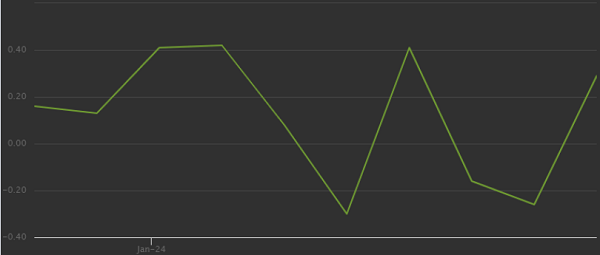
In a more direct comparison, however, the iShares Gold Trust (IAUM) has seen a spread of around +300bps over the past twelve months. Its highest premium to gold was over +200bps, and the lowest discount was around -140bps.

Given that IAUM can use in-kind orders for gold and BlackRock believes cash-creates could create a more volatile discount or premium for IBIT, investors may wonder if we should expect it to see deviations from the NAV beyond 3% in the future. Alternatively, perhaps BlackRock’s resolve for in-kind orders was a foretelling of the exodus from Grayscale, which, if handled in-kind, may have simply seen Bitcoin leaving one ETF and flowing directly into another instead of being resold several times.

The next filing to look out for regarding potential in-kind Bitcoin ETF orders is whether the Nasdaq requests that Bitcoin be considered a viable asset for buying and selling shares. Until then, the cash creation of shares will continue.


Comments

All Comments

Recommended for you

  • Bank of England Governor Bailey to Speak on Fiscal and Monetary Policy Coordination in Ten Minutes

    Bank of England Governor Bailey will deliver a speech on the issue of coordination between fiscal and monetary policy in ten minutes.

  • Solana Achieves $4.84 Billion in Spot Trading Volume for Tokenized Stocks This Quarter

    On July 3, it was reported that Solana broke multiple records in trading, revenue, and trading volume in the second quarter of 2026. In the tokenized stock sector, Solana's spot trading volume reached $4.84 billion this quarter, capturing over 96% market share. This volume far exceeded that of all other blockchains combined, marking the fourth consecutive quarter that Solana has led this sector, solidifying its dominant position. In terms of decentralized application revenue, the total dApp revenue for this quarter was $257 million, maintaining its lead over all Layer 1 and Layer 2 blockchains for the ninth consecutive quarter. Despite competitive pressure from peers, the enthusiasm of ecosystem developers and actual user demand remains strong. On-chain trading activity has surged, with daily, weekly, and monthly trading volumes all hitting new highs. The total number of non-voting transactions for the quarter approached 9.8 billion, with the overall network transaction volume rising to 59%, reaching an eleven-month high. The perpetual futures trading scale has seen a significant surge, with nominal trading volume for the quarter reaching $183 billion. GMTrade, Pacifica, and Jupiter were the main sources of trading volume, with GMTrade showing impressive growth in asset locking, cumulative trading volume, and protocol fees. The Phoenix platform also gained market recognition with its new features. Meanwhile, the Solana Foundation has proactively reduced its staking holdings, with the staking scale dropping to 4.92% of the total network staking, aiming to weaken its control over network validation and promote the decentralized and mature development of the validator ecosystem. Overall, even though the market is generally perceived to be at the bottom of a bear cycle, Solana's various innovative businesses and fundamental on-chain data are rising against the trend. If this quarter indeed marks the low point of the current market cycle, the existing performance will lay a solid foundation for long-term growth. The article also briefly mentions developments related to Solana's on-chain governance, the Grass rewards controversy, and future plans of the foundation's executives.

  • Venezuela's Largest Oil Refinery Resumes Operations

    On July 3, three sources reported that Venezuela's largest refinery, the Amuay refinery with a processing capacity of 645,000 barrels per day, has resumed operations after a power outage on Friday. It is currently processing approximately 140,000 barrels per day of crude oil, and the fluid catalytic cracking unit (FCC) has also restarted. Following two earthquakes last week that caused significant casualties, several refineries in Venezuela were affected by power outages. Additionally, sources indicated that the El Palito refinery, with a processing capacity of 146,000 barrels per day, has regained power, but staff have not yet been able to restart the production units.

  • US Bitcoin ETF Sees Net Outflow of 588 BTC Today, Ethereum ETF Records Net Inflow of 6,105 ETH

    According to monitoring by Lookonchain, today the US Bitcoin ETF experienced a net outflow of 588 BTC, with a total net outflow of 22,189 BTC over the past seven days. Meanwhile, the Ethereum ETF recorded a net inflow of 6,105 ETH, with a net outflow of 1,915 ETH over the past seven days.

  • US Stock Market Closed on July 3rd (Friday)

    On July 3rd, the US stock market will be closed for one day in observance of the Independence Day holiday.

  • Gulf Region Oil Exports Surge in June, UAE Crude Deliveries Reach Record High

    On July 3, data showed that oil exports from the Gulf region in June increased by over 3 million barrels per day compared to May, surpassing 10 million barrels per day, although still 40% lower than pre-war levels. The UAE led the recovery in the oil market, allowing millions of barrels of crude oil that were stranded in the Gulf region to enter the international market, enabling producers to increase output and bring oil prices down to pre-war levels. According to Kpler, the total export volume of crude oil and condensate from Saudi Arabia, the UAE, Kuwait, Iraq, and Iran increased by over 3.5 million barrels per day from May, reaching 10.07 million barrels per day. Another freight analysis company, Vortexa, estimated that the oil delivery volume in June was 10.2 million barrels per day, up from 7 million barrels per day in May, but still far below the 16.5 million barrels per day recorded in the same period last year. Data from Kpler, Vortexa, and LSEG indicated that UAE's crude oil exports reached a record high of 3.7 to 3.8 million barrels per day in June, more than 1 million barrels per day higher than in May.

  • June Crude Oil Exports from the Gulf Region Exceed 10 Million Barrels Per Day

    According to Reuters, shipping data shows that crude oil exports from the Gulf region in June rose to over 10 million barrels per day, but remain 40% lower than pre-conflict levels. (Jin Shi)

  • BTC Drops Below $62,000

    Market data shows that BTC has fallen below $62,000, currently priced at $61,999, with a 24-hour increase of 0.65%. The market is experiencing significant volatility, so please ensure proper risk management.

  • Iraq and Turkey Expected to Sign an Executory Protocol

    The Iraqi Ministry of Oil announced that Iraq and Turkey are expected to sign an executory protocol to ensure the continued export of Iraqi oil, including crude oil from the Kurdistan region. Iraq and Turkey have agreed to continue technical and legal negotiations regarding oil export issues.

  • Japanese Oil Buyers in Preliminary Talks with Iran for Crude Oil Procurement

    On July 3, Reuters reported, citing sources, that Japanese oil buyers are engaged in preliminary discussions with Iran regarding the procurement of crude oil.