

From Glassnode, Marcin Miłosierny
Discover how to adapt your trading strategies for the Bitcoin halving and ETF dynamics, ensuring you're prepared for the shifts in the crypto market landscape.
Executive Summary
- As Bitcoin approaches its halving, the significant buying power of ETFs is set to overshadow the traditional supply squeeze effect expected from the halving. This dynamic introduces a need for traders to balance the historical impact of halvings with the contemporary influence of ETFs on Bitcoin's availability and price.
- We are nearing the stage of the market cycle where the supply dynamics of Bitcoin are increasingly influenced by the actions of long-term holders (LTHs). As their decisions to sell or hold can significantly impact market liquidity and sentiment, traders should closely monitor the Long-Term Holder Market Inflation Rate to anticipate market shifts and adapt their strategies accordingly.
- Reaching an ATH before the halving presents a new scenario, yet the cycle’s progression mirrors past trends if aligned from the April 2021 ATH. The calming influence of ETFs on corrections suggests stability, but a potential decrease in ETF demand could amplify market fluctuations, highlighting the need for strategic vigilance in trading approaches.
With Bitcoin halving just around the corner, many directional traders are closely analyzing the potential impacts on market trends and reassessing their strategies in light of the event's historical significance as a bullish catalyst.
However, the current market conditions may present novel challenges from that perspective. Arguably, this Bitcoin cycle has broken new ground, with the largest digital market asset not only experiencing a meteoric surge this quarter but also actually reaching an all-time high before the halving for the first time in history.
This departure from historical norms poses crucial questions for traders: Will the halving spur another upward trend, or are other market dynamics now steering the cycle's direction?
In this report, we will dissect the upcoming halving from a trading strategy perspective, exploring whether we're entering uncharted territory and identifying the drivers behind potential market shifts. The insights we will offer will help directional traders navigate the unique environment of the Bitcoin market.
Halving vs ETF Supply Sink
Market participants often view Bitcoin's halving as a precursor to bull markets due to its designed reduction in the rate at which new bitcoins are generated. The halving cuts the miner reward for verifying transactions and creating new blocks in half, effectively slowing down the influx of new bitcoins to the market.
Additionally, this pre-programmed scarcity is anticipated to lead to less selling pressure from miners, who typically need to sell their rewarded bitcoins to cover operational costs. The often repeated narrative here is that with fewer new bitcoins for sale, the scarcity effect kicks in, historically setting the stage for a price increase as supply tightens and demand remains steady or grows.
However, the current market conditions differ from historical norms. As we navigate closer to the halving, the influence of new bitcoins mined and released into circulation is becoming less significant compared to the burgeoning demand from ETFs. As shown in a Glassnode chart below, the ETFs are removing from the market several times the quantity of Bitcoin being minted each day.
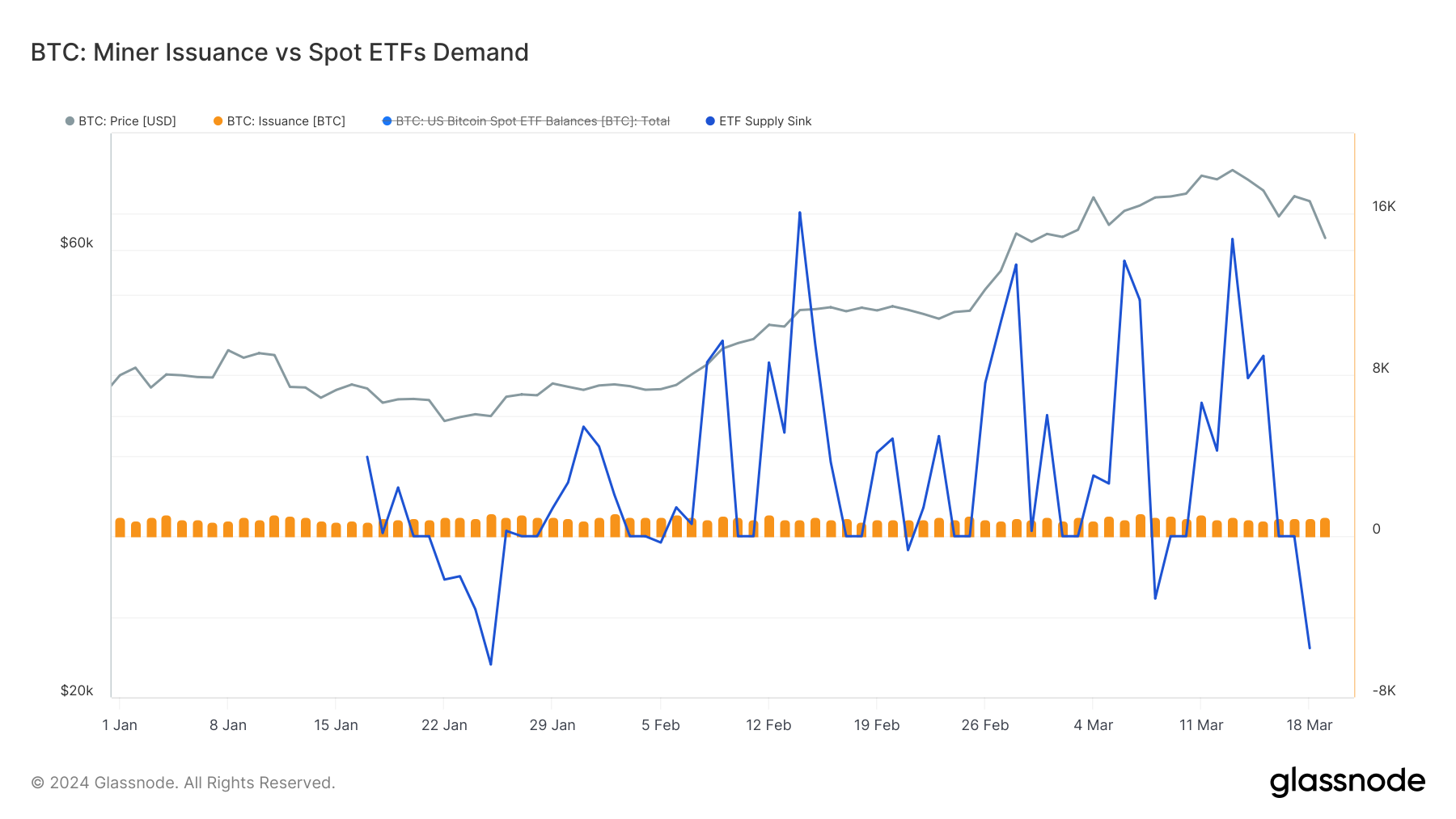
Comparing BTC miner issuance and ETF flows
At the moment, miners bring roughly 900 BTC per day to the market. Post-halving, this figure is set to drop to around 450 BTC, which under past market conditions, could have intensified the scarcity of Bitcoin and driven prices up. Yet, the scale of acquisition by ETFs — withdrawing significantly more Bitcoin from circulation than the daily output of miners — suggests that the upcoming halving might not result in the supply squeeze once anticipated.
The ETFs are, in essence, preempting the halving's impact by already tightening the available supply through their substantial and continuous buying activity. In other words, the supply squeeze usually expected from halvings may already be in effect due to ETFs’ large-scale bitcoin acquisitions. These funds are currently exerting a significant influence on Bitcoin's availability, which could overshadow the halving's impact on the market in the short to medium term.
The activity of ETFs, however, introduces its own complexities to market dynamics. For example, the force the ETFs exert on the price of Bitcoin should not be expected to work in one direction only. Despite the current trend of heavy inflows, the possibility of outflows remains, carrying the risk of introducing sudden shifts in the market. Close monitoring of ETF activity, both purchases and potential sales, is essential for anticipating market movements as the halving approaches.
Influence of Long-Term Holder Supply
As the halving's impact on Bitcoin's long-term price dynamics is likely diminished by ETF activities, other key market influences will come into focus. In terms of supply dynamics, a primary source of supply available for trading, beyond what miners contribute, comes from long-term holders (LTHs). Their decisions to sell or hold significantly affect market supply and demand.
In the Bitcoin ecosystem, market participants are often segmented into long-term holders (LTHs) and short-term holders (STHs), based on the duration Bitcoin is held. LTHs are defined by Glassnode as entities that hold Bitcoin for extended periods, typically considered to be holding for longer than 155 days. This classification stems from observing that Bitcoins held beyond this period are less likely to be sold in response to market volatility, indicating a stronger conviction in long-term value. In contrast, STHs are more reactive to price movements, often contributing to immediate supply and demand fluctuations.
To illustrate LTHs role in the Bitcoin market's supply dynamics, Glassnode’s analysts have come up with the Long-Term Holder Market Inflation Rate metric. It shows the annualized rate of Bitcoin accumulation or distribution by LTHs relative to daily miner issuance. This rate helps identify periods of net accumulation, where LTHs are effectively removing Bitcoin from the market, and periods of net distribution, where LTHs add to the market's sell-side pressure.
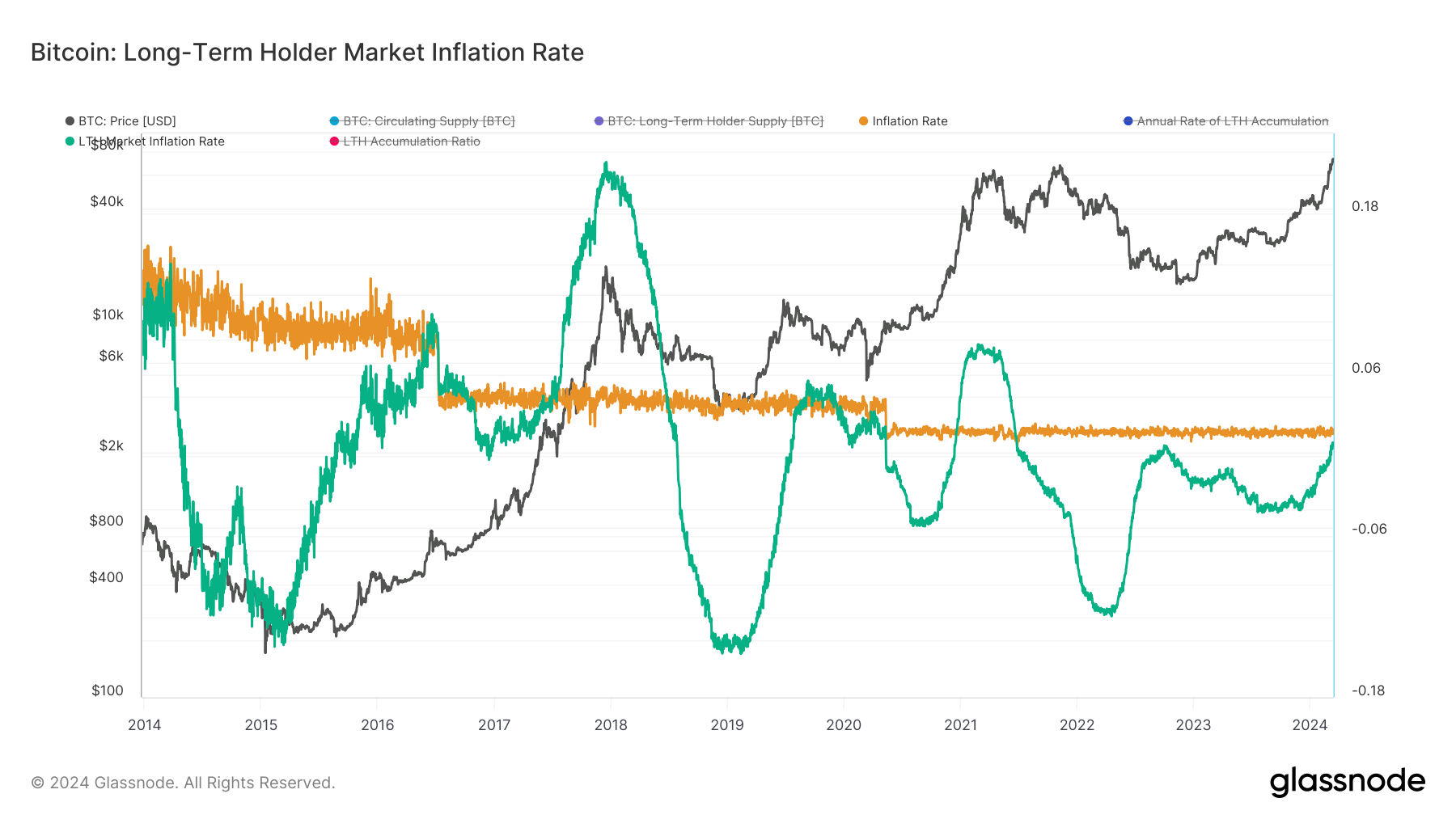
Historical patterns indicate that as we approach peak LTH distribution, the market may move towards equilibrium and potentially reach a top. Currently, the trend in the LTH market inflation rate indicates we are in an early phase of a distribution cycle, with about 30% completed. This suggests significant activity ahead within the current cycle until we achieve a market equilibrium point from the supply and demand perspective and potential price tops.
Given this, traders should monitor the LTH Market Inflation Rate closely as this metric can guide trading strategies, especially in identifying potential market tops or bottoms on the macro scale.
Halving as a Sell-the-News Event?
While the halving is often interpreted as a bullish signal for Bitcoin, its immediate impact on the market is heavily influenced by psychological factors. At times, the market treated them as a sell-the-news event, where market sentiment - and the price - builds momentum leading to the halving, only to result in significant price corrections shortly after.
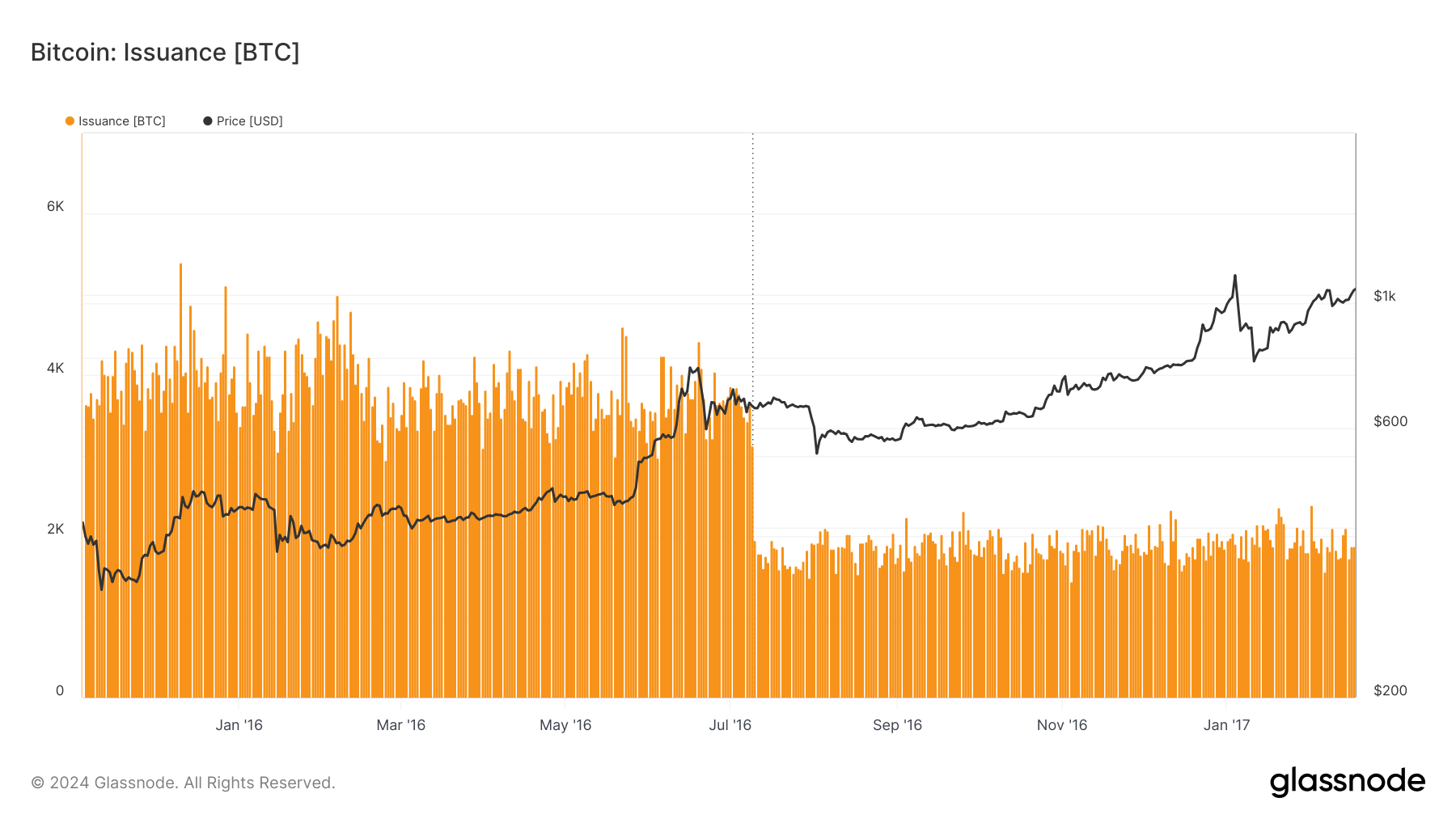
For instance, in 2016, the market experienced a sharp sell-off from around $760 down to $540 - a correction of approximately 30% - right around the time of the halving. This drop was a classic example of market participants reacting to the event itself rather than its long-term supply implications, showcasing the halving's capacity to trigger immediate market volatility.
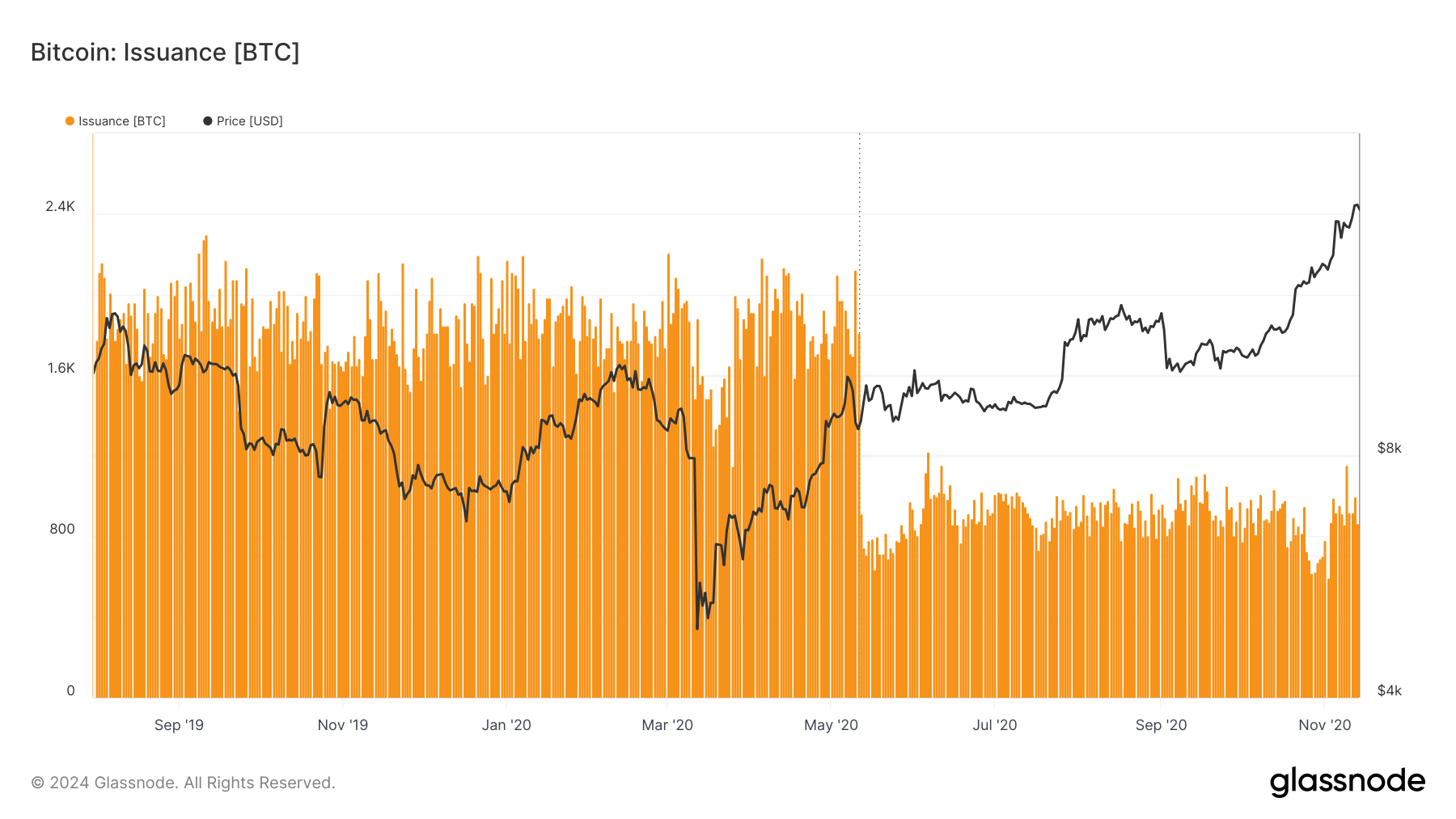
The 2020 halving presented a more complex scenario. While the direct aftermath did not mirror the sharp sell-off seen in 2016, miners experienced a 'double whammy’ due to the price recovery preceding the halving, followed by a reduction in issuance that compounded their challenges. This period did not exhibit a traditional sell-the-news event but underscored the nuanced market reactions to halving events, influenced by broader economic conditions and market sentiment.
As we approach the next halving, the market structure suggests that we could witness another significant correction. Such a correction would not only align with historical patterns but also serve as a reset, shaking out short-term speculative interest and setting the stage for the next cycle of growth.
This expectation hinges on several factors, including the continued influence of ETFs on the market. While their buying activity has provided substantial support for Bitcoin's price, there is a consensus that these inflows are not sustainable indefinitely. Should ETF flows begin to slow or reverse leading up to the halving, we may see a compounded effect on the market. The anticipation of reduced demand from ETFs, coupled with traditional halving psychology, could trigger a period of heightened volatility, with traders likely to adjust their positions in response to early signs of a shift.
In conclusion, the halving’s immediate impact on the market will be shaped by psychological factors and the dynamics of institutional participation, such as that from ETFs. Traders should prepare for potential volatility around the halving, keeping an eye on ETF activity as a key indicator of market sentiment in the short term.
What’s Different This Cycle
Historically, Bitcoin cycles typically kicked off 12 to 18 months after the previous bull market peak, with the new all-time high coming several months after the halving. This has led many to suggest the halving event itself catalyzes the next bull run due to the supply constrictions it introduces.
As we noted, however, the effect of the halving during this cycle will likely be diminished due to the introduction of new institutional demand from Bitcoin ETFs. This demand and the influx of capital into the Bitcoin network they brought have likely contributed to the fact that BTC has already broken its previous cycle’s ATH well before the having.
This fact, however, has led some to speculate that the current cycle may be shorter than the previous ones. While we cannot say for sure whether this will be the case or not, we can look at data to assess where we are in the market cycle currently and what the probability of bull market continuation is.
First, when it comes to the cyclical patterns, breaking the ATH before the halving doesn’t necessarily mean we have deviated from historical norms for Bitcoin. The key is to assess when the bull market peak really was in the previous cycle. At Glassnode, we have long maintained that this happened in April 2021 even though technically Bitcoin went higher in terms of price in November 2021. Our assumption is based on the fact that after the April high, a large majority of technical and on-chain indicators related to market sentiment and investor behaviour started displaying their typical bear market values and never properly recovered.
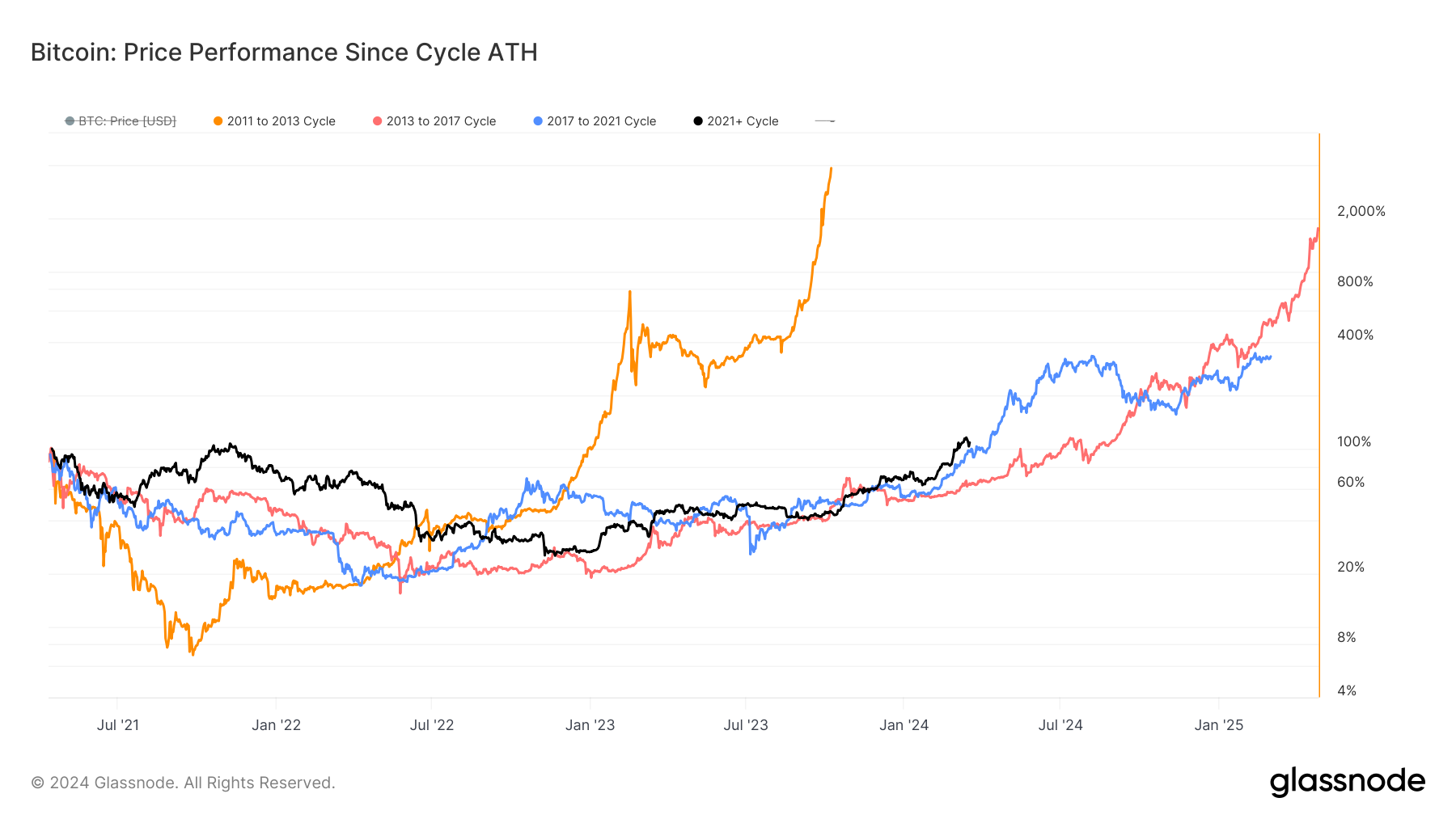
Now, taking April 2021 as the previous bull market high, we can see that the current cycle fits well into the historical norms. This would hint at a possibility that the bull market may run for longer still despite the fact that we have breached the previous ATH before the halving.
When assessing the differences between the current cycle and historical norms and trends with a view to enhancing trading strategies, it may also be practical to monitor the Bull Market Correction Drawdowns metric. This indicator reflects the depth and frequency of price retracements during the ongoing bull market.
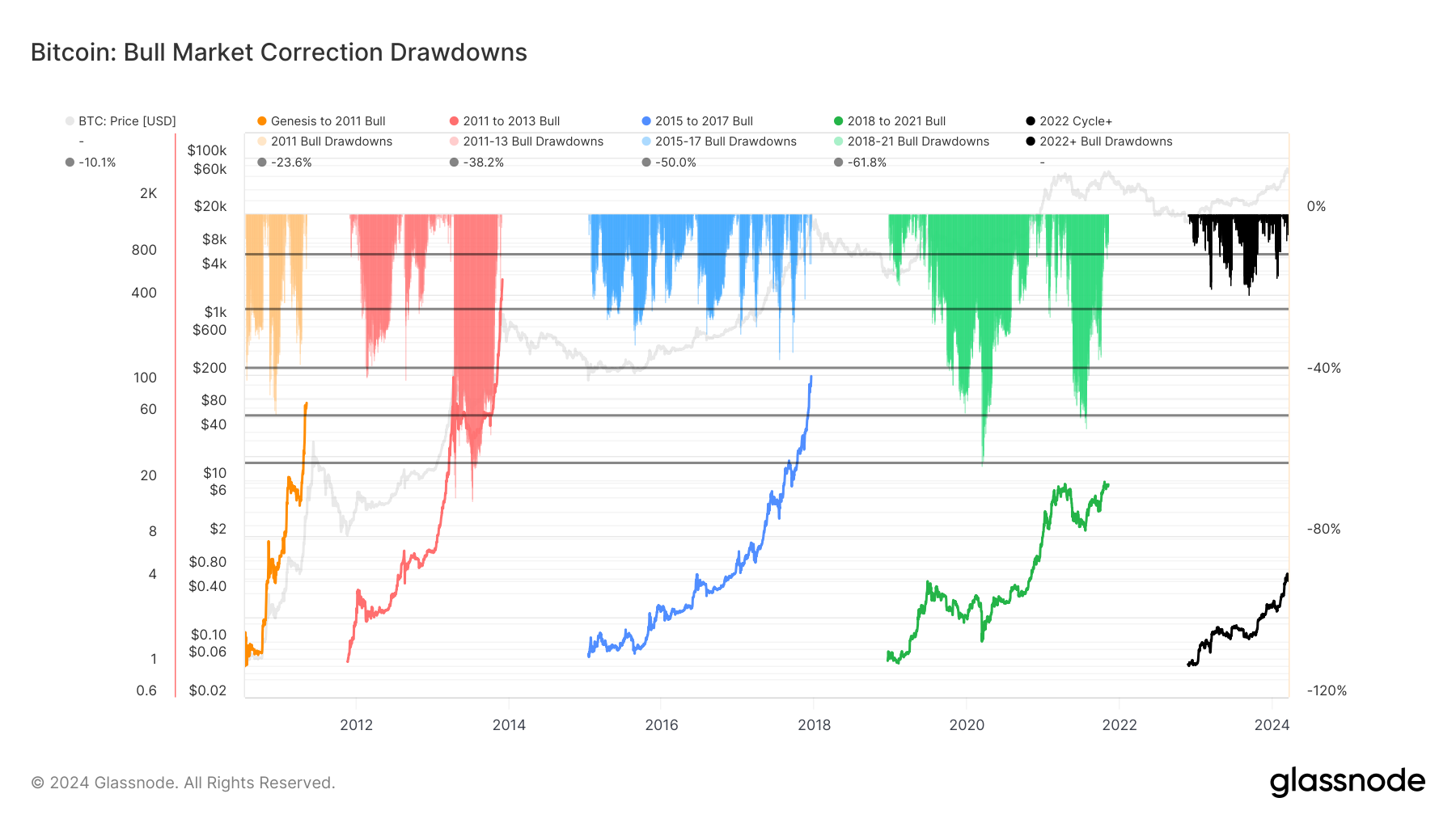
Notably, this cycle has exhibited less severe corrections, diverging from the more significant drawdowns of 30-40% typical in past bull markets. Tracking these drawdowns can provide traders with a gauge for market sentiment, risk appetite, and potential turning points. As ETF inflows continue to influence the market, a significant change in this trend of milder corrections could signal shifts in investor behaviour and offer a timely cue for strategy adjustments.
Impact on Directional Trading Strategies
The role of ETFs in shaping the Bitcoin market landscape, even especially as we edge closer to the halving, cannot be overstated. However, it is equally critical to keep the pulse on the influence of long-term holders (LTHs) on the market's supply dynamics. The interplay between the halving's supply squeeze and the ebbs and flows of the demand from the ETFs introduces a complex dynamic that could significantly alter traditional market responses to the halving event.
For traders looking to refine their directional strategies, monitoring the behaviour of LTHs becomes essential. The decisions by LTHs to either hold onto their positions or to start distributing their holdings can provide early indicators of market sentiment shifts and potential liquidity changes. Given the current market conditions, where ETFs are already impacting the supply-demand balance, a significant move by LTHs could be the tipping point that defines the market's direction post-halving.
Thus, successful directional trading in this cycle will likely hinge on a multi-faceted approach. Traders will need to keep a close watch on ETF activity for signs of continued demand or emerging sell pressure. Simultaneously, they must gauge the sentiment and actions of LTHs, whose decisions to sell or hold can further influence the market's supply dynamics. Adapting trading strategies to account for these influences will be crucial for navigating the next phases of Bitcoin's market cycle effectively.
Stay Tuned for More Halving-Related Content from Glassnode
As we countdown to the Bitcoin halving, Glassnode remains committed to equipping directional traders with comprehensive analysis and actionable insights tailored to this important market event.
Our next piece in the series, "Bitcoin Halving and Mining Operations," will specifically examine the halving's impacts on Bitcoin mining activities and explore how these changes could ripple through the broader market.
Stay connected with Glassnode for more strategic perspectives needed to make the most of the Bitcoin trading environment post-halving.
Disclaimer: This report does not provide any investment advice. All data is provided for information and educational purposes only. No investment decision shall be based on the information provided here and you are solely responsible for your own investment decisions.


All Comments