

Cointime

Download App
iOS & Android

Bitcoin price falls under $71K as US-Iran war tensions spark sell-off

Bitcoin (BTC) fell 3% to trade below $71,000 into Sunday’s weekly close after negotiations to end the US-Iran war broke down.

Key points:

  • Bitcoin shed its gains as negotiations between the US and Iran broke down.
  • The Strait of Hormuz becomes a flashpoint again as US President Donald Trump demanded that it be reopened.
  • BTC price downside punishes late long positions.

BTC price drops on US-Iran war fears

Data from TradingView showed BTC price action dipping below $71,000 after news of a sudden breakdown in negotiations between the US and Iran in Islamabad, Pakistan.
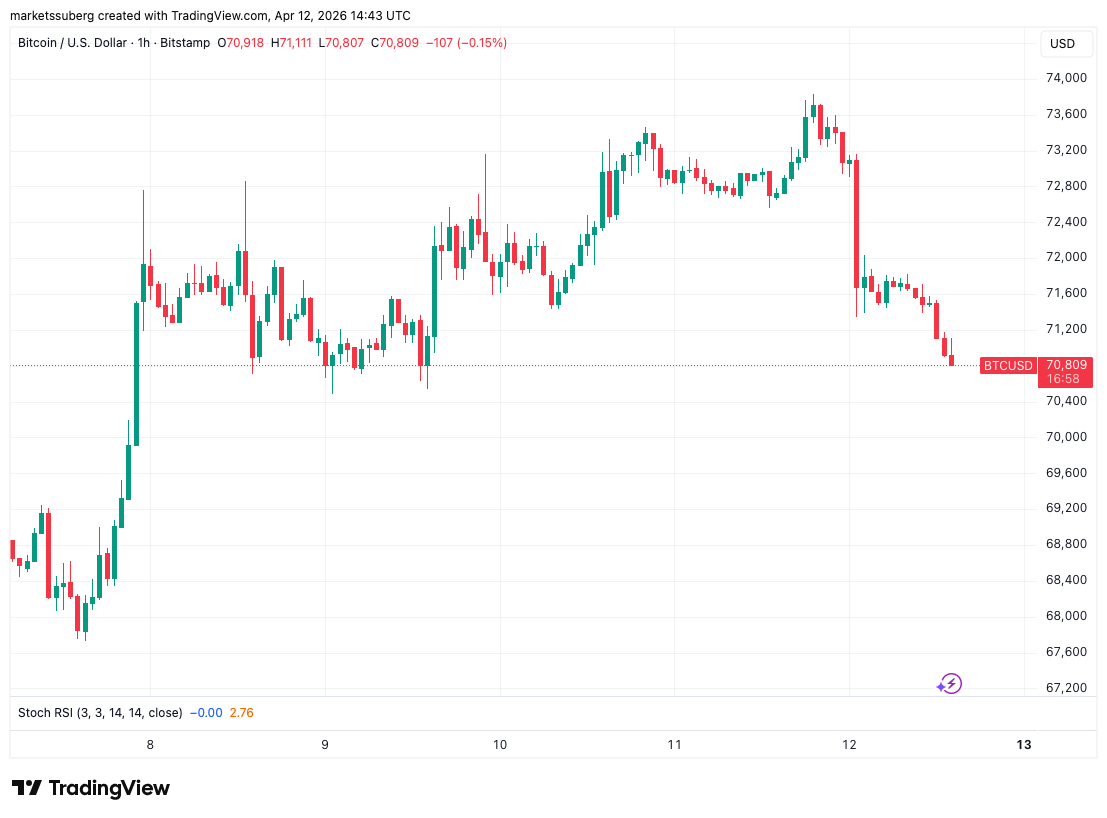
  BTC/USD one-hour chart. Source: Cointelegraph/TradingView


A failure to reach an agreement on the issue of nuclear weapons resulted in both delegations leaving talks unfinished. Later, US President Donald Trump said that the US would blockade the Strait of Hormuz and “interdict” vessels paying Iran for safe passage.

“No one who pays an illegal toll will have safe passage on the high seas,” he wrote in a post on Truth Social.

follow-up post repeated demands that Iran make Hormuz, a major oil transit route, fully operational.
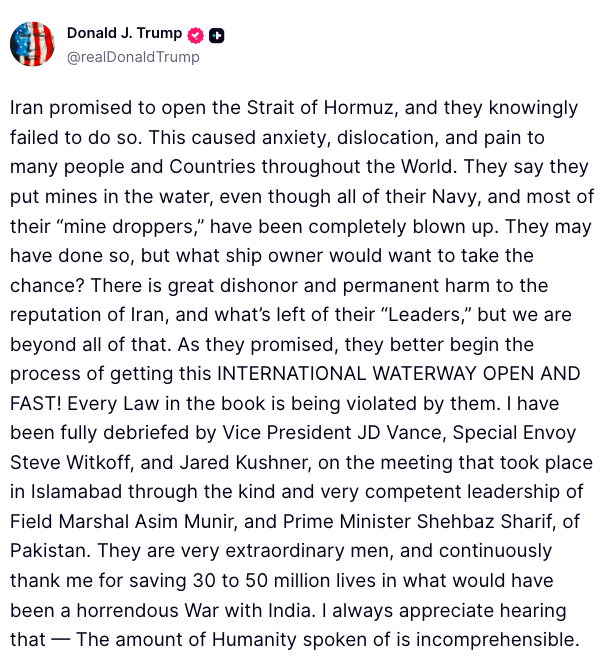
Source: Truth Social


Ahead of futures markets opening, reactions to the latest events spelled out the risks for the wider economy.

“If the path forward is continued war, escalation, and a prolonged closure of the Strait of Hormuz, then the Iran War has just entered a new era,” The Kobeissi Letter wrote in its latest analysis on X. 

“US CPI inflation just jumped from 2.4% to 3.3% and further escalation of the Iran War would lead to 4.0%+ inflation, according to our models.”
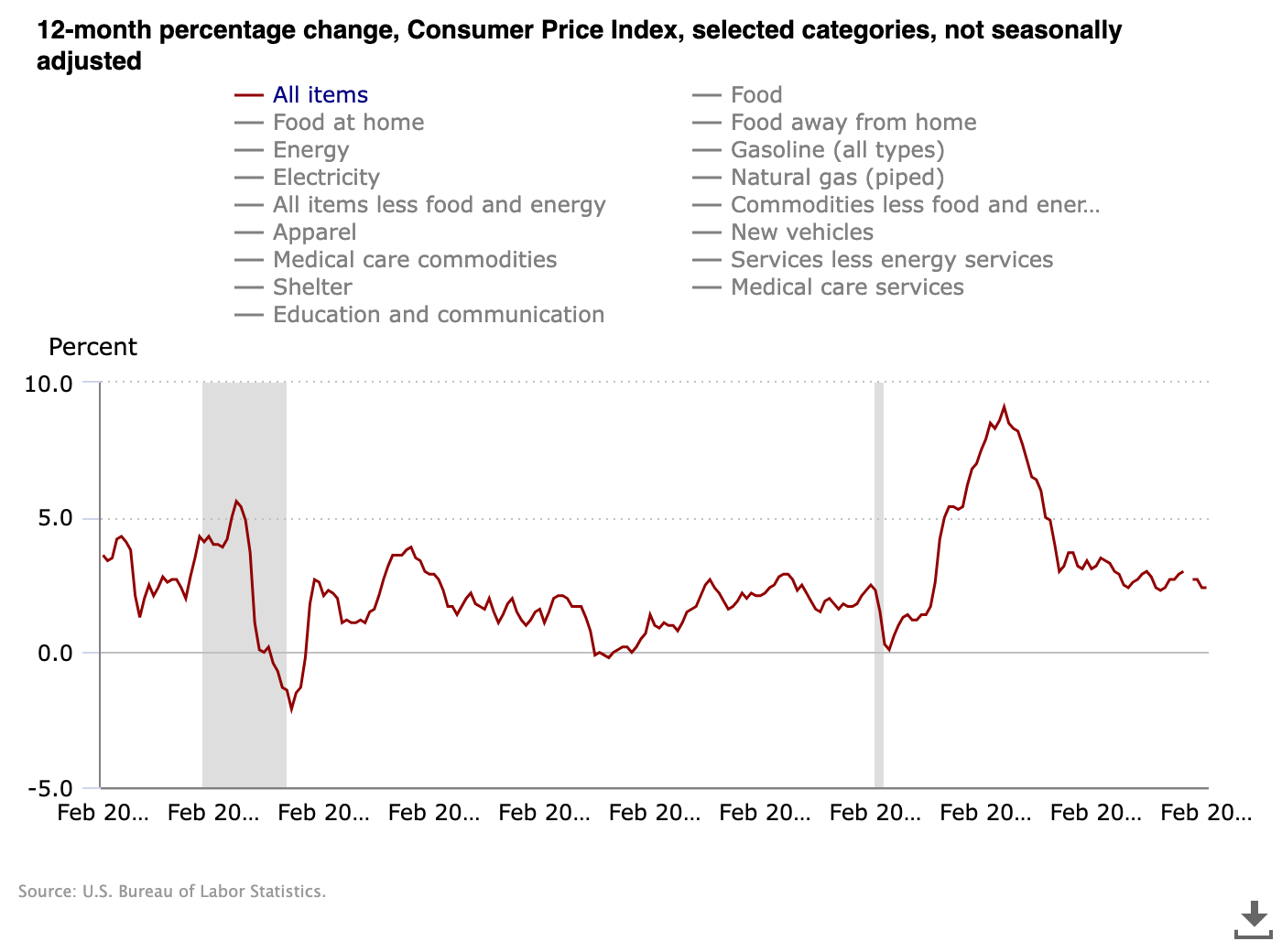
US CPI 12-month % change. Source: Bureau of Labor Statistics


Kobeissi referred to the US Consumer Price Index (CPI) inflation, a gauge particularly sensitive to oil prices. Earlier this week, the March CPI print came in slightly below expectations, despite the highest jump in its oil-price component in 60 years.

“There are currently no plans for additional talks, according to Iranian media,” Kobeissi added. 

“So, will Trump choose to push harder for diplomacy or double down on military action? Today, we find out.”

Bitcoin liquidations mount as longs suffer

As the only 24-hour-traded asset class, Bitcoin and crypto were the only ones reacting to the chaos in real time.

Data from CoinGlass showed BTC/USD slicing through long liquidations, with the liquidation total for the past 24 hours nearing $350 million.
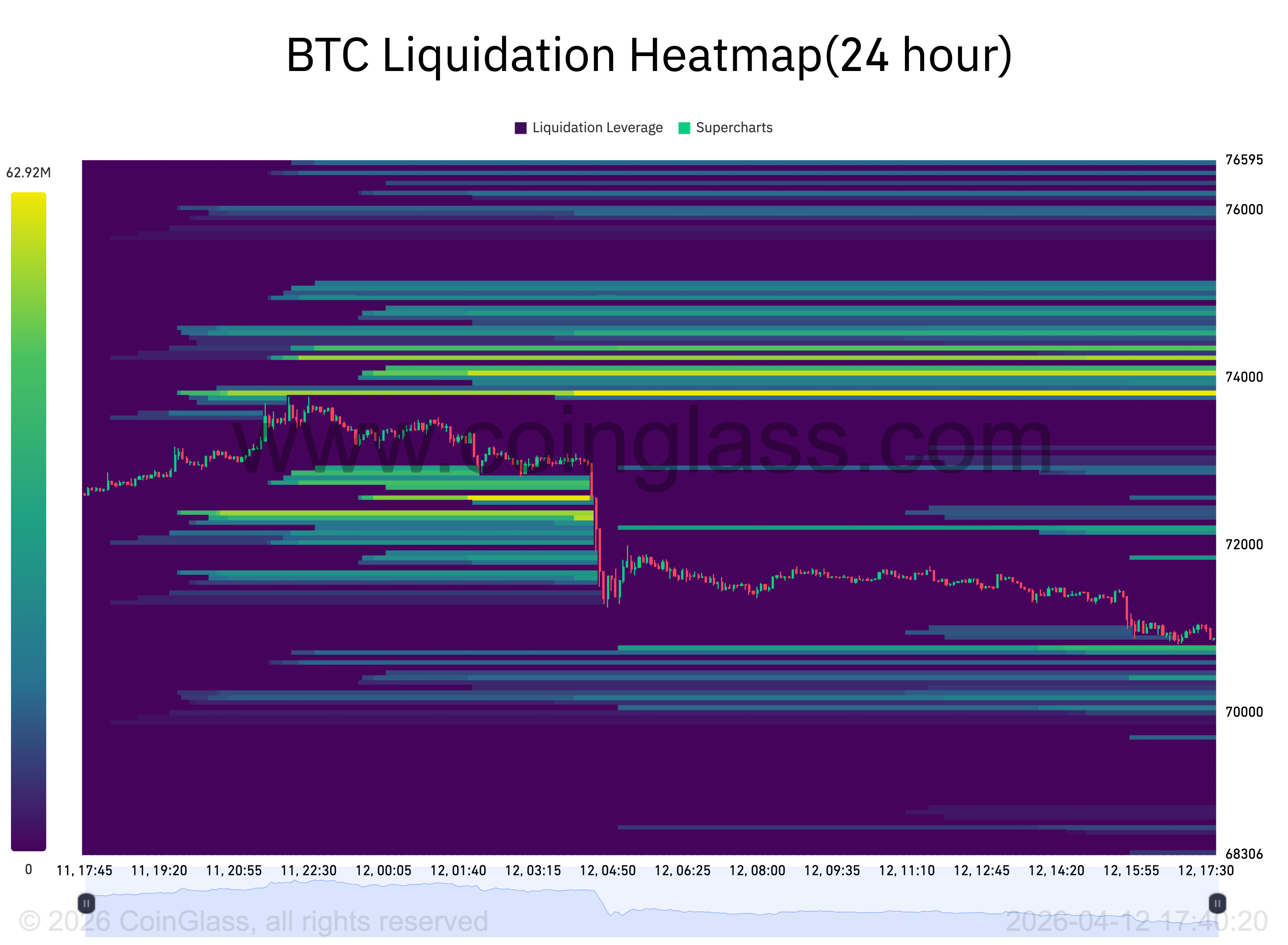
BTC liquidation heatmap. Source: CoinGlass


“Volatility remains high and it's clear that there won't be a path forward where risk-on assets will do well if this continues to be the consensus,” trader Michaël Van de Poppe wrote in an X response.

Van de Poppe suggested that the economic weakness as a result of the returning war could force the Federal Reserve to inject liquidity despite rising inflation.

“On a larger scale, I think that we're currently in a sufficiently weak economy and the FED has no other option than to start printing again to positively influence the economy,” he argued.

Earlier, Cointelegraph reported on rising odds of the US entering a recession in 2026.

Next week will bring more inflation cues from the March Producer Price Index (PPI) print, while multiple senior Fed officials will speak on the economy.


Comments

All Comments

Recommended for you

  • U.S. July Nonfarm Payrolls Fall by 23,000, Missing Market Expectations

    On August 7, U.S. nonfarm payrolls decreased by 23,000 in July, compared with market expectations of an increase of 80,000, and the previous value was an increase of 57,000.

  • US May and June Nonfarm Payroll Additions Revised Down by 103,000 Combined

    On August 7, the US Bureau of Labor Statistics: May nonfarm payroll additions were revised down from 129,000 to 63,000; June nonfarm payroll additions were revised down from 57,000 to 20,000. After the revisions, the combined additions for May and June were 103,000 lower than previously reported.

  • U.S. Rate Futures Market Sees Lower Odds of Fed September Hike

    On August 7, the probability of a Fed rate hike in September as priced by U.S. interest rate futures declined.

  • New York Gold Futures Top $4,400 per Ounce

    New York gold futures topped $4,400 per ounce, up 2.36% on the day.

  • Japan Finance Minister: FX Market Affected by Moves Not Driven by Actual Demand

    Japanese Finance Minister Satsuki Katayama said she and U.S. Treasury Secretary Bessent agreed that the foreign exchange market has been affected by moves not driven by actual demand.

  • BTC Breaks Through $65,000

    Market data shows BTC has broken through $65,000, currently reported at $65,007.44, with a 24-hour increase of 0.6%. The market is highly volatile, please exercise risk control.

  • Brent Crude Drops 2.00% Intraday to $81.07/Barrel

    Brent crude oil fell 2.00% during the day, now at $81.07 per barrel. (Jin Shi)

  • Trump: Data Centers May Be More Important Than Oil

    August 7 news, U.S. President Trump said in an interview with Punchbowl News, "I saw the other day that Texas seems to be opposed to building data centers. I think that's a mistake. I'm not taking a position—I just think it's a mistake, because there are other communities that want to build data centers. When a community is willing to accept data centers, it means a lot of money will flow into that community. I don't think they're ugly. Some of the data centers I've seen are the most incredible buildings I've ever seen. They are very important to the economy. If Texas says no to data centers, that's a mistake, because data centers may be more important than oil."

  • Trump to Meet with Mining Executives

    On August 7, according to CCTV International News, US President Trump will convene executives from some of the world's largest mining companies at the US State Department on August 7 local time, in an effort to take action to 'secure critical mineral supplies for the US and its allies.' Reuters reported that the US urgently needs critical minerals to replenish weapons inventories depleted during the war against Iran. During the more than five-month war with Iran, the US military expended large quantities of precision-guided missiles and air defense interceptors. US defense officials and lawmakers have warned that given existing production capacity constraints, replenishing some stockpiles could take years—although the Trump administration has denied reports of a so-called 'severe shortage of ammunition stockpiles.' According to Pentagon officials and defense companies, supplies of minerals such as rare earths, tungsten, germanium, and scandium are essential for manufacturing precision-guided missiles, fighter jets, armored vehicles, infrared sensors, and other advanced weapons systems. Expected attendees include industry giants such as global mining giant Rio Tinto Group, Australia's BHP, US Freeport-McMoRan, US Mountain Pass Materials, US Rare Earths, US Energy Fuels, and Canada's Metals Company. According to sources, the Trump administration plans to announce multiple deals and memorandums of understanding.

  • US Regulators Systematically Review Chinese AI Firms' Third-Country Computing Power Leasing

    August 7 news, according to Bloomberg, people familiar with the matter revealed that the U.S. government department responsible for investigating chip export control violations is reviewing Chinese AI companies' leasing of computing power in third countries to obtain Nvidia advanced chips.