

Cointime

Download App
iOS & Android

Galaxy expands retail platform with SOL staking, targeting 6.5% yield

Galaxy Digital has introduced a Solana staking feature on its GalaxyOne retail platform, furthering its push into consumer crypto services amid intensifying competition among all-in-one trading apps.

In a Tuesday announcement, Galaxy said GalaxyOne users can now stake Solana directly through the app, earning up to 6.5% in variable annual rewards. The yield is not fixed and depends on network conditions, validator performance and overall staking participation, meaning actual returns may fluctuate over time.

The rollout reflects a broader industry shift toward integrating yield-generating products into retail platforms, allowing users to earn passive income on idle crypto holdings rather than simply holding or trading them.

To attract early users, Galaxy is waiving commissions on staking until the end of the year — a temporary incentive that suggests the company is prioritizing user acquisition over near-term revenue from the product.
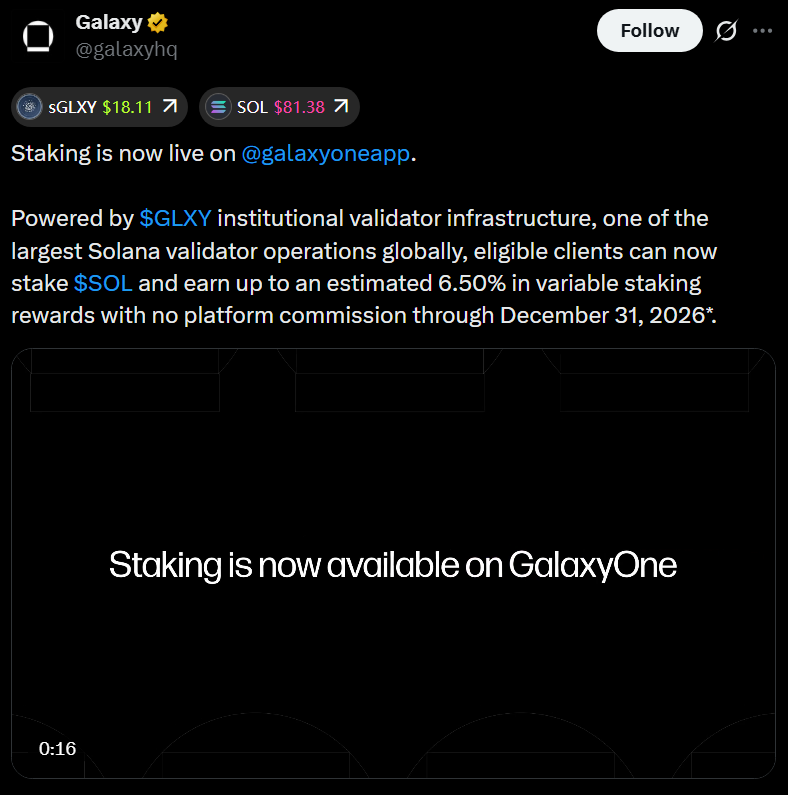
  Source: Galaxy


Galaxy already operates institutional-grade Solana validators — infrastructure that helps secure the network by processing transactions and validating blocks. 

In proof-of-stake systems like Solana, users delegate their tokens to these validators, which in turn distribute a share of staking rewards. By integrating this capability into GalaxyOne, the company is effectively extending its existing infrastructure business to retail customers.

The move positions Galaxy more directly against platforms like Coinbase and Robinhood, which offer bundled services including trading, custody and staking. As staking becomes a standard feature across crypto apps, competition is increasingly shifting toward fees, user experience and regulatory access.

Institutional demand supports staking narrative

Solana staking continues to draw investor interest despite a sharp decline in price amid broader weakness across the crypto market.

Institutional participation has rebounded recently, as staking-based investment products gain traction. The debut of Solana-focused exchange-traded funds (ETFs), including those with liquid staking strategies, has given investors exposure to both price movements and onchain yield.

Solana traded near $250 in September but has since fallen by roughly 67%. Despite the drawdown, staking activity has held up, indicating continued demand for yield.
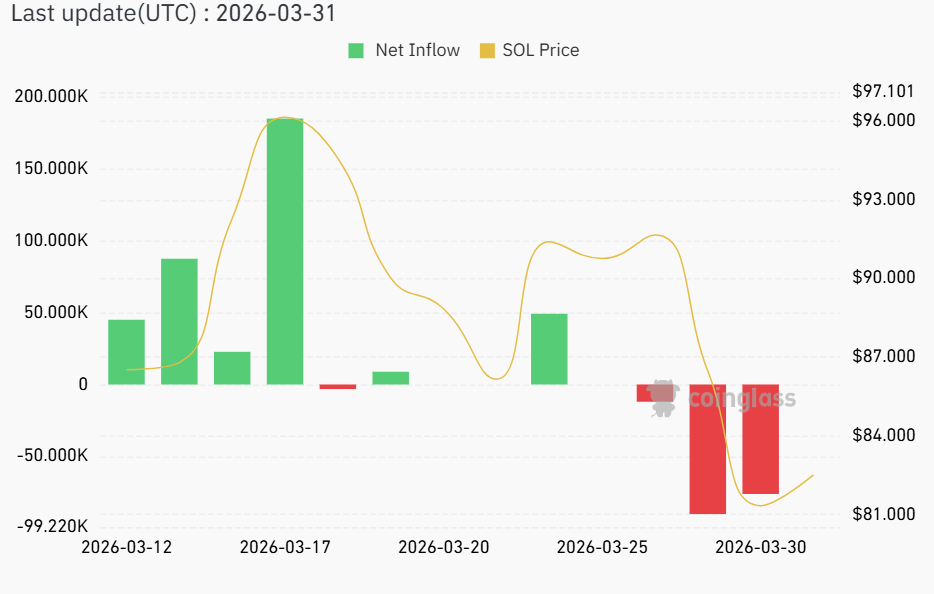
  Inflows into Solana ETFs over the past month. Source: Coinglass


Bohdan Opryshko, co-founder and chief operating officer of Everstake, which operates validator infrastructure across multiple proof-of-stake networks, said both retail and institutional participants are increasingly “treating Solana as a yield-generating asset rather than a speculative trade.”

Comments

All Comments

Recommended for you

  • BTC Falls Below $78,000

    Market data shows that BTC has fallen below $78,000, currently priced at $77,996.97, with a 24-hour decline of 1.61%. The market is experiencing significant volatility, so please ensure proper risk management.

  • BTC Falls Below $78,000

    Market data shows that BTC has fallen below $78,000, currently priced at $77,996.97, with a 24-hour decline of 1.61%. The market is experiencing significant volatility, so please ensure proper risk management.

  • US Spot Bitcoin ETF Sees Net Outflow of $120.2 Million Yesterday

    On September 10, according to monitoring data from Farside Investors, the US spot Bitcoin ETF experienced a net outflow of $120.2 million yesterday.

  • US Spot Bitcoin ETF Sees Net Outflow of $120.2 Million Yesterday

    On September 10, according to monitoring data from Farside Investors, the US spot Bitcoin ETF experienced a net outflow of $120.2 million yesterday.

  • US Spot Ethereum ETF Sees $34.7 Million Net Inflow Yesterday

    On September 10, according to monitoring data from Farside Investors, the US spot Ethereum ETF saw a net inflow of $34.7 million yesterday.

  • Iran Announces Escalation of Strikes in Response to U.S. Attacks

    On September 10, it was reported that an Iranian official stated that Tehran is prepared to engage in a more intense conflict with the United States if necessary. The official indicated that Iran would respond to U.S. attacks with escalated strikes. Iran views this conflict as a 'battle for survival.' The official remarked that Iran has 'no choice but to fight.'

  • Iran to Intensify Strikes in Response to U.S. Attacks

    On September 10, it was reported that an Iranian official stated that Tehran is prepared to engage in a more intense war with the United States if necessary. The official indicated that Iran will escalate its strikes in response to U.S. attacks, viewing this conflict as a 'battle for survival.' The official remarked that Iran has 'no choice but to fight.'

  • U.S. Treasury Announces Debt Buyback Size: Up to $6 Billion

    On September 9, the U.S. Treasury will buy back up to $6 billion in long-term bonds on Thursday. Previously, the U.S. Treasury indicated that before November 4, the size of a single long-term bond buyback would at least double to $4 billion.

  • U.S. Treasury Announces Debt Buyback Size: Up to $6 Billion

    On September 9, the U.S. Treasury will buy back up to $6 billion in long-term bonds on Thursday. Previously, the U.S. Treasury stated that before November 4, the size of a single long-term bond buyback would at least double to $4 billion.

  • Bank of America Reports Sixth Largest Weekly Inflow into US Stocks Since 2008, Driven by Institutions and Hedge Funds

    Data from Bank of America shows that last week, the US stock market recorded its sixth largest weekly inflow since 2008, marking the largest scale since mid-July. Bank of America strategist Jill Carey Hall noted that this round of inflows was primarily driven by institutional investors and hedge fund clients, with net purchases of US stocks for the second consecutive week. The funds mainly flowed into individual stocks and equity ETFs. In terms of sectors, 8 out of the 11 sectors in the S&P 500 saw net inflows, with the technology sector leading the gains, and the communication services sector receiving inflows for the first time in five weeks. The industrial sector experienced the largest outflow, facing selling pressure for the fifth consecutive week, with Hall stating that this sector is the most competitive and has the highest costs. In terms of stock preferences, clients favored large and mid-cap stocks while selling small-cap stocks. In contrast to professional institutions, retail clients have been net sellers of stocks for six consecutive weeks.
