


Web3 is making waves in the healthcare industry.
There has been a change in patient data storage and Maintenace throughout the globe, all thanks to progress in Web3. Smart solutions are developed under the banner of Web3.0 devleopment services for healthcare.
Web3 for healthcare is a gold mine- advantageous and ready to deliver several use cases such as data security, metaverse surgeries, etc.
What is Web3?
Web3 is the third iteration of the web that allows users to take control and protect their own data. Unlike the typically centralized ecosystem of Web 2.0, Web3 has established itself as a decentralized environment where data cannot be distributed without authorization.
The web has its share of centralization, data leakage, and censorship hurdles- it is not 100% secure. This is precisely where Web3 comes in as the mighty savior.
Web3 has vital elements looking out for it, such as the advanced blockchain technology, which has proven to form a trustable environment among the public over time. Below are some of the benefits that can be derived by users:
- Censorship resistance,
- Ownership,
- Self-sovereign identities,
- The native form of payment, and
- Decentralized autonomous organizations (DAOs)
Web3 solution for healthcare provides users with the benefits mentioned above. Let us dive in to understand how Web3 can improve the healthcare industry.
Web3 Development in healthcare
Web3 in Healthcare Industry
Web3 solutions in healthcare brings extraordinary outcomes to the medical field. — it was long overdue. Change can be miraculous when done in the correct manner; there are three components of Web3 that can revolutionize the entire healthcare industry.
Blockchain: Web3 is built via blockchain technology- it is then distributed, turned into an encrypted database, and permits secure storage and data transfer that the owner can only access.
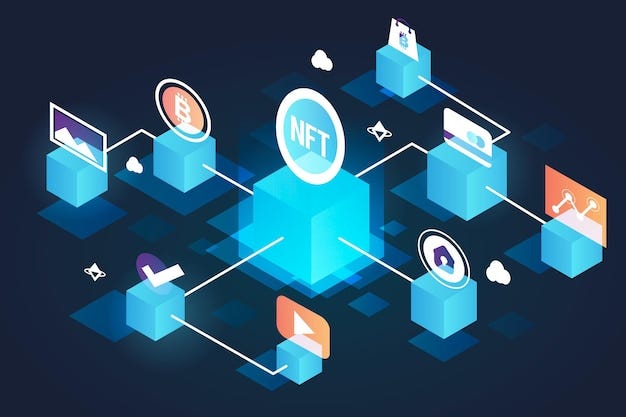
Metaverse: Metaverse is a fascinating technology, and great things will happen for it in the near future. It is a virtual world powered by different modernistic technologies such as augmented reality, blockchain, and virtual reality.
NFTs: Non-fungible tokens are irreplaceable and unique tokens that can be backed up by blockchain to maintain track of the ownership of both physical and digital assets.
Web3 core blockchain empowers medical professionals to keep patients’ data or information safe and secure via its fixed technology leader. The data is so well-maintained that it cannot be tempered as they are distributed systematically. Plus, metaverse digital transformations in the healthcare industry include teleconsultation and telemedicine. Blockchain-created Web3 tokens, such as NFTs- give ownership rights- we made it clear. Thus, it makes the healthcare system patient-centric, leading to a great shift.
Web3 use cases in Healthcare Industry
Secure Patient Data Management
Web3 solutions in healthcare is primarily used for well-planned data management in very few (yet) medical institutions. Every patient approaching a hospital or private clinic has unique diseases, weaknesses, and treatment offerings. One can hope for a strategic and more manageable approach to digital healthcare regulations.

All medical institutions or organizations need an entirely different separate record maintenance which can be challenging for management to handle and process on a regular basis- all of which can end up in unorganized data storage with excess information.
Health records that are significant to a patient’s progress and for the treatment can be kept in a centralized server- all thanks to Web3. If patients have no access, it can be counted as no right to information.
Blockchain solutions, a critical part of Web3, can significantly assist in keeping patient data. Changes need to be seen by patients so that they can also get an idea of what to expect and the absolute right to offer data access- which only medical practitioners can move ahead with; let us know how it all gets along. Blockchain technology, in its solution form, is a structured way to store hordes of data and end ledger systems which require manual hard work.
How Blockchain Registers Patients’ Data
Doctors or medical professionals (it can be anyone with access to the technology) can keep patients’ health data on the blockchain via smart contracts. The generated public key is then asked to access the data (which will be generated by the medical professional and then provided to users). Without the public key, data cannot be revealed to healthcare practitioners; only the patient can share the information whenever they wish- all this makes the patient owner of the data.
Additionally, Web3 provides data security which is the need of the hour, as more fraud cases can be witnessed in the industry.
Want to Invest in Web3 Development?
If you want to explore vast and new opportunities in the area of Web3, you can take assistance from Web 3.0 Development Company. Many organizations are progressing with Web3, and you can be one too. To conclude, the healthcare industry is leaping with Web3 solutions, and extraordinary results can be expected.


All Comments