

Cointime

Download App
iOS & Android

Bitcoin rally extends toward $73K despite concerning US economic data

Key takeaways:

  • Bitcoin climbed to $72,000 as rising recession odds and a weak US dollar boosted the appeal of scarce financial assets.
  • Rising oil prices and a wobbly truce with Iran threaten to reverse Bitcoin’s recent gains.

Bitcoin reclaimed the $72,000 level on Thursday despite data showing rising inflation and weak economic growth in the United States. Crude oil prices jumped back to $97 after senior Iranian leaders claimed that the US and Israel had violated the ceasefire. Traders now fear that risk markets could react negatively, potentially sending Bitcoin price back below $68,000.
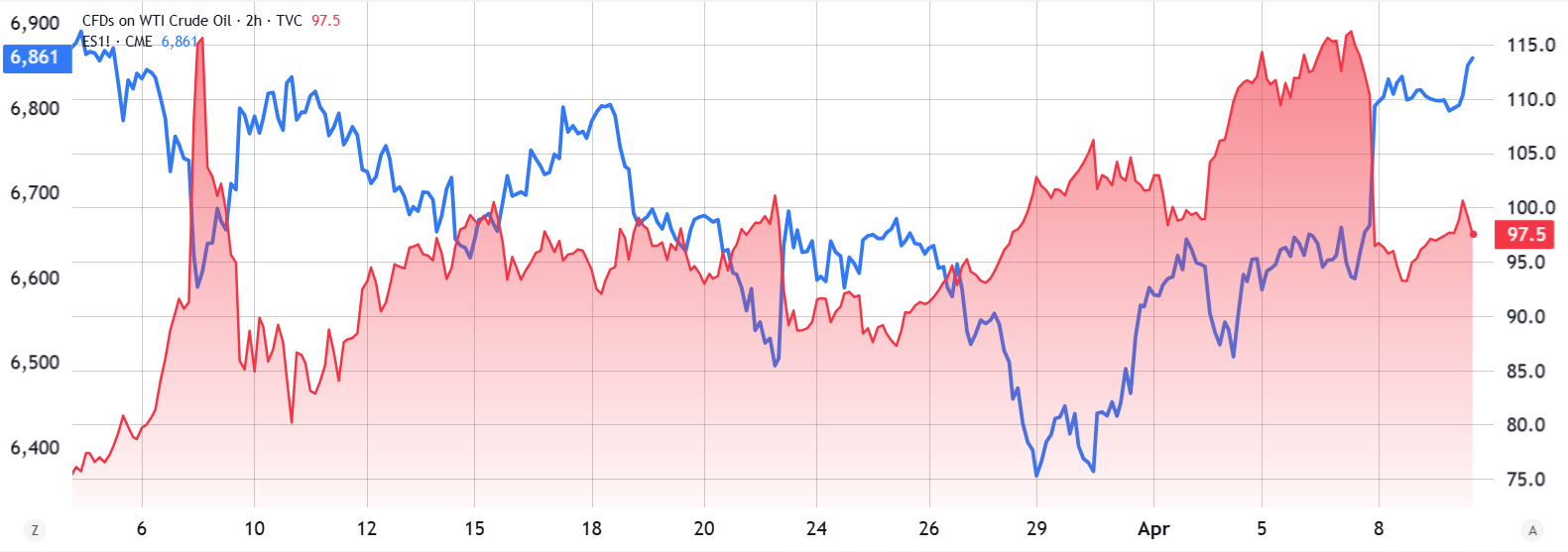
  S&P 500 futures (left, blue) vs. WTI crude oil (right, red). Source: TradingView


The inverse relationship between oil prices and risk markets became increasingly evident. Shortly after US President Donald Trump announced a ceasefire on Wednesday, the S&P 500 index futures jumped to their highest levels in 30 days, while WTI crude oil prices dropped below $100. Hence, Bitcoin traders fear that the fragile truce between the US and Iran could lead to bearish outcomes.

Fragile ceasefire with Iran and weak US economic data limit Bitcoin upside

Iranian parliamentary speaker and former Islamic Revolutionary Guard Corps (IRGC) general Mohammad Bagher Ghalibaf, who has emerged as a leading voice within the regime, said that Israel's continued campaign in Lebanon against Hezbollah, the illegal entry of military drones in Iranian airspace and the denial of uranium enrichment violate the ceasefire negotiations, according to Yahoo Finance.

Inflation data reported by the US Bureau of Economic Analysis on Thursday likely helped to lift traders’ spirits. The core Personal Consumption Expenditures (PCE) index rose by 0.4% in February over the previous month. In parallel, the US fourth quarter gross domestic product was revised down to a 0.5% annualized rate. Overall, data points to increased recession risks.
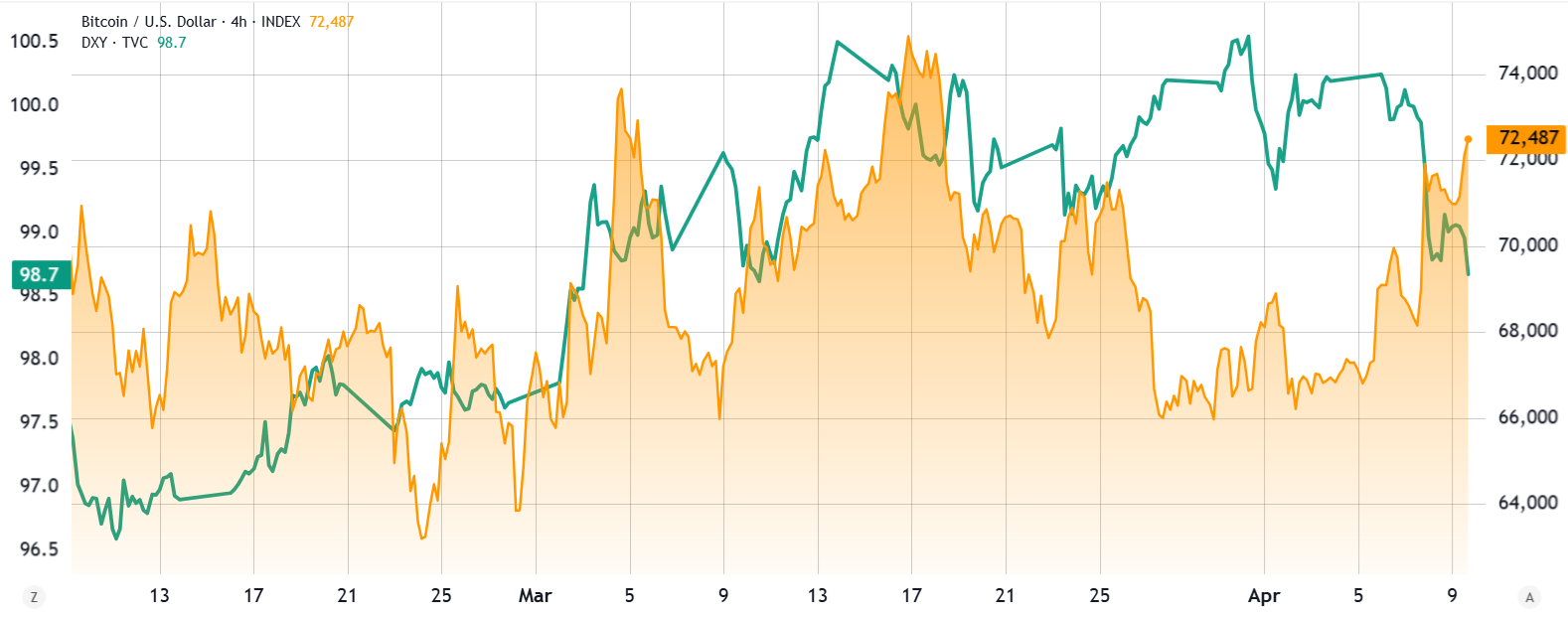
US dollar strength index (left, green) vs. Bitcoin/USD (right, orange). Source: TradingView


Although counterintuitive, the higher odds of economic stagnation amid sticky inflation have led traders to become less risk-averse, as the US government will likely be forced to inject liquidity to support markets. Reduced confidence in the US Federal Reserve's ability to avert a recession without causing inflation has led to a weaker US dollar, when measured against a basket of foreign currencies.

AI infrastructure and private credit risks are not an imminent concern

While the correlation between Bitcoin and the US stock market is far from perfect, traders tend to seek protection when fixed income returns relative to the inflation expectations are diminished. Regardless of whether Bitcoin is far from being perceived as a reliable alternative to fiat currency debasement, weakness in the US dollar tends to favor scarce assets.
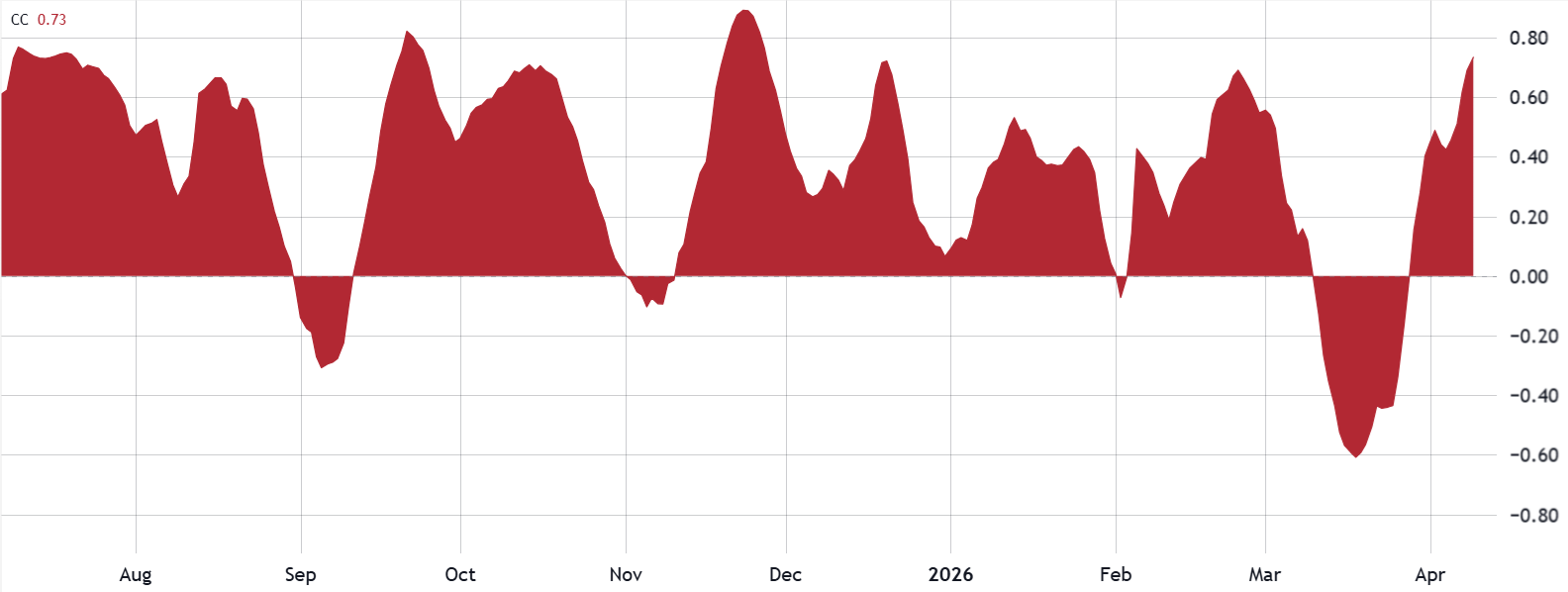
Bitcoin/USD 30-day correlation vs. S&P 500 index. Source: TradingView


The S&P 500 index traded a mere 2% away from its all-time high on Thursday, a clear indication that investors do not fear issues in private credit markets or the surging debt cost protection for AI infrastructure companies. 

Ultimately, Bitcoin seems to have merely followed investor expectations regarding the war in Iran rather than reacting to weak US macroeconomic data.

For now, recession risks favor scarce assets; hence, there is little reason to believe that inflation or job market perspectives could act as a sell-off trigger.


Comments

All Comments

Recommended for you

  • Michael Saylor Releases New Bitcoin Tracker Information

    On July 5, Strategy founder Michael Saylor released new information regarding the Bitcoin Tracker. He stated, 'Bitcoin is digital energy.' Following previous patterns, Strategy typically discloses information about increasing Bitcoin holdings the day after related announcements.

  • BTC Falls Below $63,000

    Market data shows that BTC has fallen below $63,000, currently priced at $62,978.8, with a 24-hour increase of 0.24%. The market is experiencing significant volatility, so please ensure proper risk management.

  • Vitalik: Ethereum to Complete Major Third Iteration in Next 5 Years, Quantum Resistance and Privacy as Primary Goals

    On July 5, Vitalik Buterin announced that Ethereum researchers finalized the 'Streamlined Ethereum' roadmap during a conference in Berlin. This is not a one-time upgrade but a series of forks over the next 3 to 4 years (starting from 'I-star'), which will mark the third major era of Ethereum, almost replacing all core components. Core changes include: verification shifting from direct execution to recursive STARK; consensus introducing 1-2 rounds of finality for faster and safer transactions; multi-dimensional Gas pricing; and a complete replacement of existing solutions with quantum-resistant cryptography. The most disruptive change is the state model—current dynamic states only expand to about 2TB, while introducing new scalable states like UTXO and circular buffers, with a total scale reaching up to 100TB, suitable for ERC20/NFT/DeFi, potentially reducing transaction fees by over 10 times after the rewrite; complex applications (like Uniswap pools) will retain the old state without mandatory migration. However, the issue of who will store the 100TB state and the associated incentives has become a new focus of research. Privacy upgrades are now a primary design goal, with all new components needing to support quantum-resistant, intermediary-free privacy transactions. Formal verification will be fully implemented, and there is exploration into introducing RISC-V or leanISA as the underlying VM for the protocol, with EVM potentially becoming a feature at the compilation layer in the future. In terms of scalability metrics, Gas limits, Blob capacity, and block times will be increased multiple times over the next 5 years, with the Glasterdam fork set to significantly raise Gas limits first. In the order of forks, H-star (Hegota) will be the last 'pre-streamlined' fork, after which Ethereum will fully enter the streamlined era. Through this complex yet smooth transition, Ethereum is moving towards a quantum-resistant, massively scalable, privacy-first new network while maximizing the protection of existing applications. This cautious disruption over the next five years has officially begun.

  • ETH Surpasses $1800

    Market data shows that ETH has surpassed $1800, currently priced at $1803.65, with a 24-hour increase of 3.76%. The market is experiencing significant fluctuations, so please ensure proper risk management.

  • BTC Surpasses $63,000

    Market data shows that BTC has surpassed $63,000, currently priced at $63,057.24, with a 24-hour increase of 1.18%. The market is experiencing significant volatility, so please ensure proper risk management.

  • Bank of England Governor Bailey to Speak on Fiscal and Monetary Policy Coordination in Ten Minutes

    Bank of England Governor Bailey will deliver a speech on the issue of coordination between fiscal and monetary policy in ten minutes.

  • Solana Achieves $4.84 Billion in Spot Trading Volume for Tokenized Stocks This Quarter

    On July 3, it was reported that Solana broke multiple records in trading, revenue, and trading volume in the second quarter of 2026. In the tokenized stock sector, Solana's spot trading volume reached $4.84 billion this quarter, capturing over 96% market share. This volume far exceeded that of all other blockchains combined, marking the fourth consecutive quarter that Solana has led this sector, solidifying its dominant position. In terms of decentralized application revenue, the total dApp revenue for this quarter was $257 million, maintaining its lead over all Layer 1 and Layer 2 blockchains for the ninth consecutive quarter. Despite competitive pressure from peers, the enthusiasm of ecosystem developers and actual user demand remains strong. On-chain trading activity has surged, with daily, weekly, and monthly trading volumes all hitting new highs. The total number of non-voting transactions for the quarter approached 9.8 billion, with the overall network transaction volume rising to 59%, reaching an eleven-month high. The perpetual futures trading scale has seen a significant surge, with nominal trading volume for the quarter reaching $183 billion. GMTrade, Pacifica, and Jupiter were the main sources of trading volume, with GMTrade showing impressive growth in asset locking, cumulative trading volume, and protocol fees. The Phoenix platform also gained market recognition with its new features. Meanwhile, the Solana Foundation has proactively reduced its staking holdings, with the staking scale dropping to 4.92% of the total network staking, aiming to weaken its control over network validation and promote the decentralized and mature development of the validator ecosystem. Overall, even though the market is generally perceived to be at the bottom of a bear cycle, Solana's various innovative businesses and fundamental on-chain data are rising against the trend. If this quarter indeed marks the low point of the current market cycle, the existing performance will lay a solid foundation for long-term growth. The article also briefly mentions developments related to Solana's on-chain governance, the Grass rewards controversy, and future plans of the foundation's executives.

  • Venezuela's Largest Oil Refinery Resumes Operations

    On July 3, three sources reported that Venezuela's largest refinery, the Amuay refinery with a processing capacity of 645,000 barrels per day, has resumed operations after a power outage on Friday. It is currently processing approximately 140,000 barrels per day of crude oil, and the fluid catalytic cracking unit (FCC) has also restarted. Following two earthquakes last week that caused significant casualties, several refineries in Venezuela were affected by power outages. Additionally, sources indicated that the El Palito refinery, with a processing capacity of 146,000 barrels per day, has regained power, but staff have not yet been able to restart the production units.

  • US Bitcoin ETF Sees Net Outflow of 588 BTC Today, Ethereum ETF Records Net Inflow of 6,105 ETH

    According to monitoring by Lookonchain, today the US Bitcoin ETF experienced a net outflow of 588 BTC, with a total net outflow of 22,189 BTC over the past seven days. Meanwhile, the Ethereum ETF recorded a net inflow of 6,105 ETH, with a net outflow of 1,915 ETH over the past seven days.

  • US Stock Market Closed on July 3rd (Friday)

    On July 3rd, the US stock market will be closed for one day in observance of the Independence Day holiday.