


With the development of the Internet, the power of information distribution has created a supreme authority within society. In the so-called free world, centralized institutions gradually establish control over the physical realm through mental enslavement. They manipulate the distribution of information, thus gradually controlling us.
Therefore, there is a great need for a social networking infrastructure that is based on decentralized network credibility rather than a unified authoritative credibility. This infrastructure would enable people to easily reach a social consensus on the value of content, ideas, and topics, thereby redefining the distribution of information.
Steem was the first attempt to construct a decentralized social network and credit network for distributing information through a public content platform. In the Steem network, any content can be published in a decentralized social network, and users can acquire Creation Power by pledging their tokens, STEEM (STEEM POWER, abbreviated as SP). SP holders can vote on content to determine its ranking within the network (Proof of Brain mechanism).
Although Steem has taken a significant step towards a decentralized solution for information distribution, its mechanism based on SP ownership and Curation Power is still too simplistic. Furthermore, when it comes to the value of information, it does not actually require a global consensus. Consequently, Steem faced difficulties in establishing decentralized communities with different consensuses, leading to its unfortunate demise.
Addressing the aforementioned issues, Wormhole3 proposes an approach to distribute information through decentralized content communities. Now, let us explore the mechanism of Wormhole3 together.
Wormhole3: Decentralized Curation Protocol Content Distribution Platform
Wormhole3 is a content distribution platform based on a decentralized curation protocol. It relies on a network of links pointing to the value of content, ideas, and topics, rather than centralized platforms or authoritative institutions. It aims to achieve a social consensus on content ranking and redefine the distribution of attention.
In its envisioned model, each community will reach a consensus on the ranking of information based on its decentralized curator network and curator Power system, thereby labeling the value of content, ideas, and topics and distributing people's attention. Since creating decentralized content communities is both inexpensive and simple, as long as the composition of the curator Power system in each community is sufficiently decentralized, the system is effective.
Wormhole3 provides curators with a way to monetize "social influence," enabling everyone's voice to be heard worldwide through a decentralized curation network. It believes that content does not need to reach global consensus like currency; most content only needs to reach consensus within their respective communities. If every piece of content in a community needs to achieve global consensus, the content within the community may become chaotic.
Wormhole3 hopes to enable countless content autonomous communities to easily build their open economic systems based on attention economy and content curation through modular protocols and components. Anyone can create a content autonomous community with just one click, bringing together like-minded individuals to curate and distribute community content, and forming a future of open, sustainable economic cycles based on it, which will also become a brand new attention economy model.
Content Autonomous Communities
In the process of content creation, distribution, and consumption, distribution plays a crucial role. In the current world, we often rely on centralized platforms like Facebook, Twitter, Reddit, and TikTok for content distribution, which leads to issues such as information silos, media manipulation, and censorship resistance.
To address these problems, Wormhole3 believes that content autonomous communities are an excellent solution for several reasons:
1. People naturally form communities based on interests and shared memories, and these communities also gather people's attention. Successful paradigms like Reddit and Douban have shown that it is feasible to rate and distribute information based on community consensus.
2. The information distribution network is a public good, and what people actually need is more decentralized information distribution networks rather than more centralized platforms.
3. Content autonomous communities can leverage blockchain technology to create their own open economic systems based on content curation and attention economics.
So, how would content autonomous communities operate? Before we delve into their operational mode, let's introduce a concept - Hashtag.
A Hashtag is a metadata tag, often composed of a pound sign (#) followed by a word, phrase, or sentence without spaces. It is commonly used in social media posts to link related posts together. By using Hashtags, users can easily navigate and explore posts within the same platform that are tagged with the same Hashtag.
Since the introduction of the "#hashtag" symbol as a topic tag in social media platforms, it has gradually become one of the mainstream ways of communication. In a way, the interconnection of content through Hashtag hyperlinks signifies the formation of an open participation system.
Hashtags are not just social media metadata tags; they are also a way to link and organize information and references. They can serve as symbolic labels or slogans representing users' interests, identities, and ideologies. Additionally, Hashtags can act as a semantic and social glue, connecting people with relevant content and others who share similar interests. Moreover, these topic-related Hashtags serve as a form of identity recognition and navigation, helping members find the location of conversations and participate in them.
As mentioned earlier, Hashtags function as squares, attracting the attention of people interested in specific topics and representing the value network associated with their interests, identities, and ideologies.
Now, if we can assign a value tag to Hashtags to manage the information within them and allow people to coordinate around different objectives without constraints, Hashtags can automatically form their own value networks without the need for central actors. This can lead to new organizational models and approaches.
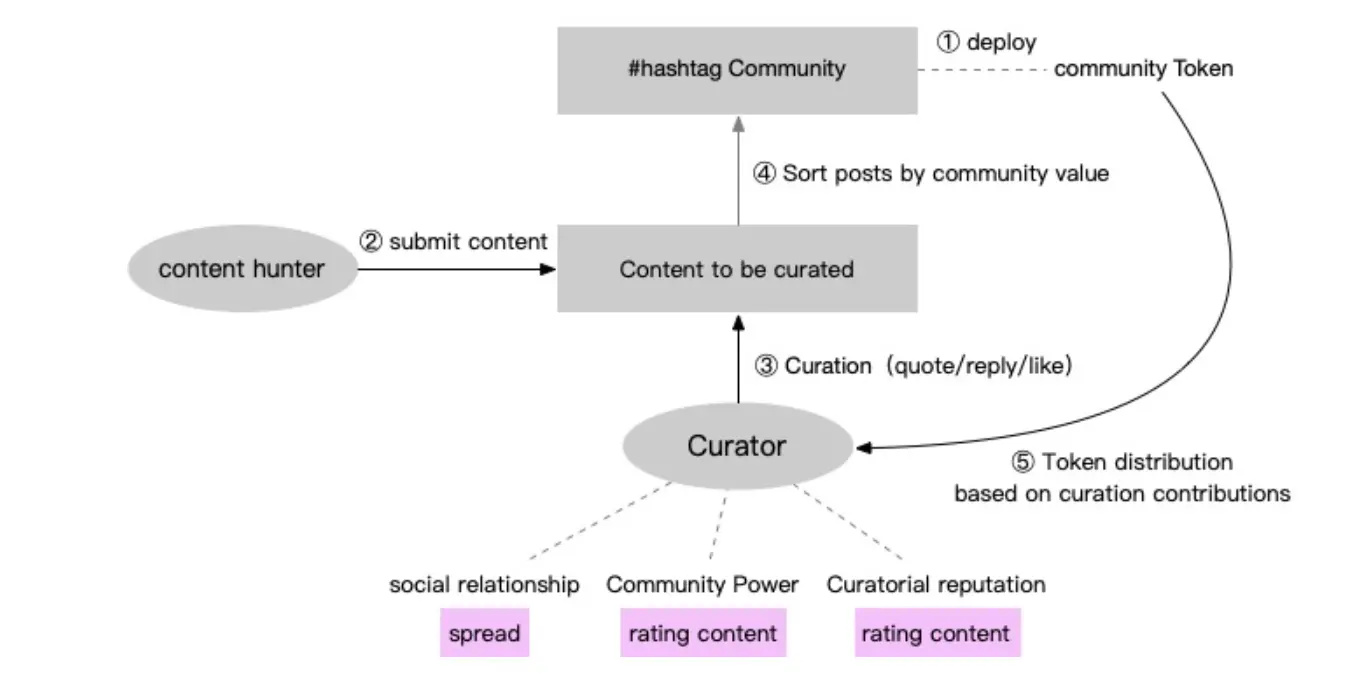
In Wormhole3's content autonomous communities, users can engage in various activities based on Hashtags. For example, they can mint tokens for Hashtags, submit high-quality content they deem relevant to the community's content reward list, curate and rate content, calculate the community value of content and rank it, and distribute tokens to curators who manage Hashtag information.
As curators continue to curate content for the community, the ranking of community content becomes more effective, and less noisy information continuously attracts the attention of people with specific interests, bringing more value to the community.
In its envisioned model, communities will reach a consensus on the ranking of information based on their decentralized network of curators and the Curation Power system. This consensus will mark the value of content, ideas, and topics, ultimately distributing people's attention. Since creating decentralized content communities is both inexpensive and straightforward, the system is effective as long as the composition of the Curation Power system is sufficiently decentralized.
Wormhole3 provides curators with a way to monetize "social influence," allowing everyone's voice to be heard worldwide through a decentralized curation network. It believes that content does not need to achieve a global consensus like currency does; most content only needs to reach a consensus within their respective communities. Requiring global consensus for every piece of content in a community can actually lead to confusion within the community.
By using modular protocols and components, Wormhole3 aims to enable countless content autonomous communities to easily build open economic systems based on attention economics and content curation. Anyone can create a content autonomous community with a single click, bringing together like-minded individuals to curate and distribute community content. This future of an open, sustainable economic cycle built around attention will become a brand-new model for attention economics.
Token Economy
1. Homogeneous Token - WH3
WH3 is the utility token of the Wormhole3 ecosystem. As the Relay component of the open interlinked content network, the value capture of the WH3 token will revolve around the following aspects:
1. The funds from the auction of #hashtag NFTs will enter the treasury and be used for direct WH3 token buybacks and burning.
2. A portion of the community curation rewards will serve as service fees and enter the Wormhole3 treasury.
3. Participation in the governance of the Wormhole3 protocol.
2. #hashtag NFTs
Wormhole3 is a modular content distribution network that enables anyone to build autonomous content communities in a modular fashion and connects these homogeneous content communities in an open manner.
However, if a content community wants to integrate into the entire economic ecosystem of Wormhole3, they need to participate in the auction of #hashtag NFTs.
The auction of #hashtag NFTs takes place once every 24 hours, continuously. 100% of the auction proceeds are automatically deposited into the Wormhole3 DAO treasury, which is then used for buybacks and burning of the Wormhole3 token. Each settlement transaction during the auction mints a new #hashtag NFT and starts a new 24-hour auction.
The community participating in the auction of #hashtag NFTs grants the holders of community NFTs the right to submit content to the Wormhole3 content incentive pool. The holders of these community NFTs, who recommend and curate the content, not only receive rewards in community tokens but also in Wormhole tokens. Similar to community NFTs, the rights associated with #hashtag NFTs are non-transferable but can be delegated.
In conclusion
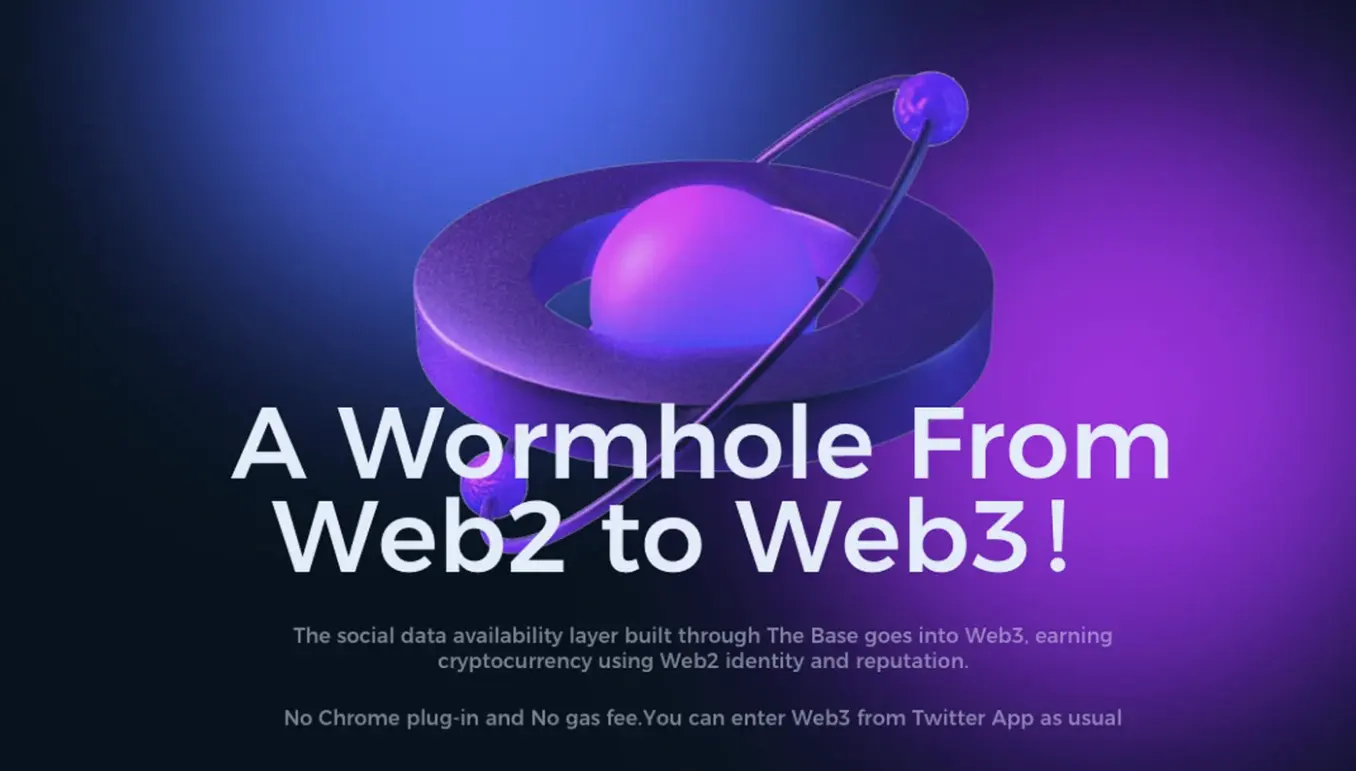
Wormhole3 is a content distribution platform based on a decentralized curation protocol. It builds content autonomous communities using Hashtags as a foundation, redefining the distribution of attention and establishing a sustainable ecosystem for content distribution.
Wormhole3 believes that content autonomous communities will be the future model of attention economics, where different communities reach consensus on the value of information based on their decentralized network of curators and Curation Power system, marking the value of content, ideas, and topics, and distributing people's attention accordingly.
Furthermore, Wormhole3 captures value through the WH3 token and #hashtag NFTs through mechanisms such as auctions, curation rewards, and governance, driving the development of the ecosystem.
Overall, Wormhole3 provides us with a fresh perspective on content distribution. We’ll see for how it goes in the future.


All Comments