
Cointime

Download App
iOS & Android

Web3 gaming won’t exist in 5 years, $656K for best crypto game pitch: Web3 Gamer

Web3 Games are dead, long live Games: SKALE CEO

Ethereum scaling network Skale CEO Jack O’Holleran is fairly confident that you’re not going to hear about Web3 gaming at all within the next five years.

“I feel very very strongly that the term Web3 gaming will no longer exist,” he tells Web3 Gamer (a column that will therefore need to be renamed by 2029).

He doesn’t expect it to fail because of tech problems. Instead, he thinks it will be a victim of its own success.

“That is because we will all be so successful at integrating the value propositions of blockchain into games that every game in the world will start leveraging this far better,” he explains.

O’Holleran compares the “Web3 game” term to the early internet days when people used to awkwardly say things like “internet company.”

“No one says that anymore because tech is a part of every vertical,” he laughs.

So if every big gaming company is using Web3 tech in their games, then the term starts to lose its relevance.

What is a Web3 game and what isn’t when every single game has some component of blockchain built into it?”

But right now, the term is still relevant.

The SKALE network is a layer-2 Ethereum scaling solution that claims to provide a seamless and lag-free gaming experience for users and can support up to 700 transactions per second.

It hosts popular Web3 titles such as multilevel motorcycle racing game MotoDex, sports metaverse Gamify and side-scrolling blockchain platformer Untitled Platformer, which have all racked up millions of downloads in the last year.
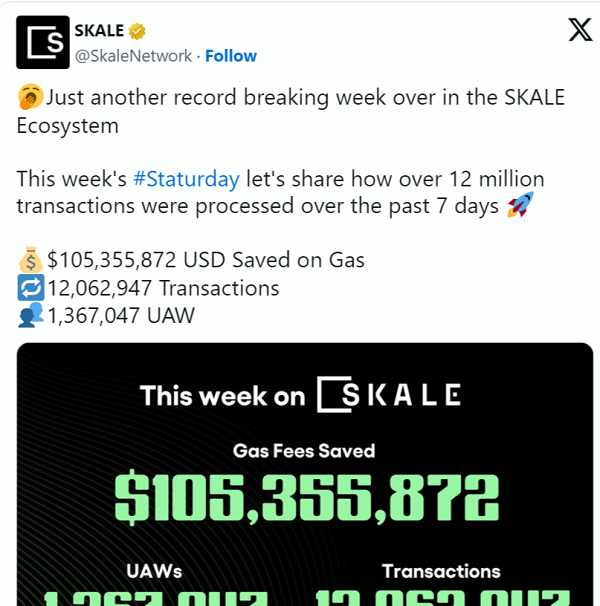
O’Holleran believes that the focus on growing Web3 gaming communities is misplaced, and projects should focus on the wider audience.

He thinks the big obstacle to traditional gaming companies embracing Web3 tech is that they want to keep users in their walled gardens by not giving them the benefits of ownership.

“Right now, if you have a game, you have to work so hard to keep the marketplace in your garden, or you lose so much money. You don’t want people going to social media and trading their game profiles or selling their profile on Craigslist,” he explains.

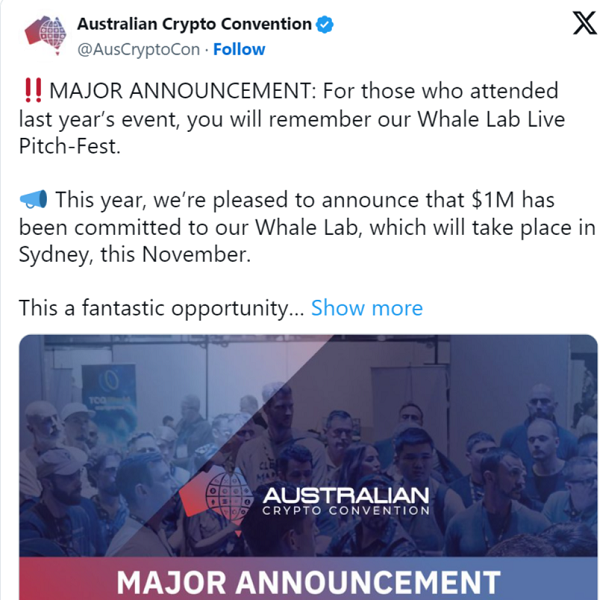
Building a Web3 Game? A$1M is up for grabs at the Australian Crypto Convention

This November, venture capitalists will come together at the Australian Crypto Convention to pick a Web3 company to invest a million Aussie dollars — approximately $656,000 — during the “Pitch Fest” competition, which is a lot like Shark Tank.

Convention director David Haslop advises devs to ensure they have high-quality visuals to enhance the appeal.

“You need really crisp graphics. If you go into it with Roblox kind of Graphics or pixelated graphics, I think you’re gonna get a lot less excitement,” Haslop tells Web3 Gamer.
Faculty Group’s founding partner, Luke Lombe, is fronting most of the money. He tells us that he’s confident that “GameFi will have its big moment later this year” after years of subpar releases.

“Many of the issues with gaming stemmed from the fact that most of the games released over the past couple of years were simply not high quality,” Lombe explains.

Venture capital firm JellyC co-founder Michael Prendiville agrees and says that’s because a lot of ill-conceived projects got funded during the Web3 gaming hype last cycle.

“There is no doubt that Web3 gaming got ahead of itself in 2021. Investors were throwing money at projects that had nothing more than a concept,” Prendiville explains.

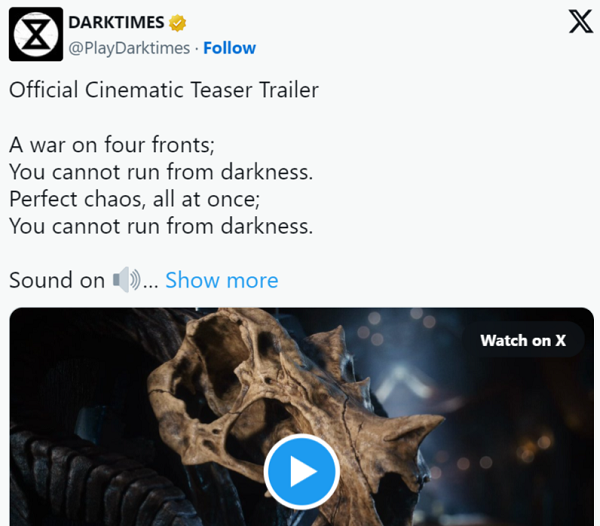
Prendiville is not tipping more funds into Web3 gaming right as several projects he invested into in 2021 are just “coming to fruition” now. One of them is the role-playing game Dark Times, which is set to launch in Q3 2024.
But he says that if he were, his focus “would be on the team, the backers, the community and the gameplay.”

Lombe believes the standard of projects is higher now due to the realization that “the experience needs to be indistinguishable from top AAA games in the traditional gaming market.” Another point is that not every game needs to use blockchain.

“Product and utility first. Make sure that you really need Web3 before diving in. Many projects building in Web3 do not actually need to be building in Web3 at all,” Lombe says.

Many traditional gamers do not like Web3 and feel that it is gimmicky or detracts from gameplay.”

Hot Take: Meta Cricket League

For the uninitiated, cricket is an English game that’s played in many Commonwealth countries, such as Australia and India. Think of the bat and ball setup of baseball, but played so slowly that the game goes on for six hours … each day … for five days.

It can get pretty boring.

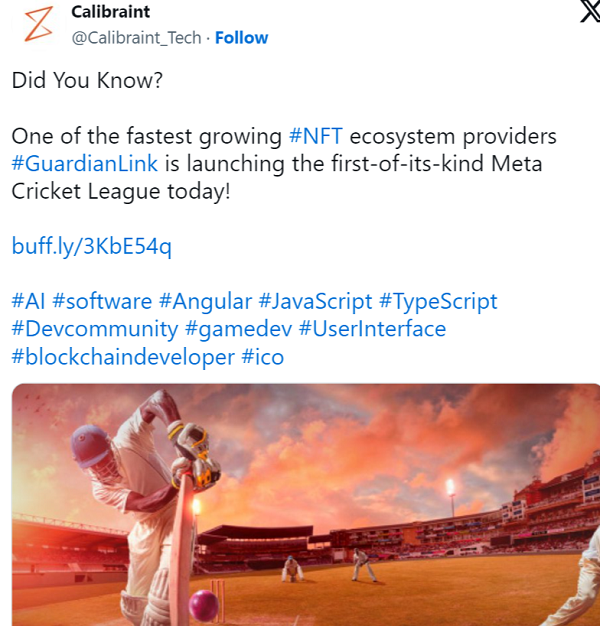
But I decided to give the play-to-earn blockchain game Meta Cricket League a go, even though I usually give cricket a hard time.

By playing the game you earn JT points, which you can use on leveling up and purchase NFTs on the Jump marketplace. The NFTs include famous cricket players and signed bats. Some trading cards are listed for as much as $99 million — but you can buy others for a dollar or two.

The game grabbed my attention more than a test match, though there were some tedious flaws in the game.

Developed by Jump.trade, the controls are really tough to get used to. I spent the first 20 minutes trying to bat but kept missing every single ball. I’m not that terrible at playing games…

I was forced to just wing it since the initial tutorial was pretty vague.

The screen kept popping up with embarrassing alerts like “too late” or “missed ball,” and while that made me want to stick around and try to nail it, the controls were the real problem.

I thought you were supposed to flick your finger on the screen to hit the ball, but it turns out I was way off.

After playing for about 20 minutes, I finally figured it out. The trick is to hold down the left control to aim while pressing down on the middle button on the right side.

I scored my first six! That’s where you hit the ball so far it flies over the boundary.

But the game just feels slightly off. In most tennis and bowling games, you just swipe your finger to play, but this feels like a pinball version of cricket with all the buttons.

On the bright side, the game does a good job with quick matchmaking. You’ll get into a game fast, and even when people quit on me (probably because I was playing poorly), I was always put into another game right away.

If you’re already into cricket, you might have a different experience. I’m more of a soccer fan, so even a mediocre soccer game would still be way more fun for me.
Other News

— Web3 gaming platform Immutable has launched “The Main Quest,” which it claims is the “largest-ever Web3 rewards program.”

— Studio369, the gaming company behind MetalCore, expects to gain 1 million new players thanks to a new partnership with Pixelmon and Mon Protocol.

— InfiniGods, the gaming company behind Kings of Destiny, has raised $8 million in funding to support its projects through the rest of 2024.

— Magic Eden rolled out its much-anticipated Runes platform to align with the big Bitcoin halving event last week.


Comments

All Comments

Recommended for you

  • Iran's Foreign Ministry: No New Developments in Negotiations

    On November 3, according to the Iranian Fars News Agency, Iranian Foreign Ministry spokesman Baghaei stated that there have been no new developments in the negotiations. All parties continue to exchange information through mediators as before, while Iran has maintained its defense readiness and preparedness to respond strongly to any acts of aggression at the highest level. Past experiences have led Iran to have no optimistic view regarding the sincerity of the United States in diplomatic activities.

  • Iran Denies Reaching Agreement with the United States

    On November 3, according to the Islamic Republic of Iran Broadcasting (IRIB): A spokesperson for the Iranian delegation stated that no agreement has been reached with the United States and that negotiations have not made any new progress. We are continuing to exchange information through mediators.

  • Binance Reports Initial Findings on Security Incident: Approximately $2.85 Billion in Assets Frozen or Intercepted

    According to Binance's official disclosure, the security incident on October 29 involved approximately $6.34 billion in digital assets, with about $2.85 billion in assets frozen or intercepted as of the report's release. The amounts are subject to verification and affected by market price fluctuations. Binance's preliminary investigation indicates that attackers infiltrated employee devices through fake job interviews and malicious software downloads, subsequently using internal AI tools and stolen credentials to access wallet signature services, bypassing normal withdrawal processes to initiate transactions. The attackers also exploited the Ethereum EIP-7702 authorization mechanism, allowing malicious contracts partial execution rights over hot wallets. Binance stated that the company will bear the financial impact of the stolen funds; as of October 31, 98% of the affected token assets have been replenished, while the remaining assets with lower liquidity are still being purchased. The company has closed the identified attack vectors and is hiring independent security experts for further review.

  • U.S. Stock Indices Open Mixed, Most Tech Stocks Rebound

    The three major U.S. stock indices opened mixed, with the Dow Jones Industrial Average down 0.36%, the S&P 500 up 0.09%, and the Nasdaq Composite up 0.36%. Among popular stocks, Nvidia rose 2.17%, Apple fell 3.8%, Microsoft increased by 0.66%, Google-A gained 0.76%, Amazon was up 1.39%, TSMC rose 1.4%, SpaceX increased by 1.33%, Tesla was up 0.46%, Meta gained 1.03%, Broadcom rose 1.44%, SK Hynix increased by 2.61%, Micron Technology was up 2.62%, AMD rose 2.27%, ASML gained 1.92%, Cisco increased by 0.49%, Oracle rose 1.91%, Intel was up 1.83%, Dell Technologies-C gained 2.45%, and ARM rose 2.04%. Apple opened nearly 4% lower, with CEO Tim Cook stating during the earnings call that rising memory prices are dragging down the company's gross margin for the upcoming quarter, and he expects memory costs to be higher in the future.

  • Meta Plans to Issue $15 Billion in Dollar Bonds

    On November 3, Meta plans to raise approximately $15 billion through a dollar bond issuance, which is part of its cross-border bond financing. Previous reports indicated that Meta aims to raise at least $20 billion through the issuance of dollar and euro bonds, with the financing scale potentially expanding further based on investor demand.

  • Central Bank's Pan Gongsheng: Ensure Stable Operation of Financial Markets

    On November 3, the 25th session of the Standing Committee of the 14th National People's Congress held its second plenary meeting at the Great Hall of the People in Beijing. The meeting listened to a report on financial work delivered by Pan Gongsheng, Governor of the People's Bank of China, on behalf of the State Council. The report outlined the main progress and achievements in financial work since October 2025, the current economic and financial situation, and the challenges faced. It proposed considerations for future work: to continue implementing a moderately accommodative monetary policy to create a suitable monetary and financial environment for the sustained and improved development of the economy; to further strengthen and improve financial regulation, continuously enhancing the quality and effectiveness of supervision; to effectively implement monetary policy tools that support the capital market, consolidating and improving mechanisms for stabilizing the capital market. The goal is to maintain the stable operation of financial markets, including stocks, bonds, and foreign exchange, and to uphold the baseline against systemic financial risks. (Xinhua News Agency)

  • CFTC Chair Announces Approval for U.S. Listing of Equity Perpetual Futures

    On November 3, Michael S. Selig, Chairman of the U.S. Commodity Futures Trading Commission (CFTC), announced that equity perpetual futures (Equity Perps) can now be listed and traded on securities exchanges that have obtained CFTC-designated contract market status and completed notification registration with the SEC. Selig stated that this move is a significant advancement, allowing U.S. market participants to use perpetual futures for risk management and price discovery within a regulated framework, thereby preventing capital from flowing to unregulated platforms overseas. The implementation of this product is based on the Commodity Futures Modernization Act of 2000 and a regulatory memorandum of understanding between the CFTC and SEC. For a long time, innovative products like securities futures and equity perpetual futures have been stuck in a regulatory gray area due to unclear jurisdiction between the two agencies. Now, both parties have reached coordination, clearing the compliance path.

  • ETH Surpasses $2300

    Market data shows that ETH has surpassed $2300, currently priced at $2300.25, with a 24-hour increase of 0.92%. The market is highly volatile, so please ensure proper risk management.

  • Insiders: Anthropic's Usable Computing Power to Reach 3.5 Gigawatts by Year-End

    AI giant Anthropic submitted its S-1 filing last week and is expected to complete a record IPO this month, stirring Wall Street sentiment. On Monday, the company updated its prospectus, revealing impressive growth data, but also highlighting significant expenditure risks. Over the past year, Anthropic has signed numerous computing power procurement contracts to secure resources for training and operating large AI models, betting that soaring demand can cover substantial investments. The updated S-1 shows that Anthropic's revenue for the third quarter reached $17 billion, a twelvefold year-on-year increase and a 47% rise from the second quarter; however, it reported a net loss of $23 billion, with the growth rate slowing from 144% in the previous quarter. By 2045, Anthropic's total commitments for data centers, chips, and computing power procurement could reach $895.4 billion, with nearly $70 billion in contract payments due within the next 12 months. Two insiders revealed that by the end of this year, the company's usable computing power will reach 3.5 gigawatts, enough to supply all households in Chicago; the target is to double this capacity next year. Anthropic is even deeply involved in data center design, hiring infrastructure and supply chain experts, and procuring hardware such as cooling systems from contractors. Its primary competitor, OpenAI, is also making massive investments in computing power, with insiders indicating that OpenAI expects total computing power investments to reach about $750 billion by 2030.

  • Spot Gold Falls Below $3900 per Ounce

    Spot gold has fallen below $3900 per ounce, declining by 1.19% during the day.