


DeFi (decentralized finance) is a new financial model that is rapidly developing under the impetus of blockchain technology. Due to its decentralization, transparency and programmability, DeFi has become a hot topic worldwide. However, with the rapid expansion of the DeFi ecosystem and the increasing number of users, the demand for cross-chain transactions of assets has grown.
Currently, the decentralized liquidity in the DeFi ecosystem leads to a sub-optimal trading experience for users, especially when trading on different master chains. This is due to the fact that each decentralized exchange (DEX) is limited to one or a number of master chains and lacks an effective bridge connection between them. To trade between different master chains, users need to go through multiple DEXs to get there. This exposes users to the risk of liquidity fragmentation, which leads to low liquidity and high slippage, making it impossible for users to get the optimal trading price and experience.
In addition, some cross-chain solutions exist in the current market, such as atomic swaps and cross-chain trading on centralized exchanges, but they generally have certain problems, such as insufficient liquidity, unsecured security, and high fees, making it difficult for users to get the best cross-chain exchange experience.
Therefore, in order to solve these problems, an efficient, secure and reliable multi-chain trading platform becomes especially important.
UXUY was created to meet this need. It treats assets and transactions from multiple master chains as one, allowing users to trade assets from different chains, while also providing features such as liquidity aggregation, easy integration and comprehensive security, providing users with an efficient, convenient and secure multi-chain trading service.
UXUY: Multi-chain Transaction Interoperability Solution
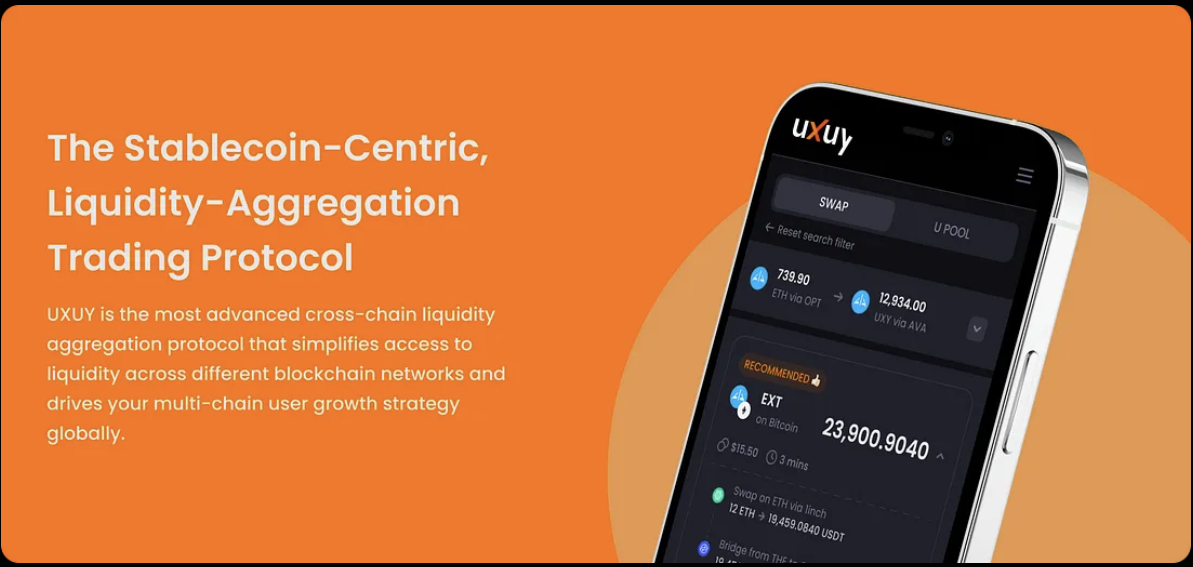
UXUY is a MPC-based decentralized trading platform that uses a solution that eliminates the need for helpers and Gas fees, enabling users to easily trade across chains. uXUY is committed to providing users with a secure, efficient and convenient trading experience, while aggregating liquidity to enhance the depth of transactions.
In essence, UXUY's underlying is a multi-chain transaction interoperability solution based on the UXUY Protocol, which connects multiple master chains through a stablecoin-based bridge to obtain liquidity from various DEX. uXUY will create a comprehensive pool of stablecoin liquidity to provide an enhanced service. This will allow users to use a mix of cross-chain liquidity across multiple chains in the UXUY APP, using UXUY's technology to scan all possible routes to find the best exchange rates.
UXUY also prioritizes security and performs external and independent audits of smart contracts to ensure that every transaction is safe and secure.
UXUY currently supports all major public chains on the market and leverages the "wallet + transaction" model to provide a more convenient trading experience for users. In UXUY's view, thousands of assets will be issued on different chains every day, and Web3 is entering the era of "one network of thousands of chains". Therefore, it is committed to actively participate in the "Unclaimed" ecological construction in order to drive the whole industry forward and make the future trend of crypto assets.
Trading Platform Highlights
UXUY is a decentralized trading platform based on MPC, which provides users with a secure, efficient, convenient and flexible cross-chain trading experience. Specifically, the main highlights are as follows:
1. Stablecoin-centric

The core of UXUY is to build stablecoin-friendly bridges, which treats multiple master chains as a whole and allows users to conduct cross-chain transactions on different chains. This design allows users to escape the limitations of the total asset class of traditional decentralized exchanges, enabling a more flexible and efficient way to trade.
By utilizing a stablecoin-friendly bridge, UXUY makes it possible to trade between any cryptocurrency pair. Users can trade any token at any time without worrying about liquidity fragmentation. uXUY's liquidity aggregation feature allows users to access liquidity from multiple sources and execute trades at the best price, ensuring users receive the most competitive pricing for their transactions and helping them maximize profits.
In addition, UXUY is building the uPool product, which is a stablecoin-centric bridge maintaining an efficient cross-chain liquidity pool to provide users with more convenient services.
2、Multi-chain Support
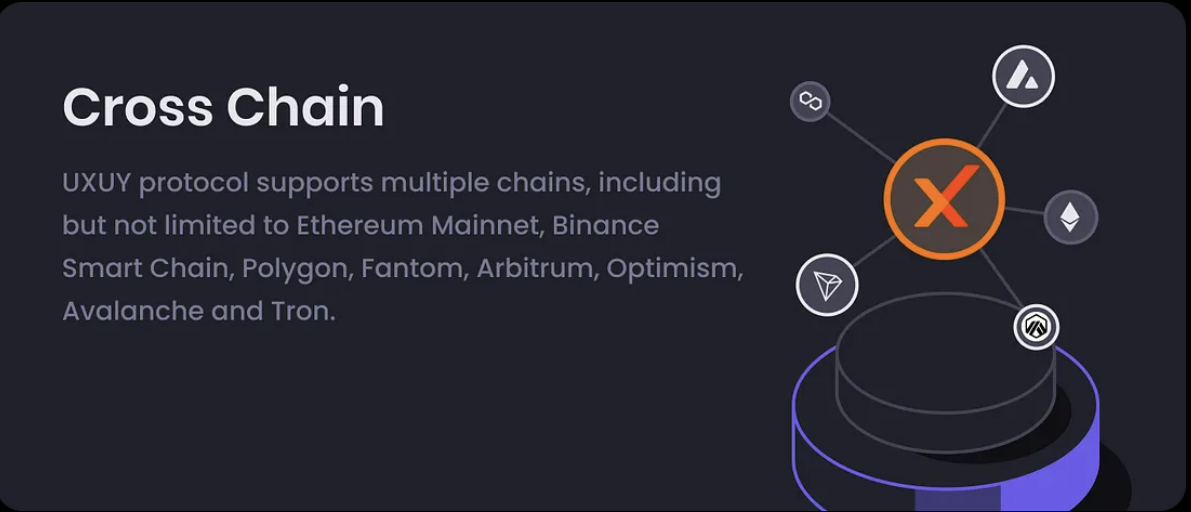
UXUY supports multiple chains, including but not limited to Ether mainnet, Coinan Smartchain, Polygon, Fantom, Arbitrum, Optimism, Avalanche and Wavefield. This multi-chain support allows users to trade across different master chains, access a wider selection of assets, and share in the explosive growth of decentralized finance.
UXUY is committed to providing users with a cross-chain trading experience in line with market trends, allowing users to easily access hybrid cross-chain liquidity in UXUY APP.
3、Security Assurance

UXUY pays great attention to security and puts it as a top priority. UXUY adopts the latest security technology and performs external and independent audits on smart contracts to ensure that every transaction is safe and secure. The protocol is unescrowed and the user always retains full control of the assets.
UXUY's smart contract technology ensures that all transactions are executed in a transparent and secure manner without the need for intermediaries. uXUY's comprehensive security architecture includes multiple layers of protection against malicious attacks, abuse prevention, and data privacy to provide users with a more secure trading environment.
4、Liquidity Aggregation
Liquidity aggregation is one of the highlights of UXUY, which helps users find the best prices and trade routes between various DEX. UXUY is committed to continuously aggregating liquidity across all master chains, scanning all possible routes, and finding users' trades at the best prices. This liquidity aggregation feature provides users with better trading depth while also finding the best trade routes and trading experience for them.
UXUY not only collects liquidity from each DEX, but also uses smart contracts to optimize liquidity, including aggregating orders, reducing slippage, and more. This liquidity aggregation technology allows users to enjoy an efficient and convenient cross-chain trading experience, with optimal pricing and experience regardless of the main chain.
Fee Structure
UXUY's fee structure is very transparent and easy to understand. There are three types of fees that users may incur when transacting across chains at UXUY:
1. Network fees
Network fees are transaction fees charged by miners in the main chain (e.g., Ether, Wavefield, etc.) to maintain the large number of computers supporting the network and to ensure the security of the network. Network fees are usually set by the network and fluctuate according to network traffic and transaction complexity. usuy has set three ranges of network fees for the convenience of users, which are low, normal (default) and fast.
2、Transaction Fee
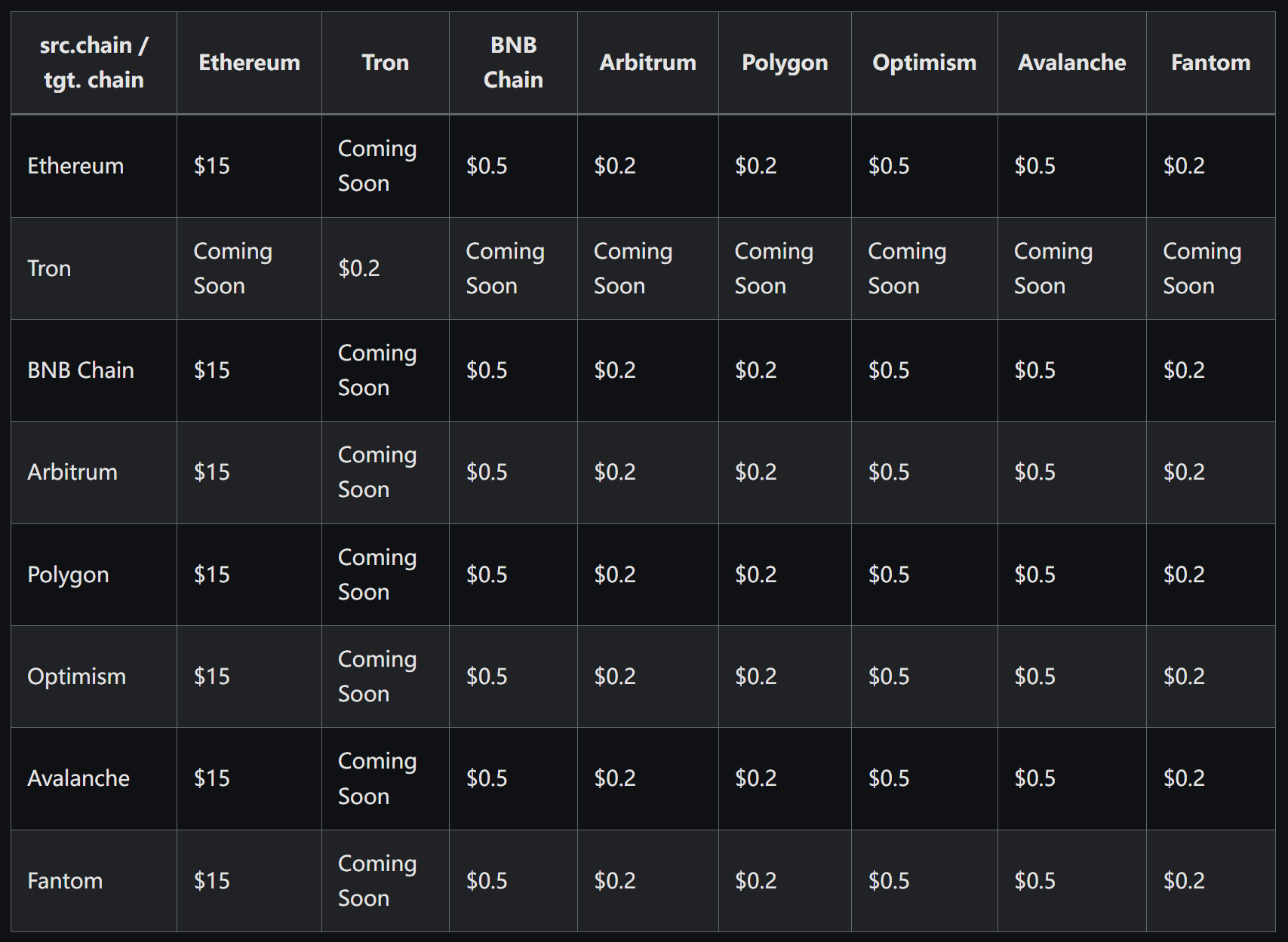
Transaction fee is the fee charged by UXUY for each single-chain and cross-chain exchange transaction. The transaction fee is fixed at 0.3% of the total transaction amount. This means that when a transaction is made, 0.3% of the total amount of your transaction will be charged as a transaction fee.
Conclusion
As the cryptocurrency market continues to grow and the decentralized financial ecosystem expands rapidly, cross-chain trading will become the mainstream trend for digital asset trading in the future.
UXUY, as an efficient, secure and reliable cross-chain trading platform with stable coin-friendly bridges and the ability to connect multiple master chains, provides users with a premium cross-chain trading experience.
At the same time, UXUY's liquidity aggregation function, easy integration and comprehensive security measures will further promote the popularity of UXUY APP in the market.
Upon investigation of UXUY Swap, which is still in beta testing, a Web3 investor named Jonathan has this to say.
"The transaction routes across chains show up faster than I expected for a product in beta testing. That's a good sign. "
Another user who goes by the pseudonym KD said, "I scoffed at the claim of being stable-centric at first, but it's real. The fees are minimal, and there are lots of routes to choose from. With the way the market is....I'm looking to save every dollar I can. Can't wait for the official launch.”
It is foreseeable that UXUY will continue to innovate and improve in its future development, providing users with more perfect services and experiences and playing an active role in driving the whole industry iteration.


All Comments