



Introduction
The development of AI technology has brought great changes to human society, but it also brings some challenges and risks. Designers and operators of AI products and platforms need to consider how to ensure the safety, reliability, fairness, transparency, and controllability of AI, and how to protect users' privacy, rights, and autonomy. Traditional Internet platforms tend to manage data, algorithms, and computing power in a centralized manner, which may lead to abuse of data, manipulation of algorithms, and monopoly of computing power, thereby harming the interests of users and society. Therefore, we need a new technical architecture to solve these problems and make AI products and platforms more in line with human values and needs. Web3 is a decentralized network based on blockchain, distributed ledger, encryption economy and other technologies. It can provide AI products and platforms with a more open, fair, transparent and democratic underlying architecture, and use algorithms to control algorithms to achieve Data democratization, algorithm fairness, and reasonable distribution of computing power and energy. In this article, we will discuss why Web3 is the best underlying architecture for AI products from the following three aspects:
- AI is too powerful. From the perspective of product radiation industry, an AI platform will merge multiple traditional Internet platforms;
- From the ability to control users, users in the AI era will become weaker and easier to control, and surveillance capitalism will be brought to the extreme;
- AI technology will cover all aspects and corners of human society, and unilateral control of algorithms will lead to systemic dangers such as technical ethics.
AI is too powerful. From the perspective of product radiation industry, an AI platform will merge multiple traditional Internet platforms
AI technology can make products and platforms more powerful and efficient, but it may also lead to increased market concentration, decreased competitiveness, and weakened innovation. An AI platform may form a strong network effect and scale effect by collecting massive amounts of data, optimizing complex algorithms, and providing diverse services, thereby merging or crowding out multiple traditional Internet platforms. For example, Google has formed a huge ecosystem through its search engine, advertising system, map service, email service and other products, covering the needs of users in multiple scenarios such as information acquisition, communication, and travel navigation; Facebook through its Multiple products such as social networking, instant messaging, and content sharing have formed a huge social empire, covering the needs of users in multiple scenarios such as social connection, emotional expression, and entertainment consumption; Alibaba through its e-commerce platform, payment system, Multiple products such as logistics services have formed a huge business system, covering the needs of users in multiple scenarios such as shopping and consumption, financial management, and life services. These AI platforms not only have a huge market share and user base, but also have huge data assets and algorithm advantages, making it difficult for other competitors to enter or survive.
Web3 can break this monopoly situation through decentralization, making data, algorithms, and computing power more decentralized and shared, thereby promoting market diversity and competitiveness. Web3 allows users to have their own data sovereignty, protect data security and privacy through encryption technology and smart contracts, and realize data value distribution and sharing through token incentives and governance mechanisms. Web3 can make the algorithm more open and transparent, record the operation process and results of the algorithm through blockchain technology and distributed ledgers, and ensure the correctness and fairness of the algorithm through community review and supervision. Web3 can make computing power more distributed and efficient, reduce costs and improve performance through distributed computing and storage, and reduce energy consumption and carbon emissions through an environmentally friendly consensus mechanism. In this way, Web3 can provide AI products and platforms with a more open, fair, transparent and democratic underlying architecture, allowing users, developers, operators and other parties to benefit from it.
From the ability to control users, users in the AI era will become weaker and easier to be controlled, and surveillance capitalism will be brought to the extreme
AI technology can enable products and platforms to better understand and meet users' needs and preferences, but it may also lead to the weakening of users' autonomy and diversity, or even manipulation and exploitation. AI products and platforms often form a powerful personalized service by collecting users' personal information, analyzing users' behavior patterns, and pushing users' interested content, thereby attracting users' attention, increasing user stickiness, and improving user loyalty. Conversion rate. For example, Douyin has formed a powerful content ecology through its short video recommendation system, live broadcast e-commerce system, creator incentive system and other products, covering the needs of users in multiple scenarios such as entertainment consumption, social interaction, and creative expression. ;NetEase Cloud Music has formed a powerful music ecology through its music recommendation system, song list community system, music copyright system and other products, covering the needs of users in multiple scenarios such as listening to songs, commenting and communicating, and supporting singers; Zhihu has formed a powerful knowledge ecology through its Q&A recommendation system, column content system, paid course system and other products, covering the needs of users in multiple scenarios such as learning and exploring, sharing experience, and improving capabilities. These AI products and platforms not only have a large amount of data and behavioral trajectories of users, but also have the psychological state and emotional tendency of users, so that users become more dependent on them, and even influenced or controlled by them.
Web3 can restore user autonomy and diversity through empowerment, allowing users to participate in and control their own data, algorithms, and services, thereby protecting users' interests and values. Web3 allows users to have their own digital identities, realize cross-platform identity authentication and management through decentralized identity (DID) technology, and realize cross-scenario attribute certification and exchange through verifiable credential (VC) technology. Web3 allows users to own their own digital assets, realize the ownership, copyright and circulation of digital content through non-homogeneous token (NFT) technology, and realize the storage, transaction and exchange of digital currency through decentralized finance (DeFi) technology. invest. Web3 allows users to have their own digital services, realize services of various functions and scenarios through decentralized application (DApp) technology, and realize governance of various rules and mechanisms through decentralized autonomous organization (DAO) technology. In this way, Web3 can provide users with a more free, pluralistic, participatory and controllable network space, so that users no longer passively accept or consume, but actively create or contribute.
AI technology will cover all aspects and corners of human society, and unilateral control of algorithms will lead to systemic dangers such as technical ethics
AI technology can make products and platforms more intelligent and flexible, but it may also lead to some problems and challenges in terms of technical ethics, social responsibility, and legal norms. AI products and platforms often use advanced algorithms, models, and frameworks to achieve various complex tasks and goals, thereby enhancing the value and competitiveness of products and platforms. For example, Baidu has formed a powerful intelligent ecology through its automatic driving system, intelligent voice system, face recognition system and other products, covering the needs of users in multiple scenarios such as travel safety, information exchange, and identity verification; Its game development system, content review system, social credit system and other products have formed a powerful entertainment ecosystem, covering the needs of users in multiple scenarios such as game experience, content consumption, and social trust; System, content distribution system, content monetization system and other products form a powerful content ecology, covering the needs of users in multiple scenarios such as content creation, content recommendation, and content monetization. These AI products and platforms not only have strong technical capabilities and innovation, but also have huge social influence and sense of responsibility, which makes them need to face some problems and challenges in terms of technical ethics, social responsibility, and legal norms.
Web3 can solve these problems and challenges in a standardized way, making AI products and platforms more in line with human values and needs, thereby ensuring the safety, reliability, fairness, transparency and controllability of AI. Web3 allows AI products and platforms to follow some general technical ethical principles, such as respecting human dignity, protecting human rights, and promoting human well-being, as well as some specific technical ethical norms, such as ensuring data quality, ensuring the correctness of algorithms, and ensuring the reliability of results. explanatory etc. Web3 allows AI products and platforms to undertake some corresponding social responsibilities, such as protecting environmental resources, protecting public interests, protecting vulnerable groups, etc., as well as some specific social responsibility measures, such as reducing energy consumption, reducing carbon emissions, and reducing information asymmetry, etc. . Web3 allows AI products and platforms to comply with relevant legal norms, such as protection of intellectual property rights, protection of privacy rights, protection of consumer rights, etc., as well as specific legal norms, such as data ownership, data use rights, and data deletion rights. In this way, Web3 can provide a more standardized, reasonable, credible and controllable network environment for AI products and platforms, so that AI products and platforms can not only create value, but also take responsibility.
Popular Science: What is Technology Ethics
Technological ethics refers to the discipline that studies the moral issues and value judgments that arise from the development and application of technology to human society and the natural environment. Technological ethics involves the safety, reliability, fairness, transparency, and controllability of technology, as well as the impact of technology on human dignity, rights, and well-being. The main principles of technical ethics include Kant's autonomy principle, Mill's harm principle, Locke's individualism principle and so on. What are the blind spots in technology ethics? There are different perspectives, but some possible blind spots are:
- Technology is too powerful, resulting in increased market concentration, decreased competitiveness, and weakened innovation;
- The technology is too smart, resulting in the weakening of user autonomy and diversity, and even being manipulated and exploited;
- Technology is too flexible, leading to some problems and challenges in terms of technical ethics, social responsibility, legal norms, etc.;
- Technology itself has ethical attributes, not just how it is used and what purpose it is used for;
- The backlash of technology to technicians, affecting their movement, pure white and divine life;
- Technology requires non-technical personnel to participate in and control their own data, algorithms and services;
- The impact of technology on technology products needs to balance openness, transparency and innovation protection;
- The impact of technology on traditional culture and religion requires review, regression or innovation;
- Neglect of technology's role in reshaping human beings, requiring respect for human beings as an end, not a means.
Examples of Web3+AI products
Volatility POPPLE is a social product that uses AI technology to help users manage their emotions and provide emotional value. It uses Web3 distributed technology to build a set of vector databases that collect user emotional data and tokenize them to form emotional vertical fields, and train a dedicated solution A large model of user emotion management, while embedding social elements in the product that assist users in deep interaction to provide emotional value, and establish a value that guides our emotions and reactions
The product design of Wave POPPLE is based on the technical architecture of Web3+AI, which has the following advantages:
• Fairness: Volatile POPPLE returns user data to users, hand over algorithms to the community for review and monitoring, and hand over platform ownership to all users, so that users can independently own, share, exchange, and realize their own emotional data, and at the same time allow users to Jointly create, maintain, optimize, and benefit from a professional emotional data vector database and large model, thus ensuring the fairness and morality of the algorithm;
• Security: Wave POPPLE adopts the underlying architecture of Web3, uses blockchain technology to protect user data and identity, uses encryption technology to protect user privacy and security, and uses consensus mechanism to protect user rights and trust, thus ensuring the security of the algorithm sex and reliability;
• Appropriateness: Wave POPPLE uses Web3+AI to design products, and adopts in the algorithm scheme: the algorithm and implementation scheme should be in line with the interests, abilities and goals of users, and users cannot be forced to do things they are unwilling or unable to do. Algorithms and implementation plans should be beneficial to the physical and mental health of users, and should not harm the user's body, spirit or morals. Algorithms and implementation plans should be moderate rather than excessive, and should not cause users to become dependent or addicted; thereby ensuring the moderation and suitability of the algorithm;
• Suitability: Wave POPPLE adopts the Web3+AI technology architecture, uses AI technology to provide personalized and intelligent emotional management and value services, and uses Web3 technology to provide an open and collaborative emotional social and value platform, allowing users to customize according to their own needs. Users can choose and use different applications and services according to their preferences, and can also participate in and contribute different content and value, thus ensuring the suitability and diversity of the algorithm.
In conclusion
To sum up, we can see that Web3 is a decentralized network based on blockchain, distributed ledger, encryption economy and other technologies, which can provide AI products and platforms with a more open, fair, transparent and democratic The underlying architecture uses algorithms to control algorithms to achieve data democratization, algorithm fairness, and reasonable distribution of computing power and energy. Web3 allows users to have their own data sovereignty, digital identity, digital assets, and digital services, thereby restoring user autonomy and diversity, and protecting user interests and values. Web3 allows AI products and platforms to follow some general technical ethical principles, assume some corresponding social responsibilities, and abide by some relevant laws and regulations, so as to ensure the safety, reliability, fairness, transparency and controllability of AI. Therefore, we believe that Web3 is the best underlying architecture for AI products.
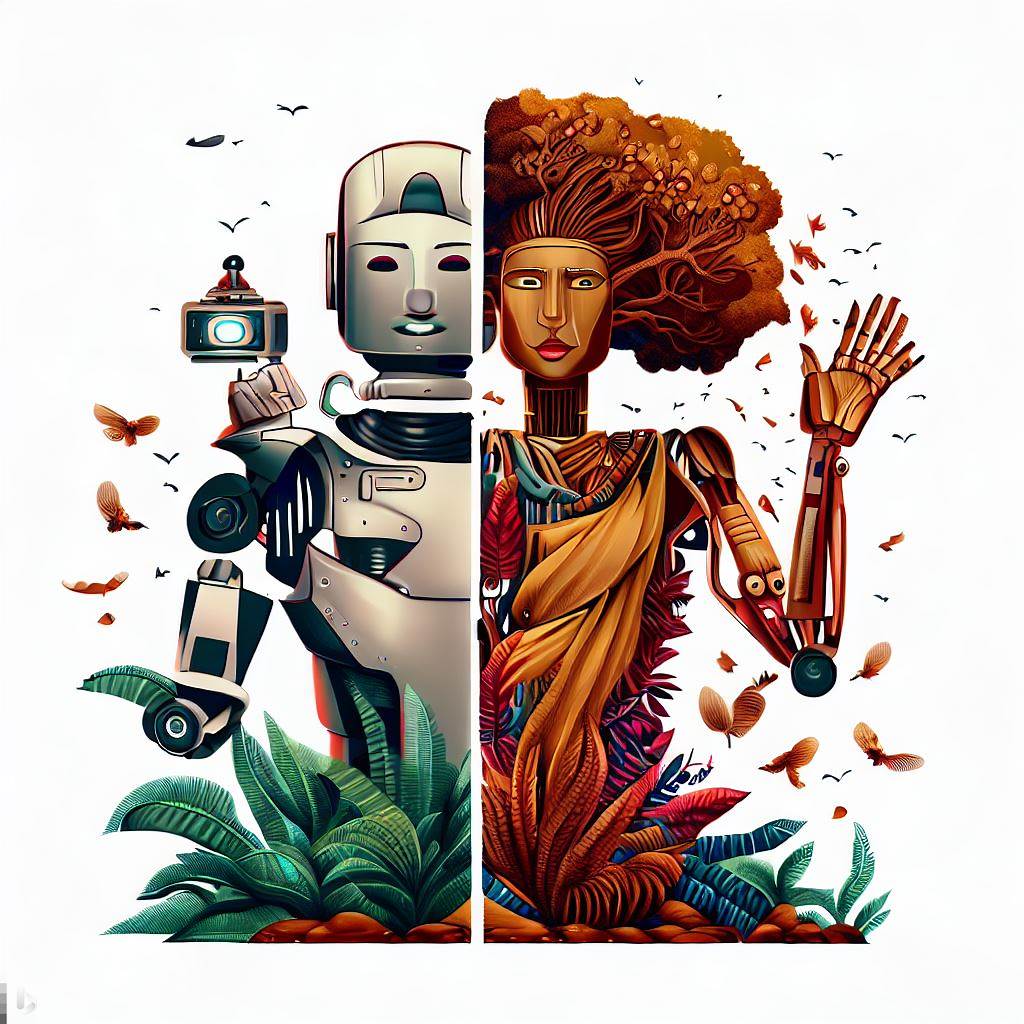
FlerkenS is a decentralized personal AI application platform, based on the Web3 network that helps users achieve digital transformation, and provides users with borderless digital and intelligent services.
FlerkenS builds an AI market, an AI publisher, and an open and scalable general artificial intelligence (AGI) system. AI-DSL enables AI applications and services of different types and fields to collaborate and interact with each other, through personal vectors Database (Personal Vector Database) + Langchain Technology Solution (Langchain Technology Solution) + large-scale model technology implementation path, allowing users to obtain personalized AI services, and realize point-to-point with service providers under AI technology in a distributed network environment The connection to build a distributed AI intelligent business and a distributed AI economy.
The first application of FlerkenS: Smart career planning based on Web3+AI, which can provide personalized career development suggestions based on users' personal information, interests, abilities and goals, including career planning, training and career recommendations wait. It can also help users solve workplace problems and improve professional skills and confidence through dialogue and interaction.


All Comments