

In the era of the internet, we witnessed the rise of "fat applications," where major giants like Facebook, Google, and Amazon monopolized the market and became the preferred platforms for hundreds of millions of users. However, in recent years, the development in the field of cryptocurrency has brought about a new revolution, ushering in the era of "fat protocols." Cryptocurrency projects at the protocol level, such as Bitcoin and Ethereum, with their distributed and decentralized features, have gradually gained widespread recognition and adoption.
However, now we are not only witnessing the ascent of fat protocols but also witnessing the emergence of super-application chains built on these protocols, such as Cosmos and Celestia. The appearance of these application chains raises an important question: why do some projects choose to build application chains instead of continuing to develop on the existing protocol layer?
This article attempts to analyze this phenomenon from a business model perspective to explain the reasons for these changes.
In the era of the internet, the rise of "fat applications" has brought about some potential issues. These "fat applications" gain significant market share and profits by monopolizing users and data. This monopoly creates an imbalance where application developers hold the upper hand, and protocol development organizations, such as the World Wide Web Consortium (W3C), may need to rely on sponsorship from application developers to sustain their operations.
More concerning is that some companies, once they have obtained enough market share, may abuse their power by altering protocols to align with their own interests. This can potentially impact the healthy development of the entire industry. For example, the earlier dominance of the Internet Explorer (IE) browser is a typical case where it monopolized the browser market for a period and influenced the interoperability of the web through incompatible features and standards.
This is the problem posed by "fat applications." They create a wide moat because they not only control users and data but also have enough resources to influence protocol development. This monopoly phenomenon may have adverse effects on innovation and industry diversity.
The "fat protocol" theory suggests that protocols should capture more value than applications. This idea has some theoretical advantages:
1、Permissionless shared data layer: Blockchain technology effectively lowers the barrier for new entrants into the market, making the entire system more competitive. Furthermore, blockchain promotes composability between different protocols, driving continuous protocol development.
2、Positive feedback loop for native network token speculation value: When token prices rise, it piques the interest of developers and investors who invest more manpower and capital in the ecosystem, further driving token appreciation.
3、As the demand for native tokens increases, protocols can capture the value created at the application layer: This is often reflected in transaction fees, so as applications grow, protocols can capture more value.
So, while the "fat protocol" theory previously aligned with market dynamics, it is currently struggling to adapt to current trends, as shown by the following:
1、Difficulty for protocols to retain the value created by applications: Rich data on the blockchain consumes a significant amount of block space, leading users to pay higher fees for the execution of the same number of transactions, limiting the protocol's ability to retain value.
2、Rise of modular blockchains: New blockchain technologies break down the functionality of blockchains into execution, data availability, and settlement, reducing the cost of the shared data layer and allowing users to pay fewer fees for data usage.
3、Ease of multi-chain: Applications can easily launch on multiple blockchains and can interoperate across chains. This makes it easier for users to move between different chains, reducing reliance on a single protocol and weakening the positive feedback loop in the "fat protocol" theory.
In this market context, the concept of "application chains" has emerged, attempting to improve upon the "fat protocol" theory to address the current challenges faced by the industry.
Application Chains are blockchains built for specific use cases, and they come with several significant advantages, including:
1、Improved Value Accumulation Mechanism: On the application chain, users can use local network tokens for staking, creating a token supply pool. This means that the value of the tokens is locked within the blockchain ecosystem, thereby generating value for that ecosystem. This mechanism helps incentivize users to actively participate in and support the operation of the blockchain.
2、Customizability: The technology stack of the application chain can be freely customized according to specific needs. Developers can adjust configurations based on the requirements of the application to find the most suitable balance in terms of throughput, finality, and more.
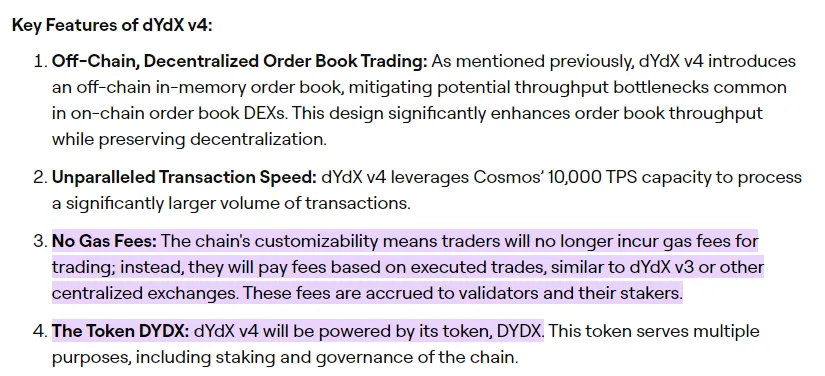
For example, the latest dYdX v4 is a project implemented on a Cosmos-SDK driven chain that promises traders no longer need to pay gas fees but are instead charged based on the transaction size to mimic the experience of centralized trading platforms.
Despite the advantages of application chains, they do come with some limitations that restrict their widespread adoption in the market. These limitations include:
1、Liquidity Fragmentation and Composability: Since native assets within a specific application chain typically cannot interact with assets on other chains unless specific assets have high support and compatibility with interoperable products, this can lead to issues of liquidity fragmentation and composability.
2、Limited Security: In theory, the security of an application chain depends on a portion of the token value being staked, which is tied to the consensus mechanism. However, if the token value declines, the security of the blockchain can also be linearly affected, potentially posing security risks.
Despite these challenges, the concept of application chains continues to evolve, attracting increasing attention and exploration to address some of the issues in the blockchain space.
In the business models at the protocol or foundational layer, users typically pay gas fees to ensure that the protocol can correctly store transaction data and settle transactions. This business model has some advantages in the era of "fat protocols" where the division of labor between protocols and applications is clear:
1、Protocol in Search of User Payment Methods: Protocols strive to find ways to make users pay for ensuring security and data availability. This helps retain users and applications within their respective ecosystems, thus maximizing composability's positive feedback loop and generating direct natural gas fee value.
2、Enterprise-Centric Business Model: Protocols are gradually shifting from a user-centric model to an enterprise-centric one. They aim to capture as much value as possible by aggregating payments for data availability and consensus. This business model has already given rise to many billion-dollar applications, such as Uniswap and OpenSea.
For applications, they essentially outsource other critical parts of the blockchain to the protocol level so they can focus on making the application work and succeed. However, some issues have caused certain super apps to detach from protocols because they've found it challenging to effectively accumulate value on the protocol.
For example, Uniswap faces the challenge of maximizing liquidity depth without a clear path to channel cash flow to token holders. However, for the protocol itself, with the emergence of modular blockchains and the aforementioned abundant block space, the current business model is gradually and inevitably collapsing, making the protocol more 'lightweight.' This suggests that business models in the cryptocurrency space are still evolving to adapt to ever-changing market demands.
Application chains and protocols have significant differences in their business models, despite both playing foundational roles:
1、Users do not need to pay gas fees for storing transaction data: On the application chain, users are essentially paying for the application itself, not for the storage of transaction data. For example, Osmosis introduces protocol receiver fees, which ultimately become revenue flowing to token holders.
2、The application chain provides everything the protocol needs: From a shared data layer to transaction processing and the appropriate level of blockchain security. Most importantly, applications can accumulate value on the application chain.
The advantages of the application chain are as follows:
1、No longer competing with substitute base layers or low gas fee agreements: Application chains have found a more reliable and sustainable business model, with the market accepting fair prices. This effectively addresses the value accumulation issue of the first-generation "fat protocols."
2、Positive feedback loop: With more applications choosing to build on the application chain, it can enjoy a positive feedback loop, addressing the issues of liquidity fragmentation and limited composability in the application chain architecture. For example, Injective extracts a portion of its trading fees from its perpetual contract exchange, a practice recognized by the market. Other exchanges like GMX and Gains also charge higher fees.
3、Fee-sharing data and consensus mechanisms: Intense competition among application chains effectively creates a zero-sum competition by charging for shared data and consensus mechanisms, providing more cost-effective solutions. Application chains offer a shared data layer, allowing the deployment of other applications on the application chain, driving ecosystem expansion and interest from developers and investors, which may influence network price performance.
4、Ongoing fees: By consistently charging fees in their business operations, such as Injective's value accumulation being related to perpetual futures trading volume and Osmosis's value accumulation being related to spot trading volume.
In the framework of application chain theory, some projects such as Cosmos and Celestia are actively exploring the concept of application chains to drive innovation and development in the cryptocurrency space.
Cosmos is currently the most renowned application chain solution, offering developers the flexibility to create their own chains. It allows them to customize aspects like inflation schedules, transaction fees, transaction types, security models, and programming languages. Additionally, Cosmos's Inter-Blockchain Communication (IBC) protocol provides application chains with mechanisms for value accumulation, including features like MEV (Maximum Extractable Value) and transaction costs. This enables the ecosystem to attract technically adept individuals who can vertically integrate their decentralized applications (dApps).
Cosmos has always been at the forefront of innovation, focusing not only on application chains as a scalability solution but also on exploring how to improve the product and economic design of dApps through application chains.
The Cosmos ecosystem is poised to become a major player in the application chain space, especially in the DeFi sector, thanks to its innovative revenue mechanisms. Some projects like dYdX and SushiSwap have already turned to building their own application chains on Cosmos, which is strong evidence of its potential.
Celestia claims to be the "best DA layer" in modular blockchain. Celestia believes that similar to Ethereum's Layer2 scaling networks, they can publish newly generated data to the Celestia chain instead of directly to Ethereum, potentially saving over 90% on transaction fees.
However, there are currently some conflicts in Celestia's business operations. Their modular blockchain requires a public chain with sufficient liquidity and a phenomenon of overflow as a settlement layer, which is typically Ethereum. But Celestia's current approach is to attract liquidity from Ethereum without directly empowering Ethereum itself, creating some contradictions.
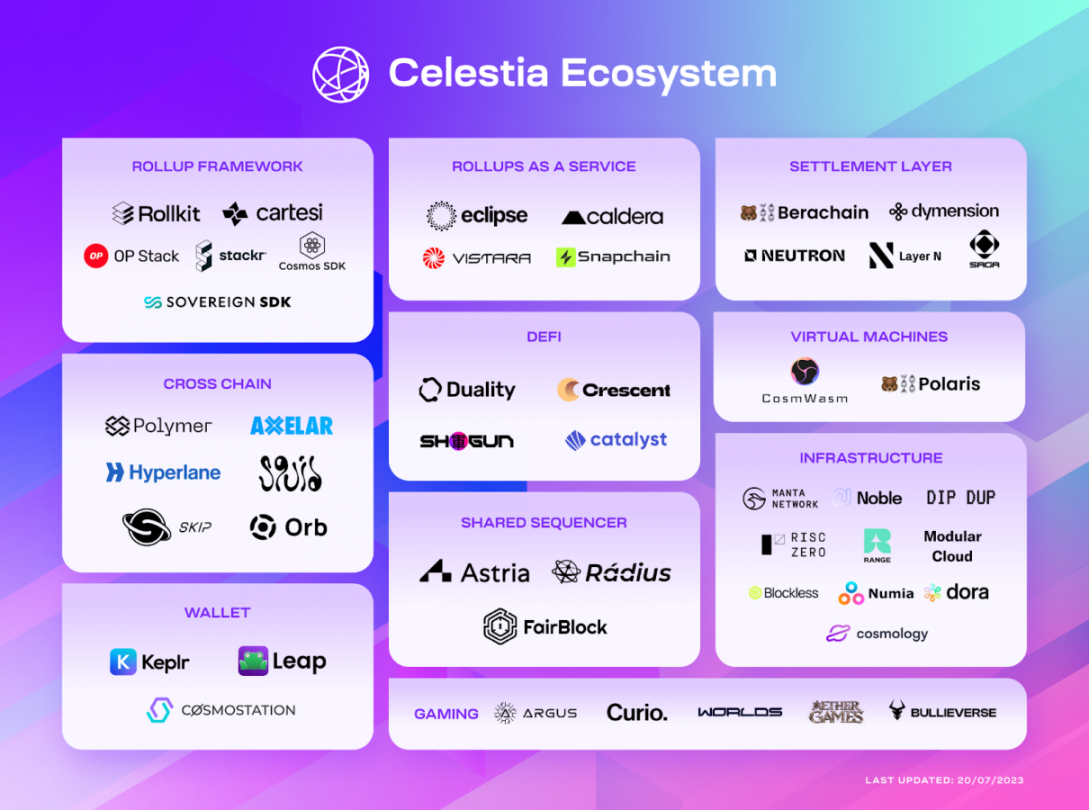
If Celestia were to become completely disconnected from the Ethereum ecosystem, the narrative of its modular blockchain might lose some of its meaning. These projects indicate that, guided by the theory of Fat Application Chains, the cryptocurrency space is moving towards more innovation and development.
We are witnessing an increasing number of cryptocurrency applications actively building their own application chains. In the future, we can expect to see more similar cases, as most of these projects aim to achieve product diversification and retain value within their systems rather than competing at the application layer. This trend suggests that the "Fat Application Chain Theory" holds the potential to further drive innovation and development in the cryptocurrency space. The reform of business models will contribute to shaping the future of the crypto world, creating more value for users and ecosystems.


All Comments