


The world of blockchain technology and cryptocurrency is constantly evolving and expanding, and one of the latest trends to emerge is the rise of non-fungible tokens (NFTs). These unique digital assets have been making waves in the art world, as well as in sports, music, and other industries where there is demand for authenticated digital content.
One of the most promising platforms for NFT development is Solana, a high-performance blockchain that has been gaining popularity in the cryptocurrency community for its speed, scalability, and low transaction fees. By leveraging Solana’s capabilities, developers can create NFT marketplaces that offer fast and secure transactions, as well as a seamless user experience for buyers and sellers.
In this blog, we will explore the process of building a Solana-based NFT marketplace, including the key features and benefits of this technology. Whether you are an artist, collector, or entrepreneur looking to capitalize on the NFT boom, understanding the power of Solana can help you take your digital asset game to the next level.
What is a Solana-Based NFT Marketplace?
A Solana-based NFT marketplace is an online platform that allows creators, artists, and collectors to buy, sell, and trade Non-Fungible Tokens (NFTs) on the Solana blockchain. Solana is a high-speed, low-cost, and secure blockchain that is gaining popularity in the NFT space due to its ability to handle a large volume of transactions quickly and efficiently.
Solana-based NFT marketplaces provide a platform for creators and artists to showcase and sell their unique digital creations, such as artwork, music, videos, and other digital collectibles. NFTs are unique digital assets that are stored on the blockchain, making them tamper-proof and easily transferable. This means that buyers can be sure that the NFT they are purchasing is authentic, and ownership can be easily transferred.
What Are the Benefits of Developing an NFT Marketplace on Solana?
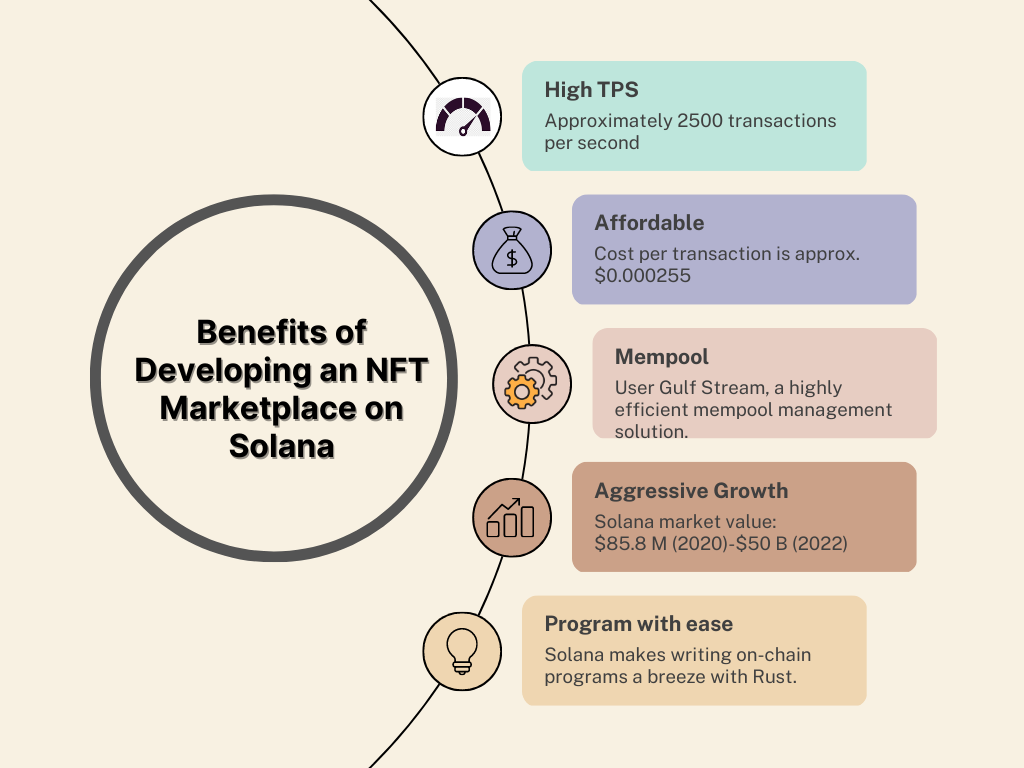
Developing your NFT marketplace on Solana can be a great choice for several reasons. Here are some unique points that explain why Solana can be an excellent platform for your NFT marketplace:
- No Mempool Problem
One of the main advantages of using Solana for building NFT marketplaces is that it doesn’t have the mempool problem that other blockchain platforms face. The mempool is a backlog of unconfirmed transactions waiting to be processed, which can cause delays and higher fees. Solana’s unique consensus algorithm, Proof of History (PoH), eliminates the mempool problem, allowing for faster transaction times and lower fees.
- Programmability
Solana is highly programmable, making it an ideal platform for building decentralized applications (DApps) such as NFT marketplaces. Solana supports several programming languages, including Rust, C++, and Typescript, which makes it more accessible to developers with different skill sets. Additionally, Solana provides several development tools and resources, such as Solana Studio and Solana’s Web3.js library, which can help streamline the development process.
- Interoperability
Solana is designed to work seamlessly with other blockchain platforms, such as Ethereum and Binance Smart Chain. This interoperability allows developers to build cross-chain applications that can interact with different blockchain networks. For NFT marketplaces, this can be beneficial for accessing liquidity pools or integrating with other decentralized applications.
- High-Speed Transaction
Solana is capable of processing more than 65,000 transactions per second, which is significantly faster than other blockchain platforms. This means that Solana can handle a large number of transactions without slowing down or incurring high fees. This makes it an ideal platform for building high-volume NFT marketplaces, where speed and efficiency are crucial.
- Low Transaction Fees
Solana’s transaction fees are significantly lower compared to other blockchain platforms, such as Ethereum. This makes it more cost-effective for creators to mint and sell their NFTs, especially for smaller transactions. Lower transaction fees can also help reduce the barrier to entry for new creators looking to enter the NFT market.
- Scalability
Solana’s scalability is another advantage for building NFT marketplaces. Its unique consensus algorithm, Proof of History, allows it to scale horizontally across many nodes without sacrificing speed or security. This means that Solana can handle a large number of users and transactions without slowing down, making it an ideal platform for building high-traffic NFT marketplaces.
- Decentralization
Solana is a decentralized platform, meaning that there is no central authority that controls the platform. This decentralized nature ensures that the platform is secure and transparent, and no single entity can manipulate the network.
- Liquidity
Solana’s growing ecosystem and interoperability with other blockchain platforms make it an ideal choice for accessing liquidity pools. This can be beneficial for NFT marketplaces, as liquidity is essential for enabling buying and selling of digital assets.
Essential Features of an NFT Marketplace
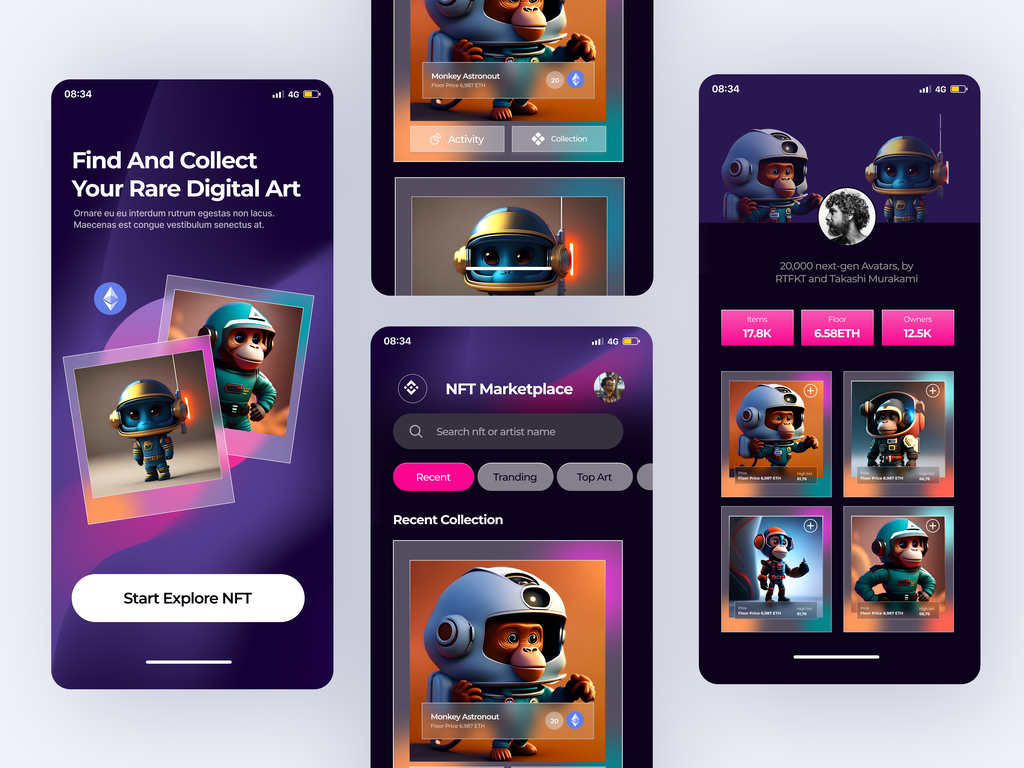
- Crypto Wallet
One of the most important features of an NFT marketplace is the integration of a crypto wallet. This allows buyers and sellers to store, send, and receive cryptocurrencies and NFTs directly within the marketplace.
- Shop Window
A visually appealing and user-friendly shop window is essential for showcasing NFTs and attracting potential buyers. This feature should allow for easy browsing and filtering of NFTs, with clear descriptions and high-quality images.
- Streamlined Process of Registration
A seamless and efficient registration process is key to a successful NFT marketplace. This feature should require minimal personal information and allow for easy account creation, verification, and management.
- Search Feature
A powerful and effective search feature is essential for buyers to easily find the NFTs they are interested in. This feature should allow for filtering by various criteria such as category, artist, price range, and popularity.
- User History
An NFT marketplace should have a feature that allows users to keep track of their purchase and sale history. This can help users to keep organized, track their investments, and manage their portfolios.
- Alerts
This feature allows users to set up alerts for specific NFTs or artists they are interested in, and receive notifications when new items are added to the marketplace or when prices change.
- Support
A responsive and knowledgeable support team is crucial to ensuring a positive user experience. This feature should provide users with access to support staff who can assist with any issues or questions that may arise during the buying and selling process.
How to Develop a Solana NFT Marketplace: Step-by-Step Process
Developing a Solana NFT marketplace can be a complex process, but with the right tools and guidance, it can be done efficiently. Here is an in-depth guide on the steps to develop a Solana NFT marketplace:
1. Define your NFT marketplace requirements
Before starting the development process, it is essential to define the requirements for your NFT marketplace. This includes defining the user interface, the types of NFTs to be supported, the payment methods, the smart contracts to be used, and the overall functionality of the marketplace.
2. Set up your Solana Development Environment
To develop your Solana NFT marketplace, you need to set up your development environment. This involves installing the Solana Command Line Interface (CLI) and the Solana Web3.js library. Solana also has a web-based development environment, Solana Studio, which can be used to deploy and test smart contracts.
3. Create the Smart Contracts
Smart contracts are essential for the development of any blockchain-based application, including NFT marketplaces. Solana uses the Rust programming language to develop smart contracts. Once you have defined your NFT marketplace requirements, you can start developing your smart contracts. The smart contract code defines the rules for creating and trading NFTs on your marketplace.
4. Develop the Front-end
After developing the smart contracts, you need to develop the front-end of your NFT marketplace. The front-end is the user interface that interacts with the smart contracts to create and trade NFTs. You can use different front-end technologies such as React, Vue, or Angular to develop the front-end of your Solana NFT marketplace.
5. Integrate Wallets and Payment Gateways
Solana NFT marketplaces require users to have a Solana wallet to hold their NFTs and make transactions. You need to integrate different Solana wallets into your marketplace to enable users to manage their NFTs. You also need to integrate payment gateways to enable users to buy and sell NFTs using different payment methods, such as credit cards, bank transfers, or cryptocurrencies.
6. Test and Deploy
After developing the smart contracts, front-end, and integrating wallets and payment gateways, you need to test your Solana NFT marketplace. You can use Solana Studio to test your smart contracts and front-end. Once you are satisfied with the results, you can deploy your NFT marketplace to the Solana blockchain.
7. Market Your NFT Marketplace
Once you have developed and deployed your Solana NFT marketplace, you need to market it to attract users. You can use different marketing strategies such as social media, paid advertising, influencer marketing, or content marketing to attract users to your marketplace.
Costs of Developing an NFT Marketplace on Solana
The cost of Developing an NFT marketplace on Solana can vary depending on several factors. Here is a detailed breakdown of the main costs you can expect when creating an NFT marketplace on Solana:
📌 Development Cost
The development cost is the most significant expense when creating an NFT marketplace on Solana. This cost is dependent on the number of hours spent by the development team to build the platform. The cost will also vary depending on the hourly rate of the development team. Typically, a team of developers will charge anywhere from $50 to $250 per hour, depending on their experience and expertise.
📌 Smart Contract Development Cost
Smart contracts are essential to any blockchain-based application, including NFT marketplaces. The cost of developing smart contracts will depend on the complexity of the platform and the number of contracts required. The cost of developing a single smart contract can range from a few hundred dollars to several thousand dollars.
📌 Design and User Experience Cost
Design and user experience are critical factors that determine the success of an NFT marketplace. The cost of designing the user interface, creating the logo, and other graphical assets can vary depending on the complexity of the design and the experience level of the designer. Generally, a professional designer will charge between $50 to $150 per hour.
📌 Hosting and Maintenance Cost
After the NFT marketplace is developed and launched, it needs to be hosted on a server to be accessible to users. The cost of hosting will depend on the hosting provider and the server specifications. The maintenance cost includes regular updates, bug fixes, and other technical support required to keep the platform running smoothly. The cost of hosting and maintenance can range from a few hundred dollars to several thousand dollars per year, depending on the size and complexity of the platform.
📌 Marketing and Promotion Cost
Marketing and promotion are essential to ensure that the NFT marketplace reaches its target audience. The cost of marketing and promotion can vary depending on the advertising channels used, such as social media advertising, influencer marketing, or paid search advertising. Generally, marketing and promotion costs can range from a few hundred dollars to tens of thousands of dollars, depending on the reach and effectiveness of the advertising campaigns.
The cost of Developing an NFT marketplace on Solana can range from $15,000 to $30,000, depending on the size and complexity of the platform. It is essential to budget accordingly and work with an experienced development team to ensure that the project is completed within budget and on time.
Conclusion
The development of Solana-based NFT marketplaces represents a significant opportunity for artists, collectors, and entrepreneurs looking to capitalize on the booming NFT industry. By leveraging Solana’s unique features such as speed, scalability, low transaction fees, security, and interoperability, developers can create NFT marketplaces that offer a fast, secure, and seamless user experience.
In addition, incorporating the essential features of an NFT marketplace such as crypto wallets, a visually appealing shop window, a streamlined registration process, a powerful search feature, user history, alerts, and support can help to attract and retain users, and ultimately drive success for the platform.
As the NFT ecosystem continues to evolve, it is clear that Solana will play a key role in shaping its future. Whether you are an artist looking to showcase your digital creations, a collector looking to add to your portfolio, or an entrepreneur looking to create the next big NFT marketplace, Solana-based NFT development offers a promising future for the industry.


All Comments