


Web3 is accelerating, and Arweave will be adopted by more developers as an infrastructure, creating a new and more colorful ecosystem. PermaDAO is a community of co-builders built for this purpose. Everyone involved can find a role in contributing to the Arweave ecosystem, and any proposal and mission for Arweave can be posted here and received support and feedback from the entire community. Join PermaDAO and build Web3!
Author: Spike @ Contributor of PermaDAO
Reviewer: XiongHa @ Contributor of PermaDAO
Defining Web3 Creator Economy: A Historical Dimension
At present, the Web3 creator economy is poorly behaved, with both NFT, GameFi, social media, and other attempts in a silent period. Azuki's reckless behavior has even caused heavy damage to the entire NFT track and creator economy.
However, in terms of the entire industry development cycle, the current Web3 creator economy is still in its early stages. This is not a slogan to cheer on, but rather an experienced viewpoint from the economic development cycles of internet creators.
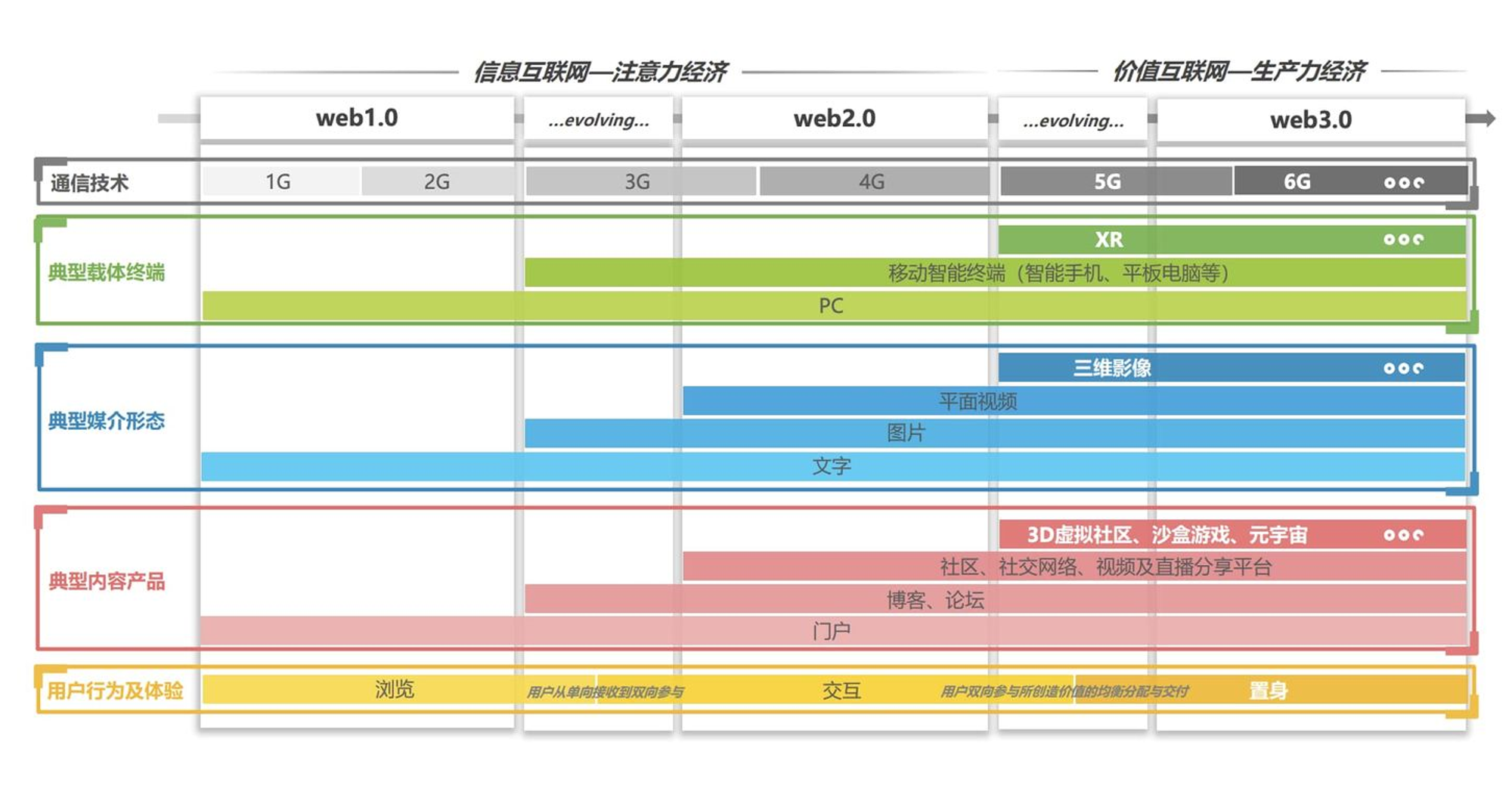
Schematics: Overview of the development stages of the internet content market
Source: https://www.wondershare.cn/document/2022-economic-white-paper-of-Internet-creators.pdf
Suppose to say that more creators and gold seekers are embarrassingly seen to be outnumbered than users and audiences respectively at the present stage of Web3, this is the case in the early stages of the internet as well. The expensive network access and electronic equipment naturally excluded the rights of ordinary users to participate. At that time, the Internet was Elitism, and they were repelled to use the Internet as a cashing channel.
However, in the 1990s, the first upsurge of the Internet in North America, in a sense, completed the initial user education. After the Dot-com bubble at the beginning of the millennium, everyone was dampened by the waves of the times. On the other side of the Eastern world, the wave of going overseas also signaled that the initial elite group began to break away from the shackled system, subsequently, they completed their capital accumulation, forming the basic internet pattern of China today.
Since then, in addition to the iPhone in the mobile The Internet Age and TikTok (short video) in the 5G era, the pattern of the global Internet has basically formed, and ultimately the gaint platforms have monopolized everything including the basic content production forms and creator groups.
From pictures, texts, short and long videos to music, more later innovations were targetted to change the Relations of production such as the break of platform monopoly by blockchain or the improvement of production efficiency by AI, but the basic forms tend to be stable.
From this perspective, the Web3 creator economy can be defined as a mechanism where the creators’ income will no longer be heavily extracted by platforms and their creations will be free of censorship and ultimately their creations will be set free completely with the support of blockchain technology.
In fact, Sector-Rotations have been within the Web3 creators' economic system. For example, the initial NFT music market was expected to change the high commissions of centralized platforms, but NFT did not fully play this role but leaped ahead of the competition about "Pictograms", anyway things would never be perfect.
Superposition and uncertainty: the Metaverse can come true?
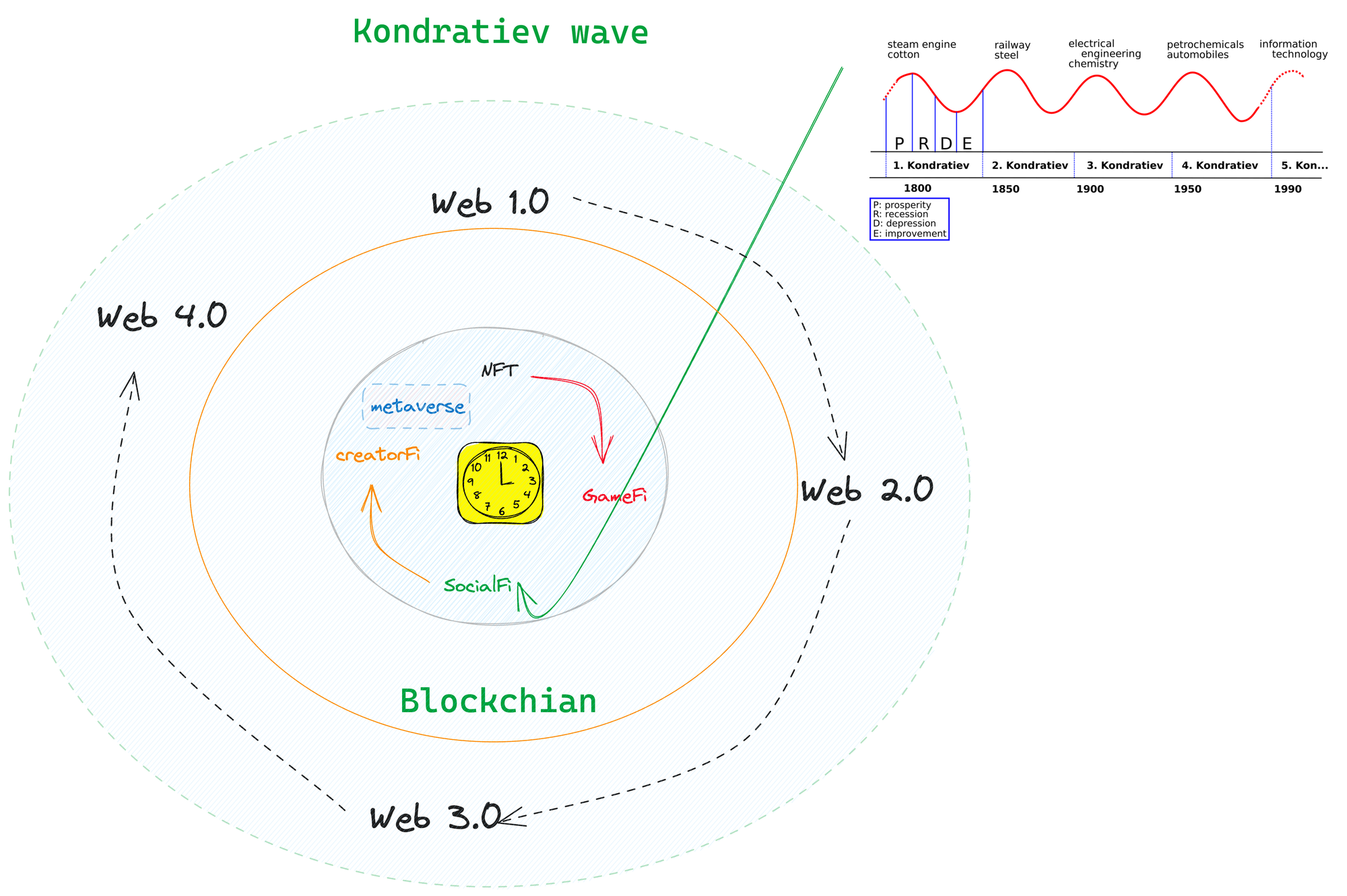
From a macro perspective, we are in a state of superposition of the macro climate of Kondratiev wave and the microclimate of internet development. Fundamental innovations in science have been inactive for a long time, and it has been hoped that superconducting technology come true and change the current stock competition.
After the human history has gone through three stages including the collecting society, Agrarian society and Industrial society, entering the information society is the human society form predicted by Toffler in the Third Wave. The development of the Internet since the 1990s has made us feel like we have been in it. From Web1.0 to Web2.0, we have witnessed the persistence of platform monopoly economy and the castration of information cocoon room on human perception.
The current digital economy is scalable enough to make us be in information society, and industrial production capacity is still important criterion for the competitiveness of countries. Toffler's statement that "**information is the most important factor of production**" is still not a reality, at least not all.
The emergence of the concept of "Metaverse" is expected to acually lead to the transformation of human society form. Calculated according to the Kondratiev wave cycle (this theory believes that there is a long-term fluctuation of 48 to 60 years in the development of capitalist economy, with an average of 50 years, which is generally understood as the result of human collective behavior), it is exactly the point of time of the renewal of computer technology, which has flourished since World War II.
Coincidently, Metaverse peaked after its renaming covering VR, hardware, games, social networking, even blockchain technology and Cryptocurrency etc. In short, we have witnessed the embryonic form of a new business model that surpasses existing internet platforms to fundamentally change the overall pattern of the creator economy.
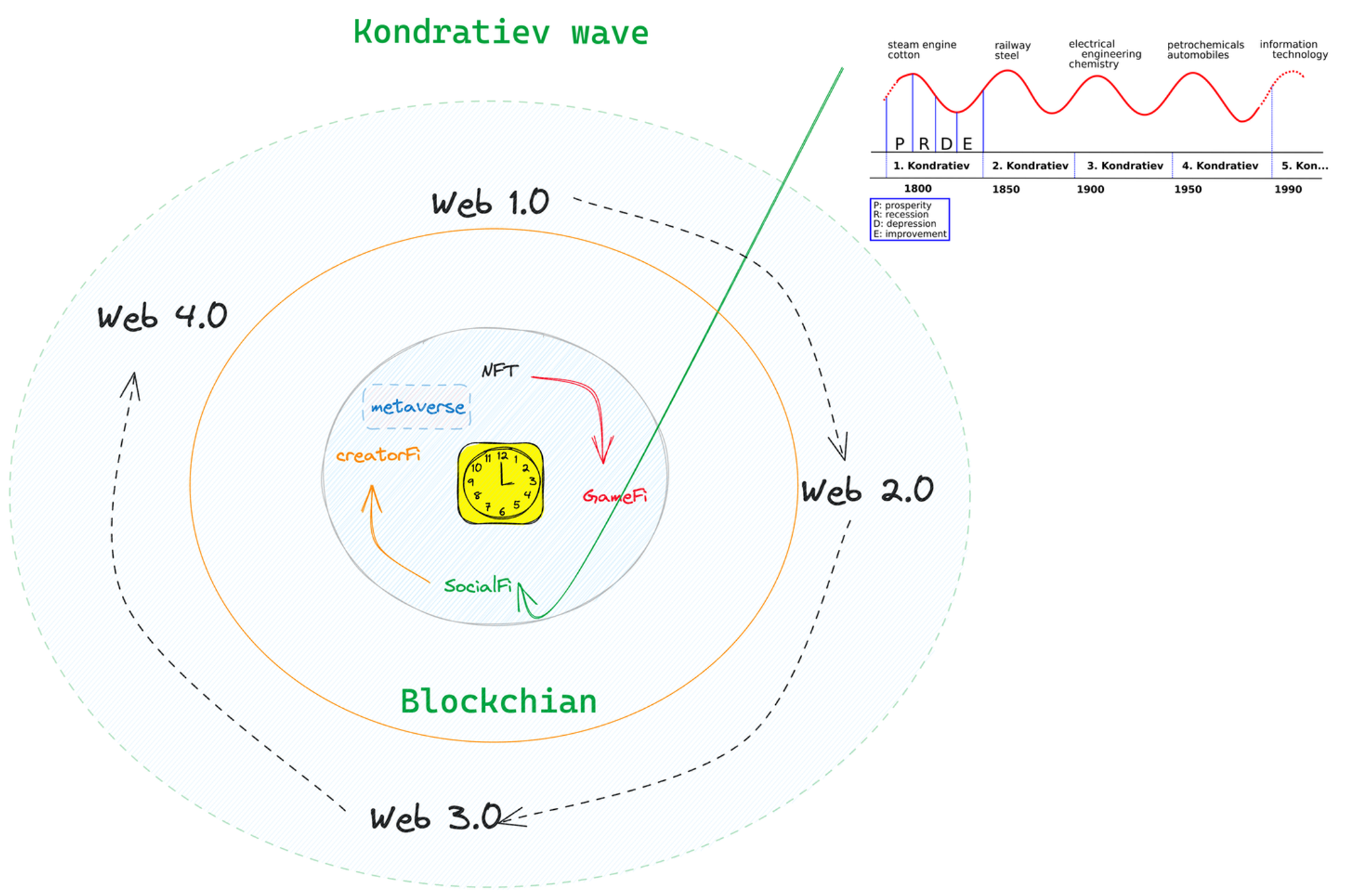
Schematics:Web3 Creator Business Cycle
Source:Arweave SCP Ventures
Metaverse to Creator: New Container
Dating back to the origin of the concept of the Metaverse, it usually refers to the science fiction “Snow Crash”. The "Metaverse" in it is actually a virtual human life scene, in which enterprises and organizations are responsible for street construction, while individuals are part of the operation in the economic system. The librarian can be regarded as the role of AI NPC, in which various architectural spaces can be considered as virtual land.
Inspired by it, Secondlife was launched in 2003 and basically achieved the illusion of an avalanche, even issuing its own Linden dollar that can be circulated within the game. 6000 activities are currently held every day among them, with the GDP totalling 500 million US dollars in 2015. From the perspective of a game, being able to exist for 17 years combined its current running stability proves its sufficient excellence and success.
However, compared with the rising star Roblox, Secondlife can only be considered as the appearence a wrong time. After all, Roblox is the greatest contributor to pushing the concept of Metaverse into the mainstream world. Roblox was founded in 2004 and launched a game with the same name in 2006. Currently, the number of DAU is close to 40 million, with a maximum of 5.7 million simultaneous online users and over 8 million developers.
In March 2021, Roblox wrote "Metaverse" into the prospectus for the first time, and defined the eight elements of the Metaverse: Identity, Friends, Immersiveness, Low Friction, variety, Anywhere, Economy, and Civility.
The biggest feature of Roblox is that it maximizes the MOD (Game Module Modification) mode. Roblox provides an extremely customizable game editor and environment, allowing users to customize their gaming methods, which can be seen as the opening of their own space within it.
Technology is a natural product of human evolution. The elements defined by Roblox themselves are ambiguous and more of a directional guide than a specific path for implementation. We need to continue to refine the technical points.
Like Bitcoin and blockchain, they are not resulted from technological breakthroughs, but they are similar to Watt's improved Steam engine. However, it was not until Satoshi Nakamoto combined the previously exsited P2P, Cryptocurrency, anonymity mechanism and PoW that Bitcoin was developed to truely realized a decentralized economic system.
This is the case of Metaverse as well. The technologies needed by the Metaverse have already existed such as XR (VR/AR/MR), 5G, Metaverse Computing, Edge Computing, blockchain and NFT, however, it was Metaverse that truly combined them into an integrated concept.
1. VR/AR - critical access to the Metaverse: they are currently focused on the visual and auditory fields and be made progress in touch, temperature, and movement in the foreseeable future. At present, the global market size of virtual reality technology in 2020 was12 billion US dollars, with the Chinese market accounting for 55%, VR accounting for 68%, AR accounting for 32%, and a total of 5.12 million globally shipped units.
2. 5G, WIFI6, cloud computing, edge computing: the link channel between people in the Metaverse will achieve ultra-high definition, dynamic rendering, preloading, and permanent online effect. According to report from Huawei, humans can only overcome dizziness when the monocular resolution reaches 6K and the frame rate (FPS) is 90Hz. At this time, a bandwidth of 1.4Gbps is required, and the ideal state is 16K@180FPS. However, the global penetration rate of 5G was only 10% in 2020. In fact, the general network speed is only 200Mbps where only 2K@90FPS can be supported ranking among the top 10 countries.
3. AI, visual development kit, one-stop development platform: reduce the development difficulty, such as Nvidia Omniverse one-stop development platform.
Roblox consists of three parts:
- Roblox Studio: it is a modular game production engine for developers where 1/5 of game players are their developers and independently produce UGC content;
- Roblox Cloud: it deploys 21000 servers in 21 regions worldwide and the servers have been directly connected to each other, being capable of processing 12 million requests per second;
- Roblox client: it is user oriented and is available for iOS, Android, PC, and Xbox , with the power of UGC, there are currently 20 million games available.
In terms of user composition, it is definitely oriented towards young people and can attract users to engage in social interaction within it, completing the traffic loop.
- Age: 29% are aged 9-12, 15% are aged over 25 , and approximately 70% are aged 5-24;
- Region: North America accounts for 32%;
- Equipment: mobile terminal accounts for 72%;
- Gender: roughly even;
- Usage time: daily usage time for single users is 153 minutes;
- Social interaction: on average, there are 61 messages per day, while 50 for WhatsApp users.
In terms of game production, it already has been capable of creating blockbusters and high retention, the number of players for the game “Adopt me” reached its peak of 2 million online simultaneously. 0.9% of games have been played for over 10 million hours, and there are 1504 games with over 1 million playing hours. Top 10 games account for 37% of the total game duration for players, 28% for games ranging 10-100 , and 25% for games ranging 100-1000.
In terms of economic model, it places great emphasis on developers. Within 12 months of 2020, 0.5% of developers and creators earned over $10 million in revenue. In 2020, mobile game revenue exceeded $1 billion, with a sharing ratio of 25% for platform , 24.5% for developers , 26% for platform consumption, and 24.5% for Roblox sharing. In 2020, the loss of $250 million was due to the rapid increase in developer sharing ratio. In Q1 2021, the total developer revenue was $120 million, with nearly 800 developers earning over $30000. The company expects to share nearly $500 million with the community on 21E.
It can be seen that young people, economic incentives, social interaction and Open platform are the four major factors to succeed, and only Roblox can meet these four factors at the same time.
From this perspective, Meta's impulsiveness and the popularity of MANA/SAND at that time can be universally perceived, land economics and virtual real estate were imitations of Roblox, and it is believed that subsequently extending to GameFi will change the current game landscape.
However, nothing has changed until now.
For example, the current problems for the development of Metaverse platform are generally shown below: the poor reusability of development, high difficulty in technology integration and high expenditure.
- The relevant standards of Apple, Huawei and Microsoft are not unified, and Nvidia omniverse needs hardware support;
- Hardware layer: The chip is monopolized by Qualcomm and the hardware devices market are divided into three parts (HoloLens, HTC, Oculus) .
- System layer: the system of Facebook, Steam, and Sony are self-developed, while AR Engine of Huawei is self-developed as well.
- Service layer: The development platform and distribution platform are not unified, and each hardware is self-contained.
- Application layer: it is divided into 2B/2C, where 2B is for smart education and healthcare, and 2C is for streaming and gaming, however this layer supports only a small number of games.
- The hardware, content, software, and service markets account for 37%, 36%, 19%, and 8% respectively, however the overall market size is relatively small. For example, Oculus Quest 2 of Facebook is expected to reach 10 million units. Prior to this, it was difficult to be scalable enough to reduce the high cost.
Outline the economic characteristics of creators
The previous round of hype was not entirely worthless, at least we can summarize the characteristics from a successful economic platform for creators.
- Open system and closed-loop economy: in a virtual world open to everyone, try to keep economic activities circulating within the system as much as possible; The mainstream world values its openness, and it undoubtedly has a strong attraction in the current situation of various platforms. The crypto world hopes to use NFT to achieve economic circulation.
- Virtual interaction and real emotions: non real contact behavior can trigger human real emotions, and the further development of XR devices has the possibility of replacing real human contact.
- Asynchronous loading and synchronous rendering: large-scale multi-person collaboration and simultaneous online require massive network bandwidth and simultaneously presented interactions. Because of the multi variations of and user device performance, asynchronous loading and cloud rendering are required at this time, and local devices are only responsible for presenting the results;
- Public platforms and private creations: new platforms are required to be publicly oriented, and there is no centralized management organization built on the blockchain. However, each "venue" and "street" carries specific scenarios which is a typical UGC (User Generated Content).
Upon the realization of the points above, it would be worthless to go for the past outdated methods. At least, new rules of action are required besides the points below:
- Economic system: transforming B2C and C2C transaction forms into NFT and truly achieving decentralized economic system operation will at least reduce the encroaching ratio by certain channels;
- Fundamentals of operation: from a centralized internet platform to a blockchain platform, it is advisable to achieve decentralized data storage, to achieve "login one time, operate in the whole network " and to break through the current state of internet isolation while protecting personal privacy.
- In the short term: The crypto economy requires the creator communities to complete a new round of user education, while the creators need the crypto economy to break away from exploitation by centralized platforms.
- In the medium or long term: it is advisable to take the blockchain as the foundation to operate on the chain for creators' economy and control personal data, and it is only by the underlying infrastructure built on the blockchain that the problem of platform monopoly can be resolved.
So far, the basic outline of the Web3 creator economy have been completed and typical case studies will be conducted in the following text. These three cases are all based on Arweave's solutions with stable operations for a long time and without being too affected by the market environment. It is believed that these practices will become benchmarks for the future Web3 creator economy, thereby completing the innovation of the existing creator system.
Case study: Creation, Socialization and Standardization
With the development of computer technology, the objects for creatation are no longer limited to the form of text. The decreasing entry threshold for games, music, and videos, and the increasing popularization of creator groups are darkening the early internet elite, facilitating the democratization of rights for creation.
In the social stage, there is a new change called the migration of the on chain data production paradigm - the transformation and increase from DeFi data to social data. Although social data is a rich mine to be explored, its direct economic value is not as good as DeFi. Therefore, public chains for storaging such as Arweave are the most acceptably suitable.
Finally, Arweave proposed UDL (Unified Data Standard), hoping to unify on chain data formats in future, create universal standards similar to URLs, truly unleash the potential of creators, and solve their concerns from a technical perspective.
The wonderful use of economic incentive mechanisms and self-organization in an open world
"Re-creation" is not a new concept. In the 1980s, Ultima, an RPG game, provided players with an open world map, while game “Elite” in 1983 was a relatively high degree of completion, in which players could play the role of astronauts driving spaceships, shuttle in the universe, complete various tasks, and player behaviors began to have an impact on the game ecology.
The current game re-creation can be divided into five types: Re-creation, MOD, Townsmen, Sandbox Games, and UGC.
There has been irreplaceable value about the encryption economy in the Metaverse. UGC content production is self-organized. However, the unstable profit expectations and ownership ambiguity have been all along the two awkward problems of the UGC content. For example, Blizzard has taken over the MOD copyright of Warcraft 3.
The Introduction of the NFT economic incentive model will promote a clear mechanism for both the copyright and the value transmission, clarify the ownerships of game props obtained by players, and make their props tradable and storable, be free of the problem of copyright infringement caused by re-creation, and develop one's own gameplay within relatively developed games, conduct clear profits instead of high channel fee from centralized platforms, for example, Steam and App Store accounted for 30%, Microsoft and Epic accounted for 12%, which is generally around 50% in China.
The most typical example here is the popularity of Axis Infinity in Southeast Asia. During the epidemic period, many Filipinos realized the "Play 2 Earn" mode through Axie Infinity. The minimum wage in the Philippines is 200 dollars, and each amateur Axie Infinity player can earn an average of 200 SLP (Small Love Potion) every day. Each month can earn more than 1000 dollars that is several times of their own working income. The current price will also exceed their minimum wage. And the activitive players will promote the prosperity of land sales and markets, which can be understood as the prosperity of commerce driving the rise of land prices.
And the P2E model is also a counterattack against digital labor. The theory of digital labor suggests that centralized platforms exploit data generated by users, and even games can become 'players' of platforms, this players are called playbor. The P2E model of the crypto economy is not only an evolution of game creation models, but also a reshaping of the economic system.
Subsequently, there is the necessity of freely created content. The reason why UGC is needed to generate content rather than traditional producers providing an open world model, is mainly because the present production ability is clearly not keeping up with the time consumption of game players. The current 3A major requires an average of 5 years for a team of 1000 people to produce content, but it only takes 189 hours for players to fully experience it, games like 'King of Glory' that have been profitable for over 5 years appeared basically once in a life time.
Therefore, if a large number of users and a large amount of time pour into the Metaverse, UGC is the inevitable choice. No organization or individual can develop the entire environment. Moreover, this UGC is not disorderly, but will give rise to new organizational forms - DAO, such as YGG forming Axie teams for gaming and sharing, with over 2000 members and raising over millions of dollars.
Furthermore, platforms such as Mirror are closer to the most traditional creator economy, namely the writing paradigm. Unlike transaction information such as Ethereum, Mirror's data is in text format, and then all of it will be uploaded to ArWeave for permanent storage.
It can be understood that Mirror does not solve the problem of data transferability but the problem of permanent storage of text. In the previous group of creators, they have experienced multiple changes and platform updates such as forums, blogs, and Weibo, and their data has frequently encountered issues such as loss. Although it can be solved through downloading and other methods, which can lead to access difficulties as well.
After uploading to Arweave, the same link can always be used to access content beyond time and space. Even if the operation of Mirror project stops, it will be saved on Arweave for at least 200 years.
Although Mirror and other platforms are relatively friendly to creators, they are still too professional, and UGC content requires a large number of producers. Therefore, the DAO model is clearly more suitable for ordinary users to access. For example, PermaDAO focuses on building by strangers, and you can write, translate, and operate contents within the Content Guild. After calculating the production data, it will be linked up to Arweave for storage, forming a ledger that will never be lost.
Using UGC X DAO to generate content not only promotes the growth of new organizational forms, but also facilitate the operation of new economic models.
Social Data: On Chain Migration of Real Relationships
This comes from the discussion of human social identity. People are social animals, and there will be a role sets identity system, which can reveal itself according to different Roles, such as Digital identity in family, workplace and digital space. In a sense, this is the most logical process, regardless of virtual space or real scenes, we always need to communicate with specific identities, and using digital tools is also the most practical and feasible migration path.
We can map relationships, first of all, because more human beings have lived in a network society since their birth. The network is a transcendental and unquestionable existence for Generation Z and post-2000s generation, just like water, air and screen.
On the whole, we have evolved based on the logic of digital immigration, digital twin, and digital species. The intuitive understanding of relationship mapping is to project real relationships into the Metaverse, namely virtual interaction+real action logic, such as video conference, live broadcast, and video social networking. Real people, real-time, non-contact communication. Digital twins has been in progress.
Secondly, the reason why migration can be carried out is **because people online time is increasing**, with 7.5 million viewers of the NBA Finals and 46 million viewers of the LOL S Finals. The total expenditure on electronic games was $174.9 billion, a year-on-year increase of 19.6%, which was twice the total revenue of movies and music during the same period.
The first highlight of products on the chain or Metaverse has been during the time of epidemic. Roblox hosted Lil Nas online concert, Fortnite hosted 100 DJ Marshmello online syllables, UCB held a graduation ceremony in My World, and the Travis Scott concert was held on the night of the fortress with a maximum of 12.3 million players online in real time.
Social activities will also tend to be online as time consumption scenarios change. For example, Tencent has been secretly developing a social product called "M8", which will be managed by the QQ team and positioned as a virtual social product based on maps, focusing on the social arena for young people. Old brand social products are all striving to prevent external disruption, so why don't native on chain social products have the opportunity?
In fact, if we decompose online social interactions, at least two aspects of behavioral shaping are needed - online image shaping and offline influences transfer:
- For example, the classic Avator virtual online image was lanched as early as 2021 by Epic launched MetaHuman Creator to help humans create virtual appearances and action creations. With the assistance of AI facial pinching systems, it has become extremely close to the real face effect.
- The second is the migration of offline influence, for example, Damus was created by former Twitter founder Jack's "positive calling for orders", creating a momentary sensation. Moreover, Meta's social product Threads relies on Instagram's account system.
We can speculate that if a sufficient number of people and a sufficient amount of time settle into the space on the chain, which product has higher economic value - it would definitely be social data, which will be the proof of people activities, and this is also the reason why Lens and other products can raise $15 million.
It is strange that a social product should be charged. It focuses on the concept of Open platform, but paying for data storage space is very consistent with the real behavioral logic, and it is easier to attract most people to migrate if it is cheap enough.
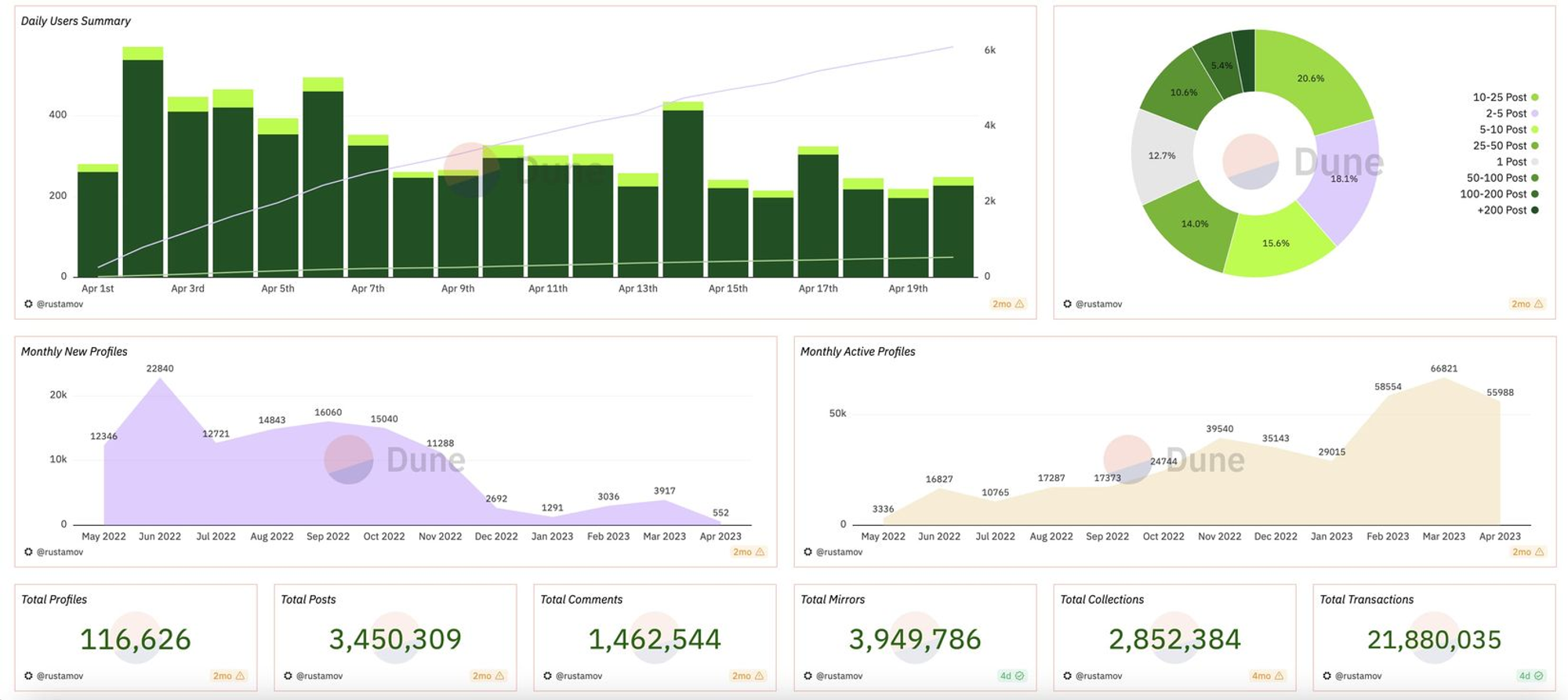
Schematics:Lens
Source: https://dune.com/rustamov/lens
After upgrading Lens to Momoka, it decoupled various functions, it is similar to the concept of modular blockchain. Lens data will be hosted in Arweave for permanent storage, and Bundlr will be used as the data rolling tool. In nearly 500000 transactions, the data storage service only costs less than $180, supporting the daily use of 6000 users, with a single transaction of less than $0.0004, which is sufficient to support large-scale promotion and use.
As afore-mentioned, social data requires complex classifications and organizations in order to reflect interpersonal relationships on the chain, which can be used for data mining and organization for complex operations such as monetization. Arweave has reduced the cost of data storage to a universally accepted level, and the next step is to provide a unified paradigm for data induction and organization.
Content monetization: $U and UDL
As McLuhan once said, "The intermediary is the message." The true greatness of an era is not the content it spreads, but the use of communication tools and their impact. The Couch potato of the television era and the internet addicted teenagers of the internet era are all people's stress reactions to new media. If people use social media at a high intensity in addition to basic physiological needs, they are likely to be considered to suffer from mental illness.
In fact, the current on chain content creation, social products, and more mainstream applications such as DeFi and Metaverse still account for a very small proportion in the global market. In 2021, the blockchain bull market highlights, when the global epidemic hit was not good, but by contrast, blockchain still has a very large space for development.
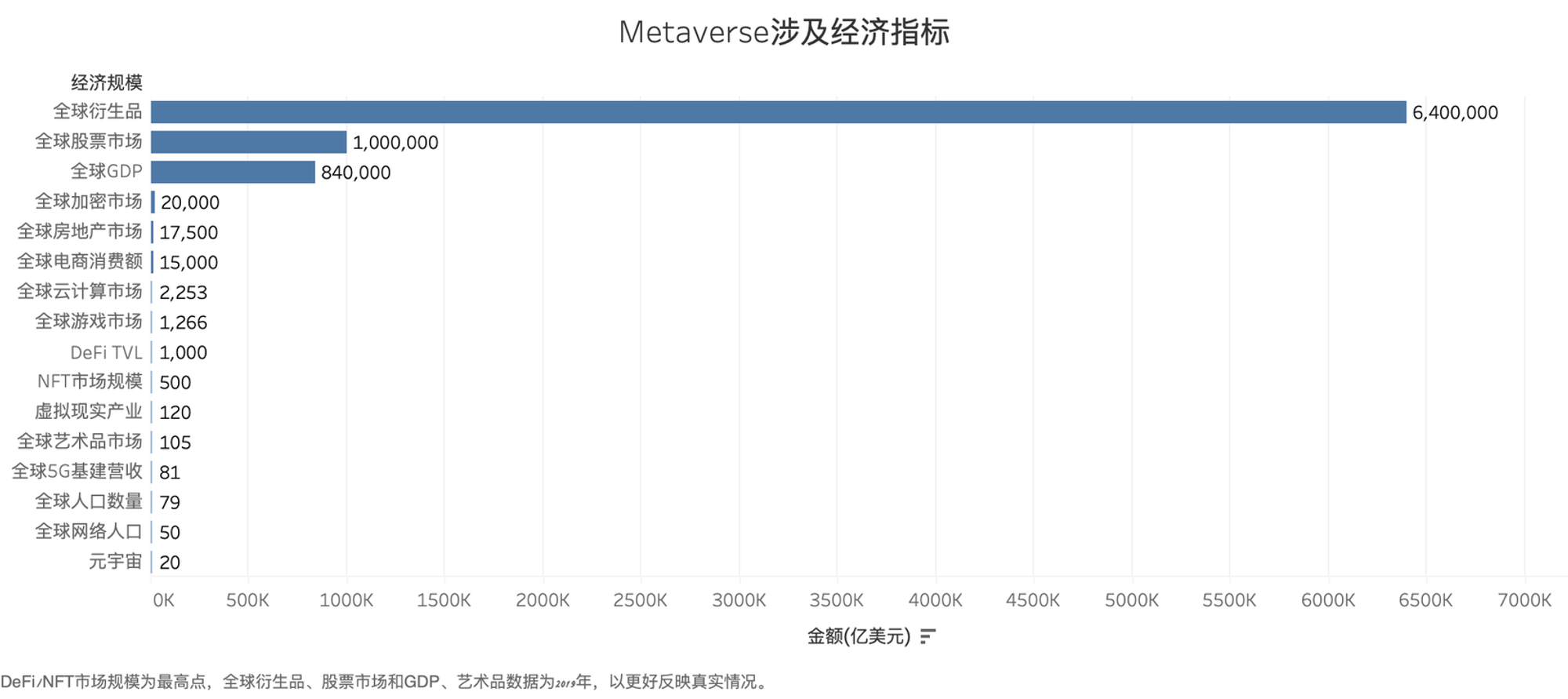
Schematics:Scale of major economic indicators
Source:Arweave SCP Ventures
For the current Web3 creator economy, the main problem is the lack of channels to rely on "content" for monetization. This is not just sensationalism because the current market size is too small. According to a report by BlockDance, "According to Linktree, 66% of creators view online content creation as a sideline, and 36% have content production time of less than a year. Among these early creators, only 6% earn more than $10000, 35% earn insufficient money to make a living, and 59% have not realized content monetization at all.”
According to the statistics of IResearch Consulting Group, "In terms of the fans distribution , among the creators who operate personal accounts, the number of long tail creators with less than 50000 fans dominates the lists with the percentage of 83.2%." These two points show that the problem of the current Web3 creator economy lies in the importance of traffic. Although there have been many drawbacks about the traditional centralized platforms including monopoly, inequality, invasion of privacy, etc, the advantage for the centralized platform is that it can actually capture traffic, and then support top creators to form a prosperous content ecosystem.
However, blockchain cannot adopt such methods and technically cannot capture users’ data. Therefore, it is necessary to encourage more native creators from an incentive perspective, which is also the cleverness of Arweave's launch of the $U token.
$U is a token issued based on Smartweave and was named from the first letter the abbreviation of Unit. The relationship between AR and U is similar to ETH and WETH. AR plays a role in paying storage fees within the ecosystem, but AR lacks the ability to call smart contracts, and $U will have stronger universality and programmability, undertaking the role of communicating with the Arweave developer ecosystem.
When users use AR to pay for storage fees, they will automatically receive a return of $U tokens and can be directly tradable, which is equivalent to obtaining a discount on transaction fees. The more data users access, the greater the discount would be, and thus encourage users to actively use it from the production level.
In addition, the launch of UDL is a solution for monetization of content directly related to Arweave. Even on the blockchain, the transferability of data can be a major issue, as evidenced by the constant occurrences of various cross chain bridge accident. The goal of UDL is to build a unified data protocol, as sam who is the founder of Arweave said "UDL allows users to embed programmable and legally valid licenses into any type of data uploaded to Arweave and generate continuous income from copyright royalty.
When creating content, UDL can also be used to label the data to support users' subsequent data management work. UDL can not only be effective for videos or text but also can theoretically predefine programming for all formats of data on Arweave.
Similar to various licensing systems in the open source field, UDL delegates permission of management to users themselves and tracks and manages them entirely through code to achieve a balance between protecting content copyright and maintaining an open world. Currently, UDL allows for replication, visibility, and publicity settings, as well as distribution management and availability for commercialization scenarios.
Conclusion
Starting with the current problems in the current Web3 creator economy, this paper focuses on reviewing the development process and the current stage of the Web3 creator economy, and taking games and the Metaverse as the entrance, discusses the reasons for the temporary silence of the creator economy.
In terms of a chronic cycle, the problem with Web3 currently lies in the shortage of infrastructure in various aspects. Although they are accumulated with practices such as Mirror and Lens, there is still a significant gap compared to traditional competitors, and there is no possibility of direct competition in the short term. For the industry, it remains more experimental than practical.
But before more infrastructure is built, the most important thing is to have the right direction.
The idea for Arweave is to create the storage layer at first, to involve the protocol layer afterwards, using the adoption of Mirror and Lens to slowly draw on it, hoping to guide the fire of Prometheus and illuminate the bright path of the next era.
References:
🔗 About PermaDAO:Website | Twitter | Telegram | Discord | Medium | Youtube


All Comments