


Web3 is booming, and Arweave is becoming a popular infrastructure choice for developers. PermaDAO is a community where everyone can contribute to the Arweave ecosystem. It's a place to propose and tackle tasks related to Arweave, with the support and feedback of the entire community. Join PermaDAO and help shape Web3!
Author:Spike @ Contributor of PermaDAO
Translator: Xiaosong HU @ Contributor of PermaDAO
Reviewer: Kyle @ Contributor of PermaDAO
In the past, we started discussing the development history of DePIN from Bitcoin, but after Ethereum converted to PoS, the entire encryption world has become extremely fragmented. On the one hand, although the PoW model represented by Bitcoin has been excellent, it is undeniable that the current situation is not It has existed for a long time - the vast majority of on-chain activities, such as DeFi, NFT, and GameFi, occur on the EVM ecosystem.
On the other hand, virtualization of hardware devices is not a unique trend of Web3. The vast majority of underlying physical hardware, such as fiber optics and servers, are far from end users, and even in the real industrial system, their employment proportion is not as high as that of the service industry. Even though China emphasizes the importance of industry and industry, the number of employees in the tertiary industry accounts for 48% (2021), solving the employment problem of nearly half of the population.
Therefore, when Ethereum forked, PoW believers were ultimately defeated, leaving almost nothing except Bitcoin. However, in the author's opinion, there are still two sparks of hope left, one of which is based on hardware needs, such as storage and GPU utilization platforms, which always require sufficient redundant inventory resources to create additional incentive space; The second is demand-based hardware orientation, that is, DePIN, this type of business always requires hardware to meet business needs.
The logic of storage platforms such as Arweave is based on the following two points:
- The total amount of storage space in the world far exceeds actual needs and can be included in a unified incentive network;
- For miners, the incentive model that takes into account efficiency and fairness is proof of work, because the amount of data is an objective evaluation indicator.
Of course, in actual operation, audio and video data or more specific data will receive more incentive weight, but in general, the pursuit of more objective data storage is the goal of miners, and additional incentives can even be established based on this Mechanism, such as $U, is a secondary issuance of tokens based on storage fees to directly encourage users to upload data.
The second category is demand-based hardware, that is, such hardware equipment does not originally exist, or its purpose is not DePIN. However, due to strong business demands, it became necessary to conduct operations on the hardware.
Taking the smart socket Starpower as an example, under the concept of virtual power plant (VPP), traditional, centralized power generation will be transferred or dispersed to emerging, distributed energy models. ln the Web3 model, users move to distributed energy sources providers, not only reduce fossil energy consumption but also obtain $STAR tokens. With strong enough user willingness and large user scale, the economic value of their tokens can be maintained for a long time.
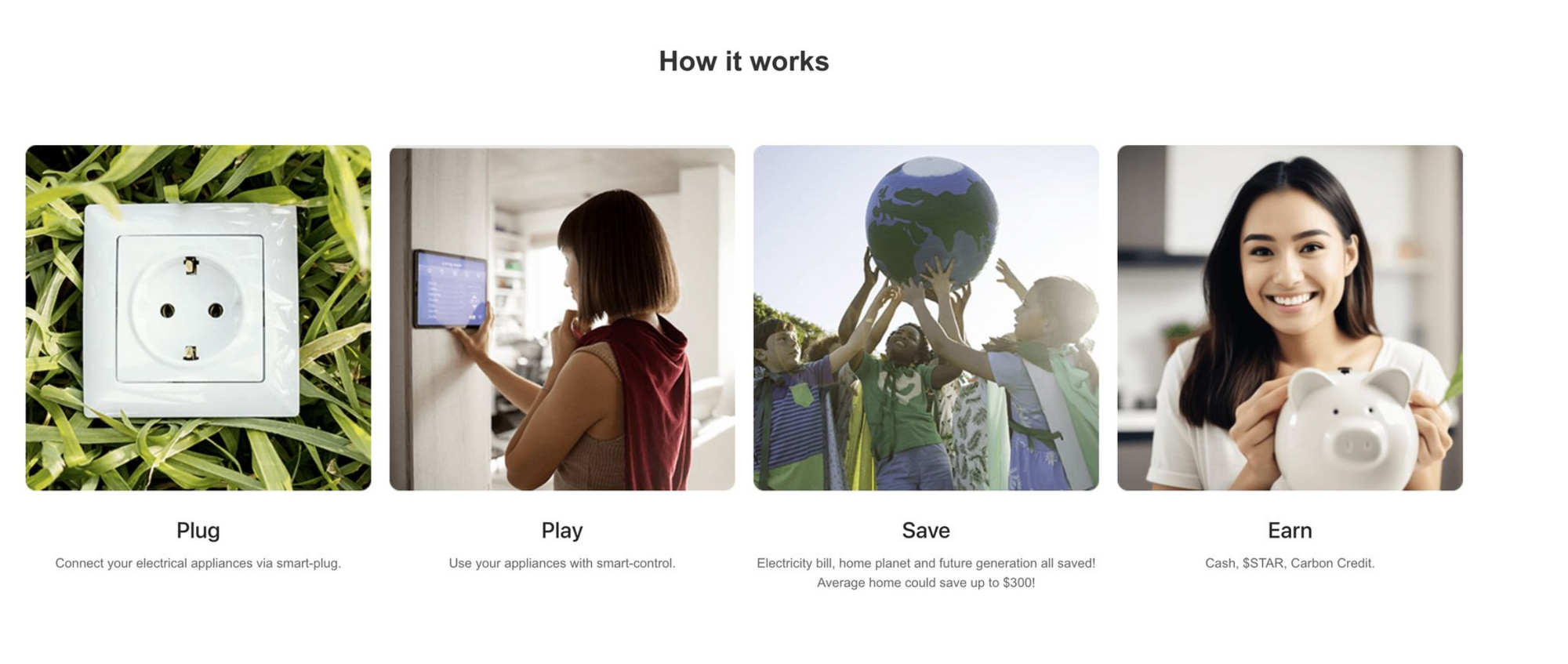
In other words, under the narrative logic of DePIN, it is closer to the traditional commercial sales mechanism. The sockets purchased by users themselves are a daily and popular demand, and on this basis, adding Web3-related functions has a sufficient pressure pool from the beginning.
After Ethereum, DePIN Is The Only Entity
Strictly speaking, Bitcoin is the largest supporter of physical hardware. There are at least millions of mining machines around the world that have been or are currently participating in the operation of the network. However, Bitcoin lacks sufficient spillover and its use can only be used by miners, but cannot provide application value.
In addition to shouldering its own business needs, DePIN actually plays a role in linking the blockchain and the real physical world.
DePIN refers to the combination of physical devices and blockchain technology to achieve decentralized management and control. Traditional physical devices are usually controlled and managed by centralized entities or organizations, while DePIN makes the control and management of devices decentralized, transparent, and trustworthy through the distributed ledger and smart contract technology of the blockchain.
Traditionally, DePIN is implemented by recording the information and control rights of physical devices on the blockchain and realizing automated management and control of the device through smart contracts. In this way, whether the owner, user or other relevant parties of the device can verify the status and operation of the device through the consensus mechanism on the blockchain. At the same time, due to the non-tampering and decentralized nature of the blockchain, DePIN can effectively prevent the tampering and manipulation of device data and improve the security and reliability of the device.
From the perspective of entity theory, the world must be divided into the observable and unobservable worlds. These two parts are mutually opposed and cannot be coordinated. Only in this division mode can the most basic entities be confirmed and subsequently recognized and discussed.
The PoW mechanism is actually the same. Taking Bitcoin as an example, electricity needs to go through mining machines to be converted into Bitcoin, and electricity consumption is a widely recognized material consumption process. The same applies to DePIN, where data always requires special hardware to be adopted by the blockchain.
However, PoS is not like this. The data in Ethereum is a calculated representation, and its actual operation does not correspond to a real hardware device. Users do not need specific devices to use it, and developers do not need to invest in dedicated hardware to access the network. Even the miners themselves, who are professionals in maintaining network operations, have transformed into pledge token providers, losing the necessity of professional division of labor.
In a broad sense, currently, PoS chains such as Ethereum account for the vast majority of TVLs, while PoW modes such as Arweave and Filecoin account for a relatively low proportion except for Bitcoin. If this situation persists, blockchain will lack sufficient physical layers and become a part of the Web2 framework, unable to truly establish its own censorship resistance.
If the underlying hardware lacks sufficient storage, then decentralization on it will be meaningless. The importance of PoW cannot be erased due to high power consumption. Outside of Bitcoin, most DePIN models have the main goal of saving energy.
In addition, if the blockchain network is directly built on existing network facilities, there will be the following problems:
- The data lacks universality. Traditional physical devices are usually provided by different manufacturers and suppliers, which leads to interoperability issues between devices. For example, data transmission and sharing between different devices may be limited, thereby reducing the efficiency and flexibility of the devices.
- Infringes user privacy. Traditional physical devices typically require users to provide personal and sensitive data, such as identity information, financial information, etc. Due to centralized management, user data may be abused or leaked, leading to issues with data privacy.
- The data lacks availability. Traditional physical devices require users to trust the data and information provided by the device. However, due to centralized control and management, users are unable to verify the authenticity and integrity of these data. This may lead to a decrease in user trust in the device.
- The system lacks robustness. Traditional physical devices are usually controlled and managed by centralized agencies or organizations, which leads to single points of data failure and potential security risks. For example, if a centralized physical device is attacked or malfunctions, the entire system may be brought down.
At present, the PoS mechanism has stronger energy friendliness and extremely strong expansion capacity. As long as it does not exceed the physical limitations of the underlying hardware, the expansion capacity of PoS can continue to improve. For example, the L2/L3- LN layer can indeed ensure network security through the restocking mechanism.
However, the value orientation of DePIN still holds great significance, and security and decentralization still rely on physical hardware. As mentioned earlier, the security level of DePIN depends on hardware devices, which can have sufficient dispersion, especially products such as smart sockets, which can theoretically reach households around the world without considering concentration issues.
Essentially, DePIN is addressing issues of data source and credibility. It is not in opposition to PoS, but rather a form of complementarity. In addition to the dispute over the blockchain development model represented by Bitcoin and Ethereum, there is also a compromise option for DePIN.
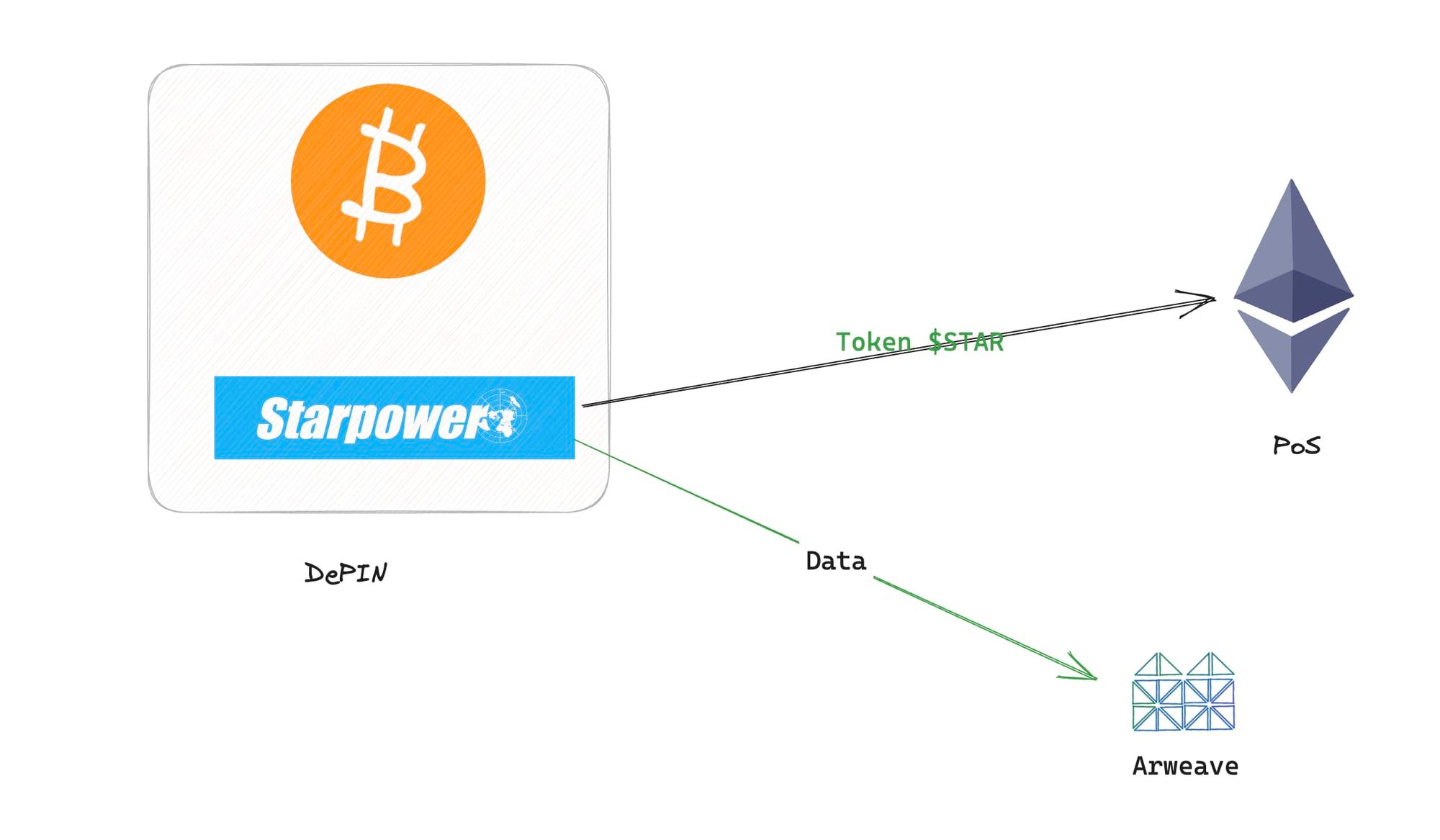
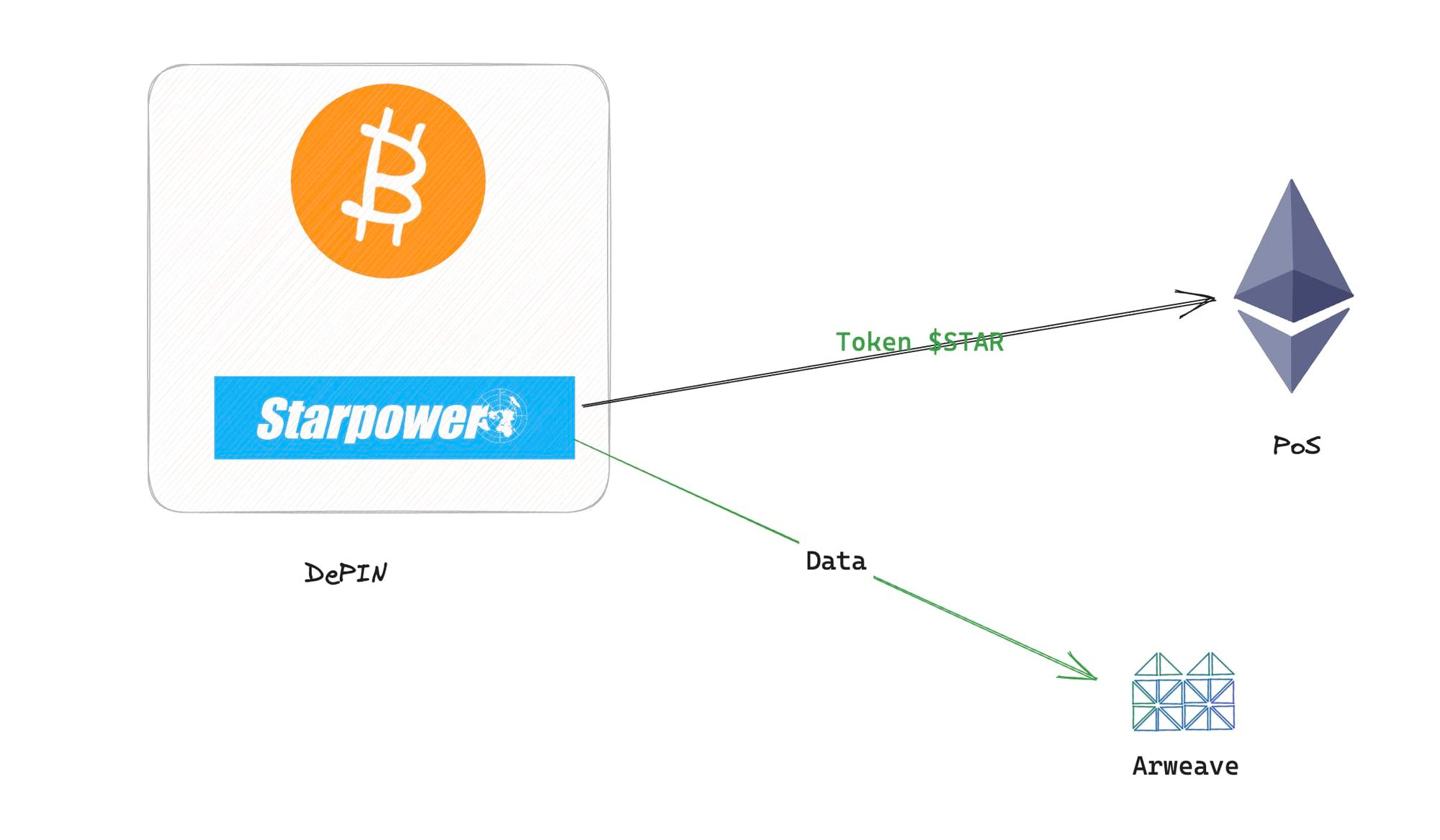
The operational logic of DePIN can be summarized as follows: DePIN relies on hardware devices to generate data, which can be uploaded into PoS to build an economic model. Furthermore, the data can be stored in Arweave and saved on the hard drive, completing the dual circulation of data and economic value.
In addition, the price of DePIN's equipment is far lower than the staking costs of Bitcoin and Ethereum. Equipment such as Starpower is sold for hundreds of dollars, while the price of a Bitcoin mining machine and 32 ETH is in the tens of thousands. If you participate in Various types of cloud mining or LSD protocols will lose control of the hardware equipment.
In essence, DePIN is the optimal solution to the democratization of control rights, which can be achieved at a cheaper price, rather than masking impracticability with theoretical feasibility.
It can be summarized as follows. DePIN has three meanings for the blockchain:
- Decentralized Control: DePIN disperses control of devices to multiple participants through blockchain technology, achieving decentralized management and control. In this way, not only can the flexibility and response speed of the device be improved, but it can also prevent single points of failure and attacks, and improve the reliability and security of the device.
- Data Credibility: DePIN records device information and operations on the blockchain, achieving transparency and traceability of information. Anyone can verify the status and operation of devices through consensus mechanisms on the blockchain, ensuring the credibility and fairness of the devices.
- Permanent Security: DePIN utilizes the immutability and decentralization characteristics of blockchain to prevent device data from being tampered with and manipulated. The data and operation records of the device are encrypted and distributed on the blockchain, and only authorized participants can access and modify the data, improving the data security of the device.
DePIN New Ideas: Normalization and Objectivity
DePIN reconstructs the objectivity of data, which is consistent with the Arweave principle mentioned earlier. Specifically, the following methods are needed to organize objective data, including data production, data flow, and final storage.
One of the importance of DePIN in blockchain is to improve data security. In traditional centralized architectures, data is stored on centralized servers, which makes it vulnerable to hacker attacks or data leakage risks. The introduction of DePIN can disperse data storage and processing across multiple nodes, thereby reducing the risk of a single point of failure and increasing data security.
By using DePIN, data can be dispersedly stored on multiple devices, with each device only storing part of the data, so that even if a device is attacked or malfunctions, other devices can still continue to provide services. At the same time, DePIN can also use encryption technology to protect the privacy and integrity of data, ensuring that data is not tampered with or leaked during transmission and storage.
In addition, DePIN can also achieve data transparency and non-tamperability by using blockchain technology. Arweave is a public distributed ledger where all transactions and data are recorded on the chain and cannot be tampered with. By storing data on a blockchain such as Arweave, data integrity and traceability can be ensured, preventing data from being tampered with or forged.
In summary, one of the importance of DePIN in the blockchain is to improve data security and thereby build objectivity in data production. Protect data through decentralized storage and encryption, and use blockchain technology to achieve data transparency and non-tamperability, which can effectively improve data security and protect user privacy and rights.
In addition, the importance of DePIN lies in its ability to increase the credibility and transparency of blockchain systems. Traditional centralized systems face information asymmetry and trust issues, while DePIN's data flow is entirely on the chain, avoiding the vulnerability of self-built networks. For example, Starpower's data will be broadcast onto Arweave.
DePIN can provide a more reliable source of data. In traditional centralized systems, data is often controlled and managed by a single organization or individual, which can easily lead to data tampering and forgery. In decentralized systems, the data of physical devices is shared and verified by multiple nodes, ensuring the authenticity and integrity of the data. For example, in Starpower's data management, by binding physical devices to blockchain, real-time tracking and verification of logistics information can be achieved, ensuring the accuracy and credibility of data.
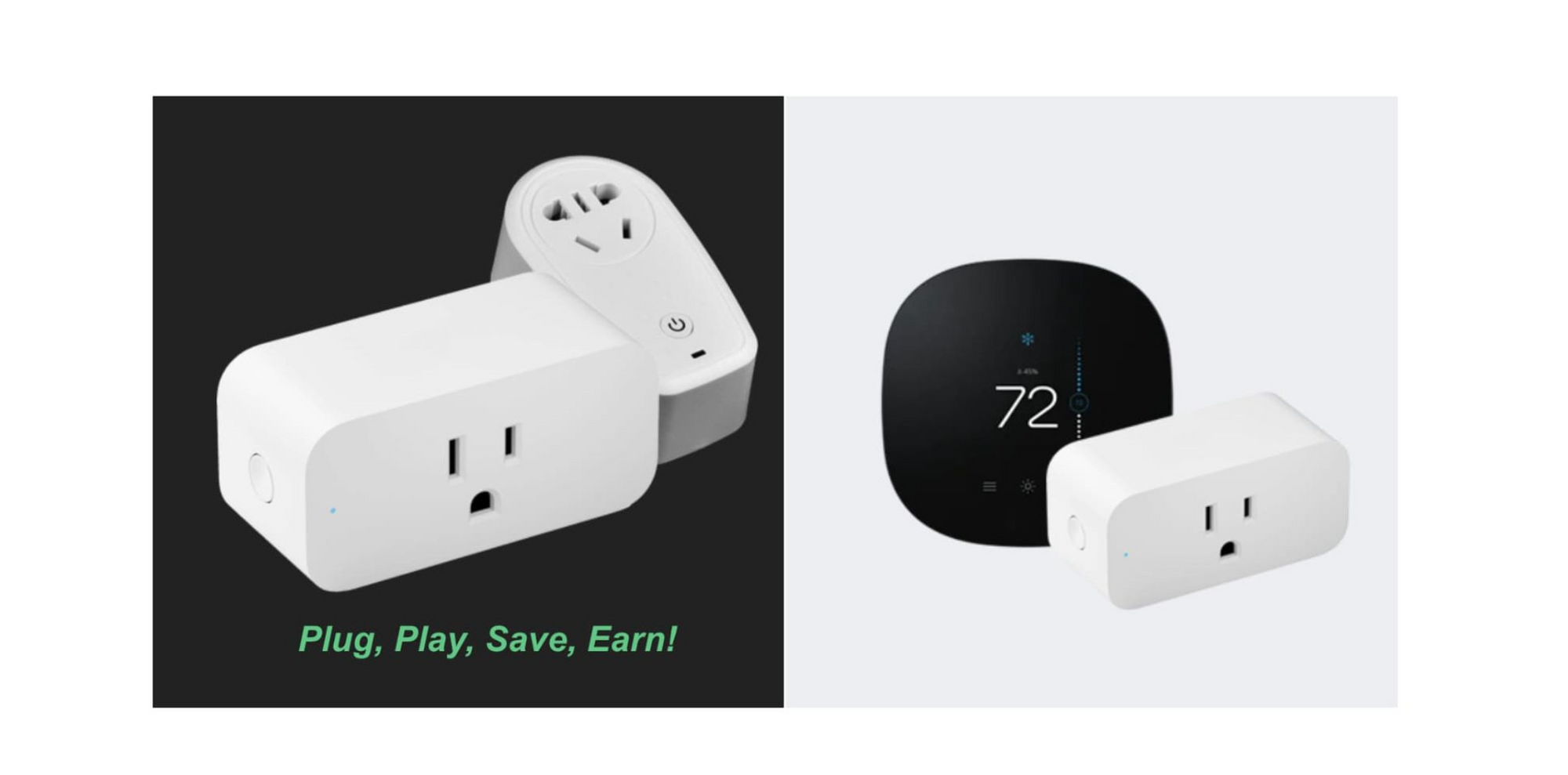
DePIN can provide greater transparency into the functioning of the system. In the traditional DePIN system design, users are often unable to obtain complete information and data flow paths, resulting in opaque and non-traceable information. The decentralized system implemented by Arweave achieves information disclosure and traceability by recording physical device data on the blockchain. Users can view and verify the flow path of data through tools such as blockchain browsers to ensure data transparency and traceability. For example, in the field of virtual power plants, Starpower is the first to make socket traceability data open and transparent by binding physical devices to Arweave, allowing users to understand the production and circulation process of the data.
To sum up, the importance of DePIN lies in its ability to increase the credibility and transparency of the blockchain system. By providing reliable data sources and achieving information disclosure and traceability, DePIN provides a more trustworthy and transparent basis for the application of blockchain systems.
Finally, the importance of DePIN in the blockchain is reflected in reducing the risk of centralization. There will be about 1,000 backups of data on Arweave. Traditional centralized systems have the risk of single points of failure. Once the central node fails or is attacked, the entire system will face the risk of paralysis. The introduction of DePIN into Arweave for data persistence can disperse system risks and improve system reliability and stability.
By distributing physical devices to different geographical locations and into the hands of different parties, DePIN can avoid the impact of a single node failure on the entire system. Even if a node fails, other nodes can still continue to run and provide services, thus ensuring the continuity and availability of the system.
Additionally, DePIN reduces the risk of system attacks. In traditional centralized systems, attackers only need to attack the central node to paralyze the entire system. In a decentralized system, attackers need to attack multiple nodes at the same time to have a serious impact on the system, which increases the difficulty and cost of the attack.
The importance of DePIN in the blockchain is reflected in all aspects of reducing centralization risks. By decentralizing devices and power, the reliability, stability, and security of the system can be improved, thereby better protecting users' data and assets.
everVision Technology Stack: DePIN Technology Service Package
After uploading DePIN data to Arweave, it is not simply a data storage service, but rather a complete service that includes tokens, point systems, data management, and access to the Ethereum network.
For example, in DePIN design, supporting the execution of smart contracts is of great significance. Smart contracts are one of the important applications of blockchain technology, which can automatically execute contract terms without a third party. Specifically, their functions are as follows:
- Automated Execution: DePIN, which supports smart contracts, can automatically execute contract terms without manual intervention. This can greatly improve the efficiency and accuracy of contract execution and reduce the occurrence of human errors. For example, when a certain condition is met, the smart contract can automatically trigger device operations, such as Starpower's data upload operation, points recording, etc., without manual intervention, saving time-consuming manual intervention and avoiding centralized operations;
- Transparency and Verifiability: The execution process of smart contracts is traceable on the blockchain, and every step of the operation will be recorded. This means that anyone can verify the execution of the contract and ensure the fairness and credibility of the contract, which is of great significance to the subsequent promotion of Starpower;
- Data Security: DePIN, which supports smart contracts, can protect the security of contracts through technologies such as encryption and digital signatures. This means that both the content and execution of the contract are secure and cannot be easily tampered with or manipulated. For example, the data of the Arweave network itself is open and searchable, but combined with privacy services such as Mind Network, it can avoid the disclosure of personal information and only upload socket data;
- Flexibility and Programmability: Smart contracts can be programmed and customized as needed, and can be flexibly adjusted and expanded according to different business needs. This means that DePIN can adapt to different application scenarios and business needs, providing more personalized and customized services.
In summary, supporting the execution of smart contracts is one of the importance of DePIN in blockchain. In the planning of everVision, the above can be managed using everpay, such as building a built-in data upload service, and directly building a user identity system. For example, EverID can support mobile phone number and email login.
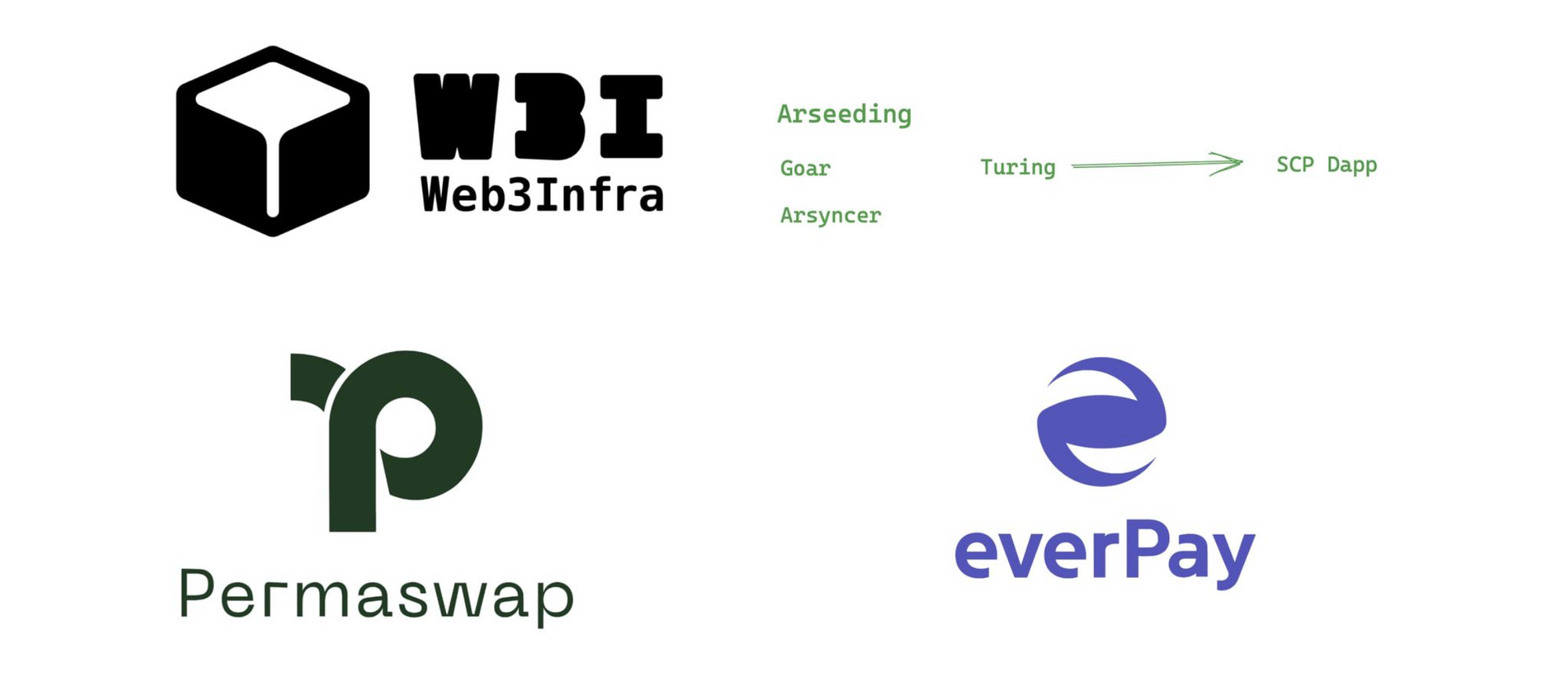
- Web3Infra provides a series of development components. Arseeding is responsible for uploading and synchronizing data, providing the Arweave gateway function, and can be used to upload, download, and broadcast any AR native transactions and data. Developers do not need to synchronize the full Arweave data, but only need to care about the data generated by the current business.
Arseeding supports bundle (ANS-104) transaction types. Compared to AR native transactions, bundle transaction types are more suitable for storage scenarios with a small number of files. When using bundles for file storage, Arseeding supports using everPay for storage fee payment, which means holding tokens such as ETH and USDC can also use Arweave's file storage service; At the same time, Arseeding can ensure 100% file upload to the Arweave node, improving the storage experience of developers.
- goar is an officially certified Golang SDK for Arweave. golang developers can use goar to easily interact with Arweave, including signing, sending, obtaining, and parsing transactions, uploading data, and obtaining and parsing block information.
- Arsyncer is a high-performance Arweave transaction synchronization tool. Support synchronization of all Arweave transactions, transactions with specified Tag information, Smartweave (Arweave Smart Contract) transaction information, and block information.
Taking the application scenarios planned by Starpoer as an example, individual users are the starting point, but they will gradually expand to more scenarios, such as commercial office areas, automobiles, or industrial environments. Human electrification and informatization are gradually expanding, and are no longer limited to the corner of the home.
Roughly speaking, the application scenarios of DePIN can be classified into the following categories around human life scenarios:
1. Internet of Vehicles
Electric vehicles are an emerging data origin for the Internet of Vehicles, involving the entire transmission process of data from vehicle terminals to end users. Traditional car networking systems typically rely on centralized databases and more centralized management institutions, which can easily lead to data opacity and manipulation risks. However, by utilizing the everVision technology stack and Starpower's socket design, more transparent and secure data tracking can be achieved.
In Arseeding, multiple transactions are recorded in a Bundle hash, and any participant can view and verify these transactions. By associating logistics information with transaction data on the blockchain, real-time data tracking can be achieved. Every Starpower device can interact with blockchain through smart contracts, recording its own location and status information. In this way, each data node of Starpower can monitor the position of the car and data production in real-time, thereby improving the visibility and transparency of the object data.
In addition, using everPay can also prevent data tampering and manipulation. Each physical device can sign transaction data through its own private key, ensuring the integrity and authenticity of the data. If someone attempts to tamper with data, other nodes in the blockchain network will use consensus algorithms to verify the correctness of the data, thereby preventing data tampering.
2. Smart Home
Smart home is an important application scenario of Starpower, and the application of DePIN in smart home is still in its very early stages. By connecting physical devices to the blockchain network, interconnection and interoperability between smart home devices can be achieved, and automation and intelligent control of smart home systems can be realized. For example, by connecting physical devices such as smart door locks, smart cameras, and smart home appliances to the blockchain network, remote control and management can be achieved. Users can monitor and control their devices in real time through a mobile app or cloud platform, ensuring the convenience and security of smart homes.
At the same time, the decentralized nature of blockchain technology can also ensure the security and credibility of data sharing and interaction between smart home devices, avoiding the risk of single point failure of centralized servers and data leakage.
In the future, with the help of Starpower's socket system, any home device can have a certain degree of smart functionality, and the value generated by the data can also be permanently stored on Arweave.
3. Industrial Internet of Things
Traditionally, the Industrial Internet of Things refers to the application of physical equipment, sensors, networks, cloud computing and other technologies to industrial production and manufacturing processes to achieve interconnection between equipment and real-time monitoring and analysis of data.
Combined with Starpower, the application of DePIN is also of great significance in the future industrial Internet of Things. By connecting industrial equipment and sensors to the blockchain network, data sharing and interaction between equipment can be achieved, and automation and intelligent control of industrial production can be achieved.
For example, in smart factories, by connecting Starpower devices and sensors to the Arweave network, real-time monitoring and data analysis between devices can be achieved, improving production efficiency and quality, and through the decentralized nature of the blockchain, it can ensure The security and credibility of production data avoid the risk of data tampering and forgery.
4. Urban Infrastructure
If all goes well, the application of DePIN in urban infrastructure will be one of the ultimate energy-saving solutions. By connecting urban infrastructure, such as roads, bridges, water and electricity, and other facilities into the Starpower network, real-time monitoring and management between facilities can be achieved. For example, in smart cities, by connecting urban infrastructure equipment to the blockchain network, data sharing and interaction between devices can be achieved, and automation and intelligent control of urban infrastructure can be achieved.

The above application scenarios basically continue from the entire environment of personal life, consumption, and production. Moreover, Starpower can also support customized B2B2C modes, generate devices for B-end customers, and synchronously join its own incentive network. For example, Starpower can collaborate with power plants to offer electricity discounts to users who use Starpower equipment, in order to support their participation in the historical trend of energy conservation and emission reduction.
Climate change is already a daily reality, and the combination of Starpower and Arweave aims to include everyone in the supply side of energy conservation and emission reduction, as an active party to participate in the new normal of global climate change, rather than being a passive recipient.
The key lies in the mechanism of token economics, where devices purchased online can continuously generate profits. Modern humans can avoid currency speculation, but cannot use electricity, and the users on it are infinite.
Nowadays, energy trading is a complex process that involves interaction and coordination among multiple participants. For example, carbon trading can only be circulated between countries and large enterprises. For example, Tesla earned $5.4 billion in revenue over a decade by selling allocated carbon credits, while individual users were basically unable to participate. The emergence of DePIN can include everyone in the trading system.
By connecting energy equipment (such as solar panels, wind turbines, etc.) to the blockchain network, decentralized production and distribution of energy can be achieved. In this way, energy trading no longer relies on centralized trading platforms, but is conducted on the blockchain through smart contracts.
In addition, DePIN can also solve the problem of data credibility. The main reason why traditional trading systems exclude individuals is that their data cannot be counted, and Starpower hopes to incorporate more and more personal daily devices to fundamentally solve this problem.
🔗 More About PermaDAO:Website | Twitter | Telegram | Discord | Medium | Youtube



All Comments