


PlugChain: A high-performance public chain focused on solving information and data interaction problems
PlugChain is a high-performance public blockchain that focuses on solving the issues of information and data interaction. Not only does PlugChain enable secure, smooth, and efficient communication between the blockchain and real-world information and data, but it also facilitates interoperability with other public chains' smart contracts such as Polkadot, BSC, and Heco through cross-chain technology.
The core functionality of this project lies in its decentralized oracle network. By utilizing innovative cross-chain interaction designs, PlugChain effectively addresses information exchange with various independent blockchain networks like Cosmos. It also provides modular underlying components embedded in BSC and Heco ecosystem scenarios, thereby supporting global enterprise-grade application networks.
To ensure the integrity, confidentiality, reliability, availability, scalability, and interoperability of data interaction, PlugChain's technical framework revolves around data security, data storage, data interaction, and future applications.
Building upon the Oracle Network Protocol (ONP) design foundation, PlugChain incorporates multiple solutions such as multiple data sources, reputation systems, trusted execution environments, and authenticity proofs to ensure integrity. Public key encryption is utilized for query requests while restricting the flow of information from oracles to safeguard confidentiality. Verifiable random number engines and cryptographic signature technologies are employed to ensure the reliability of service network results. The decentralized oracle network effectively addresses real-time performance and anti-auditing issues of information/data. Multiple nodes are used to achieve reliable data collection or complex computations off-chain to enhance scalability. Asynchronous sharding technology enables seamless data exchange between different blockchains to ensure interoperability.
Furthermore, to ultimately support global business applications, PlugChain offers customizable functional modules for rapidly designing and tailoring to different business scenarios. It provides better flexibility and support for different business blockchains by combining various functional components. PlugChain excels in performance scalability, governance models, and specific business requirements, providing a superior series of connections and divisions, as well as improved flexibility.
Technical Innovation
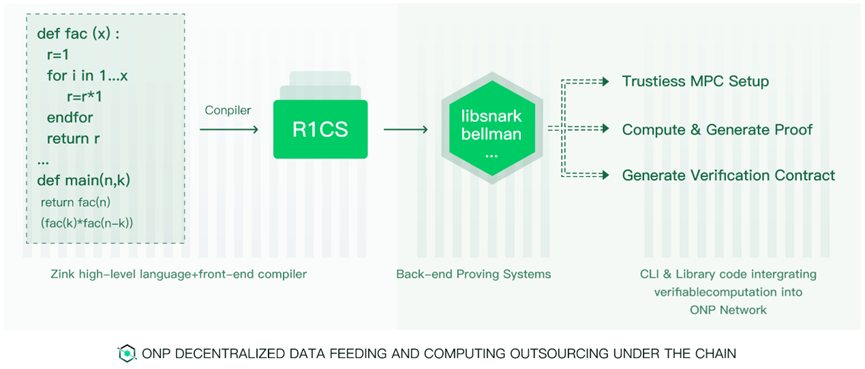
PlugChain is a public blockchain and oracle project that incorporates fundamental technologies such as sharding, state channels, and lightning network. The design of PlugChain encompasses both on-chain and off-chain aspects, including a proxy system for invoking user contracts, a supervision system, a registration system for externally joining validation nodes, and a payment system with a well-designed threshold. To ensure efficiency and scalability, the computation of the PlugChain oracle network is performed off-chain. Modules enabling this functionality include verifiable computation outsourcing and distributed data provisioning. Additionally, PlugChain integrates the design advantages of DOS and Chainlink to enhance security and scalability.
In addition to the aforementioned features, PlugChain also boasts difficult-to-replicate technological innovations, with the most significant ones being:
1. Interoperability
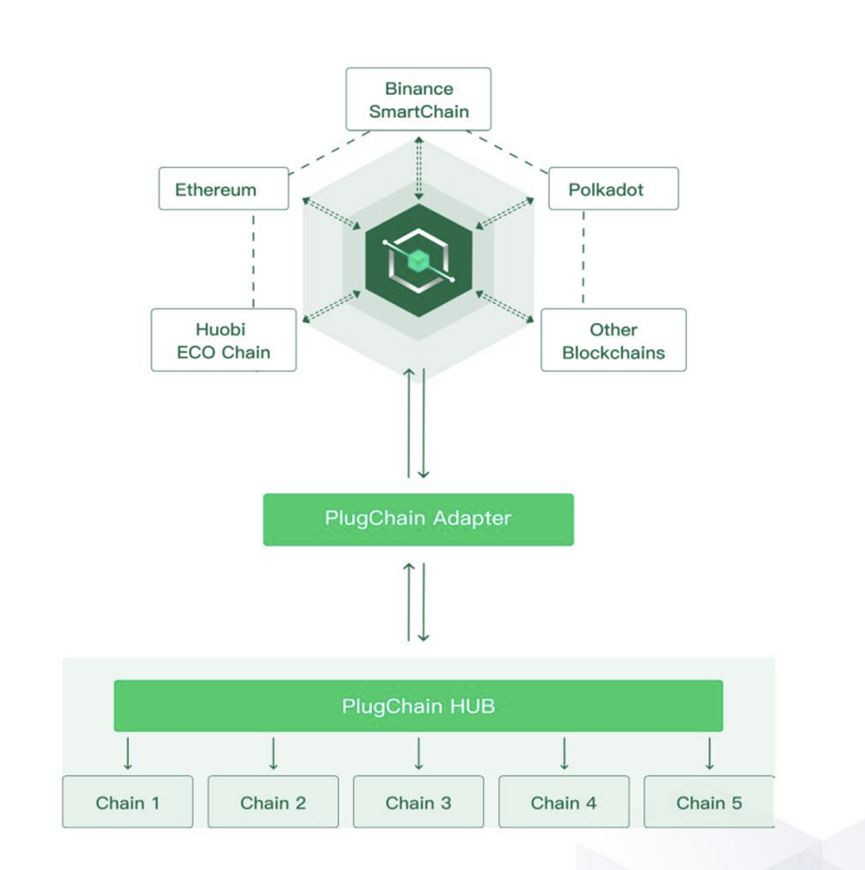
PlugChain is committed to achieving interoperability between different blockchains. By connecting technical resources, meeting business requirements, integrating existing blockchain functional components, and combining them with real-world business chains, PlugChain achieves scalability. This innovation enables PlugChain to interact with various independent blockchain networks through the oracle network and connect different blockchain requirements through the PlugChain Hub, catering to diverse business needs.
The PlugChain Hub serves as a transportation hub with robust infrastructure, powerful technical resources, and efficient interaction. It functions as a cross-chain service, providing chain registration mechanisms, automatic market makers, Ethereum bridges, special ratio currency bridges, and connectivity to the broader digital economy. Additionally, the PlugChain Hub facilitates the sharing of security and fundraising for new blockchains and provides cross-chain accounts and devices for capital formation.
2. Scalability Implementation - Heterogeneous Sharding Technology
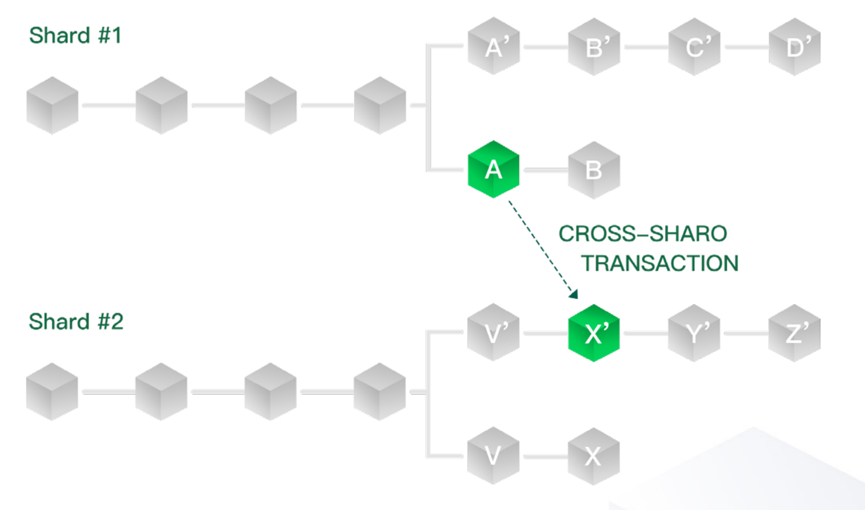
The PlugChain team continuously explores innovative ways to achieve data and information exchange between different chains while ensuring scalability and efficient transactions. As a result, they have introduced heterogeneous sharding technology. This technology enables seamless interoperability within fragmented blockchains, where the block structure and consensus protocols are the same across all fragments.
Heterogeneous sharding technology integrates Ripple's InterLedger protocol and Polkadot's relay chain/parachain concepts to enable cross-chain interoperability under state and asset fragmentation. When only cross-chain asset transactions are required, fragmented nodes within the PlugChain network responsible for this functionality can activate the InterLedger protocol. This protocol uses cryptographic algorithms to create fund custody for both accounting systems and connectors. When all participants agree on the fund amounts, they can transact with each other, and only the participating accounting systems can track the transactions, ensuring privacy.
PlugChain also allows for the operation of one or more DApps on each shard and enables more complex contract interactions through the invocation of heterogeneous multi-chain protocols and the initiation of relay chain-parachain mechanisms. Different parallel chains transmit data via Merkle trees to ensure data integrity. The relay chain only transfers transactions from the exit queue of the source parallel chain to the entry queue of the target parallel chain.
3. Data Verification of Oracles - TLS Notary Proof Technology
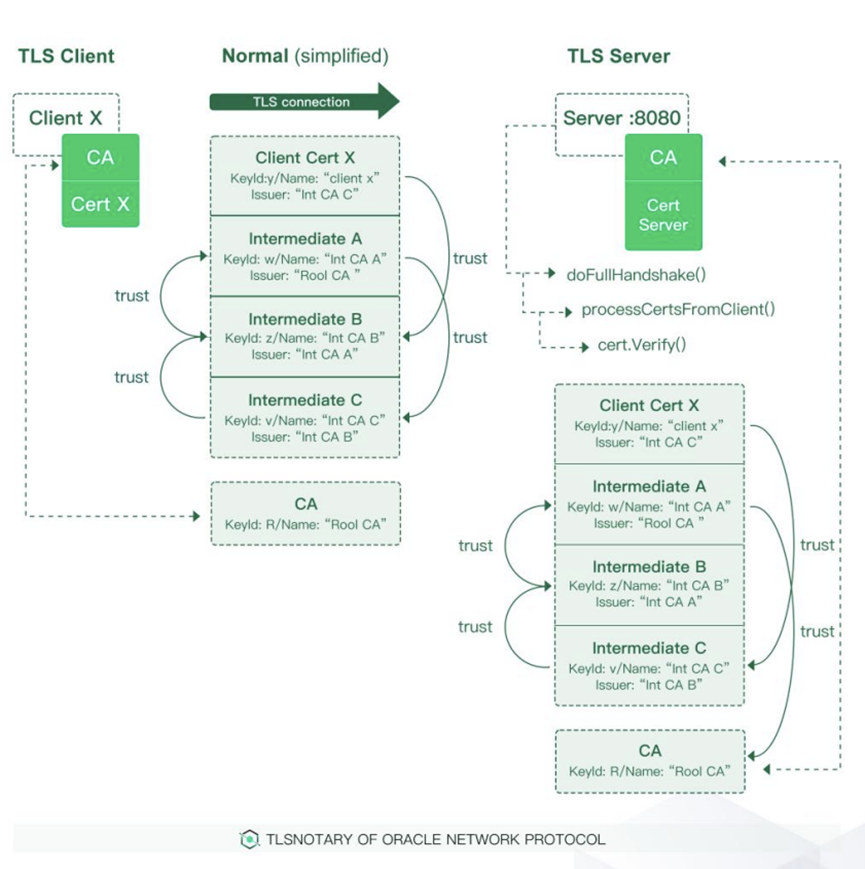
TLS Notary, an improved version of TLS, is used by PlugChain to provide cryptographic proof that the data they supply to smart contracts is authentic and valid, thereby enhancing the security and trustworthiness of the oracle network. PlugChain utilizes TLS Notary proof technology to compare the results of oracle queries with the transaction data occurring on the blockchain, ensuring that the data provided to smart contracts is accurate and reliable.
4. Friendly to developer-PlugChain SDK
PlugChain SDK is a significant innovation aimed at enabling developers to build secure blockchain applications. The SDK utilizes the Solidity language and offers scalability and flexibility, making it easy to develop DApps based on PlugChain. Unlike other public blockchains, smart contracts in PlugChain can be written in various programming languages, including C++, Python, and Java, among other popular languages. Additionally, PlugChain provides API documentation and comprehensive tool support to assist developers in creating compliant DApps more easily.
5. Threshold Signature Technology
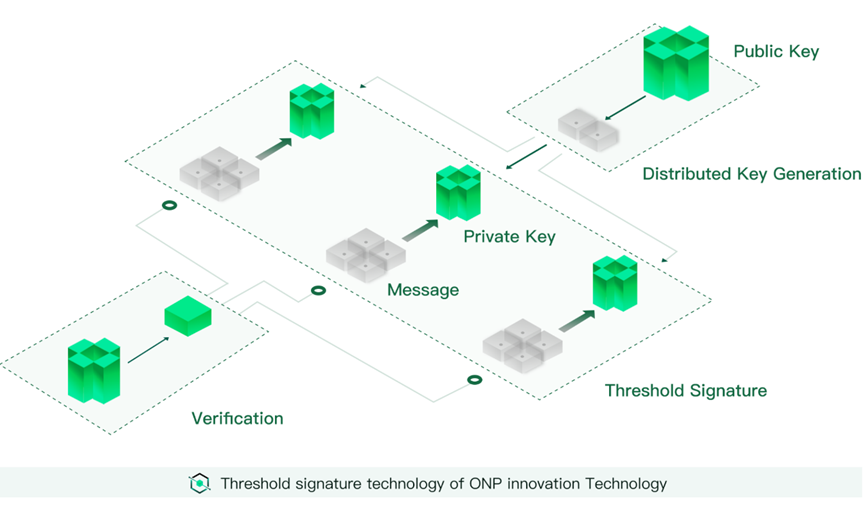
Threshold signature technology is an innovative cryptographic technique that enhances security and privacy. PlugChain applies threshold signature technology in on-chain transaction verification and off-chain computation processes, making them more secure and efficient. Threshold signatures allow multiple signers to sign with a shared private key, providing a higher level of security.
In conclusion, PlugChain stands out in the field of public blockchain projects with several innovative technologies and designs, including interoperability, scalability implementation with heterogeneous sharding technology, data verification of oracles using TLS Notary proof technology, developer-friendliness with the PlugChain SDK, and threshold signature technology. These innovations provide a solid foundation for the development of PlugChain and make it one of the highly anticipated and prominent projects in the current public blockchain market.
Token Economy
PlugChain is a public blockchain based on the Cosmos SDK framework, and its token economy utilizes PC Pass as the sole circulating value. Regarding PC Pass, there are three main aspects to consider:
1. Supply and Distribution
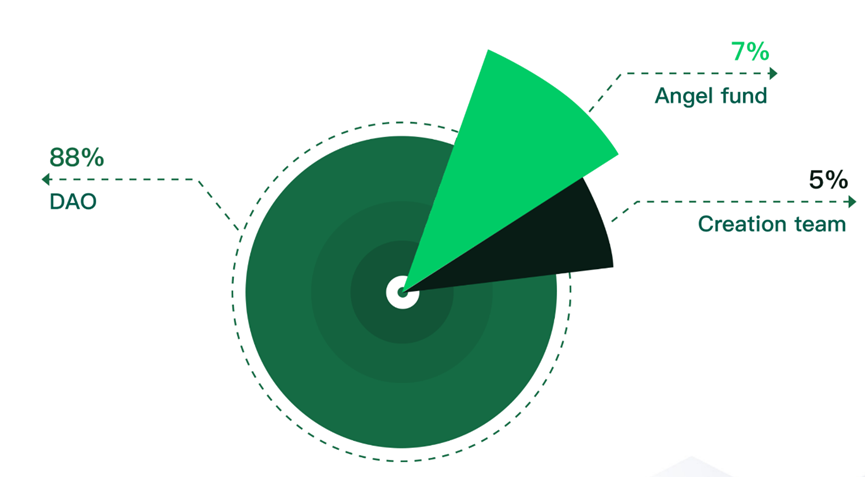
The total supply of PC Pass is 100 billion tokens, with 15.989 billion tokens allocated in the genesis block. The annual average expansion rate is 13%. According to the allocation mechanism, the founding team holds 5% of PC Pass, the angel fund holds 7%, and the DAO holds 88%.
2. Circulation and Value
As the sole circulating value in the decentralized oracle network of PlugChain, PC Pass can be utilized in various scenarios:
1) Payment for associated costs: If PlugChain network nodes or external users need to use PlugChain Oracle functions or develop related DApps as required, they will use PC Pass as a means of payment.
2) Node ownership acquisition: The off-chain network of PlugChain is composed of nodes operated by third-party users. Each node will hold or lock a certain amount of PC Pass to acquire corresponding node ownership.
3) Mining incentives: PC Pass can be used as mining incentives for node computation and verification incentives.
4) Community activity incentives: When the community initiates online sharing, promotions, or other activities, PC Pass can be used as incentives.
5) Custom advanced data source fees: If users wish to have customized or higher-level data sources provided by PlugChain, they can pay a certain amount of PC Pass to access valuable data sources from blockchain traffic in addition to traditional internet traffic.
3. Governance Rights
Holders of PC Pass can become co-governors of the PlugChain community, participating in the decision-making process of the blockchain and voting on the direction of development and governance policies. When implementing the PlugChain governance scheme, the following important details need to be considered:
1) Staking of PC Pass is required to participate in governance.
2) Voting rights are weighted based on stake evaluation, where the number of PC Pass held by a user determines their weight in proposal decisions.
3) Delegators can inherit the voting rights of their delegates unless the delegate has already voted.
In summary, PC Pass, as the sole circulating value within the PlugChain public blockchain ecosystem, has broad application scenarios and governance rights. As PlugChain develops, the circulation and value of PC Pass will continue to increase, thereby promoting the construction and development of the entire ecosystem.
Conclusion
PlugChain, as a high-performance public blockchain focused on solving information and data interaction issues, possesses several technological advantages in terms of technical innovation, including interoperability, scalability implementation with heterogeneous sharding technology, data verification of oracles using TLS Notary proof technology, developer-friendliness with the PlugChain SDK, and threshold signature technology. Additionally, its token economy utilizes PC Pass as the sole circulating value, featuring characteristics such as supply and distribution, circulation and value, and governance rights, which can drive the construction and development of the entire ecosystem. PlugChain has the potential to become one of the highly anticipated and prominent public blockchain projects in the future.


All Comments