


Web3 is booming, and Arweave is becoming a popular infrastructure choice for developers. PermaDAO is a community where everyone can contribute to the Arweave ecosystem. It's a place to propose and tackle tasks related to Arweave, with the support and feedback of the entire community. Join PermaDAO and help shape Web3!
Proofreader: Orange @ Contributor of PermaDAO
Reviewer: Viya @ Contributor of PermaDAO
Hey everyone, what a great day! Thanks for having me. I'm glad to be here in Singapore to talk and meet with everyone. Today, I am going to be talking about the Permaweb and really more a vision for a better internet.
I'm Tom, a founder in residence at Forward Research, and I’m also the main developer for the Stamp Protocol and Universal Content Marketplace. I'm proud to say I'm a Permaweb Pioneer. If you haven't heard of the Permaweb Pioneers podcast, you definitely should check that out.
So what can we expect with this presentation? As a builder, creator, and user of Arweave, you should learn what the Permaweb is and how it will change cyberspace. We'll talk about the Permaweb, or more precisely, the values that drive the Permaweb. Why is it different than the regular internet or the legacy web? That is what I like to say.
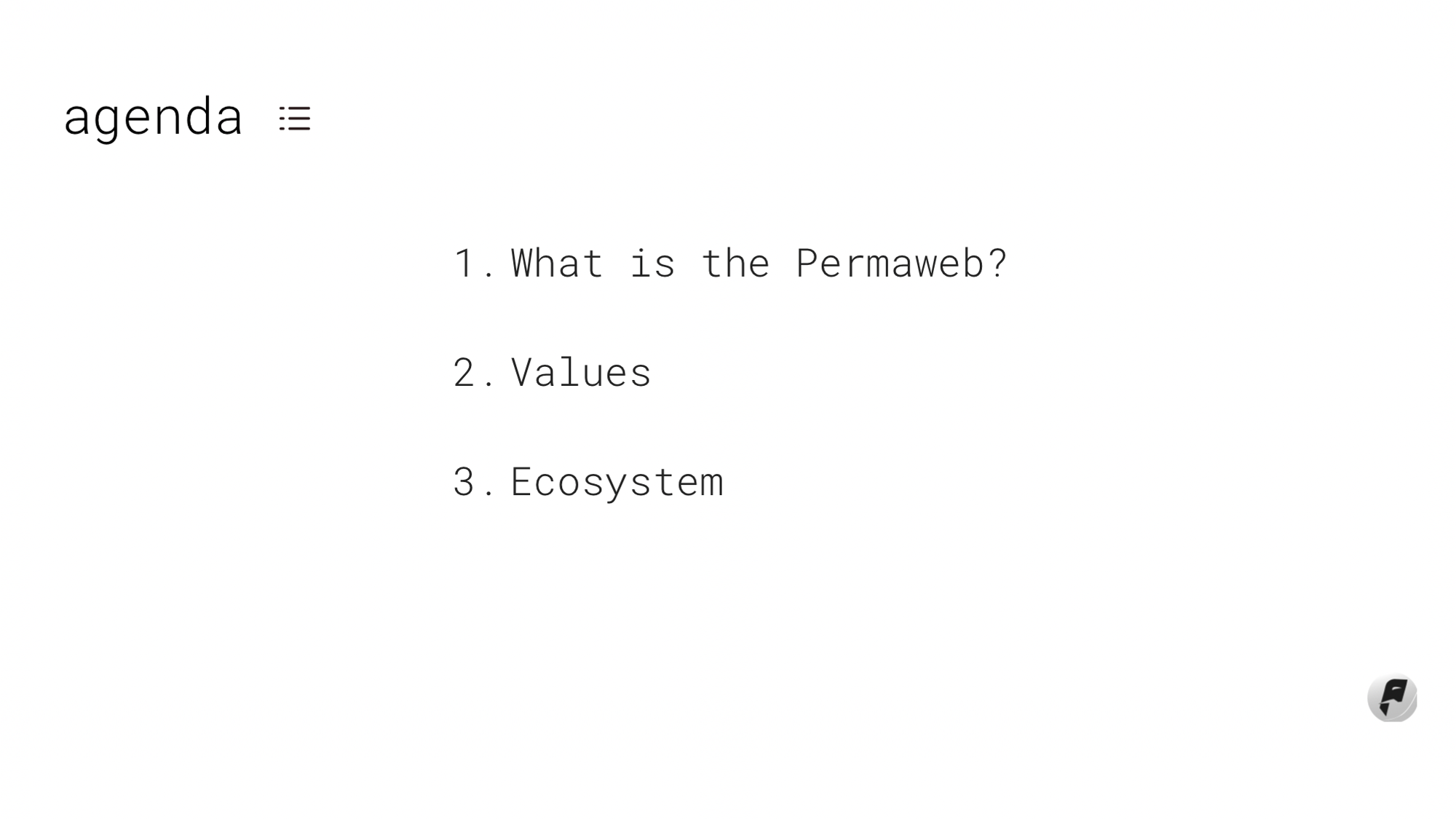
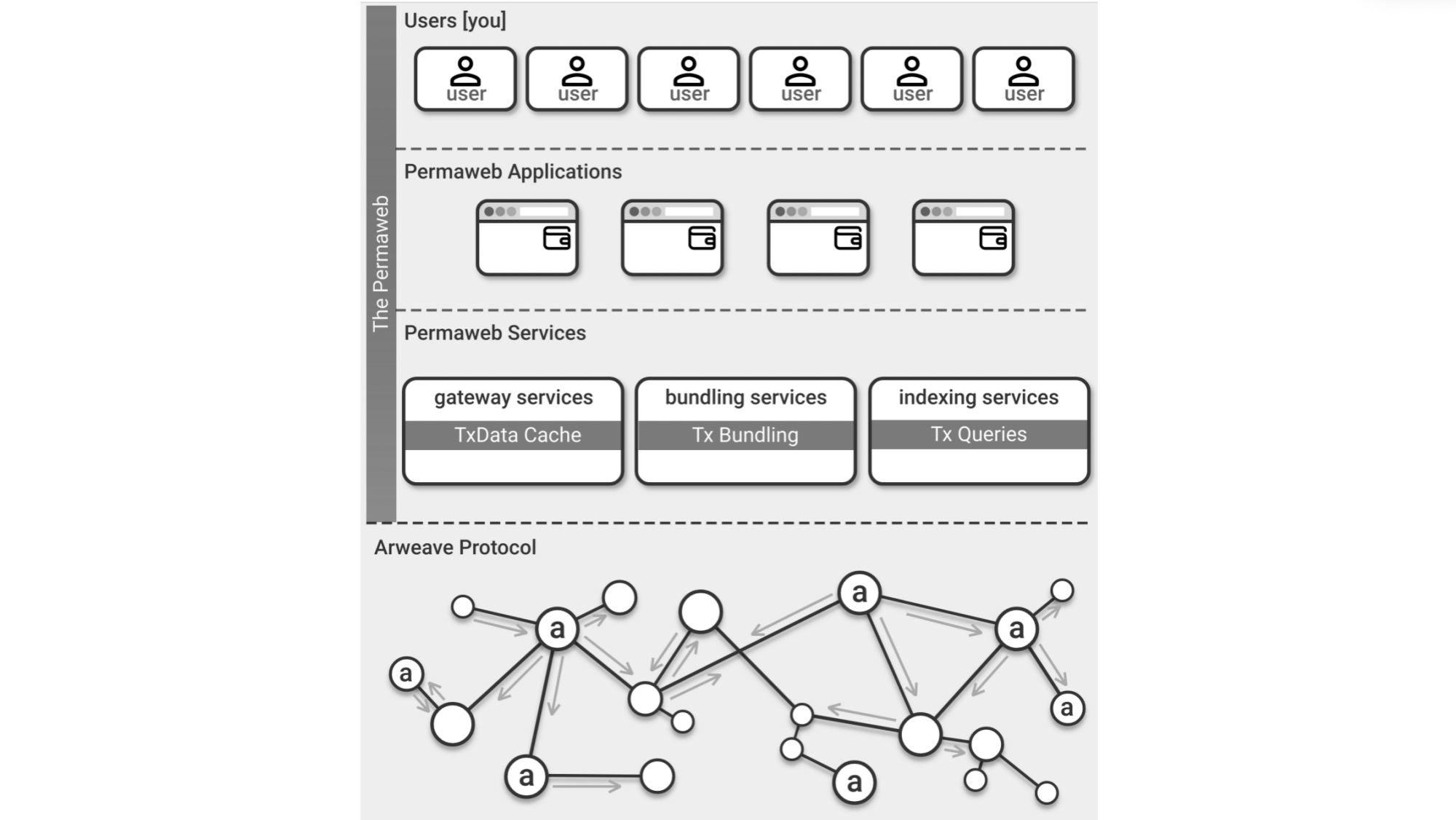
So we've seen this before, but the basic stack of the Arweave network, and then we have Permaweb services, which include gateways, indexers, and bundling services. These services are really the bridge that bridges permanent data into applications that anyone with a web browser can use and interact with. Users connect using permaweb applications, and then those Permaweb applications are served from gateways which are very similar to webservers but connect straight to Permaweb or to Arweave. Bundling services are an easy way to explain as optimizing the right of the data into the Arweave network, and indexing services, an easy way to explain that they're optimizing the readout from the Arweave network.
So the Permaweb services provide that application speed that you need to serve users' data, and the interesting side effect of that is that it creates a composable internet where one application does not own your data but users can travel their data from app to app in a composable way.
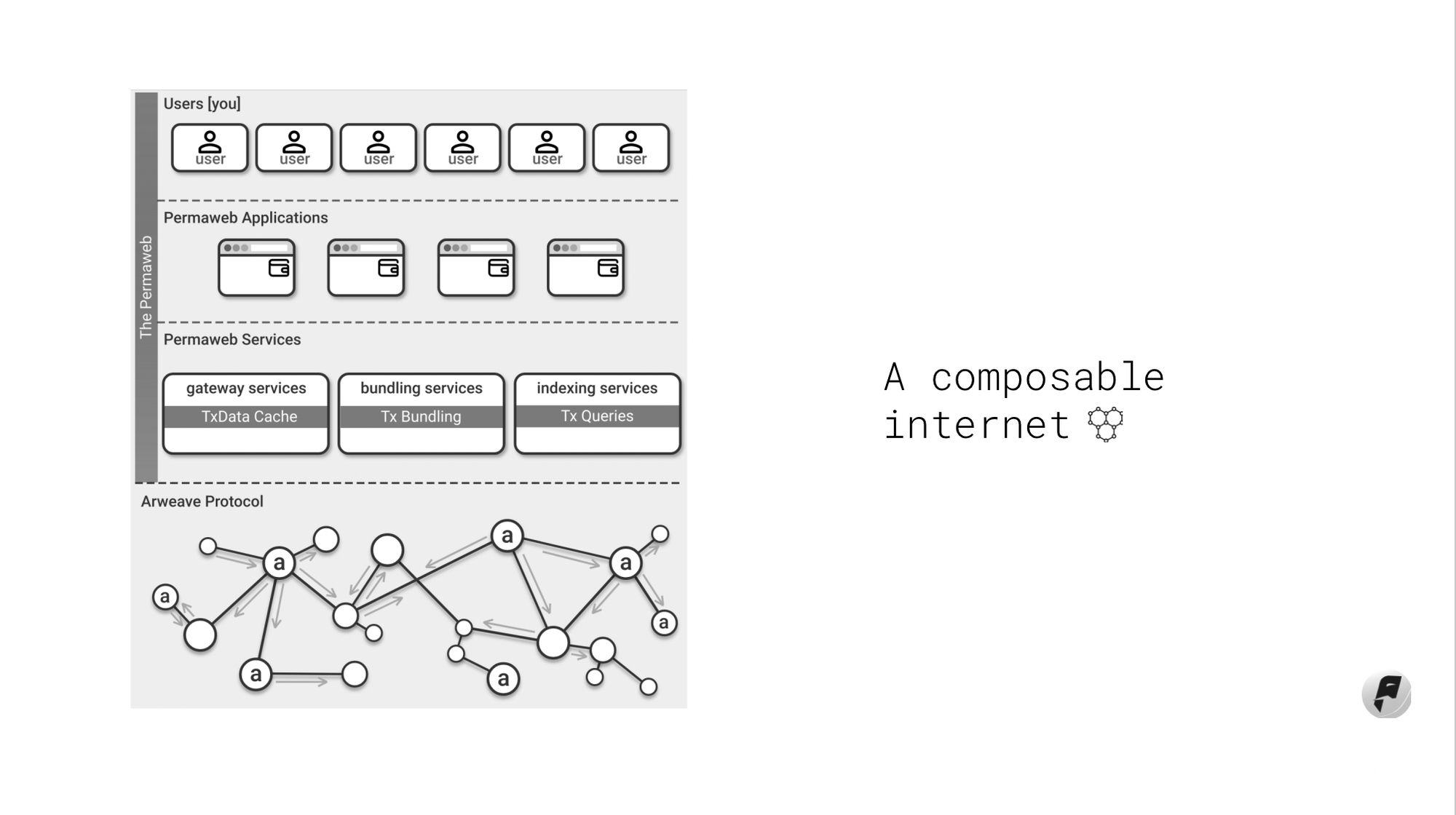
So the core values of the Permaweb are useful, right? Anything on the Permaweb needs to have use, so I think that's pretty clear and scalable. Clearly, we need scalability for data and applications, and finally, probably the hardest one is completeness because, unlike the legacy web where an app may work today but may not work tomorrow, what we have to build is applications that will work today and work 200 years in the future. So we really want to focus our mindset as builders on building complete applications that will work now and in the future.
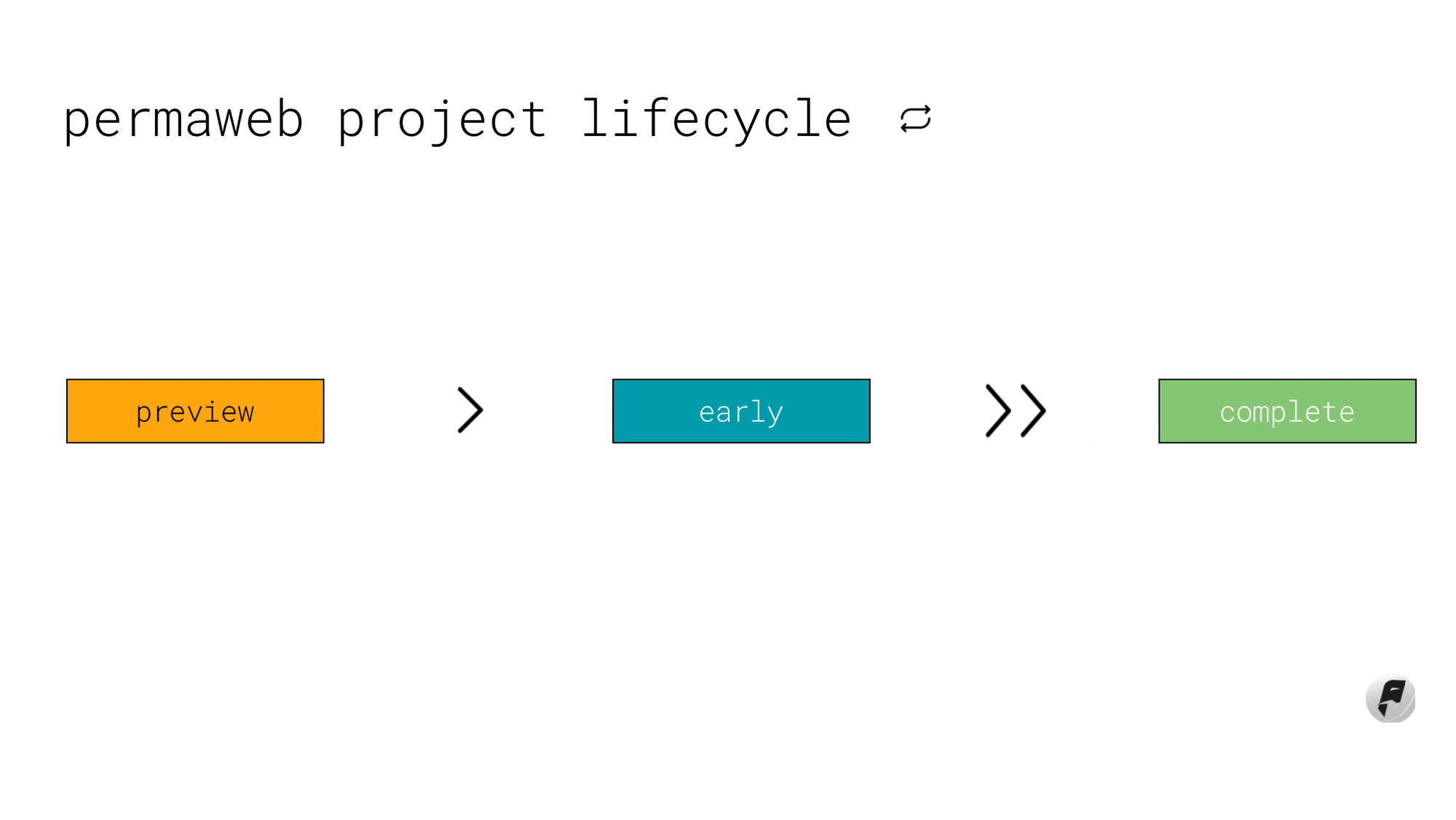
And with that, as we're building, one of the things forward is: how do we describe the status of our projects as we go through this building effort? Because when you have an idea, it doesn't become complete and able to be built and used in 200 years overnight. You have an idea; people have comments on that idea, and what we want to do is implement that idea in a way for people to react and to see what these ideas are and really kind of figure out if they're good or if they're bad or if they're great. And so we call that a preview.
Preview is the status when we take an idea and implement it and share it with the community and get feedback to really refine the project. The second status is early, and you'll see that a lot in some of the Permaweb apps today because in this phase of preview, we've implemented it and we're getting feedback and now we've refined it to where we think we can really turn it into a product. So the EARLY status which is communicating this protocol, product or service is “feature complete” but still may have bug fixes and performance improvements. Feel free to use it, and you'll be pretty confident that it's going to work all the time, but there may be bugs.
And then finally, complete. When we label a project complete, a protocol or an application, that means we expect that to work with zero ongoing development for at least 200 years, hopefully forever. So when we put a protocol and give it a complete status, we are saying that it is permanent, just like permanent storage.
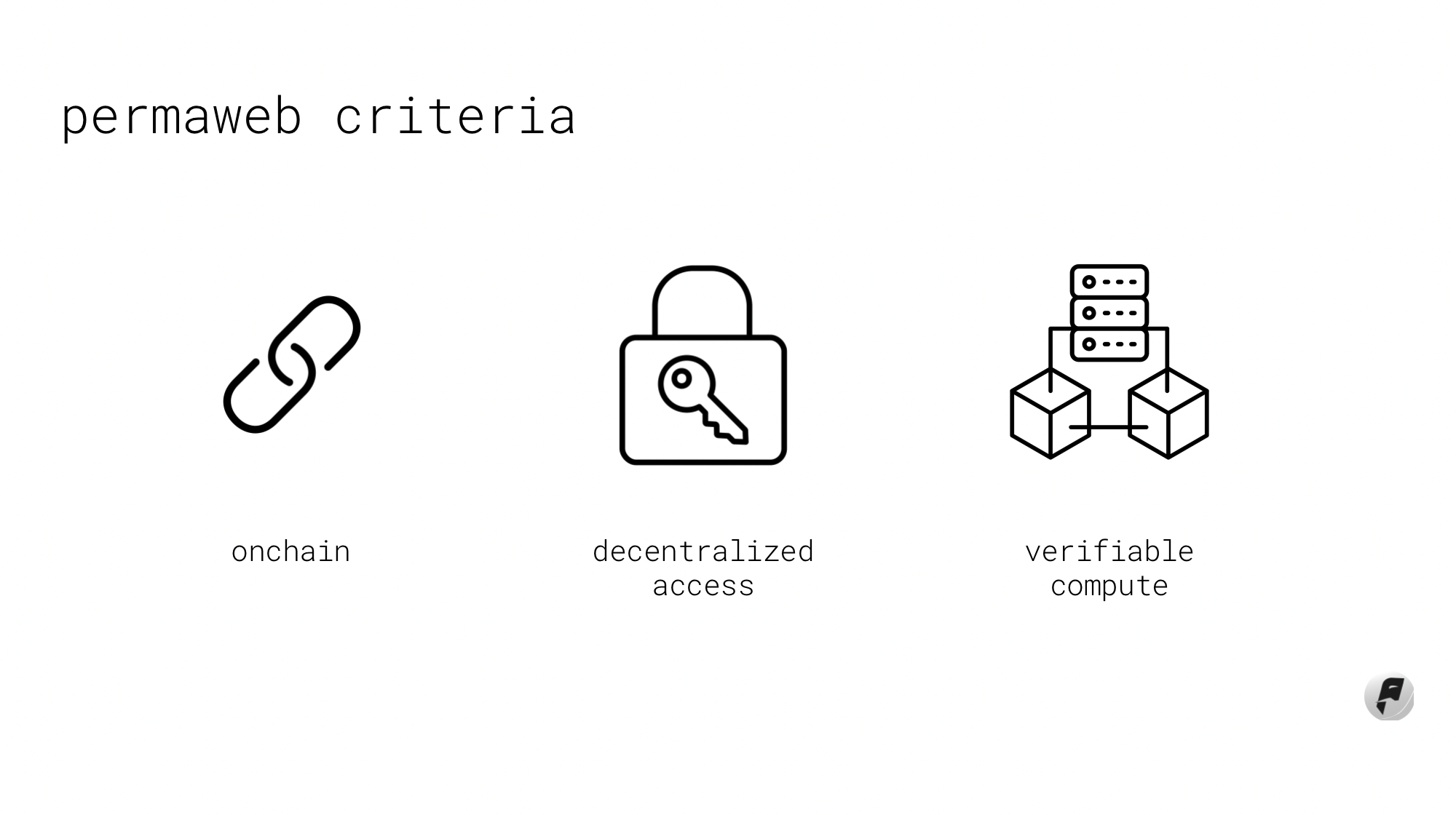
We also have some criteria for the Permaweb. The criteria we use are pretty straightforward. It's got to be on-chain; it's got to have decentralized access. So anyone should be able to access that using any operational service, whether it's a gateway or a node, etc. So it's important that everything on the Permaweb is accessible in a decentralized environment. And then finally, one of the hardest problems is verifiable compute, which basically means that when you're calculating the business logic for applications, whether you're on a MacBook or a Windows computer, you should both arrive at the same result. So verifiable compute means that no matter where you are, if you're looking at the same data, you should get the same results. And that's the mindset that we take when we're building these applications: To have those criteria milestones.
So that's kind of what the Permaweb is from values and criteria. We work within the Arweave ecosystem, and the Arweave ecosystem has grown significantly. This is a slide put together from Community Labs, and you can see there are tons of applications in the Arweave community. What about the Permaweb ecosystem? The Permaweb ecosystem is really focused on thinking about useful, scalable, and complete protocols and applications. We kind of break this down into very specific components.
So we first start with protocols, and protocols are defined through specifications. The easiest way to explain it is to explain the protocol that I work on called the stamp protocol, and it's a universal ‘like’ button. And the reason that we emphasize protocols is we want a composable web where applications can be built and features can be included without having to be reengineered. For example, the stamp protocol. If a user is on BazAR and they stamp an atomic asset and then they go and look at it in now.arweave.dev. They will see that that asset is stamped, which means the data is moving from one application to another.
Protocols are great, but developers love SDKs because it makes their job easier to put applications together without having to essentially write redundant code. So we put SDKs on chain. One of the founders of Permafacts is actually working on a project called Pakajs, and this actually allows us to put SDKs on chain on Arweave, so developers will have access to them forever.
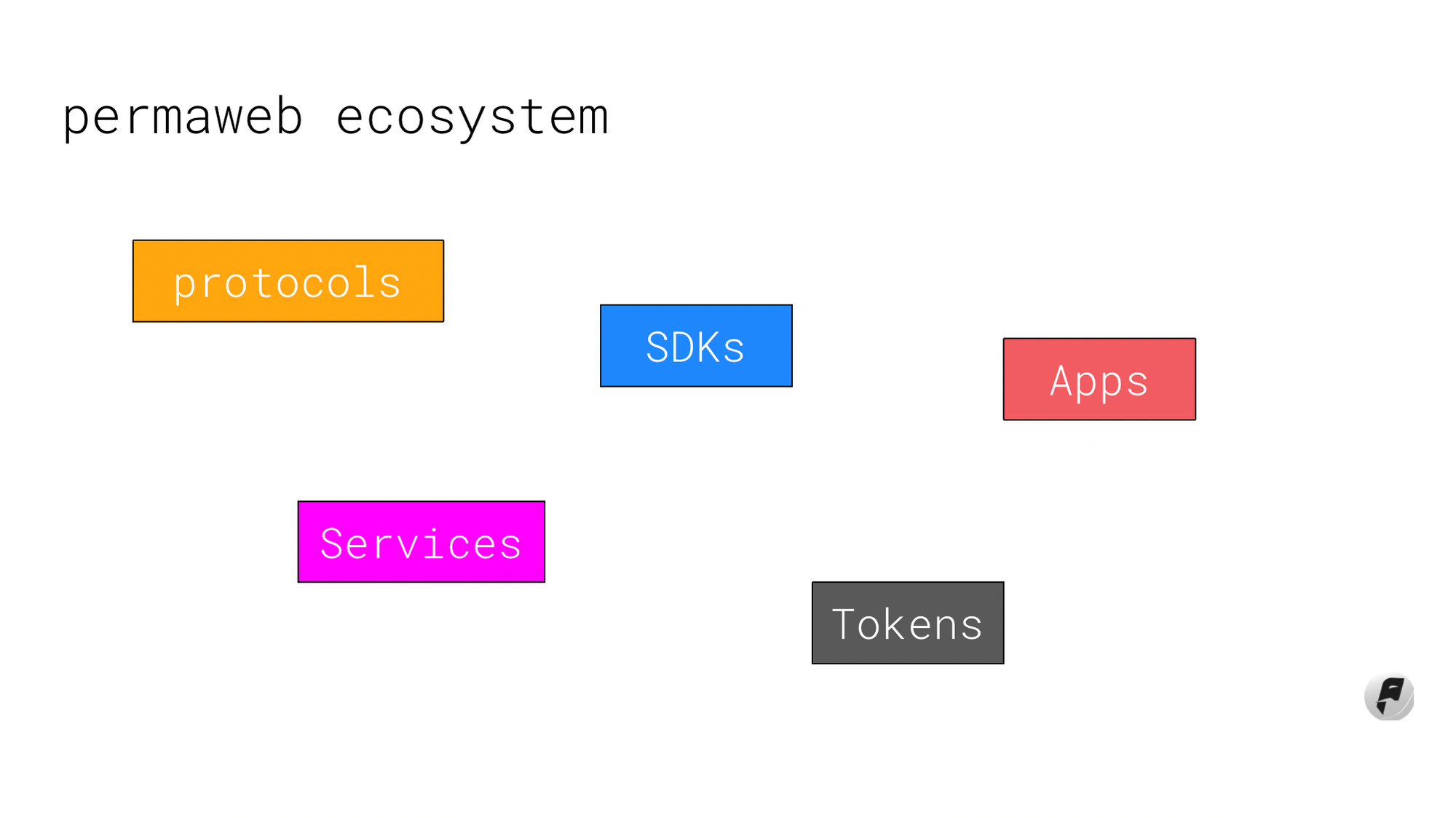
And then obviously applications drive the Permaweb because users love applications to work with their data. The final two pieces of the ecosystem are services, where you have Warp and SmartWeave and SCP, and then tokens to transfer value from data to tokens to wallets. So all of these pieces are really important when you think about the Permaweb and how you're putting together applications. As we build these building blocks, builders will be able to create applications faster than any time before this. I fully believe that because we're working with data that's shared across applications, and we're really focusing on completeness and composable protocols.
So with that, instead of going through a bunch of screenshots, I want to invite you all to scan the QR code. This QR code is going to take you to BazAR, which is our latest release of showing how Permaweb applications can use protocols, SDKs, services, and tokens to combine and share data and allow creators to distribute their content and allow users to trade content on the Permaweb.
While you look at the BazAR, I'm going to kind of unpack how it's built just quickly. The Permaweb, we've seen the slide before. You have these services, and that QR code clicked went to a gateway called arweave.asia. There are very many gateways. I think we'll have hundreds of gateways by the end of the year, which truly makes the doorway to the Permaweb decentralized. Rweve Asia is local to Singapore, and it's using our seating an Arweave Lightnode, which is really cool.
As we go into BazAR, we have some tokens and some services that really are the foundation of BazAR. We have the U token which stands for a unit of account on Arweave, and the way that I like to think of it is it's the medium of exchange for the Permaweb. So it's super easy to get because when you deploy or publish data on Arweave, it actually mints some new for you. And you can also go to getu and trade AR for you, and finally, you can go to Permaswap and swap many different tokens for you, and this becomes the currency of the Permaweb so that you can buy or sell digital assets.
The second thing we have is the Universal Data License, and the Universal Data License allows creators to specify the rights to sell or distribute their assets. If they want to charge commercially 1,000 new for an incredible PFP, then they can specify it when they publish the data, and it's their own chain permanently. And it's very clear and descriptive exactly the terms and conditions to use that data.
Then the second Smartweave contract is the Universal Content Marketplace. This is an open contract that allows us to build BazAR on top, but other Permaweb apps can also use this contract to build different types of marketplaces. So we don't need one marketplace for the Permaweb; we need 100 marketplaces for the Permaweb, but having one contract that allows for that trade to happen makes it super easy for developers to implement great user experiences but still have the fundamentals of the trade process in place.
Finally, to the bottom right corner is the Pixel Token, and the Pixel Token is a rewards token in BazAR and the UCM that allows users that are vouched when they purchase assets. We have a feature called streaks, and every day they purchase, they get Pixel Rewards, and those Pixel Rewards can be traded through you and other means. They can actually be traded on BazAR itself, so you can actually sell your Pixel tokens, get more you, and buy more digital assets on BazAR.
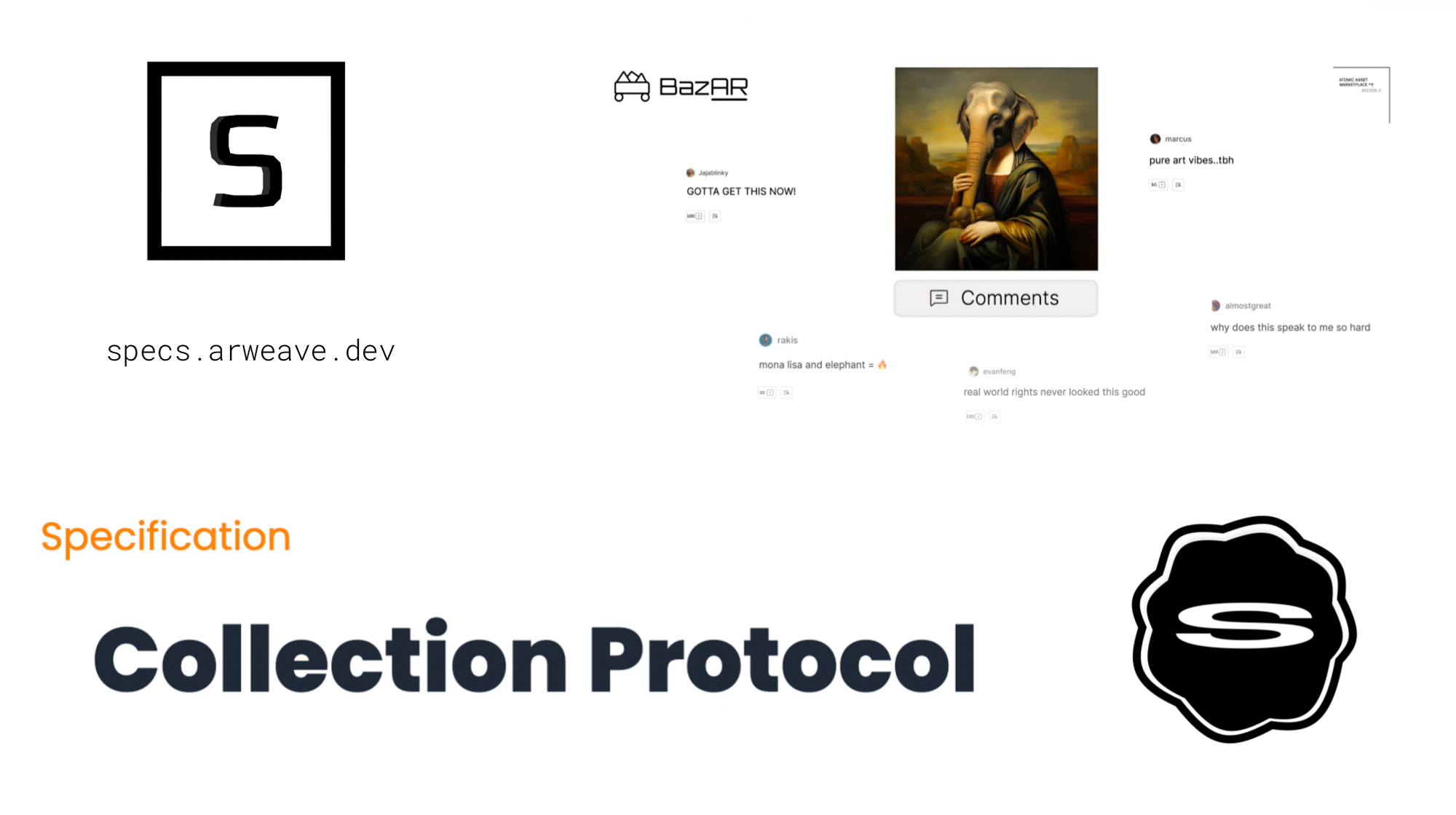
Another important piece of what I was saying with the Permaweb and components of BazAR is protocols. Two protocols I want to highlight are the comments protocol and the collection protocol. Any application can leverage these protocols, and we publish the protocols on specs.arweave.dev, and I encourage all builders to check this out and actually publish your open protocols that are for the Permaweb so that other builders, future builders can take advantage of that system, and we can compose this incredible new web together.
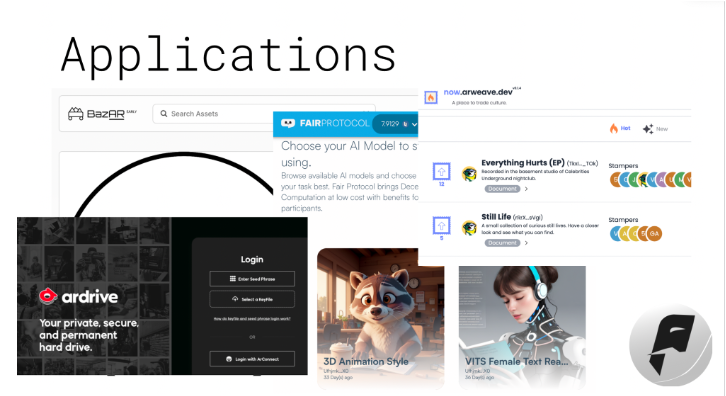
And then finally, there are more applications than just BazAR. ArDrive was one of the first Permaweb applications. We have the fair protocol, which is a really neat and fascinating marketplace for AI and LLMs. And then lastly, Now Arweave dev, one of the coolest things about that is that if you want to see what's going on daily, you can go to Now and see all the content that's being published on the Permaweb.
With that again, I'm going to show the QR code again. I encourage you to check out BazAR, and you'll see comments, stamps, collections, and just a ton of functionality that's all built through this mindset of protocols, SDKs, apps, services, and tokens.
So thank you very much, and that is my talk. Let's build a better web!
🔗 More about PermaDAO :Website | Twitter | Telegram | Discord | Medium | Youtube


All Comments