


Particle Network: Web3 Full-Stack Infrastructure
Particle Network is a full-stack, data-driven, and composable Web3 data and development platform. Its vision is to accelerate the transition from the real world to the world of cryptography. By utilizing the SDK provided by Particle Network, developers can shed the burden of heavy work and focus on creating exceptional application experiences.
Particle Network aims to provide users with secure, user-friendly, and trustworthy Web3 product solutions, with its core business philosophy rooted in the concept of security.
In the eyes of Particle Network, private keys are the most valuable assets in the world of cryptography. If users lose or disclose their private keys, they will suffer significant financial losses. Therefore, in the design and implementation of Particle Network, the secure management of private keys is always regarded as the most important aspect.
To achieve their security vision, Particle Network adheres to three fundamental points:
1. No one, except the user themselves, can control the user's funds.
Particle Network insists that only users can initiate the signing process, and no other parties, including Particle Network and developers, can ever access the user's funds.
2. Users need to securely recover their accounts.
In certain situations, users may delete their applications or lose their devices. Therefore, Particle Network aims to assist users in securely recovering their accounts.
3. No single point of failure.
When using traditional private keys, if the key is compromised, users would lose their cryptocurrencies with no possibility of recovery. Particle Network replaces the traditional private key with two independently created mathematical secret shares, eliminating the risk of a single point of failure.
Next, we will provide specific introductions to the products and services offered by Particle Network.
Connection Service - Particle Connect
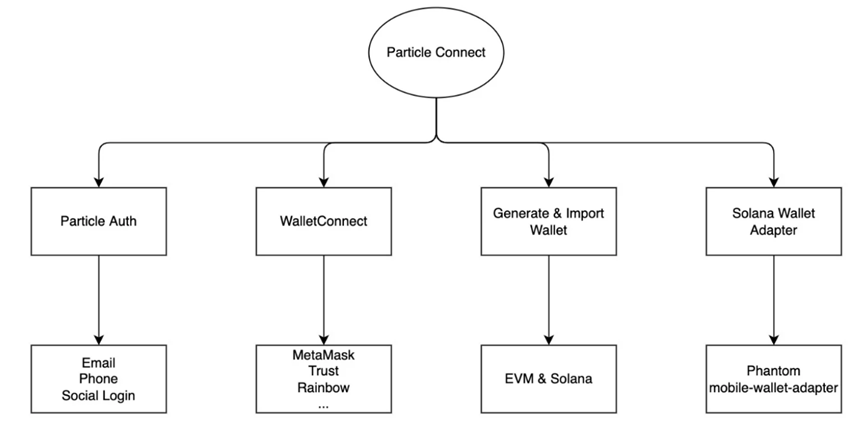
Particle Connect defines itself as the Web3 Single Sign-On (SSO). SSO is an identity authentication solution that allows users to log in to multiple applications and websites with a single user authentication. Particle Network aims to seamlessly and securely enable users to experience Web3 through Particle Connect.
Currently, Particle Connect has introduced a wide range of connection options. Users can connect to the Web3 world through various Web2 methods such as Google, Facebook, Apple, Twitter, Discord, Telegram, Microsoft, Linkedin, Github, Twitch, as well as directly using Web3 native wallets such as MetaMask, Rainbow, Trust, ImToken, Phantom, and more.
Authorization Service - Particle Auth
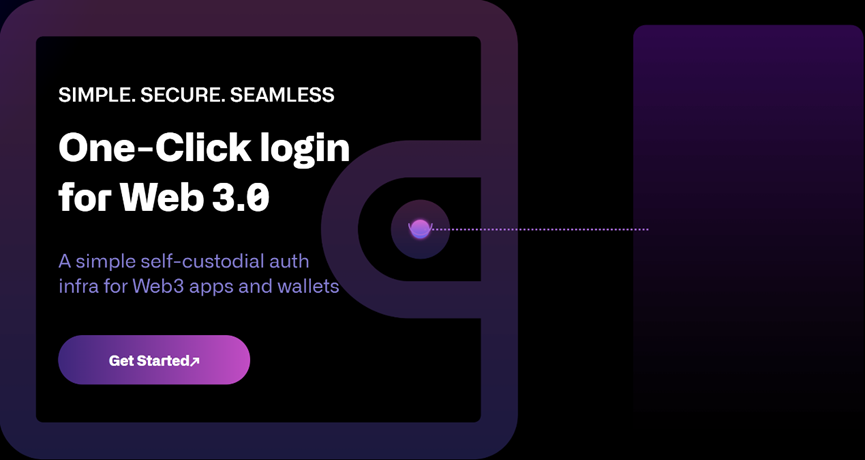
Particle Auth is a simple, self-hosted identity verification infrastructure specifically designed for Web3 applications and wallets. It supports login using phone numbers and email addresses, providing users with a straightforward user experience. After logging in, the user's login account is associated with a blockchain wallet, which is protected by a "Threshold Signature Vault."
The core principle of Particle Auth is based on MPC (Multi-Party Computation) threshold signatures. By using threshold signatures, each party involved can create an independent key. The vault is forged together in a modular way, with each party shaping only a portion of the lock that corresponds to their key.
These features mean that with Particle Auth, users no longer need complex passwords, lengthy mnemonic phrases, browser extensions, or specialized hardware for login. Their accounts are protected by industry-leading TSS (Threshold Signature Scheme) and KMS (Key Management System) encryption.
In summary, the key features of Particle Auth can be summarized as follows:
Instant Login: The login process with Particle Auth is similar to Web2 login, significantly reducing the entry barrier to Web3 and enhancing the user experience.
Unmanaged Private Key Infrastructure: Particle Network provides TSS based on MPC. Each party involved creates an independent key. The vault is forged together in a modular way, with each party shaping only a portion of the lock that corresponds to their key. Users always retain ownership and access to their encryption key pairs.
Customizable UI: Users can customize the UI of Particle Auth to seamlessly integrate it into their existing applications.
Signature Services: Particle Auth provides users with complete signature services, including sending transactions and signing messages. Users can view detailed data for each signature.
Wallet Service - Particle Wallet
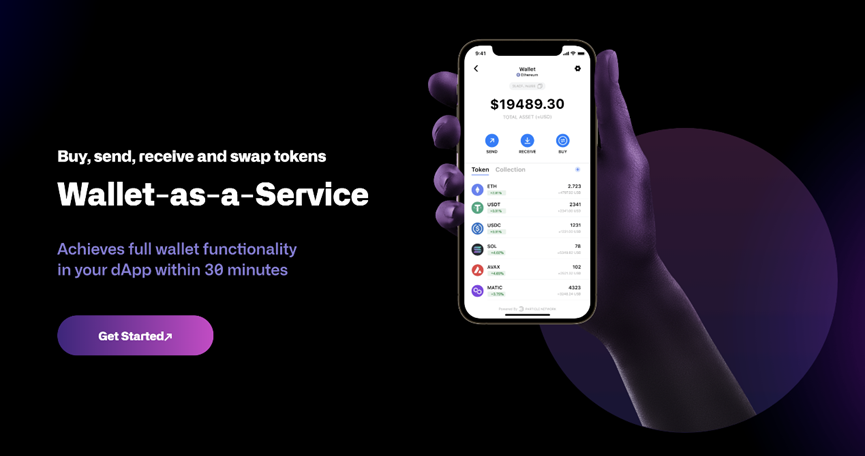
Particle Wallet offers an all-in-one wallet solution that is user-friendly, powerful, and secure. It is not a standalone wallet in the true sense but rather a wallet infrastructure that can be integrated into applications or wallets.
With Particle Wallet, users can customize wallets tailored to their specific application needs, including transaction functionality, NFT display, and more.
By using Particle Wallet, users have the flexibility to choose whether to build an in-app wallet for their application or create a standalone wallet itself.
Specifically, Particle Wallet has the following features:
Rapid Development: Particle Wallet provides users with a complete wallet SDK, including transaction functionality, NFT display and trading, signature capabilities, and more. This helps users shorten their development time while ensuring security.
Comprehensive UI Interface: Particle Wallet offers multiple highly adaptable UI interfaces to suit different application styles and scenarios.
Support for Standalone Functionality: To ensure a seamless user experience, Particle Wallet supports the use of individual functionalities in specific scenarios. For example, if a user needs to make a transfer, they can directly access the "Transfer" page without having to enter the entire wallet interface.
Node Service - Particle Node
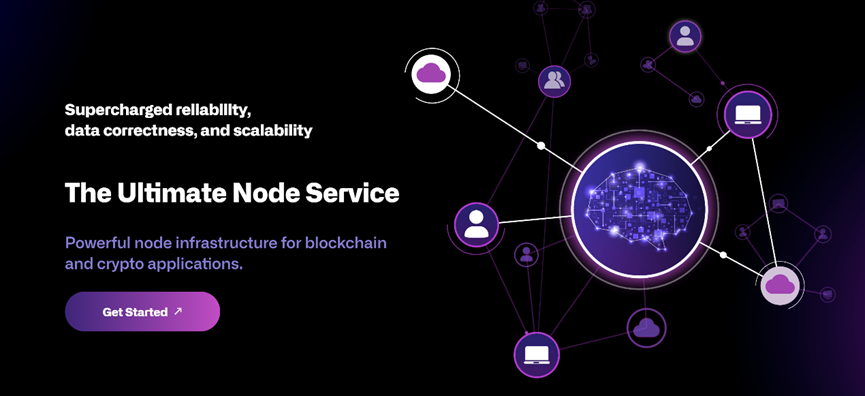
Particle provides a node service that supports high-performance access to all major blockchains. It offers strong reliability, data accuracy, and scalability. Particle nodes provide users with secure and highly available blockchain APIs. They not only support JSON-RPC but also provide enhanced APIs. This enables users to receive transaction information and NFTs through addresses, access token prices, perform smart encoding/decoding of transactions, and more.
Specifically, Particle's node service offers the following features:
Fast and Reliable: Particle's node service ensures lower latency and faster response times.
Enhanced Functionality: Particle's node service provides robust reliability, data accuracy, and scalability. It supports JSON-RPC and offers enhanced APIs.
User-Friendly: Particle's node service helps developers save over 1,000 engineering hours per year, making it easy to use and integrate into their applications.
By utilizing Particle's node service, users can access blockchain data and functionalities efficiently and reliably, enhancing their overall blockchain development experience.
NFT Service - Particle NFT
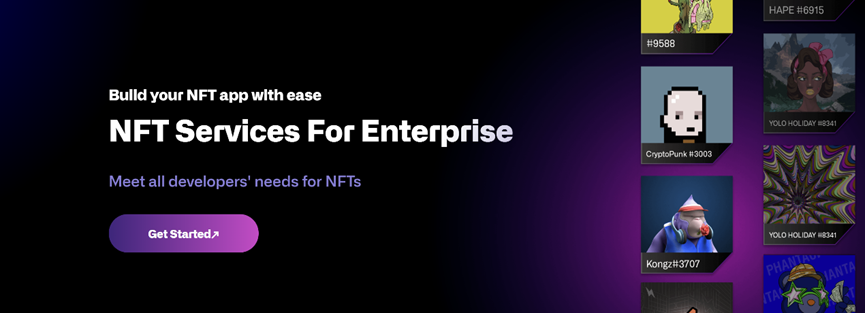
Particle NFT Service is an all-in-one NFT service solution that supports the minting of NFTs in multiple file formats. It also has the capability for batch minting. During the minting process, NFTs can be tagged with different attributes and rarities.
Particle NFT Service provides developers with an SDK and API to quickly and securely integrate NFT-related functionalities into their dApps. Additionally, Particle NFT Service supports various features such as NFT management and operations. It enables the rapid creation of NFT marketplaces and supports multiple forms of sales to meet the needs of various NFT projects.
Specifically, Particle NFT Service has the following features:
Accessible within minutes: Developers can easily integrate marketplace functionalities into their dApps by calling the Particle NFT Service API.
Seamless User Experience: Users can buy and sell NFTs without leaving their dApps.
Diverse Sales Options: This includes one-time sales, bidding and procurement. Sales promotions, lotteries, and other purchasing methods are gradually being integrated as well.
Multi-Chain Support: Currently supports mainstream public blockchains such as Solana, Ethereum, BSC, Polygon, and Avalanche.
High Security: Particle Network ensures the security of user assets by controlling the entire process of NFT withdrawal, transaction flow, and NFT deposits, allowing developers to focus on dApp development.
Data Analytics: Users can collect NFT sales data and user feedback with just a few lines of code to provide timely feedback on the market.
Conclusion
As a Web3 full-stack infrastructure, Particle Network places a strong emphasis on security. While ensuring the security of user assets, Particle Network provides comprehensive services and tools for developers. These services and tools are geared towards breaking down barriers between Web2 and Web3, and we can have high expectations for the actual results they will achieve.


All Comments