


Next.ID: Decentralized Identity Aggregation Protocol
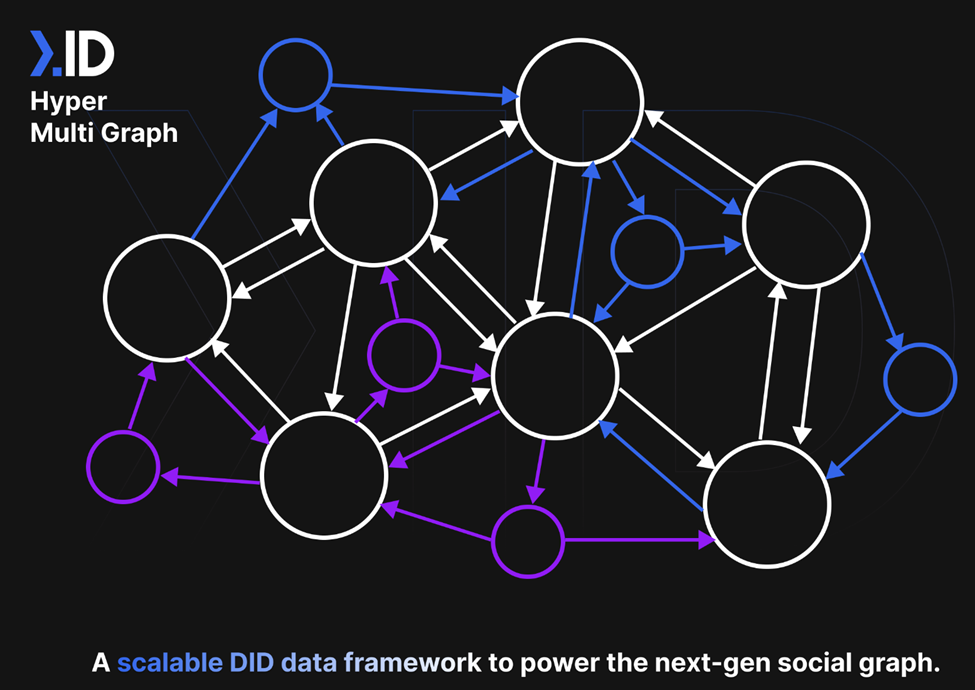
Next.ID is a protocol that provides services for decentralized identity (DIaaS). By its very nature, it is a decentralized identity aggregation protocol that integrates Web2 and Web3 digital identities and is dedicated to providing open source developers and projects with a comprehensive, verifiable identity database to facilitate innovation and development of dApps.
As a protocol for Decentralized-Identity-As-A-Service (DIaaS), Next.ID creates an identity infrastructure that securely aggregates users' identities into Avatars (password-based student digital avatars of users). ID aims to be the identity aggregation gateway for all types of decentralized social protocols and dApps in the Web3 ecosystem.
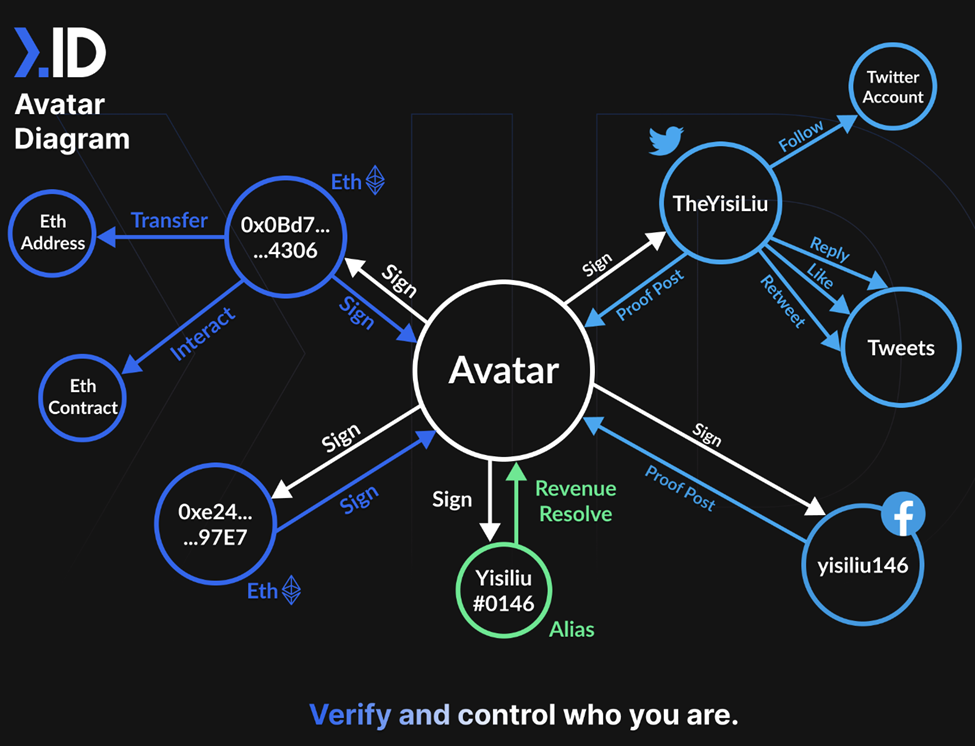
Avatars are built on cryptographic key pairs that are tamper-proof and unbreakable; at the same time, they are built on a non-mandatory use basis, which means that users can create as many Avatars as they want; in addition to that, Avatars can be used and operated on any platform that supports integration with Next.
Next.ID's Avatars exist independently of Web2 and Web3 and use a blockchain-like model to maintain data integrity. Therefore, Next.ID can in principle connect all Web2 and Web3 platforms/protocols and aggregate all identities in a platform and public chain ecology independent way, consolidating them into a single, decentralized identity (DID).
Just as people can show different personalities in different environments in real life, Next.ID enables users to create multiple digital body Avatars that can be used interchangeably on Web2 and Web3 platforms.
Just as the notion of human self-perception, belonging to a social group (e.g. age, race, nationality) exists, Next.ID creates a framework that allows users to engage in self-identity construction.
In short, Next.ID is dedicated to helping more users achieve autonomy in the digital world and build their reputation in the digital world.
Technology Highlights
Next.ID is a decentralized identity aggregation protocol that integrates Web2 and Web3 digital identities to provide open source developers and projects with a verifiable identity database to innovate and build dApps. on the technical side, Next.ID has the following major highlights:
1. ProofService (Authentication Service): ensuring data integrity with cryptography
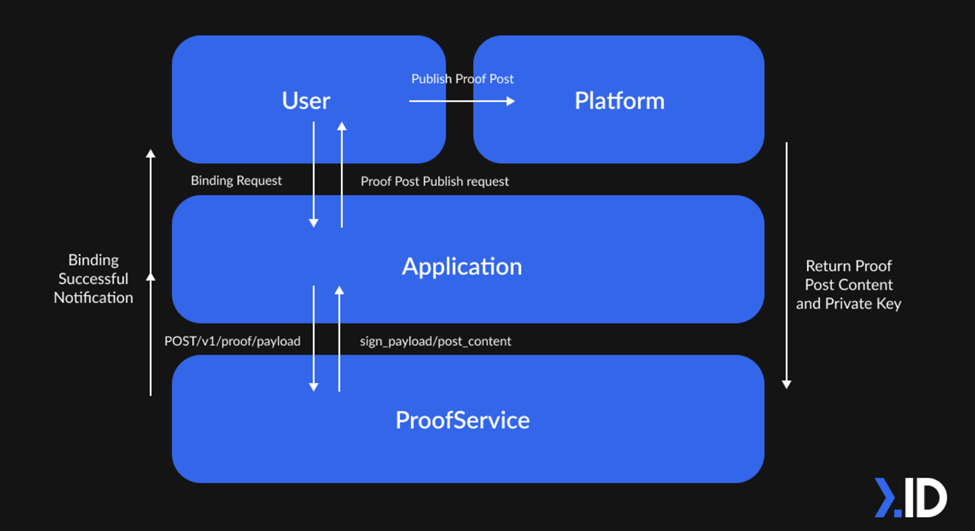
ProofChain uses a blockchain-like model to maintain data integrity through cryptography and a private to public key pairing system, thus ensuring that only users with the correct private key can add data to each block.
ProofService (authentication service) and each of its historical changes are fully visible on Arweave, which is also in line with the Next.ID community's commitment to keep its protocols fully transparent.
2. KVService: Helping to organize and rationalize user data
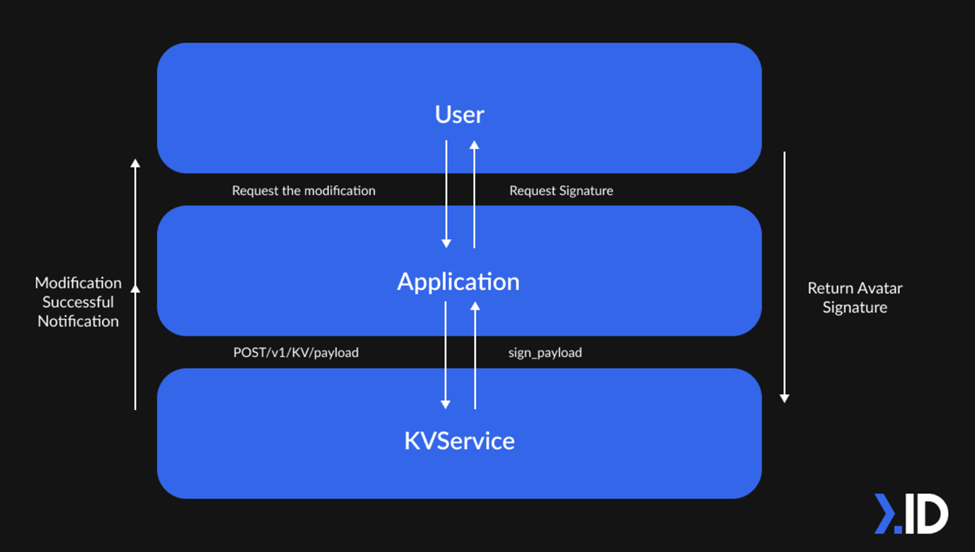
When users and protocols read and write data using Next.ID, KVService sets up a framework to clearly organize the information, making the front-end use of Next.
3、RelationService (RelationshipService): Realize comprehensive identity query and social use cases
RelationService is an aggregation of existing IDs, ID queries, and IDs bound to Next.ID, parallel IDs, which opens up a range of possibilities for integration with external protocols and creates the possibility of greater Web3 native social use cases.
4. AuthService: Self-hosted service providing authentication and authorization for Web3 applications and dApps
ID's AuthService can be used for authentication. We can think of it as a Web3 version of "using Google/Twitter login".
Application scenarios based on Next
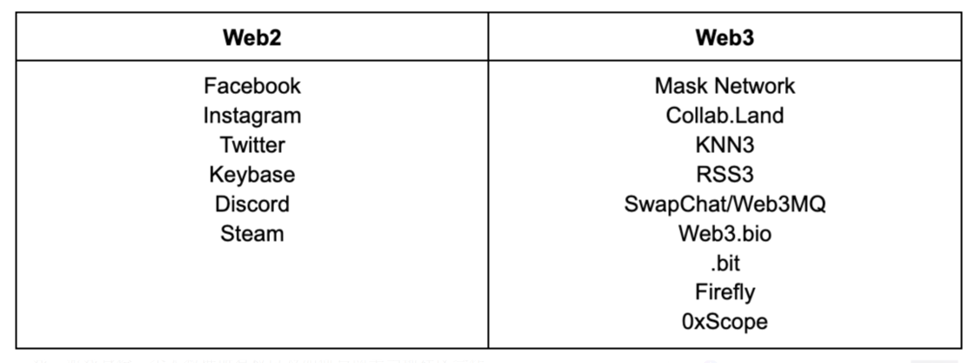
ID is a decentralized identity aggregation protocol that integrates Web2 and Web3 digital identities to provide open source developers and projects with a comprehensive, verifiable identity database to facilitate innovation and development of dApps.
Currently, the list of protocols and dApps using Next.ID is growing weekly. The following are some of them:
1、Mask Network
A network of social protocols connecting Web2 and Web3
2、KNN3
Social graph data solution for Web3 relationship data exploration
3、RSS3
Content push protocol that supports aggregation of Web2 and Web3 content
4、SwapChat
Cross-platform chat protocol that allows users to send messages and group chats on Opensea and Twitter, enabling social NFT transactions
5、Web3.bio
Web3 identity front-end account page
6、.bit
Web3 data container and naming service that helps users connect to ENS and other identity services
In the following, we will take SwapChat as an example to explain the combination of Web3 applications with SwapChat.
SwapChat is one of the partners in the internal testing phase of Next. It is a dApp that helps users chat with buyers and sellers across platforms.
By integrating with the Next.ID protocol, Swapchat users are now able to negotiate prices with buyers and sellers through their Avatars on OpenSea, allowing for more efficient price discovery. Users can also use Avatars to find each other's Twitter and Discord. next.ID's multi-platform identity architecture empowers SwapChat's cross-platform social application scenarios.
Future Plans
ID will maintain continuous upgrades and improvements in the coming year. The main point of the upgrades and improvements is to reduce and merge the existing 4 main services into 3: ProofService, RelationService and CoreService.
1、ProofService
ProofService ensures the legitimacy of user identity data during on-chain and off-chain interactions by using cryptography and a private key-public key pairing system. Its improvement points are as follows:
1) Support for more Web2 and Web3 platforms
2) Remove platform API dependencies for proof verification
3) Design public key infrastructure (PKI) for users to better manage their keys for different purposes in different scenarios
4) identity bindings will be divided into public (existing) or private
5) Add more EOA wallets
6) Self-recovery of avatars
Can be replaced/recovered by multiple authentication methods
7) Zero knowledge proof
8) Oracle services for blockchain
2、RelationService
RelationService gets Web2 and Web3 IDs and aggregates them into the database. By using Next.ID as a DID layer, social dApps can use this database to perform internal functions. And as more and more projects join Next.ID and more data points are collected, the potential of its database is unlimited. The main points of its improvement are as follows:
1) Include more data sources from Web3 and Web2 platforms
2) Ensure 100% credible data sources
3) Improve graph algorithms through heterogeneous graph mining, weighted node scoring, etc.
4) Develop a Dune like open dashboard for back-end access
5) Optimize the graph database to get better performance
3、CoreService
ID wants to launch a new module named Core Service. ID used Arweave as a 3rd party decentralized data storage solution in the past. ID wants to allow its end users to host their own DIDs and data networks to minimize external risk and regain absolute control over their own databases.
Conclusion
For a long time, our identities have been managed and controlled by a single organization or an organization with a multi-tiered structure, an approach also commonly referred to as centralized identity management. Under this model, all of people's identity information would be connected through web services, devices, and applications.
However, as more and more personal information is stored and shared on the web, information security has become an issue that cannot be ignored. Our information is often misused by online information managers to push the display of targeted content and advertising, or even to track us personally.
At the same time, as people visit more and more websites and applications, they need to create and manage more and more accounts, which undoubtedly results in a poor user experience.
From an administrator's perspective, there are also many problems with the security of centralized management systems, with cyber-attacks and privacy breaches having long been a common occurrence. The reason is not hard to understand, after all, a huge amount of user data is stored in the same place, hackers can access a large amount of confidential information at one time, for hackers, the job "cost-effective" also seems to be very high.
In this case, the need for a new way of identity management has arisen, and DID was born.
In my opinion, it is difficult for a project focused on the DID track to become a breakout point like NFT and DeFi. Its cornerstone-like characteristics predestine it as the infrastructure of Web3 will be very difficult to come into the public eye. Web3 is undoubtedly in need of these underlying designs, and DID is indispensable in it.


All Comments