


Web3 games, based on blockchain technology and decentralized principles, combine ownership of in-game assets such as NFTs with tokenized assets, providing players with greater autonomy and credibility. As blockchain technology continues to evolve, Web3 game development is undergoing rapid innovation and iteration.
In Web3 games, blockchain technology not only offers transparent and secure transactions but also enhances community interaction and uniqueness within games. As each player can own their digital assets and receive real rewards within the game, Web3 games are gaining attention from game developers and players alike.
Currently, significant progress has been made in Web3 game development. Technologies such as smart contracts have been employed to implement game logic, expand NFT functionality, and improve the game's distributed processing and operational capabilities. At the same time, the Web3 game ecosystem is expanding, encompassing new gaming platforms, tools, protocols, markets, and communities.
In summary, Web3 games represent a potential direction and opportunity for the future gaming industry. They not only provide a fairer, more transparent, and profitable gaming environment but also promote the application and adoption of blockchain technology.
However, despite the rapid growth and innovation in Web3 games, they still face challenges related to incomplete infrastructure. For instance, in terms of blockchain technology, game developers need to address issues such as high transaction fees, limited scalability, and unstable network connections.
Additionally, within the Web3 game ecosystem, a lack of standardized protocols and tools poses a significant challenge. This means that game developers have to build their own comprehensive infrastructure, including custom smart contracts and transaction control logic, secure wallets and treasuries, etc. These efforts require substantial time, resources, and are prone to errors and vulnerabilities.
Furthermore, due to the differences between Web3 games and traditional games, there are inherent risks and uncertainties for players when using and purchasing digital assets. The absence of authoritative evaluation and protection mechanisms may result in fraudulent or unfair transactions for players.
In conclusion, the infrastructure and system development of Web3 games still face numerous issues and challenges. Game developers need to continuously explore and innovate to overcome these difficulties and provide players with better gaming experiences. Simultaneously, the standardization and regulatory mechanisms within the industry need to be strengthened and improved to enhance the stability and credibility of the Web3 game ecosystem.
MetaSpaceY: The Steam for Web3 Games
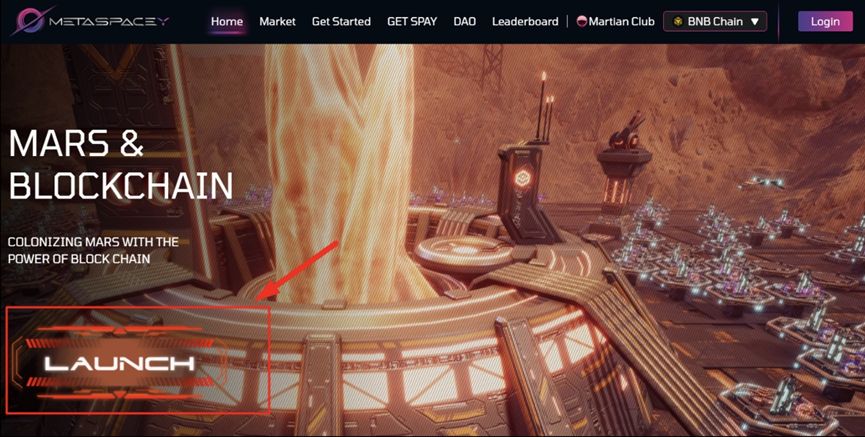
MetaSpaceY is a Web3 game platform that aims to become the "Steam" for Web3 games. Through MetaSpaceY, users can create game nodes to share their disk space and GPU for mining computational power. This means that in the future, games may no longer require dedicated graphics cards, and players can simply use a display screen and stream games directly through 5G, significantly lowering the barrier to entry for gaming.
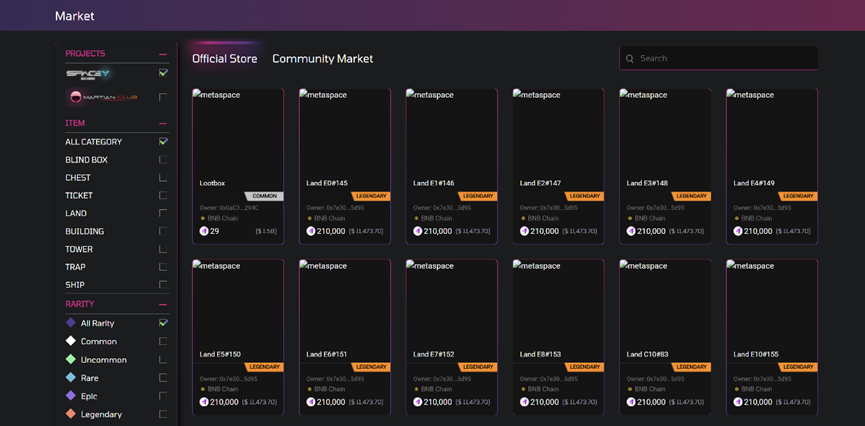
In terms of features, MetaSpaceY provides users with game listings, rankings, and other functionalities. Additionally, it has an integrated NFT marketplace that supports the purchase, sale, and minting of NFTs. MetaSpaceY aims to reform the NFT market from the supply side to reduce the barriers for creating game-related NFTs.
Furthermore, MetaSpaceY plans to gradually introduce AI-driven content creation features. This feature combines high efficiency with low cost. Users can provide keywords to the AI, which will generate game assets in just 60 seconds. The cost of generating 3D game models and rendering is also relatively affordable, typically maintained at a price of $0.1 per hour. The AI content creation feature allows users to create game assets and maps with low barriers, enabling the concept of "Create to Earn."
SpaceY 2025
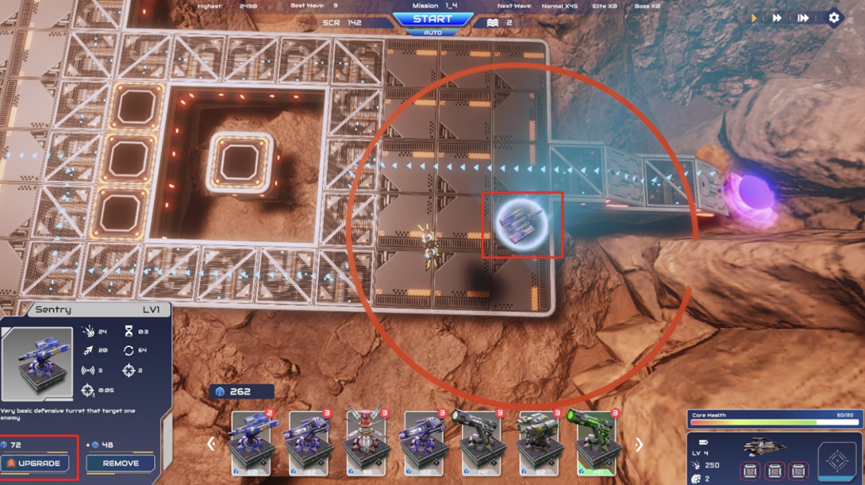
In addition to the mentioned plans, MetaSpaceY has also launched a game called SpaceY 2025.
SpaceY 2025 is a sandbox tower defense game set in the backdrop of human colonization of Mars. On their journey to Mars, humans face a significant challenge in the form of extraterrestrial threats. These alien creatures are fierce and constantly evolving. Players will explore the story and challenges of the Martian colony by completing levels in the game.
SpaceY 2025 primarily consists of two game modes: the campaign mode and the endless mode.
The campaign mode is designed to familiarize players with the tower defense mechanics. Players progress by defeating each level, gaining access to more and better towers, and challenging themselves with new and more difficult maps. Each tower in SpaceY 2025 has unique abilities, rarity, and types to differentiate them.
The endless mode is for players seeking to challenge themselves. Outstanding players in this mode will receive tokens as rewards and can showcase their achievements to friends.
Moving forward, SpaceY 2025 will continue to focus on enhancing and refining the gameplay while fostering community communication and engagement.
Community involvement is at the core of SpaceY's vision, aiming to establish a DAO (Decentralized Autonomous Organization) that empowers players to control the game's development and direction. By granting the community the power to shape the game's future, SpaceY seeks to create a more inclusive and collaborative gaming experience that benefits everyone.
Economic Model
The economic model in SpaceY 2025 revolves around two main tokens: SPAY and MetaMars.
SPAY:
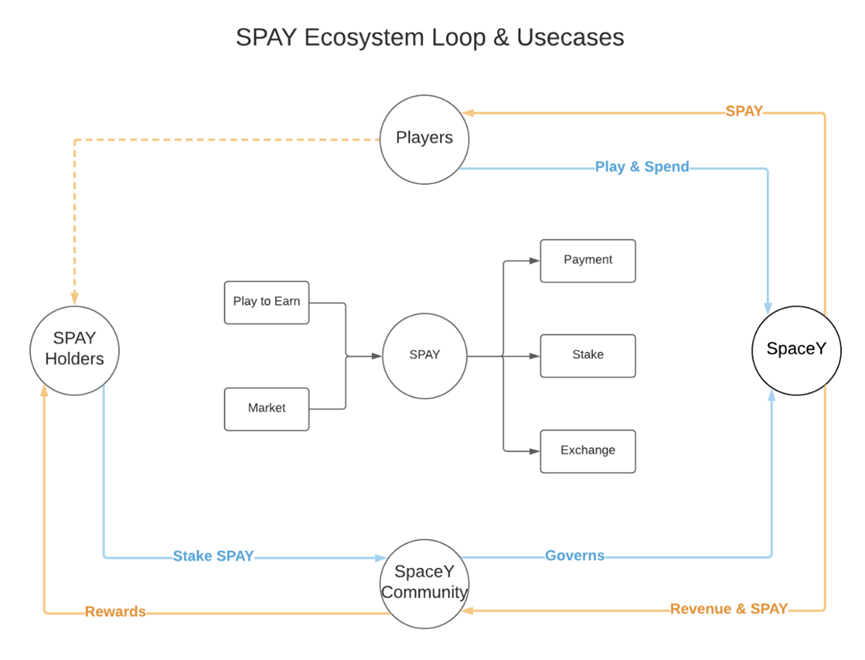
SPAY is the governance token of MetaSpaceY, allowing token holders to participate in DAO voting and governance. By holding SPAY tokens, users have the ability to influence decisions regarding the future development, feature updates, and reward mechanisms of the game. Additionally, SPAY can be used within SpaceY 2025 to purchase NFTs, including rare items, decorations, and other virtual assets.
MetaMars:
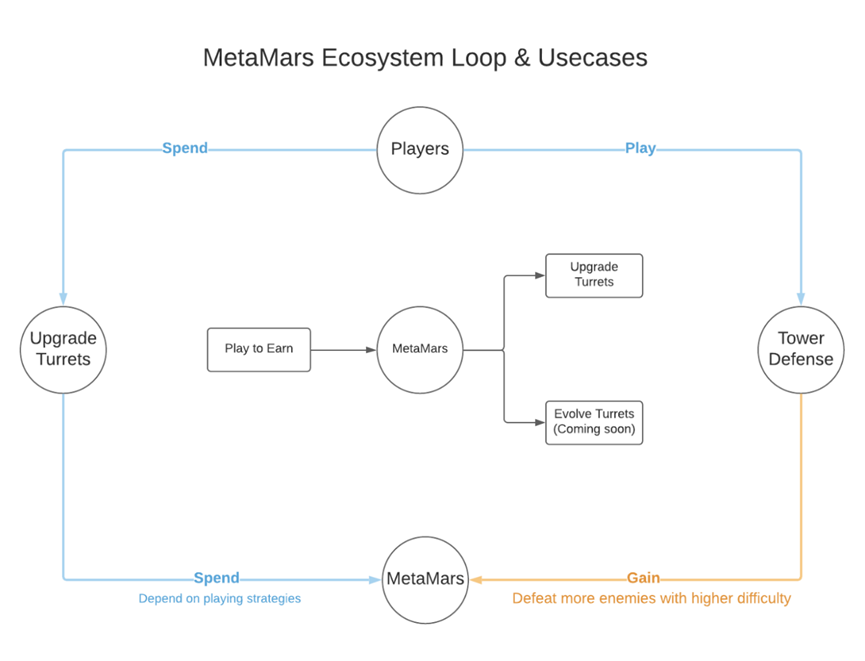
MetaMars is the token used for tower upgrades in SpaceY 2025. Players can earn MetaMars by defeating extraterrestrial creatures in the tower defense mode. These tokens can be used to upgrade existing towers, enhancing their abilities and effectiveness in defending against the alien threats.
Play To Earn
The economic activities in SpaceY 2025 revolve around two main functionalities: battling and upgrading.
Battling requires players to acquire multiple towers (NFTs) to progress. The game provides players with 15 free towers that are not NFTs, allowing players to use them for free.
Players can earn in-game resources called "gMars" as rewards by defeating enemies, which can be further converted into MetaMars. Players can then withdraw their MetaMars to their wallets as actual tokens.
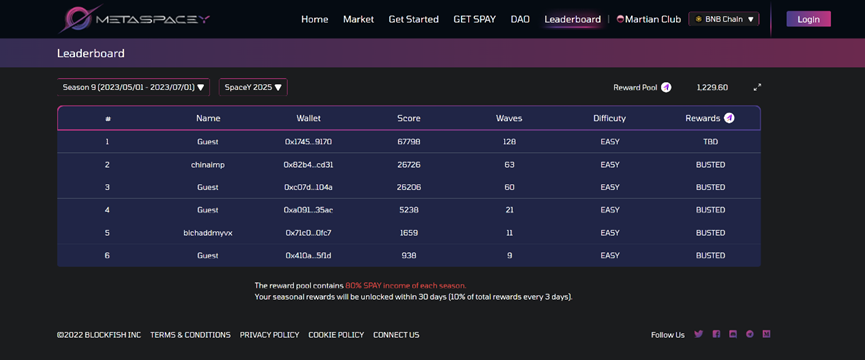
In addition, SpaceY 2025 incorporates a leaderboard mechanism where the top-ranking players each month will receive a certain amount of SPAY tokens as rewards. This incentivizes competition and provides additional earning opportunities for skilled players.
Conclusion
Web3 games are an emerging form of gaming that is rapidly developing and innovating, driven by blockchain technology and decentralized principles. They offer players greater autonomy and credibility, while providing a fairer, more transparent, and profitable gaming environment.
As Web3 games continue to evolve, we can expect to see more innovative games based on blockchain technology, as well as the emergence of new gaming platforms and ecosystems. These games will expand the boundaries of the gaming industry, providing more opportunities and challenges for players and developers.
While Web3 games face challenges such as incomplete infrastructure and a lack of standardized protocols and protection mechanisms, we believe that these issues will be gradually resolved with technological advancements and the industry's growth.
In the future, Web3 games will become an important trend and direction in the gaming industry, offering players and developers a more diverse and engaging gaming experience. They will also contribute to the application and adoption of blockchain technology in a significant way.


All Comments