


Blockchain technology has ushered in a new era of decentralization. The journey towards a fully decentralization of the Internet boils down to three main players: consensus mechanisms, storage, and computing.
In the last ten years, consensus mechanisms have been leveling up big time. Now, we're stepping into the Web 3.0 and metaverse era, where the lines between the digital and physical worlds are getting blurrier than ever. It's an info overload as we've never seen before, and the network's "flywheel effect" is fueling mega growth for decentralized storage applications
Understanding Decentralized Storage and Why Web 3.0 Needs It
Before diving into "decentralized storage," it is helpful to first understand its counterpart, "centralized storage."
"Centralized storage" refers to a method where all storage devices are concentrated within a single system, originating from the mainframe era. This approach relies on a limited number of fixed nodes, with data access passing through a single controller. The operation of a centralized storage system hinges on the stability of the storage server, which in turn determines the system's reliability and performance. This places high demands on the storage environment and hardware equipment, ultimately resulting in only a handful of technology giants dominating the centralized storage landscape.
In Q1 of 2023, Amazon, Microsoft, and Google collectively accounted for 65% of the cloud storage market share.

Decentralized storage, on the other hand, distributes data across multiple nodes, enhancing data security, reliability, and ensuring no single point of failure. Web 3.0 requires decentralized storage as it aims to create a more democratic, user-centric Internet, where users maintain control over their data and privacy. By leveraging decentralized storage, Web 3.0 applications can provide a more resilient and transparent infrastructure, which is essential for the growth and sustainability of the decentralized ecosystem.
Centralized storage services have come a long way, with market giants dominating the scene and prices steadily dropping. So, why bother with decentralized storage? The answer is simple: to tackle the issues centralized servers can't handle—data immutability, trustlessness, persistence, and censorship resistance.
Let's use the increasingly popular NFTs and dApps as examples to explore why Web3 needs decentralized storage.
NFT Storage: Where's My Digital Art?
Everything can become an NFT, but have you ever wondered where they're stored?
An NFT is typically created by referencing metadata that includes its description (name, attributes, etc.) and links to media files (images, videos, audio, etc.). Opting for centralized storage means the entire NFT project relies on a specific company, server, or even an individual. If the server fails or gets damaged, the data might vanish forever, turning your precious NFT into nothing more than a "verbal agreement." Also, if the server falls under someone's control, your NFT data could be tampered with—defeating its original purpose of encryption, confirmation, permanence, and non-tampering.
The NFT trading platform OpenSea initially used centralized servers for NFT metadata and media storage, leading to occasional data loss. In 2021, they introduced a feature to "freeze" NFT metadata, enabling creators to decentralize their NFTs. The PFP NFT project, CryptoPunks, initially stored product integration images on centralized servers and hashed their values in smart contracts for verification. As NFT values soared, so did the cost of data loss or damage. Thus, CryptoPunks decided to store all metadata and image data directly on the Ethereum blockchain. By parsing metadata and image data from smart contract addresses, users can retrieve all NFT attributes and original image data. As long as Ethereum exists, CryptoPunks will too, be safe from tampering.
dApps: Why Decentralized Storage Matters
dApps are applications running on a blockchain, driven by smart contracts, and consists of a front-end user interface (UI) and back-end smart contracts.
As long as an app enables users to interact with the blockchain via smart contracts through an operational interface, it's a dApp. While dApp back-end code runs on the blockchain, front-end code and UI can be stored through any means. So, why opt for decentralized storage for dApp front-ends and back-ends? The answer lies in ensuring service availability and durability. While dApps' core mechanics are executed by smart contracts, user accessibility is guaranteed through the front-end. Ensuring dApp front-end availability is crucial for underpinning service reliability.
Decentralized storage networks, spread across multiple nodes, minimize the risk of dApps going offline due to server failures, increase resistance to DNS hacking attacks, and ensure app persistence. Decentralized storage also enhances censorship resistance, as no centralized entity can easily delete stored data.
A Decade of Decentralized Storage: Pioneers and Innovators
One of the earliest and most influential projects in decentralized storage is the InterPlanetary File System (IPFS), created by Protocol Labs founder Juan Benet in 2014 and officially launched in 2015. Decentralized storage projects such as Arweave, Storj, Filecoin (also developed by Protocol Labs, the team behind IPFS), and Memo followed, each with a unique design and problem-solving approach:
- IPFS/Filecoin: Multi-node storage + miner incentive mechanism
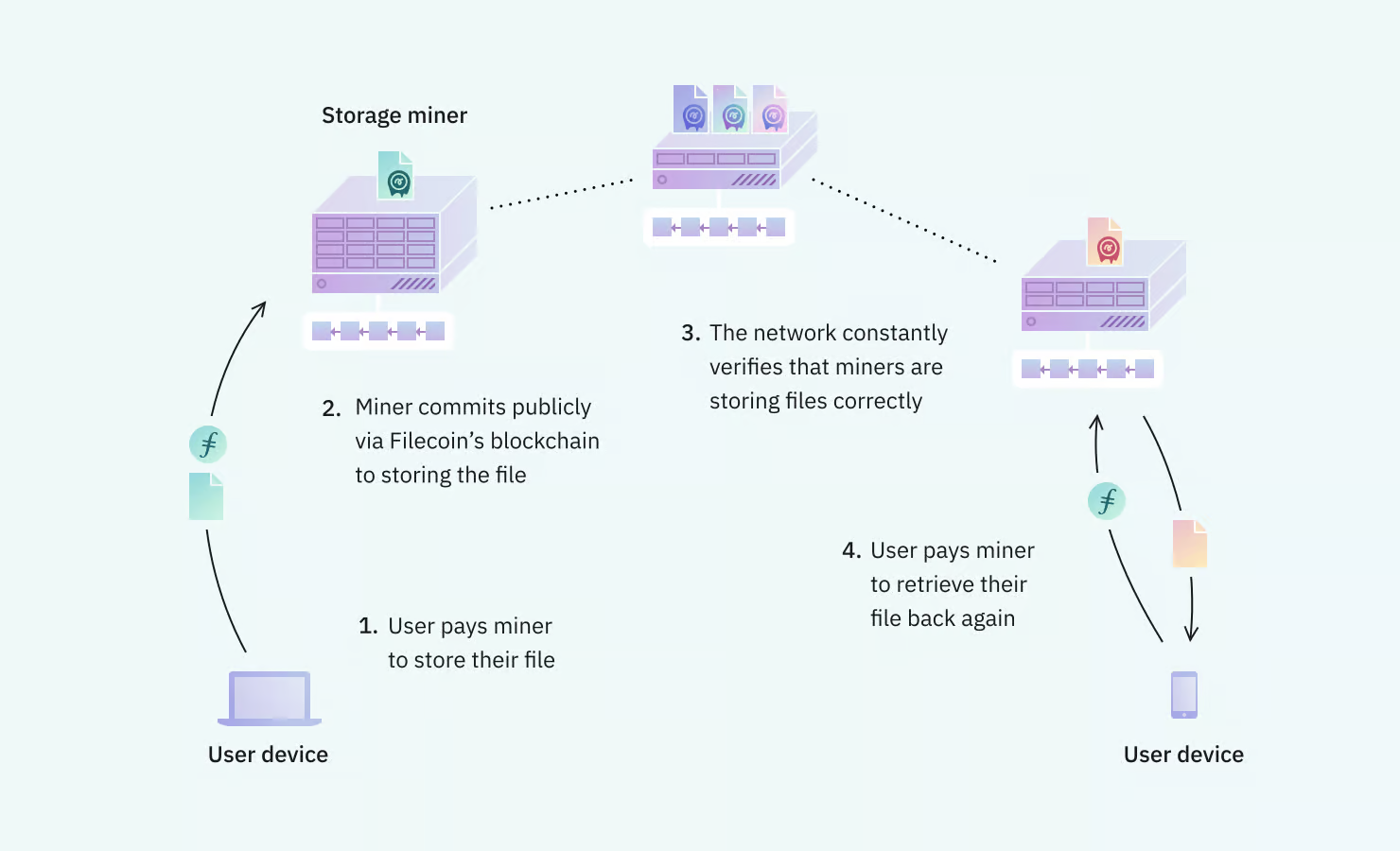
IPFS achieves decentralized storage by distributing files across multiple nodes in the network and ensures reliable, fast file access through content addressing and peer-to-peer transmission technology—a significant innovation for the underlying Internet protocol.
In 2017, IPFS introduced the incentive layer Filecoin to guarantee reliable file storage within an agreed-upon timeframe using a token-based incentive mechanism. Filecoin is a decentralized storage network built on the IPFS protocol, comprising miners and storage users. Miners earn rent and block rewards by providing storage space, while storage users issue orders to hire miners in the decentralized market. Think of it as an Airbnb for data storage, offering short-term services on a monthly basis by renting out excess server storage in various locations.
- Arweave: One-time payment for permanent data storage
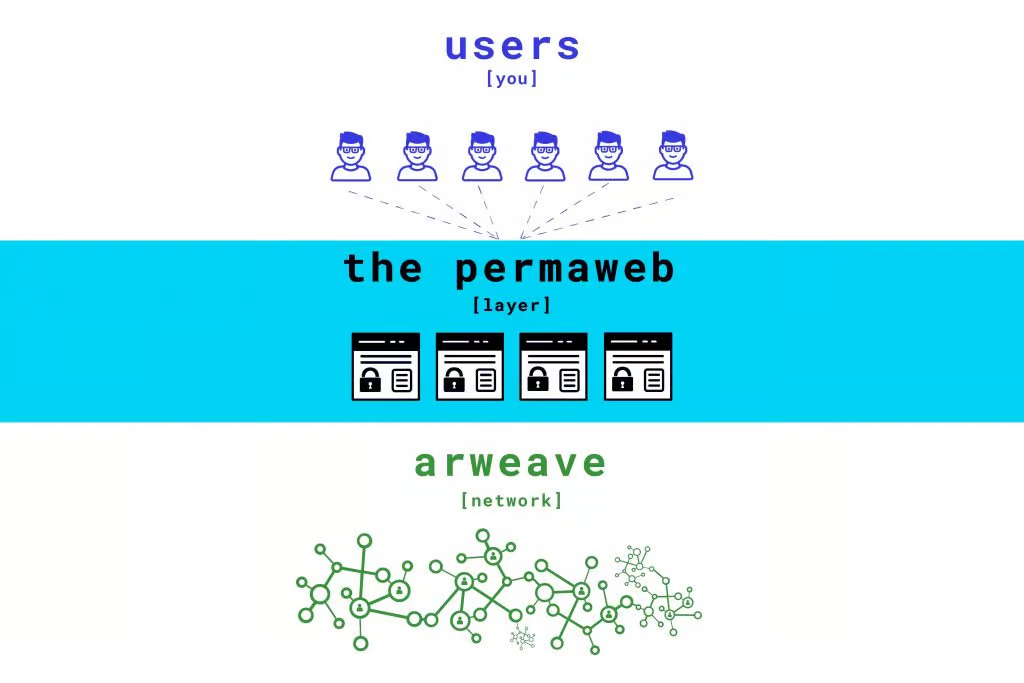
Arweave, created in 2017 and launching its main network in 2018, writes content directly into the blockchain for storage, achieving permanent data storage. It uses Proof of Access (POA) to incentivize miners to continually store and share historical data. A miner's income is directly proportional to the number of stored blocks: they receive rewards for both new blocks and random old blocks in the storage chain. The more total blocks a miner stores, the more income they earn.
Unlike Filecoin's monthly payment, Arweave provides permanent storage with a one-time payment, reducing long-term storage costs.
- Storj: Grassroots mining and enterprise-level storage
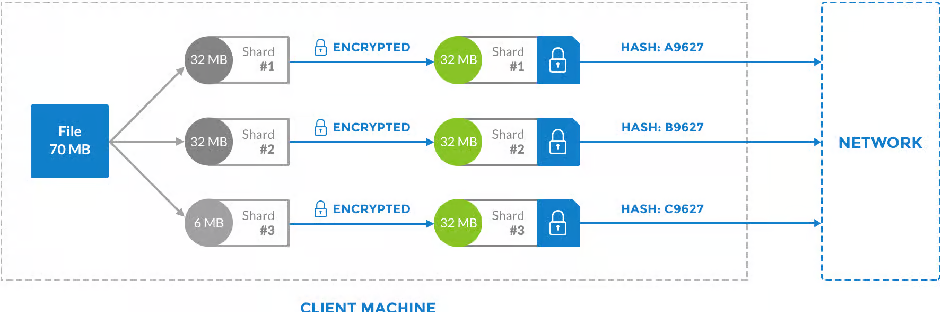
Storj is a decentralized storage protocol based on Ethereum, created in 2017. It leans toward "grassroots mining" with devices like personal computers, Raspberry Pi, and NAS serving as Storj nodes, building a highly decentralized cloud storage network. Storj primarily offers enterprise-level storage services, targeting Amazon's S3 platform.
In terms of user incentives, Storj is similar to Filecoin, allowing users to earn rewards by renting out storage space. The difference is that Storj launched its native token, $STORJ. Storage users pay for services using $STORJ, while providers rent out idle storage space to receive $STORJ rewards.
Each project's decentralized storage design differs, but they all tackle three core challenges: realizing storage "decentralization," motivating users to continuously provide storage space, and ensuring data storage security.
Now, let's examine how the decentralized storage network Memo introduces three roles in its design—User, Provider, and Keeper—to address these challenges.
Decentralized Storage Network MEMO: Introducing Three-Party Roles and Offering Multiple Incentives
MEMO, a blockchain-based decentralized cloud storage system, is developed by the Memolabs team. This innovative storage network features three distinct roles—User, Provider, and Keeper—to maintain a balanced ecosystem.
- User: Storage service consumers who defines storage requirements and upload data.
- Provider: Offers storage to users, participates in staking, and provides liquidity.
- Keeper: Acts as a transaction intermediary and network manager.
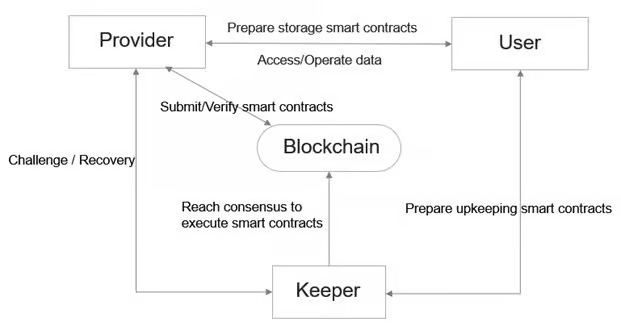
The User role is simple: they initiate storage transactions and purchase storage space using smart contracts to store various data types on the network. Providers lease their storage space to Users, earning stable rent. In MEMO's system architecture, Providers do more than just lease space—they can also generate income by participating in pledges and providing liquidity.
The User and Provider roles are also included in the designs of Filecoin, Arweave, and Storj (i.e., storage users and miners), as buyers and sellers are essential for storage transactions.
MEMO's innovation lies in introducing an "intermediary" and "steward" role, the Keeper. Keepers offer intermediary services such as information matching, storage verification, and transaction facilitation between Users and Providers, collecting "commissions" in return. Additionally, Keepers are responsible for maintaining network security, which includes verifying the validity of storage space provided by Providers and penalizing any violations.
Now, let's revisit the three main questions discussed earlier:
- How does MEMO achieve decentralized storage? There are numerous edge storage devices across the Internet. MEMO has developed a scalable decentralized cloud storage protocol by integrating these idle resources, allowing users with limited storage capacity to store data on edge storage nodes. Each piece of data is sliced, encrypted, and distributed across multiple network nodes, reducing the risk of centralized data storage.
- How does MEMO incentivize users to provide storage continuously? In terms of system operation, Filecoin, Arweave, and Storj motivate miners through block generation. MEMO, on the other hand, has designed multiple incentive mechanisms and introduced three roles to facilitate storage transactions. Compared to other storage projects, Providers in the MEMO system can achieve more substantial incentives. They can earn income not only from renting storage space but also by providing liquidity and staking. As a fundamental application scenario in the blockchain field, liquidity and staking have relatively high market demand. Likewise, Keepers can collect "commissions" by facilitating transactions and earn income by verifying system security.
- How does MEMO ensure the integrity of stored data? MEMO employs a public verification mechanism, with the Keeper role-playing a critical management and supervisory function. Smart contracts are used to record the dynamics and transaction information of the three roles on the blockchain, while other information is stored on edge storage devices. Due to the low reliability of edge storage nodes and the potential for malicious actions, effective supervision is necessary to verify the correct storage of data. All nodes benefiting economically are subject to regulation. For instance, each Provider must accept verification challenges from Keepers, who, in turn, must accept challenges from other Keepers, establishing a system of checks and balances. To prevent collusion attacks, the public verification mechanism allows any third party to join the verification process, ensuring openness, unpredictability, and randomness. Moreover, MEMO implements a multi-level fault tolerance and data recovery mechanism to further secure stored data.
Decentralized storage is still in its early stages, with current storage scale and performance lagging behind centralized storage. However, given the numerous advantages of decentralized storage, this field has immense growth potential and is likely to yield more possibilities in the future.


All Comments