


Project Overview
Maverick Protocol is an emerging decentralized trading platform aimed at challenging the dominant position of decentralized trading platforms like Uniswap. Maverick Protocol was co-founded by Alvin Xu, who entered the cryptocurrency field in 2018 and has worked for companies such as Tron Foundation and BitTorrent. Recently, he has been working at ConsenSys, a leading Ethereum developer, where he is responsible for the development of the MetaMask wallet, one of the most popular wallets in the ecosystem.
Funds and Resources
Maverick Protocol recently announced raising $9 million in a seed round of funding led by Founders Fund. Other participants include Binance Labs, Coinbase Ventures, Pantera Capital, and Apollo Crypto. This funding injection comes as cryptocurrency enthusiasts seek alternative places to purchase and exchange tokens following the Securities and Exchange Commission (SEC) lawsuits against the two largest cryptocurrency exchanges in the market, Binance and Coinbase.

Goals
The goal of the Maverick Protocol is to challenge the dominant position of automated market makers like Uniswap and ultimately surpass centralized exchanges like Binance or Coinbase. Maverick Protocol is an automated market maker, where traditionally giants like Citadel Securities act as market makers, helping match buy and sell orders for stocks. In the world of cryptocurrencies, trading is 24/7, so popular protocols like Uniswap fully automate market making to facilitate the buying and selling of various tokens.
Outlook
While the goal of the Maverick Protocol is to challenge the dominant position of automated market makers like Uniswap, they ultimately hope to surpass centralized exchanges like Binance or Coinbase. However, Alvin Xu believes it is still too early to compete with centralized exchanges, despite their ambitions.
Challenges
Although the Maverick Protocol has ambitious goals, they face several challenges to achieve them. Firstly, platforms like Uniswap have a significant first-mover advantage, which is crucial in the cryptocurrency world. Secondly, Maverick Protocol needs to demonstrate that their platform can not only provide the same services as existing platforms but also offer superior services. Lastly, they need to carve out their position in a highly competitive market that already has many established players.
Technical Innovation
One of the key innovations of the Maverick Protocol is its Automated Market Maker (AMM). This AMM facilitates users in maximizing capital efficiency through automated liquidity concentration that adjusts with price changes. Higher capital efficiency results in a more liquid market, which means traders can obtain better prices, and liquidity providers can earn higher fees. Additionally, liquidity providers now have the option to bet on the price trajectory of a specific token by aligning their assets' prices in a particular direction. These directional bets are similar to one-sided liquidity strategies, where liquidity providers have significant or complete exposure to a single asset within a given pool.
Maverick allows liquidity providers (LPs) to configure their own liquidity distributions along the price range of the pool. Maverick offers several preset distributions, but LPs can also adjust them individually to tailor their own custom liquidity strategies.
Example of possible custom liquidity distributions in the Maverick AMM.

An LP with a non-uniform distribution is useful for LP positions implementing risk optimization, as described in a paper by Harvard University on exponential distributions. The paper demonstrates that rational LPs should balance their volatile loss risk and fee rewards by providing liquidity on a exponential distribution of prices.
While complex liquidity distributions can be configured in other concentrated liquidity AMMs, this often requires users to open multiple positions and mint several NFTs to support them. With Maverick, you can design your custom distribution within a single position using just one NFT.
Advantages
One major advantage of the Maverick Protocol is its ability to offer higher capital efficiency and a more liquid market. This is beneficial for both traders and liquidity providers. Additionally, the Maverick Protocol introduces a new liquidity strategy that allows providers to follow the asset's price in one direction, providing them with new investment opportunities.
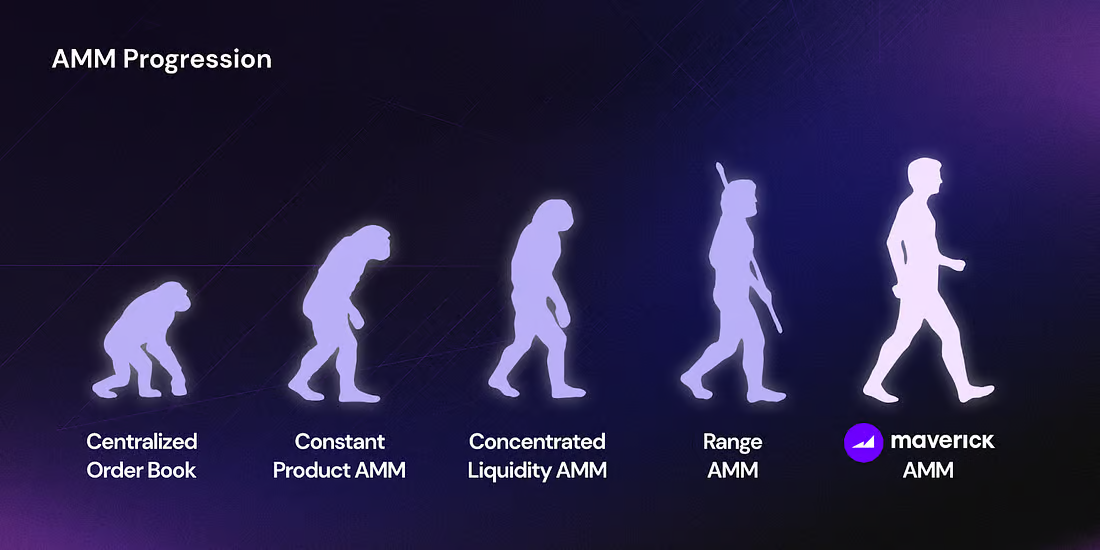
Maverick AMM aims to be a sophisticated tool that allows LPs to design and automate individual strategies for concentrating and mobilizing liquidity.
Maverick AMM offers a range of out-of-the-box liquidity patterns—static and mobile—empowering users to execute a variety of liquidity strategies.
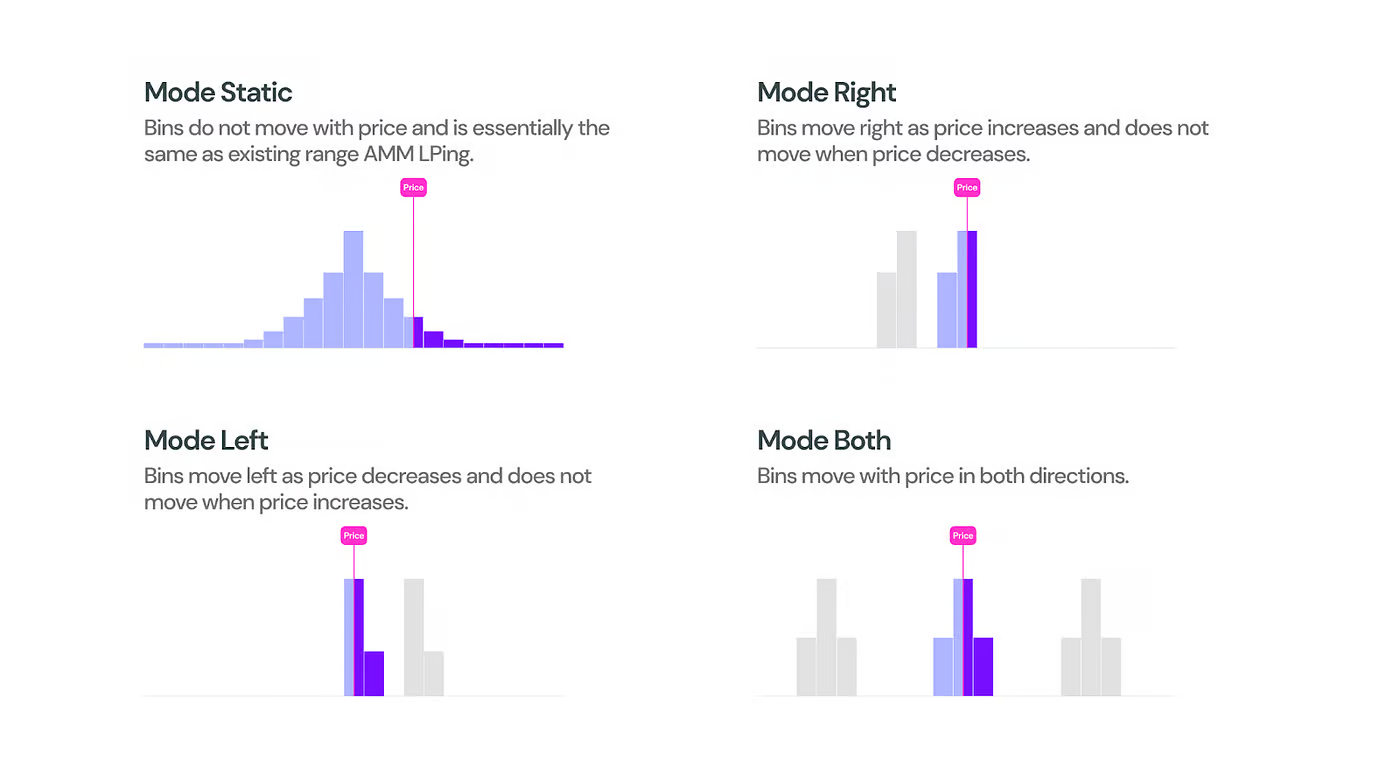
Maverick AMM empowers liquidity providers with a set of tools to implement their own liquidity strategies.
Risks
Although Maverick Protocol has many advantages, there are also some risks. Firstly, Maverick Protocol is a new project that has not yet undergone thorough market testing. Secondly, the success of Maverick Protocol largely depends on its ability to attract enough users. If Maverick Protocol fails to attract a sufficient user base, its liquidity may be affected, which could impact its price and trading volume. Lastly, the success of Maverick Protocol also depends on its ability to find its place in a highly competitive market.
Conclusion
In conclusion, Maverick Protocol is a promising project that offers a new liquidity strategy and aims to challenge existing decentralized trading platforms. However, the success of Maverick Protocol will depend on its ability to attract sufficient users and find its place in a highly competitive market. While facing some challenges, if Maverick Protocol can successfully overcome them, it has the potential to become a significant cryptocurrency trading platform.
The future prospects of Maverick Protocol rely on multiple factors. Firstly, it needs to continue attracting new users and liquidity providers to maintain platform liquidity. Secondly, it needs to keep developing and improving its technology to stay competitive in the market. Lastly, it should be able to adapt to the evolving market environment, including changes in regulations and the emergence of new competitors.



All Comments