


As a key infrastructure linking the off-chain and on-chain economies, a miner is a very special interest-bearing asset. It anchors the right to receive the proceeds of minting taxes on the Bitcoin clearing network, and it is for this reason that the profession of the crypto miner has been created.
Since the early days of the crypto industry, the mining industry has been one of the most fundamental industries in the blockchain industry. However, to this day, it has yet to develop a global, fair-priced, and real-time tradable online marketplace.
We are curious about the reason for this
On the whole, the current mining industry has inevitably moved in the direction of capital concentration. It is true that the concentration of capital in the industry is conducive to industrial scale and process, but it is undeniable that as the concentration of capital continues to deepen, the threshold for investment is also rising.
This has resulted in a shrinking relative share of new users in the mining industry, which in turn means that it will be difficult to take advantage of the intellectual and financial resources that new entrants bring to help the industry iterate and evolve.
Ultimately, the biggest constraint on the mining industry is due to a lack of buying.
Firstly, the mining industry is highly dependent on the offline industry chain and the upstream and downstream are complex, with the risk of credit default looming large.
Secondly, even if various key nodes in the offline industry chain are opened up through industry resources, it does not mean that profits can be sustained. This is because mining actually involves a series of quite complex investment decisions, such as position-building timing, cost planning, capital management, hardware depreciation, and so on. Some even involve quite cutting-edge financial mathematics. And these elements deeply influence whether or not an investor can make a sustainable profit.
In addition, the vast majority of investors' exposures are largely exposed due to the lack of underlying derivative instruments, which further undermines the possibility for investors to hedge risks and leapfrog cycles.
Finally, from a global perspective, the mining machines produced by the highly concentrated mining giants need to be transported through layers of distribution to locations around the world where electricity resources are abundant and delivery to end miners is completed. Through physical delivery and negotiated bargaining, the pricing power of the core asset, the miner, is shifted up and down the value transfer chain and is highly correlated with the secondary market.
This situation makes it difficult to create a globally harmonized online trading market with real-time bidding and a full range of derivatives instruments.
At the same time, most of the DeFi industry's earnings are currently based on an inflationary model, it lacks a sustainable APY, and this reflexivity has contributed to the strong cyclicality of the chain's ecology, which does not allow for sustainable development.
To this end, MappingFunk is committed to solving these problems through blockchain technology.
MappingFunk: Bridging the path between PoW and DeFi
MappingFunk is a cash flow asset trading marketplace dedicated to creating never-defaulting, homogeneous interest-bearing assets through the use of income predictors, over-pledges, and clearing mechanisms; and trading infrastructure such as Uniswap to enable its trading, thus bridging the gap between PoW and DeFi.
For the PoW industry, MappingFunk's model allows interest-bearing assets to retain their original income-generating nature while achieving better on-chain liquidity for risk management; and for the DeFi industry, it will also generate sustainable returns for on-chain investors.
MappingFunk is a generalized protocol, but its current focus is still on consensus layer assets. Therefore, at this stage, it is creating a use case for an interest-bearing asset trading market for consensus layer assets to enable pricing, trading, and risk hedging of consensus layer assets.
Through a path of minimal trust cost and maximum composability, MF creates standardized, homogeneous interest-bearing assets on the chain, which allows interest-bearing assets to be default-free and generate exactly the same cash flows as the consensus layer assets, without any discounting.
And to help achieve a similar effect for consensus layer assets, MF has certificated a type of cash flow where vendors can sell such interest-bearing pass-throughs to manage risk and demand side can buy such interest-bearing pass-throughs. Unlike the conventional governance token inflation model on the chain, such an approach can provide sustainable APY for on-chain investors, and such returns are settled in mainstream assets.
To put it succinctly, MF links DeFi and PoW as a trading marketplace. DeFi is flooded with liquidity but lacks a sustainable APY; PoW returns are large and sustainable but lack liquidity. MF, on the other hand, strives to be a canal between these two crypto economies and will continue to provide the infrastructure to price, trade, and hedge the economic exchange.
Protocol design
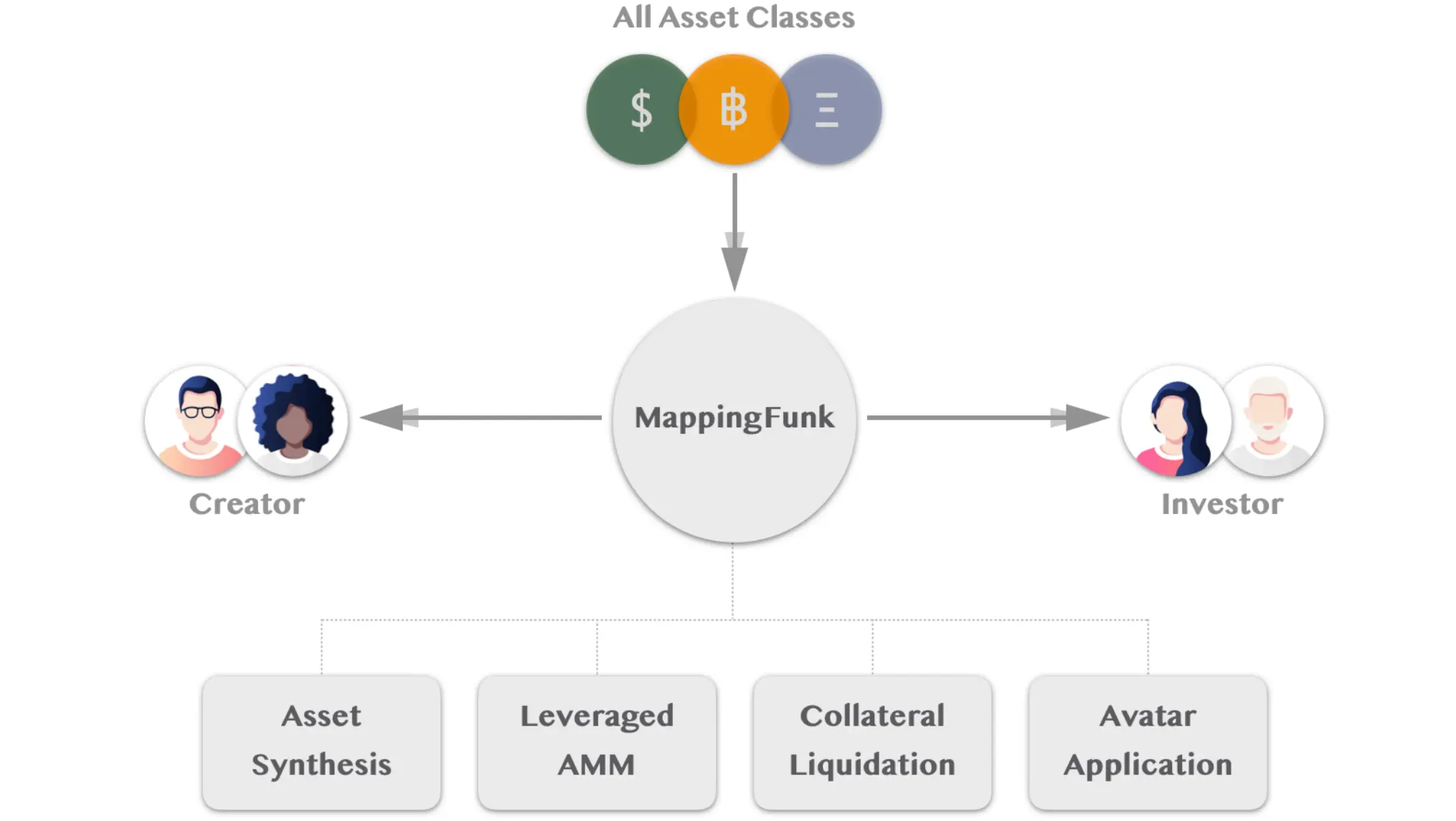
The MappingFunk protocol designs an asset synthesis model that allows any person to map interest-bearing assets onto the blockchain and to trade them through the DEX infrastructure, and to create and apply financial LEGO.
The MF's AMM module will follow the constant product formula; the Avatar module will be a de-centered programmable account protocol that can hold any on-chain asset on behalf of the user and can be edited for permissions such as transfers.
Currently, all kinds of business innovations within the mining ecosystem are largely limited by the problem of insufficient credit. As the DeFi infrastructure becomes more sophisticated, the synthesis of assets onto the chain may be a near-optimal solution for credit enhancement of arithmetic assets.
A common idea for synthesizing trusted assets on the chain is over-pledging, i.e. achieving economic credit casting by increasing the cost of default. For synthetic assets, there are critical conditions for the pledge rate:
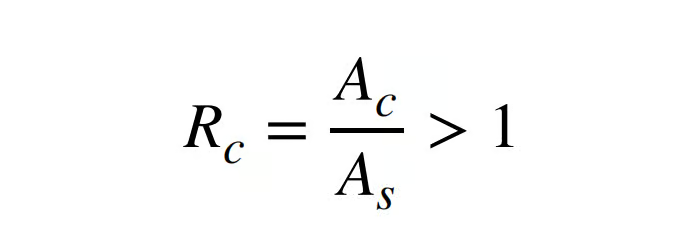
Also, this condition needs to be met if you want to circumvent a foundry default.
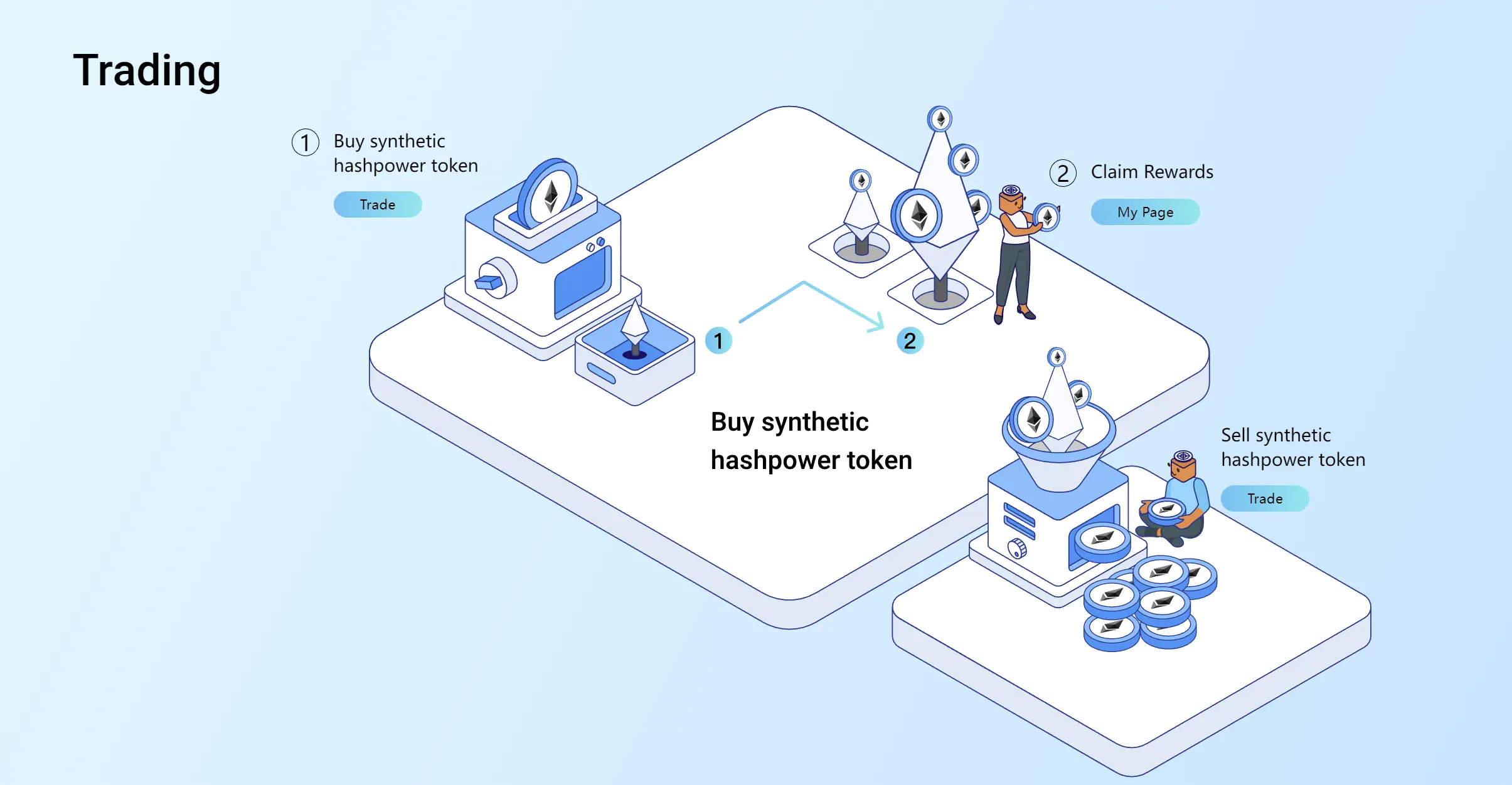
However, for investors, such efficiency in capital utilization seems to be at odds with their need to increase leverage or improve the efficiency of capital turnover. MF will therefore address this contradiction in the casting model.
For the minted on-chain standardized arithmetic, MF will build a trading market through the DEX infrastructure, which will divide the liquidity pool according to the different power ratios of the standardized arithmetic.
Agreement Ecology and Trading Mechanisms

1. Protocol Ecology
MappingFunk is essentially a bilateral market, but since the DEX infrastructure introduces automated market makers as a trading medium for buyers and sellers, a total of 3 types of ecological entities are involved.
1) Minter: i.e. sellers, who generate on-chain standardized arithmetic passes by pledging margin and crypto assets for casting.
A minter can mint a trusted piece of arithmetic by pledging crypto assets as margin. Based on Avatar (a decentralized, permission-programmable middle-tier account), the molder can freely transfer positions in margin across a range of assets, which can significantly increase the efficiency of the molder's capital utilization and lock in the risk of forward uncertainty through the derivatives native to the arithmetic.
2) Traders: i.e. buyers, those who buy standardized arithmetic passes on the chain through an agreement.
By buying an arithmetic pass from the liquidity pool, the investor is effectively taking a position in 1T of standardized arithmetic with a power consumption of 20J/T. Passes marked with different "power ratios" will have different net returns. Similar to owning a physical miner, investors reap the benefits of the previous day's mining on the following day, except that it is fully standardized through smart contracts and there is no credit risk. Given that arithmetic passes are more volatile than the underlying asset, to hedge against risk, investors can also lock in profits through derivatives. Alternatively, if investing in a single arithmetic pass is too complex, it is possible to build an arithmetic index fund that can easily track the entire fundamental without having to focus on short-term fluctuations. Based on future combinability, pledged interest-bearing assets can be lent out to other crypto assets, which can also further increase the efficiency of capital utilization
3) Market Maker: i.e. an intermediary, someone who participates in liquidity market making by combining standardized on-chain arithmetic passes and crypto assets.
The market maker composes liquidity from interest-bearing assets and paired assets to fill the pool, and the market maker will be equivalent to self-directed mining because he holds the interest-bearing assets. Better still, the impermanent losses would be neutralized relative to a market-making strategy with non-interest-bearing assets.
4) Arbitrageurs
Arbitrageurs can not only arbitrage between varieties in the spot market, but also between MappingFunk and lending agreements, or between on-chain and off-chain, with the help of futures and spot instruments. These will further improve price discovery, especially for assets that do not yet have market consensus in an illiquid environment.
2. Transaction Mechanism
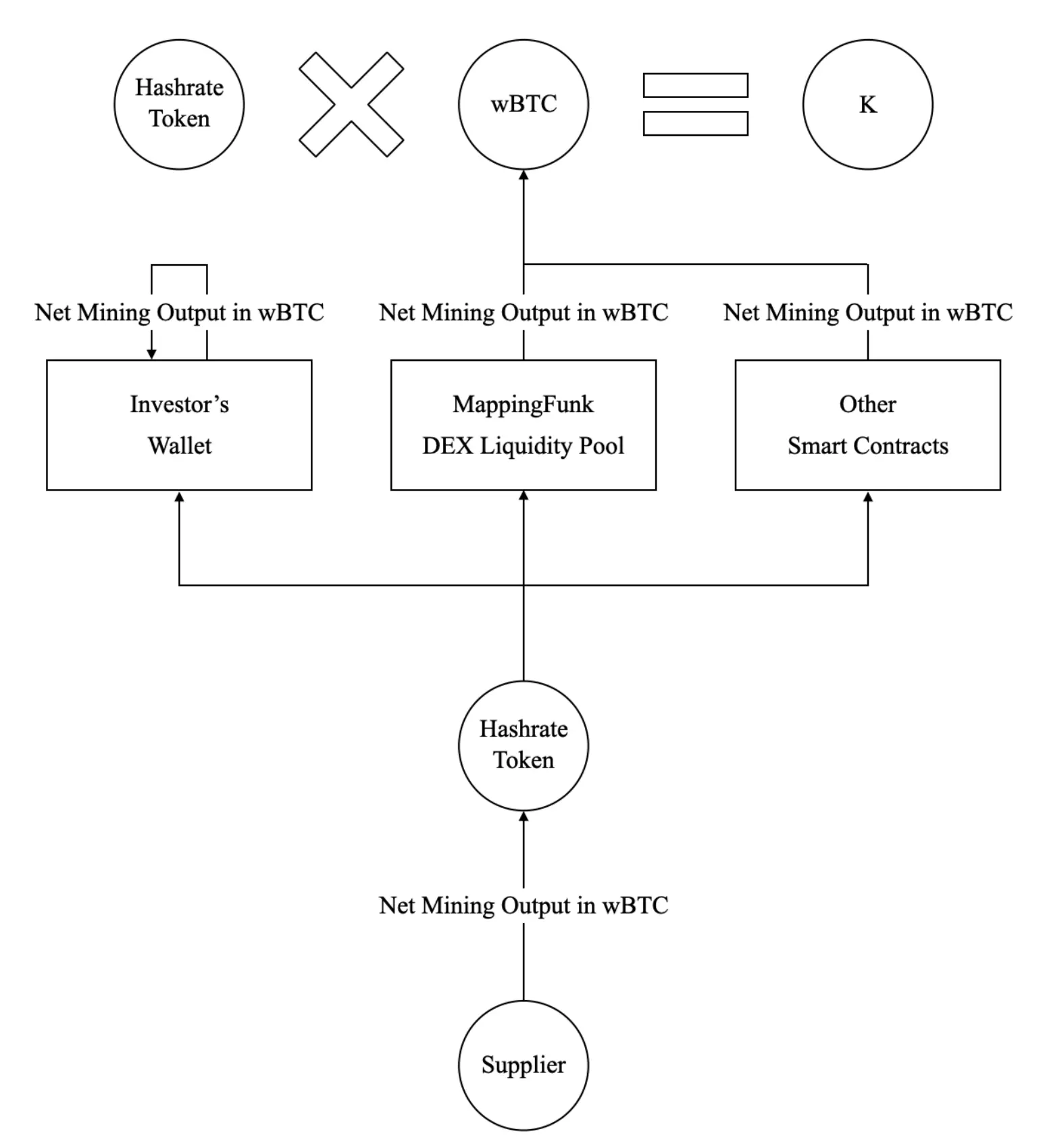
In order to solve the on-chain transactions of interest-bearing assets, and also to restore the qualities of real interest-bearing assets to the greatest extent, especially to achieve, in the scenario of frequent transactions of interest-bearing assets, the clear realization of interest sharing, based on the existing ledger and pass-through paradigm, MF has designed a simple transaction mechanism.
Under this trading mechanism, founders can inject cash flow from interest-bearing assets, i.e. net cash flow from mining, into the protocol; investors receive net cash flow from mining by holding standardized interest-bearing asset passes in their crypto-wallets; automated market makers holding liquidity certificates are close to participating in proprietary mining and receive an additional liquidity incentive; and users who participate in other protocols through interest-bearing asset passes are considered to have voluntarily given up mining Net cash flow to receive incentives for other agreements.
Principle Analysis
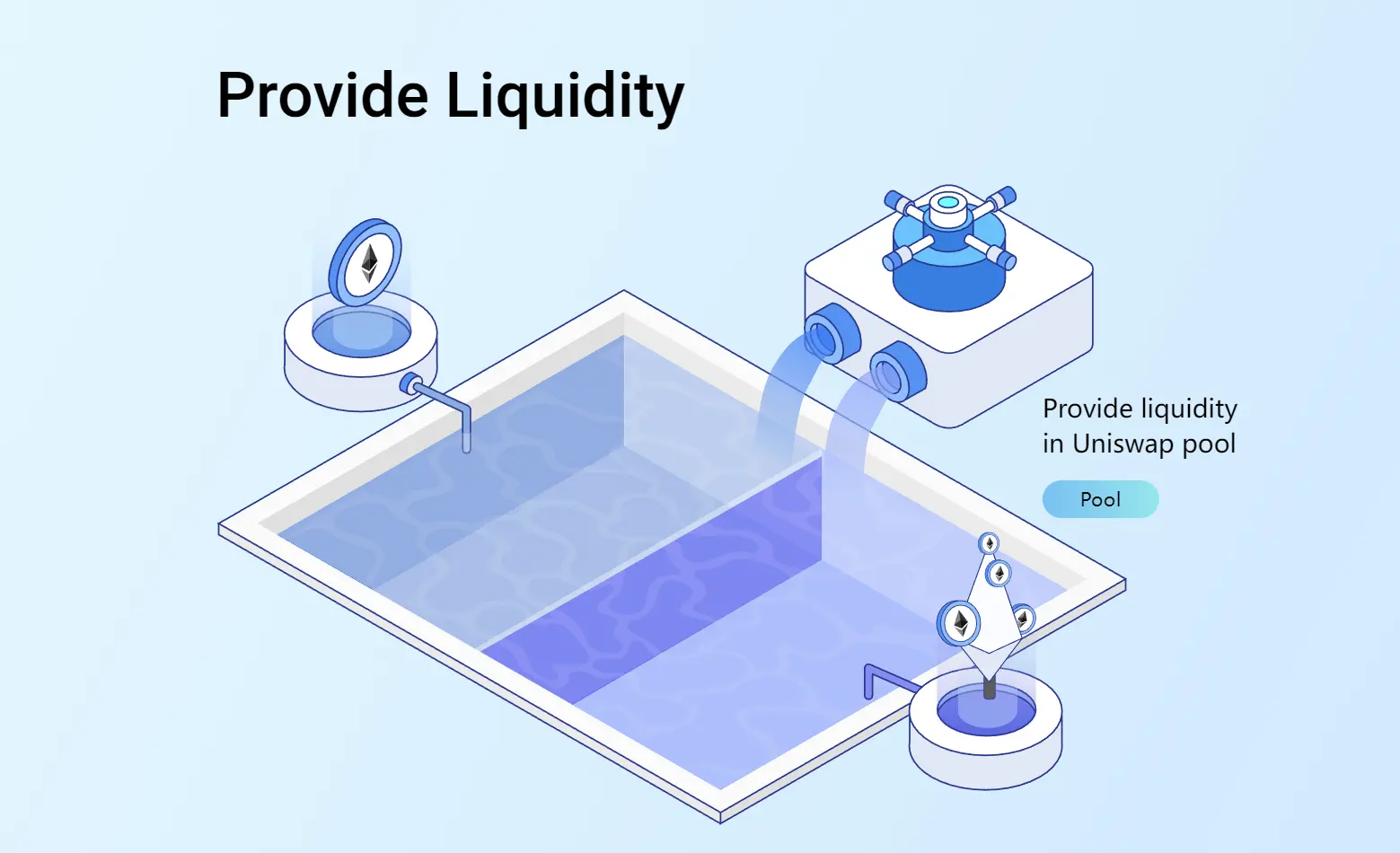
If you think of DeFi as a black box, MappingFunk's role is to bring in cash flow from outside the system, thus expanding the overall network value.
Based on the difference between the TVL and APY of the two niches, MF wants to maximize the exchange of TVL and APY on both sides to enhance the economic exchange between the two crypto economies. The size of the cash flow will determine the size of the TVL, and the most substantial untapped cash flow will undoubtedly come from the consensus layer.
More specifically, arbitrage makes the relative price between passes anchored by the relative proportion of their net cash flows, and the futures spot basis spread anchored by the average beta on the chain. This allows pricing power to be tilted towards the on-chain anchor until cash flows from outside the DeFi world are sufficiently large that price equilibrium will be differentiated from the physical assets below the chain.
Interest-bearing assets are overpriced based on rich and diversified liquidity, and this has led to an incentive for the mining industry to migrate the entire business up the chain. And deeper cash flow migration will also lead to deeper liquidity. With such a natural and organic potential gap, the differences between the two niches will be bridged quite naturally.
Project Advantages and Summary
1. Minimising the Cost of Trust
With the cash flow prophecy machine, over pledging and clearing mechanisms, all cash flow assets minted by agreement are free of default risk and are able to generate standardized cash flow income on an ongoing basis, all without relying on the backing of a centralized entity and with completely risk-free participation on both the supply and demand side.
2. Maximum Composability
MF's homogeneous and native cash flow pass-through design allows on-chain cash flow assets to be easily integrated into centralized spot, derivatives, lending and other protocols, and other protocols can easily be built on top of MappingFunk for building block innovation. Moreover, the protocol itself can be applied to other use cases of cash flow assets, such as other layers of consensus layer assets, liquidity certificates, crypto bond financing, etc.
3. Improved Capital Efficiency
Although the agreement level is over-pledged, for the casting party, MF has reduced the pledge contribution from 150% to interest-only payments through the liquidity pledge model, the liquidity pool leverage model, and the credit leverage model. This allows capital efficiency to be guaranteed.
4. Stable price discovery
Profit-seeking capital above the chain, industrial capital below the chain, and traditional world investors participate in the price game together, which makes the consensus layer assets expected to grow into a more macro global market.
5. Mitigating Impermanent Losses
Under the price discovery mechanism of the AMM model, the MF introduces cash flows whose equity belongs to the liquidity provider, which are directly charged to the liquidity pool and can, to some extent, hedge against impermanent losses.
6. Sustainable Supply of APY
MF connects two crypto niches with vastly different liquidity and return fundamentals in order to enable a continuous economic exchange between them, thus providing a source of sustainable supply of APY.
MappingFunk is innovative in that it looks at two niche markets and uses itself as a medium to try and bridge the gaps with each other's strengths. At the same time, the issues that MappingFunk focuses on are more relevant and we can see the sincerity of the team in the design of the project itself.
The next thing we need to look at is the implementation of the project itself and the extent to which the problems are solved, so I think we can wait and see.


All Comments