


By Cointime.com 237

Once upon a time, the Filecoin community faced a common challenge - how to create more liquidity for the world's leading distributed storage network? It was in this context that FilFi was born.
FilFi is a DeFi protocol designed to create liquidity for Filecoin assets and drive the Filecoin ecosystem to thrive through innovative products and services. It blazes a path to a license-free liquidity marketplace that ties Filecoin to decentralized exchanges (DEX) and provides greater opportunities and benefits for users.
The story begins with the Pledge Pool, an innovative concept introduced by FilFi that enables Filecoin holders to pledge their FILs to the platform for a corresponding share of the token. In turn, those service providers who own nodes can put their own arithmetic into the pool and lend their arithmetic NFTs to enable the lending of FIL. In this way, builders can earn stable revenue by pledging FIL, while node holders are able to leverage their own arithmetic to add additional revenue. This mutually beneficial model promotes the liquidity of Filecoin assets while creating more value for participants.
However, FilFi doesn't intend to stop there. They will follow up with a liquidity pledge service that seamlessly connects Filecoin's liquidity to DEX's liquidity pool. This means that members of the Filecoin community can deposit their FILs into the liquidity pool, providing DEX with the liquidity it needs and receiving the corresponding liquidity tokens. These tokens can then be traded on DEX, bringing more trading opportunities and revenue to participants.
The federated nodes are one of the unique highlights of FilFi. By pooling the arithmetic power of multiple nodes together to form a powerful federated node, FilFi increases the stability and reliability of the arithmetic power. Participants simply put their nodes into the FilFi platform's arithmetic pool, and then they can get arithmetic NFT and participate in pledging and lending operations, further increasing their revenue. This innovative node cooperation model brings more opportunities and room for development for the Filecoin community.
FilFi will also support arithmetic trading, allowing participants to freely buy and sell arithmetic NFTs, which will not only facilitate the allocation and utilization of arithmetic power, but also promote the prosperity and growth of the arithmetic market.
In addition, FilFi has established the FIL Fund to support the building and development of the Filecoin network. This fund will support a variety of projects related to the Filecoin ecosystem, including development tools, applications, scaling solutions, and more. This provides a solid foundation for the future of Filecoin and accelerates the further growth and improvement of the network.
In conclusion, FilFi is a platform that inspires innovative thinking and creates more opportunities and benefits for the Filecoin community by introducing products and services such as pledge pools, liquidity pledges, federated nodes, arithmetic trading, and FIL funds. It breaks traditional constraints, reduces the cost of trust, and drives further development of the Filecoin ecosystem. the FilFi story continues, and its will continue to bring new possibilities to the Filecoin community.
Core Product Description
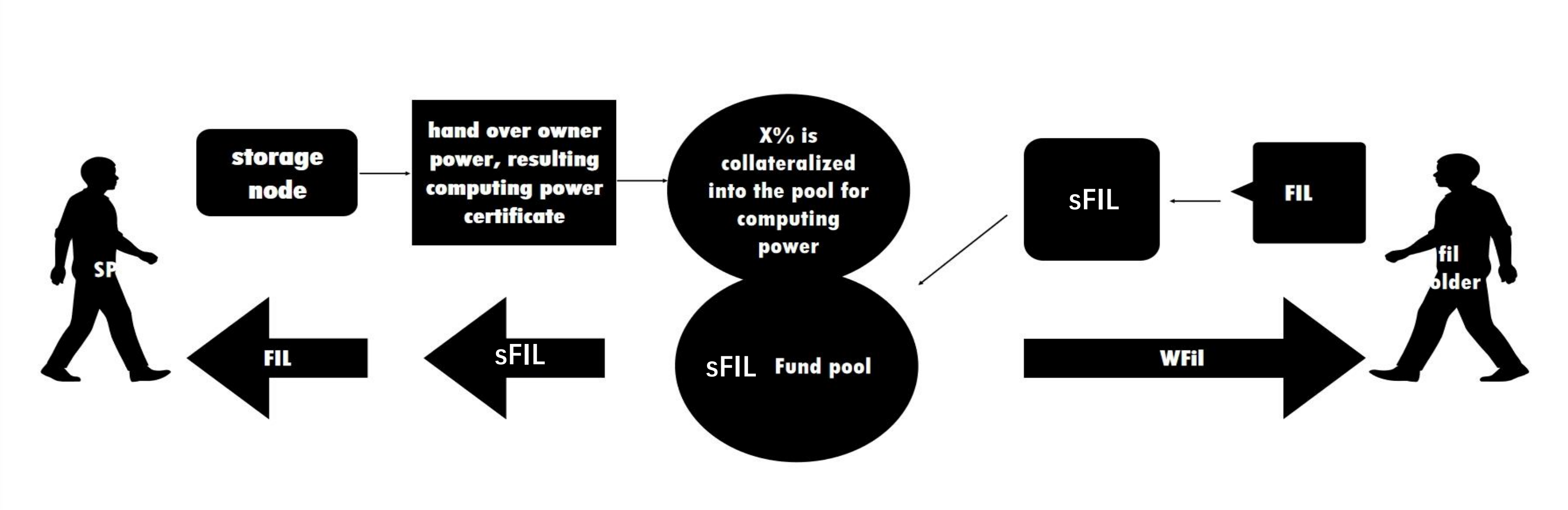
FilFi is a comprehensive platform that provides Filecoin (FIL) holders with two core products: the Staking Pool and the Funding Plan. These products are designed to increase the liquidity of FIL and contribute to the prosperity of the Filecoin ecosystem.
First, let's understand the Staking Pool.
The Staking Pool allows builders to place their FIL holdings into FilFi's Staking Pool and receive a token SFIL with a corresponding equity share, while Service Providers (SPs) place their node holdings into the Arithmetic Pool to receive Arithmetic NFTs and lend these NFTs as pledges to FIL. in this way, builders are able to earn interest on their FILs by pledging them, while node holders can use the arithmetic power generated by their nodes to gain additional revenue.
To improve the liquidity of the pledge pool, FilFi optimizes the exit mechanism for builders. When builders need to retrieve their pledged FILs, these FILs are converted into exit tokens exFIL and enter the queue. However, the FILs that builders want to retrieve will remain in the pledge pool and continue to generate revenue. As soon as the pledge pool gains revenue, such as from node block bursts or FIL repayment from the lending FIL party, the pledge pool will return the reserved FIL in the queue to the builder.
In addition, exit tokens can be transferred on the secondary market, where builders can sell exit tokens to liquidity providers at a discount. As a result, builders can immediately get back their pledged FIL without waiting.
Second, we look at node plans.
When SP launches a node plan, builders holding FILs can place their FILs in the node plan. These raised FILs will be used to build nodes and place them into the FilFi platform's pool of computing power. The generated revenue will be distributed according to the proportion of each party's investment and generate the corresponding NFTs, which can also be distributed to the builders as the nodes are hosted permanently by the service provider. This means that by investing FIL to purchase arithmetic power, the builder receives the benefits of the node's output.
In general, FilFi offers two types of pools: one created on the platform by SPs without nodes, and another where SPs with nodes put their nodes into the FilFi platform's pool.
Both pools generate NFTs that can be used as pledges to lend FIL, while builders with FILs have the option to buy capacity to earn node output or store FILs for interest.
FilFi is based on the FEVM platform, which provides more value to Filecoin believers than the traditional DeFi platform, and drives FIL liquidity and the Filecoin ecosystem to flourish. FilFi plays an important role in the Filecoin community by offering products such as pledge pools and node programs. Builders and service providers can benefit from participating in FilFi's pledge, lending, and node building process, while also being able to place relevant tokens into liquidity pools on the secondary market and other DeFi platforms for ongoing revenue.
Project Features

1. Transparent and open node building process
FilFi provides a complete node-building process through its website, including node collection, packaging, production and recovery of pledged coins. This transparency allows investors to fully understand all aspects of the node construction and thus better evaluate the risks and returns. In addition, a transparent and open process can promote trust and cooperation among participants and build a fair and reliable node construction ecosystem.
2. Multi-role co-build model
FilFi divides the roles in the node construction process into three roles: organizer, technical service provider and investor. The organizer is responsible for node collection and management, the technical service provider provides node packaging and maintenance services, and the investor participates in pledging and shares the revenue. This multi-role co-construction model helps balance the rights and responsibilities of all parties, avoids the monopolization of node construction by a single centralized entity, and promotes the formation of cooperative and mutually beneficial relationships.
3. Innovative Margin System
FilFi introduces a deposit system to protect the interests of builders. Hosts and technical service providers are required to pay a certain amount of deposit and promise to fulfill their responsibilities for node construction and operation as agreed. If they default or fail to fulfill their obligations, the deposit will be used to compensate investors for their losses. This deposit system improves investors' confidence in node construction, reduces potential risks, and emphasizes the importance of contracts and commitments.
4. Globalized technology service provider aggregation
FilFi attracts competent and qualified technology service providers from around the world to join the platform, providing investors with neutral, combinable and diverse choices of services. This global aggregation of technology service providers allows investors to choose the most suitable technology service providers according to their needs and preferences, while also providing better risk control and portfolio opportunities.
5、0 Fee Model
FilFi does not charge investors any share fees, and the output of the nodes will all go to the investors. This zero-fee model brings higher returns for investors and encourages more people to participate in node construction. In addition, the zero fee also reflects the FilFi project's concern and commitment to investors' interests and provides investors with a more competitive investment option.
FilFiDAO - the bridge between DeFi and Fil

FilFiDAO is a decentralized organization that aims to enhance Fil's liquidity and promote the prosperity of the Filecoin ecosystem. Based on the Filecoin public chain, the community brings together people from around the world and across sectors who share the same beliefs in value and are committed to achieving worthy goals.
As an influential community in the Web3 ecosystem, FilFiDAO aims to be a bridge between DeFi and Fil, empowering mobility in the Fil ecosystem. It helps storage service providers gain Fil liquidity by providing a convenient, low-cost way to do so, while giving Fil holders a more secure and stable return. By accelerating the financial construction of the Filecoin network, FilFiDAO supports the landing of valuable Web3 applications and becomes the most solid and reliable partner for these applications.
Contributors who participate in FilFiDAO will enjoy multiple benefits.
First, they will receive the benefits of FilFi tokens. These tokens will play an important role in the FilFi platform and bring financial benefits to their holders.
Second, they will also gain access to Web3 resources and influence opportunities on FilFi projects, enabling them to play a more significant role in this rapidly growing industry.
In addition, participants will have the opportunity to participate in FilFiDAO's community governance, voting and voicing their opinions on the direction of the project and related decisions.
Participation in FilFiDAO also increases one's influence in the Web3 space. By participating on the FilFi platform, contributors can increase their visibility and reputation, expand their personal networks and gain access to more collaboration opportunities. At the same time, they will enjoy the value that the FilFi platform offers when they first use it, including easy Fil mobility and efficient financial services.
Notably, participating FilFiDAO also provides access to new business opportunities and timely information from the Filecoin ecosystem. As a platform built on the Filecoin ecosystem, FilFi connects technology service providers and investors from around the world, providing participants with the opportunity to collaborate with these partners.
The FilFi platform also provides timely industry information and resources, enabling participants to stay abreast of trends and market dynamics in the Filecoin ecosystem to make better informed business decisions.
Conclusion
The main feature of the current online version of FilFi is the joint node co-construction, the core of which is to move node construction and expansion to the chain to achieve decentralized construction, thus enabling open and transparent collection and distribution at the contract level, breaking the industry black box, protecting the interests of investors, and building a secure mobile network trust platform for Filecoin.
As more users participate in the FilFi platform, the liquidity of Filecoin assets is expected to be further enhanced, and FilFi will continue to improve its core functionality and expand its cooperation with other DeFi protocols to further promote Filecoin's liquidity and application scenarios. This will provide more choices and opportunities for users and drive the maturity and prosperity of the entire ecosystem.
FilFi will continue to encourage developers to join the platform and drive the emergence of innovative products and solutions. By supporting open source projects and providing technical resources, FilFi is expected to attract the attention of more developers and drive the technical progress of the Filecoin ecosystem. This will bring better user experience and broader application scenarios to users.
However, as with any project in the emerging space, FilFi faces a number of challenges and uncertainties. Market competition, regulatory environment and technology risks may have an impact on its development, and FilFi needs to remain flexible and adaptable to respond to changes in the external environment and continuously improve its products and services to meet user and market needs.
Overall, FilFi is expected to play an important role in the Filecoin ecosystem as a promising DeFi protocol. Through continued innovation and collaboration, FilFi is expected to increase liquidity, expand application scenarios, and bring more opportunities and benefits to users. However, success depends on the team's ability to execute and market acceptance, so FilFi needs to maintain an open, transparent and robust growth strategy to ensure long-term sustainability.


All Comments