


Decentralization is synonymous with Bitcoin, and user experience is the first principle of the Internet industry.
Bitcoin is undoubtedly the most special existence in the blockchain, which does not need to "look" for more use scenarios, but has natural value. The last one with such scarcity is gold, "gold and silver are naturally not currencies, but currency is naturally gold and silver", in other words, bitcoin is the anchor of the whole crypto industry.
But it is helpless, centralized exchange and fiat stable currency (USDT, USDC) is the foundation of encryption monetary industry and value flow, and the use of the currency value is always not satisfactory after many years development, not to mention the daily pay P2P scenarios, which is generally stable currency reservation.
If we want to get rid of this dilemma, we must eliminate the complex DeFi protocol and the use threshold of the chain wallet, no longer let the beginner mind to abandon, but also really dig out the daily use scene, from this point of view, bitcoin has completed the historical mission of the crypto industry from 0 to 1, and the further development needs to truly meet the needs of users.
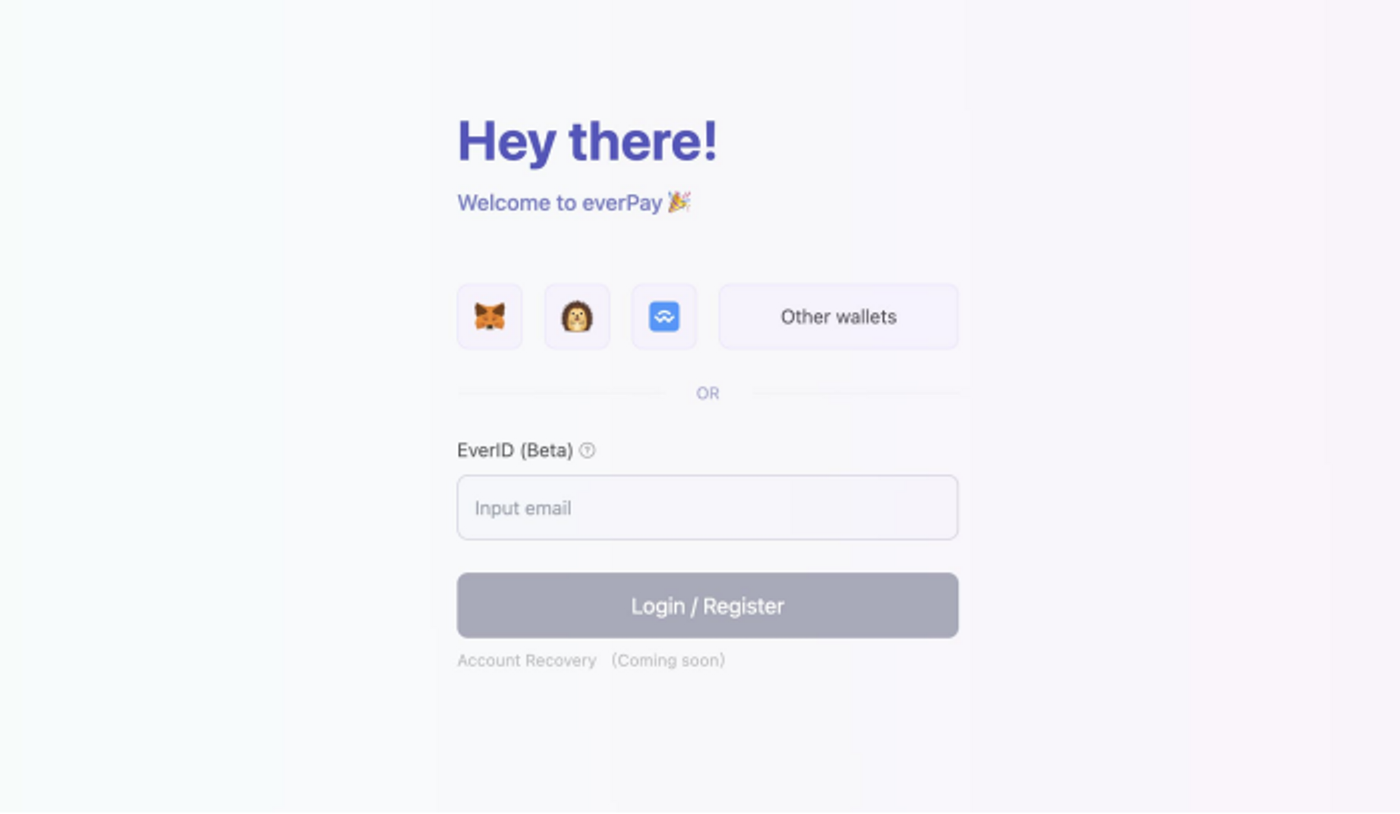
For example, everVision team in the official announcement of EverID, only a simple demonstration at the fifth annual conference of Arweave, has attracted the attention of many ecological teams, and after the launch of the test version this month, users at home and abroad have flocked to the test network, users can get rid of the tedious and trouble of wallet and private key. It's as simple as registering a website.
Have to at the end of 2023, up to now, it is certain that only can use the decentralized way can meet the demand of users is Web3 victor, if we believe Web3 will replace the existing network structure.
Layout the future, abstract accounts are the only way
Abstract account is not new ideas, just as the etheric fang co-founder Vitalik on EthCC again, caused the market based on the contract the wallet account abstract intelligence of severe concern, because the account is no longer abstract encryption the fun of the industry, but really can absorb the mature product form of mainstream users.
The logic is obvious, decentralized solutions to enter the mainstream market requires the participation of a large number of users, and abstract accounts have not been popularized, private keys and mnemonic phrases have blocked them out, on-chain interaction may not be complicated, but in the cloud era, pen and paper memory is really not in line with the daily habits of users.
In view of this, DeFi leading products are turning their attention to Web2 users. Abstract accounts are not the first practice. The number of mobile App installs of cross-chain aggregation app 1inch has exceeded one million. Rather than packaging Uniswap as a mobile app, it is enough to see the importance of wallets.
And the established CEX is not content to be left behind. For example, OKX has built Web3 wallet into its trading App, and Coinbase has launched its namesake wallet. It can be seen that wallet is undoubtedly the consensus of CEX and DEX to expand next.
Therefore, the layout of EverID is logical, but how to achieve the technical details of this product, the use of mature product paradigm to go up the chain route, or look at the mainstream products below the chain?
Web2 and Web3 shouldn't be opposites or replacements. Traditional Internet products have developed products with hundreds of millions, billions or even billions of users, and account abstraction is the best choice to attract incremental users to the decentralized world, which can handle more than a billion users.
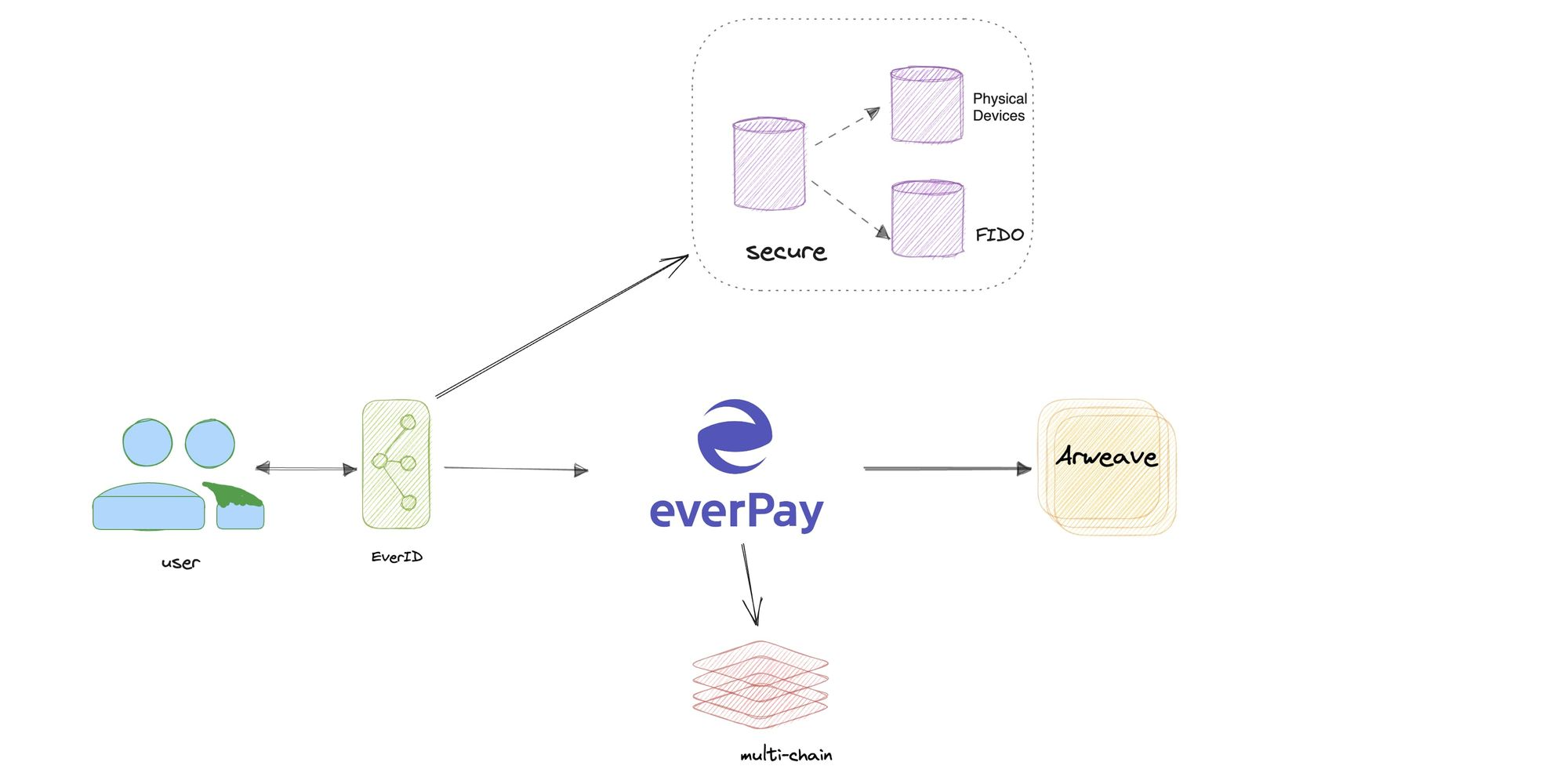
In everVision's view, in terms of workflow, account abstraction can be divided into three parts: identity generation, information on-chain and post-chain. Specifically, it can be roughly divided into two parts, that is, using hardware devices to generate universal identity information and receive the information in a secure usage scenario.
Taking EverID in this test as an example, its core logic is to connect the user's mailbox information to everPay, and generate the corresponding user chain identity information in everPay at the same time, and the two sides are bound to each other. This is essentially the same logic as using Metamask or Arconnect.
Theory is not complicated, rarely is practice.
At present, everPay has OTC services, which can support the use of USD, EUR and other fiat currencies to directly purchase USDC and other stablecoins, and the built-in Permaswap can trade any asset in real time with 0 Gas Fee and anti-MEV.
In addition, EverID needs to take into account the usage habits of different users. Users in Chinese regions are not used to using email, while overseas users, especially those who are fans of mainstream email such as Gmail, are not used to using email. Even if we take the standard of support as an example, we also need to take into account the usage habits of different cultural backgrounds and people. The more hardware devices and login methods we take into account, the more complicated the overall implementation will be.
In the end, the first phase of the launch test of EverID supports multiple email logins, not limited to Gmail, but gives up the support of rival phone numbers, which is a compromise between Eastern and Western cultural groups. Under the guidance of this idea, EverID also considered many aspects of its development path:
- Account abstraction itself can support a variety of methods and chain, because everPay can support several chain and dozens of Arweave, ERC - 20 tokens, open into infrastructure, access to follow-up to consider any agreement;
- EverID needs a backup and recovery scheme in the future to permanently eliminate the loss of user assets and devices. In addition, EverID itself needs to take security measures, such as single-person multi-device and multi-person shared device.
Using everPay itself for a long time practice and user precipitation, EverID from the morphology of the products at least in terms of balancing the needs of the Web2 and Web3 users. But polishing the product is just the first step. EverID needs a long period of testing before it can catch up with traditional login methods and wallet security. In other words, keeping the decentralized protocol attractive to Web2 users is the key to success or failure.
In the end, in terms of the specific route choice, everVision chose the path of convergence. In order to develop a more secure on-chain account system, the first step is to ensure the reliability and trust of the source, especially the complex requirements of everPay, a universal support protocol involving the operation of many assets.
Since the launch of the everPay project, within 2 years, it has expanded from a simple payment product to a complex protocol with 10 million transactions. Currently, it includes account system, transaction, transfer, and deposits and withdrawal, basically covering all the processes of users on the chain, and realizing the complete functions of traditional exchanges in a decentralized way.
everVision's view is that after the wallets with account abstraction into the mainstream, CEX entry status will be the first time suffer from severe challenges, and broken the key lies in EverID should have enough products.


All Comments