


From kanfa by Mac Budkowski
Let's play a game.
What does he think about capitalism?
Let's play a game.
What does he think about capitalism?

And what does he think about gun control?
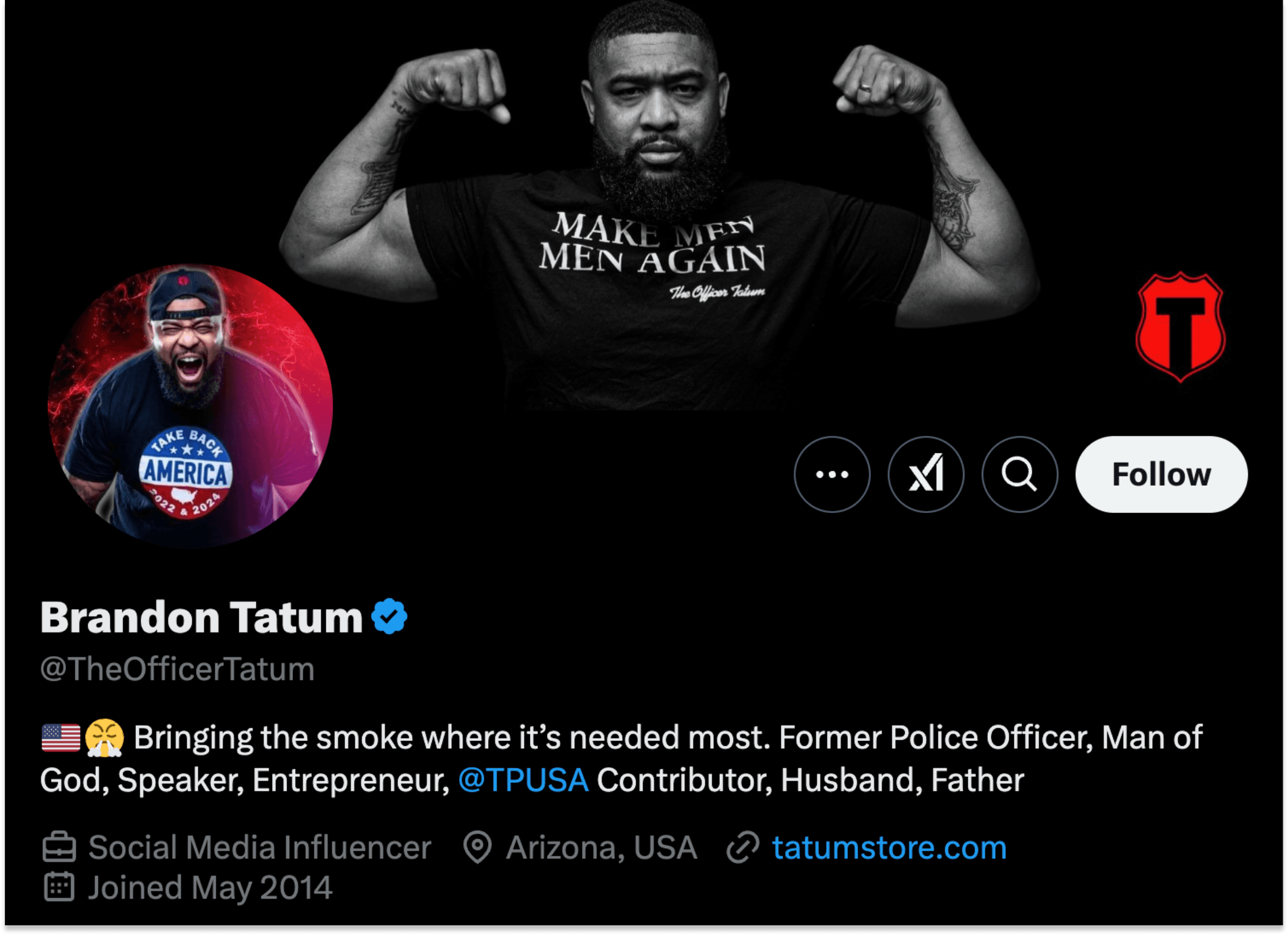
You probably had some answers in your head. How could you make an opinion about their beliefs with so little data?
Say hello to memeplexes.
What are Memeplexes
I learned about Memeplexes about 10 years ago thanks to my friend Arthur.
The idea is simple:
Memeplex is a set of ideas that are most often seen in groups, even if they’re not logically connected.
So for example being supportive of Queer movement doesn’t need to mean you’re anti-capitalism. Or believing in God and living in Arizona doesn’t mean you support guns. Yet, many people share these ideas.
Because beliefs often coexist together, we start thinking things such as: "He supports LGBT rights, so he probably votes for Kamala", "He listens to Joe Rogan so he probably supports Trump", and so on.
And very often, we are right!

Example of a right wing memeplex. What does owning a gun have to do with God?Yet in the US these ideas often go together.
So aren't memeplexes just stereotypes? Only on a surface.
Memeplexes are like a weather that is objective and has some patterns that occur in the real world. Stereotypes are like weather forecasts that are subjective and try to simplify the patterns we have observed.
And just like weather forecasts, stereotypes can be a hit or miss. Especially when they're not based on beliefs that everyone can freely choose, but things beyond people's control such as sex, age, or skin color.
In other words, if you want to understand why people around you think what they think, it's better to focus on memeplexes than stereotypes.
And memeplexes can change history.
Age of Enlightenment memeplex promoted ideas such as rationalism, empiricism, and liberty, that helped us develop scientific methods, political institutions and economics we use up to this day.
Globalization memeplex promoted ideas such as free trade, open borders, and cultural exchange which shaped the modern economy and made a world more interconnected (for better or worse).
And we all know more negative memeplexes such as Nazism or Communism.
So how do end up following such ideologies?
How do we get into a Memeplex?
It usually starts when we meet people whose single idea resonates with us.
Let’s say you’re a young American.
On a rainy Friday evening you go to a bar with your Norwegian friend named Thor. Over some beer and chips he tells you a story of how he got injured in a car accident, but thanks to universal healthcare he didn’t have to pay for the hospital and deal with insurance providers. You got intrigued.
So you come back home, open your laptop and spend a night in the universal healthcare rabbit hole reading essays, wikipedia, reddit, and papers. You invest a lot of effort to understand this idea and - all things considered - you decide that universal health care makes sense to you.
Then you meet with Thor again, and something subtle happens.
Having accepted one idea from Thor, you lower your cognitive defenses toward his other beliefs. Maybe because you trust his research capabilities ("Well, he was right about healthcare..."). Maybe it's simple intellectual laziness (“I don’t have time to verify all that data again…”). Or maybe it's because you want to be accepted by your cool Norwegian friend.
There could be many reasons but now, when Thor tells you over whisky how great it is to get support from the Norwegian government, you start to think that maybe this whole American capitalism is not so good…
Why memeplexes are problematic
Is it a problem that you start questioning some parts of American capitalism? Well, maybe not. But what makes memeplexes problematic is their tribal nature.
Sharing beliefs connects people. If you go to a random bar and shout: “Bitcoin is freedom”, or “We should protect the Earth from climate change”, you would definitely make some enemies, but also make some friends.
And the more polarizing the beliefs, the stronger the bond. If you lived in ancient Rome and met a fellow Christian, you'd feel he's your best friend because you both risked getting eaten by lions. (And yes, religion is a memeplex - literally a set of ideas and beliefs glued together).
The part where it gets tricky is when you don't like one belief that's a part of a bigger set.
So let's say that after meeting with Thor you started supporting universal healthcare. Then you start thinking that a social safety net is nice. But when Thor tells you that actually communism is the answer, you start to have doubts.
So you tell him: "You know Thor, I liked your other ideas, but communism... I don't know. It's been tried in Soviet Union, China, Vietnam, Cuba, Venezuela and many other places and it never worked."
But because memeplexes consist of multiple beliefs, it means that if you question one idea, you might be treated as an enemy of the entire memeplex. Just like when you question some religious dogmas. So now the conversation with Thor gets heated and emotional. After a few rounds, he ends the discussion by saying that you should read Piketty and Marx.

Reactions to this questionshow how “Free Ross” was a part of the crypto memeplex
This tribal nature of memeplexes creates a strong social incentive to accept all ideas of my group in bulk rather than examining each one critically. Most of us don't want to be left behind by our peers.
What makes a careful examination of each belief even harder is that ideas are not only accepted based on rational debates, but also based on vibes. Some things are considered cool, some things are considered ewww. And you might dislike something without even understanding logically why it’s not great.
For example, I always thought that Cardano and Ripple were useless. But to be honest? Never even dug in. My tribe (Ethereum builders) always made fun of them, so I discarded these networks as something not worth my attention.
Maybe it was a good decision, maybe it wasn’t. But running on a Memeplex autopilot can be problematic.
If you were part of a tribe that said that “Bitcoin is just a scam”, you might have missed a chance to make millions of dollars.
If you believed that “Twitter is just for sharing pictures of your lunch”, you probably lost a chance to become an early influencer and have 100k+ followers today.
If you accepted the common belief that 'you need to get married by 30,' you might have rushed into marrying a partner that won’t work for you long-term.
And there's also this 'memeplex creep' where you accept one idea and the tribe pressures you to accept the others, like your friend Thor.
You might have come for beautiful Enlightenment ideas of liberty and ended up beheading aristocrats in 1793 Paris. Or maybe you supported Globalization's cultural exchange, but now you can't openly criticize Mexican gangs invading your neighborhood. Or you supported an economic recovery of the 1930s Germany, and you ended up shouting "Heil Hitler".

Paul Graham points out that you don't need to follow the full Trump supporter memeplex to be anti-woke
Being aware of the memeplex you are in can literally change your life.
So what can you do?
Escaping the memeplex
Most thoughtful people are mosaics of beliefs.
This means they don't squeeze their worldview into boxes such as “Democrats”, “libertarians” or “e/acc”. They have diverse opinions that - on a surface - might seem conflicting. Their perspective is, as Vitalik would probably call it, pluralistic.
But it's not easy to cultivate it.

By being a part of many groups, you get exposition to different cultures and memeplexes [from Vitalik's essay]
Social media algorithms understand which ideas you find interesting based on your likes, shares and things you watch. So then they show you more of it, and after some time they start the memeplex creep.
They take you from one memeplex idea ("Universal healthcare is nice"), to another ("Communism is nice"). And at one point you might become an NBA player that believes that the Earth is Flat. If you want to test it, just like a few strong political statements on Twitter or YouTube and watch the recommendations.
So what to do?
If I wanted to give a bs answer to a hard question, I’d say: “You should follow many different sources and carefully examine the information you consume”.
But what exactly can you do?
First of all, you should not be limited to things you see on one social app, because all social apps (minus Reddit and crypto social apps) limit links' reach. And, as I wrote in Rise, Marginalization & Return of the Niche Internet, links matter:
In other words, niche communities rely on people who have a deep understanding of the subject and stay up-to-date with these ever-changing domains. These people are rare and are typically scattered across different social media, blogs, forums, and group chats.
The chances of getting them all on one platform are probably not much higher than Google or Microsoft employing all the brightest engineers in the world. As Bill Joy said: “No matter who you are, most of the smartest people work for someone else.”
If we wanted to adapt Joy’s law to social networks, we could say: "No matter what platform you are, most of the smartest niche people don’t publish there.”
This means that to reach a satisfying depth of conversation, the niche community can’t rely only on content published on one platform, such as Facebook or Twitter. The community needs links. Links to the best tools, videos, blogs, or websites covering a certain subject that can enrich the conversation and provide more depth.
So, if you run social media and you want to serve niches, you can’t penalize links because the niches will eventually run away, looking for deeper conversation in a place where links are welcome.
Having that in mind, there are a few things I try to do and work for me:
- Following many sources of ideas and news.
When I was a teenager, there was this newspaper in Poland called "Angora". They barely had any original content: 90% was just reprints from other newspapers. So you had an essay from an ex-communist politician next to an essay from a hardcore libertarian guy. You could read articles from Le Figaro, New York Times and Die Welt, tackling the same issue. It was a really good eye-opener to different opinions.
You can recreate that online by following multiple newsletters, YouTube channels, podcasts and so on. It takes some time to find the right sources and consume all that, but it might be worth it.
- Having a carefully curated Twitter follow list.
Twitter - with all its flaws - can sometimes be a great idea Colosseum, because people like to dunk and debate each other. If you have a good follow list, the quality of these debates can be high. Especially with the Community Notes that might fact check some claims.
The challenge is that since people talk in public, they might focus less on substance, and more on entertainment. Especially when they're seeing they're losing the debate. Plus Twitter penalizes links. But with some effort, Twitter can be very useful.
- Being a part of multiple groupchats.
It’s easy to follow different viewpoints when people in your groupchat actually have different perspectives on the news, essays and data being shared.
You just need to follow the dialogue and add your two cents here and there. It’s not easy to find or create the right groupchats (took me years to do it), but it’s worth it. One thing to keep in mind is having a really diverse set of people there, otherwise it's easy to stay in a bubble as no one from outside can easily join your conversation. Or just hop between different bubbles. I sometimes share the same link in a few chats and follow very different reactions.
- Link aggregators like Hacker News or Slashdot.
Aggregators are great because they give you exposition to varied content that's discussed by many different people. The challenge is that such a community can also end up building their own memeplex, and Hacker News def has an anti-crypto one. That's btw why we built Kiwi.
Path forward
So, all in all, there are many methods to cultivate independent thinking, but there's no one perfect solution.
The goal here isn't to eliminate tribal thinking entirely – that's probably impossible. Rather, it’s about identifying the memeplexes you follow and putting yourself in a place where you will naturally see many different ideas.
Just like joining a book club ensures that you read books, and joining a running club ensures you do your runs, regularly opening the right apps and pages on the Internet helps you build your intellectual autonomy.
And in a world of increasing polarization and algorithmic echo chambers, I believe that being able to look outside the memeplex can be more valuable than ever.
So, good luck!


All Comments