


One of the most traded instruments in conventional finance is funds. They can assist customers get greater asset returns, eliminate investment barriers, reduce investment risks, and hedge portfolios.
Users do not need to have specialized understanding of funds or extensive industry experience to administer the fund; everything is managed and run by qualified fund managers in order to maximize investment returns. It helps to lessen the user's investment risk to some extent.
Professional blockchain fund managers can increase their profits in the cryptocurrency market by running funds and managing fund assets through smart contracts, which don't need high asset or fund company endorsement and all are based on data.
Today we are going to introduce DeFund Protocol, a decentralized fund investment protocol with no threshold.
Defund Protocol: Decentralized Fund Manager
DeFund Protocol is a decentralized fund investment protocol. It consists of a series of smart contracts for decentralized fund management. Users can use smart contracts to manage fund assets for decentralized value investing without any third party authorization or license.
DeFund Protocol relies on Uniswap for fund investment operations. It achieves convertibility and docking with Uniswap and liquidity market makers, which not only ensures that the protocol is decentralized, but also makes use of Uniswap V3's license-free liquidity implementation protocol for long-term operation.
The core vision of DeFund is to realize a fully decentralized fund investment protocol, and build a more powerful DeFi application based on the existing DeFi protocol, so that LP and GP can conduct asset management more conveniently and quickly, and improve the utilization efficiency of funds.
In terms of income, DeFund enables GP and LP to obtain higher income by setting the dual rate form of management fee and Carry rate. At the same time, since all the funds are in the contract, LP does not have to worry about the security of funds, and has the right to redeem its own funds at any time. LP may also increase capital injection or redemption at any time, depending on the Fund's returns, all without the consent or authorization of any third party.
Compared with the traditional fund model, DeFund has the following characteristics:
1. The fund will never expire, permanent valid
2. You can buy at any time, redeem at any time and funds will immediately arrive to the account
3. Anyone can participate in the purchase or operation of the fund, without access permission requirements
4. It does not involve counterparty trading
5. No capital requirements, you can choose any kind of the fund to buy
Working Principles
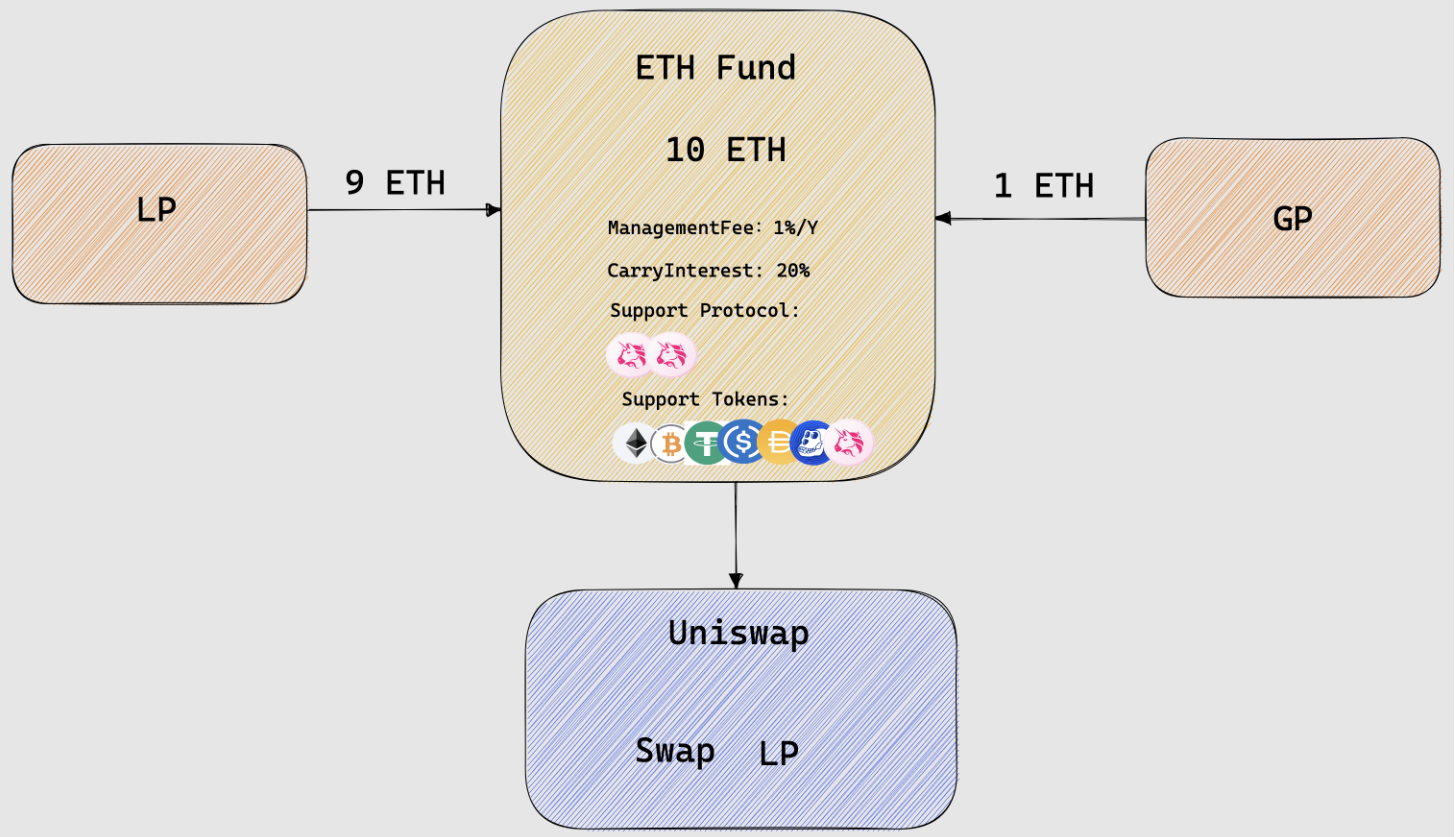
DeFund Protocol currently allows for one-to-many open-end fund management through contracts. It supports Uniswap's exchange and liquidity pools as DeFi protocols, and will support more DeFi protocols in the future.
There are two primary identities in the DeFund Protocol ecosystem:
1. LP LP may quickly see how the fund is operating; LP can also carry out fund purchases, redemptions, and other operations at any time. It can also set a stop loss for its own investment at the same time, which will be fully redeemed when the stop loss is triggered.
2. GP GP can establish a fund, specify the LP account and minimum investment limit, as well as criteria like the investment limit, management fee, carry, agreement, and token. According to the operational scope established by the Fund, GP may invest on Uniswap.
According to the DeFund model, the fund agreement contract will be created by GP. Funds are divided into public funds and private funds. Anyone can buy public funds, while private funds can only be purchased at the whitelist address specified by GP. The initial purchase amount of the LP needs to be greater than or equal to the initial subscription amount determined by the contract.
This means that the annual income GP can get mainly includes two parts: the first is the management fee and the second is the Carry fee. In addition, if GP sets a redemption fee, it may incur a redemption fee.
DeFund Protocol's economic model is thus primarily made up of the three parties, LP, GP, and Platform.
GP unifies the management and operations of funds, generates income, and distributes it. For its operations, LP can give GP a sizable sum of money, and it splits that money with GP Carry based on how well the Carry performs when it is redeemed. The platform will deduct a portion of the agreement fee during the procedure.
Technical Principles
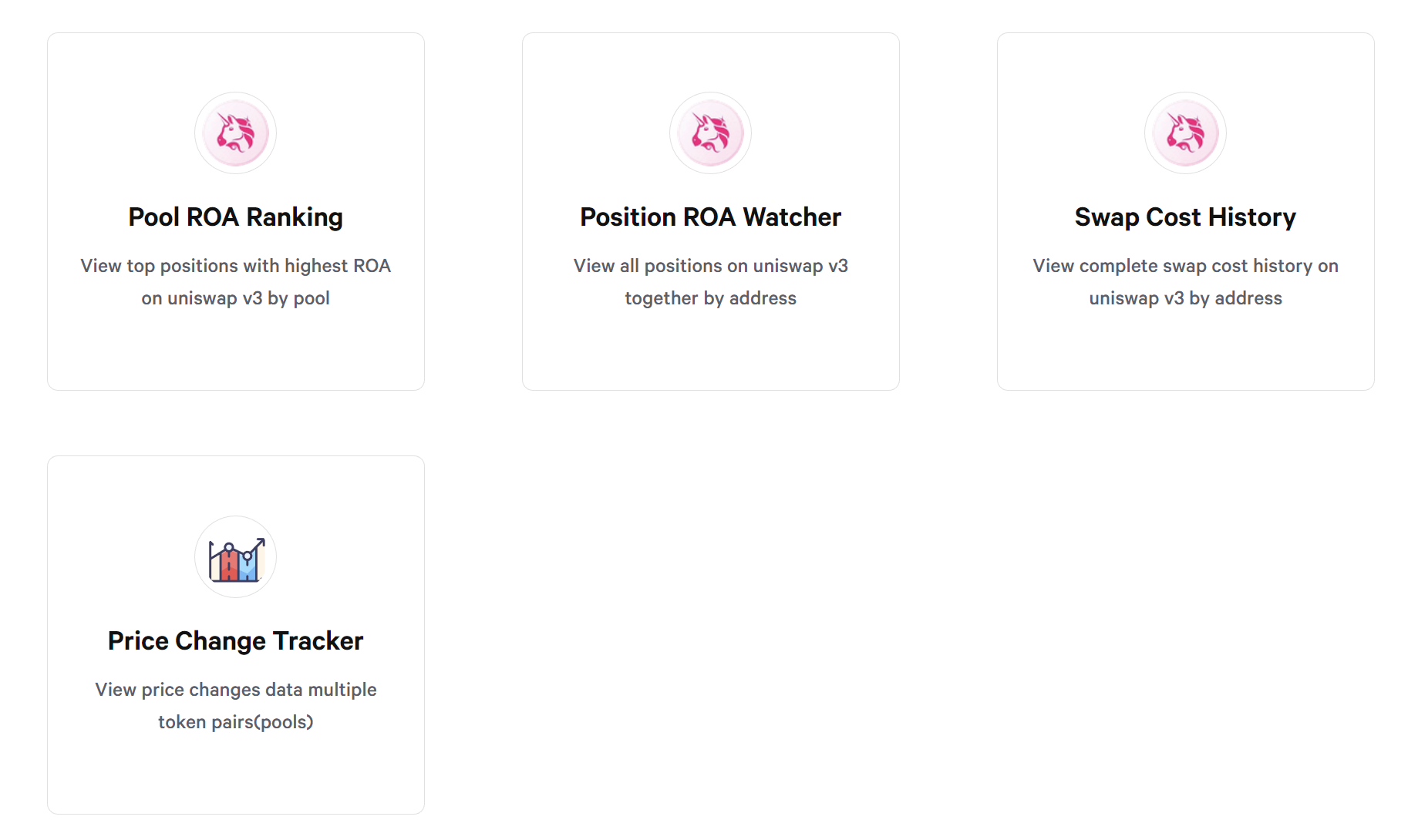
DeFund Protocol is a smart contract system composed of many libraries, which together complete the function of the protocol.
The smart contract of DeFund Protocol includes four parts: core contract, extension contract, data processing contract and library contract.
The core contract mainly provides the core implementation functions for the agreement. They define the generation and operation logic of the Fund.
Extension contracts are mainly contracts that connect to third party contracts, currently Uniswap's PathFinder, PriceOracle, and PositionViewer.
The data processing contract is mainly used to capture the Fund's data.
Library contracts mainly refer to third-party libraries used, such as OpenZeppelin, Uniswap, etc.
1. Core contract
The core contract of DeFund loan agreement mainly consists of the following parts:
1) FundAccount
A FundAccount is a contract for a single fund that holds all of the fund's assets.
2) FundProxy
FundProxy is a contract that operates fund contracts. GP and LP mainly operate fund in this contract.
3) FundManager
FundManager is a management contract used to create fund accounts and perform authorization and transaction security verification.
2. Extension contract
Extension contracts are mainly used to connect to third party contracts, currently Uniswap's PathFinder and PriceOracle.
1) PathFinder
PathFinder is Uniswap V3's Pathfinder contract that finds the best path based on the borrower's asset value and the borrower's asset value.
2) PriceOracle
PriceOracle is Uniswap's price oracle contract that uses Uniswap's price oracle to forecast borrowing prices and evaluate the asset value of the borrower's loan account.
3. Data processing contract
The data processing contract is mainly used to capture the Fund's data.
1) FundViewer
The contract is mainly used for data processing, mainly for queries to obtain fund data.
4. Library contract
Library contracts are mainly used for third-party libraries, such as OpenZeppelin, Uniswap.
Conclusion
Even though it has advanced to this point, DeFi still lags far behind established traditional finance. And one of them is the fund sector that we're discussing today. DeFund Protocol offers its own solution for this track. A decentralized fund platform for LP, GP, and other identities is created at a lower cost using core contracts as the architecture, expanding the smart contracts of mature DeFi products. On the other side, it simplifies the project's architecture, which is smart and reliable. But, given the current situation, it is challenging for us to foresee how the project would turn out. As a result, we can keep an eye on the dynamics of the DeFund Protocol market.


All Comments