


2023 has proven to be an eventful year for Binance. From February to now, various agencies—including the Financial Services Authority, the Securities and Exchange Commission (SEC), the Futures Trading Commission, and the Ministry of Justice—have launched a series of investigations and lawsuits against the company. These actions include demands for Binance to stop issuing the USD-backed stablecoin BUSD. Binance and its founder, Changpeng Zhao, face multiple charges, such as violating trading and derivatives rules, breaching securities laws, and aiding Russians in evading U.S. sanctions and transferring funds.
This week, the SEC brought the hammer down on both Binance and Coinbase within two days. Let's examine the crucial timeline of Binance's ongoing battle with the SEC:
- May 31, 2023
At the end of May, just before the regulatory storm, Binance announced a leadership appointment to address growing concerns from regulators worldwide.
Binance appoints Richard Teng to oversee all regional markets outside the US
So, who is Richard Teng?
The 52-year-old Singaporean has an extensive background in financial regulation. He worked for the Monetary Authority of Singapore for 13 years before joining Binance. From 2007, Teng served as Chief Regulatory Officer of the Singapore Securities Exchange (SGX) for eight years, where he was responsible for creating rules, frameworks, and policies for listing, trading, and clearing. He then spent six years as Head of the Financial Services Regulatory Authority in Abu Dhabi Global Market.
In August 2021, Teng joined Binance as CEO of Binance Singapore. From December 2021 to October 2022, he led the company's Middle East and North Africa region. Between November 2022 and April 2023, Teng served as Regional Director for Asia, Europe, Middle East, and Africa. With his appointment in June, Teng is now responsible for all regional markets outside the United States.
Why choose to appoint Teng at this critical juncture?
Some observers believe that Binance is "building reserves," while others think Teng is picking up a "hot potato." On June 5 (the day Binance faced an SEC lawsuit), Bloomberg cited sources familiar with the matter, suggesting that if Changpeng Zhao steps down, Richard Teng is likely to assume the role of Binance CEO. Teng's appointment, backed by over 20 years of experience in financial services and regulation, is evidently designed to help Binance navigate global regulatory challenges.
- June 1, 2023
Binance reveals in a filing that securities regulators in Canada, founder Changpeng Zhao's home country, began investigating the company on May 10. Two days after the investigation started, on May 12, Binance withdrew from the Canadian market.
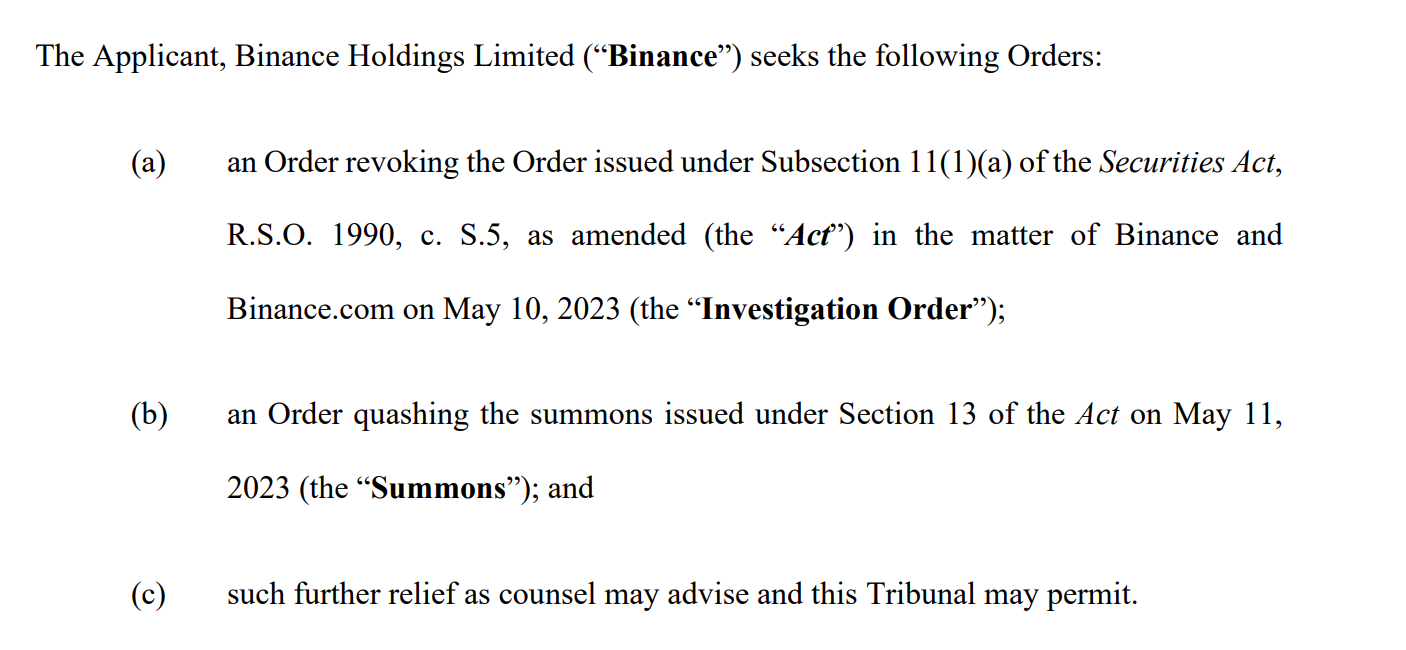
On June 1, Binance Australia also announced the suspension of all Australian dollar (AUD) trading pairs. Binance users in Australia can no longer make AUD deposits and withdrawals via bank transfer.
Fellow Binancians,
— Binance Australia (@Binance_AUS) June 1, 2023
We regret to inform you that AUD deposits and withdrawals by bank transfer are no longer available to Binance users in Australia. Binance has ceased all AUD trading pairs as of June 1. In order to facilitate withdrawals and trading activities after June 1, you…
- June 2, 2023
Binance's troubles extend beyond Canada and Australia. On June 2, the company announced it would delist 12 privacy coins in France, Italy, Poland, and Spain, including ZCash, Monero, and MobileCoin, effective June 26.
In the announcement, Binance cited "regulation" and "compliance" as reasons for the delisting, stating that removing these cryptocurrencies is part of an "ongoing compliance process" with regulators.
- June 5, 2023
Reuters published an exclusive report alleging that Guangying Chen, a close friend of Changpeng Zhao and a senior executive at Binance, managed five assets originally owned by Binance in a US Silvergate Bank account. Binance US is an independent subsidiary of Binance, and its funds should not be controlled by the parent company.
A Binance US spokesperson later denied the report, asserting that no one other than Binance US officials has control or access to Binance US accounts.
- June 6, 2023
The U.S. Securities and Exchange Commission (SEC) formally imposed sanctions on Binance, Binance US, and Changpeng Zhao, filing a lawsuit against them.
The SEC's lawsuit contains 13 allegations, including operating an unregistered exchange, offering and selling unregistered securities, misleading investors, concealing platform operators, manipulating transactions by affiliated market makers, and transferring user funds at will.
Furthermore, the SEC identified 12 cryptocurrencies listed on the Binance exchange as securities in its 136-page lawsuit. These tokens include Binance's native token BNB, the stablecoin BUSD launched by Binance in partnership with Paxos, and popular tokens such as SOL, ADA, MATIC, FIL, ATOM, SAND, MANA, ALGO, AXS, and COTI. As soon as the SEC documents were released, the prices of these tokens collectively plummeted in a short period.
“Through thirteen charges, we allege that Zhao and Binance entities engaged in an extensive web of deception, conflicts of interest, lack of disclosure, and calculated evasion of the law.” said SEC Chairman Gary Gensler in a tweet.
Through thirteen charges, we allege that Zhao and Binance entities engaged in an extensive web of deception, conflicts of interest, lack of disclosure, and calculated evasion of the law. https://t.co/E06hVOaYby
— Gary Gensler (@GaryGensler) June 5, 2023
The public's reaction to Gary Gensler's tweet regarding the SEC's lawsuit against Binance was mixed, as Gensler has a controversial reputation in the crypto industry.
A user commented, "The problem is we don't trust to SEC to protect investor interests any more than we trust CZ. In fact, most of us trust the SEC less than we trust Binance."
Changpeng Zhao (CZ) responded to Gensler via Twitter, suggesting he read the comments on his tweet.
Wonder if he ever reads the comments under his post, from the consumers he is suppose to protect. https://t.co/xQjC872GsD
— CZ 🔶 Binance (@cz_binance) June 5, 2023
Gemini co-founder Cameron Winklevoss summarized the situation, saying, "Being sued by the SEC used to mean you probably did something wrong. Now it means you're probably doing something right."
CZ later pointed out that the SEC did not sue FTX, an exchange with arguably more negative impact and a wider range of victims.
They didn't sue FTX. https://t.co/FVgi5l6VcI
— CZ 🔶 Binance (@cz_binance) June 6, 2023
- June 7, 2023
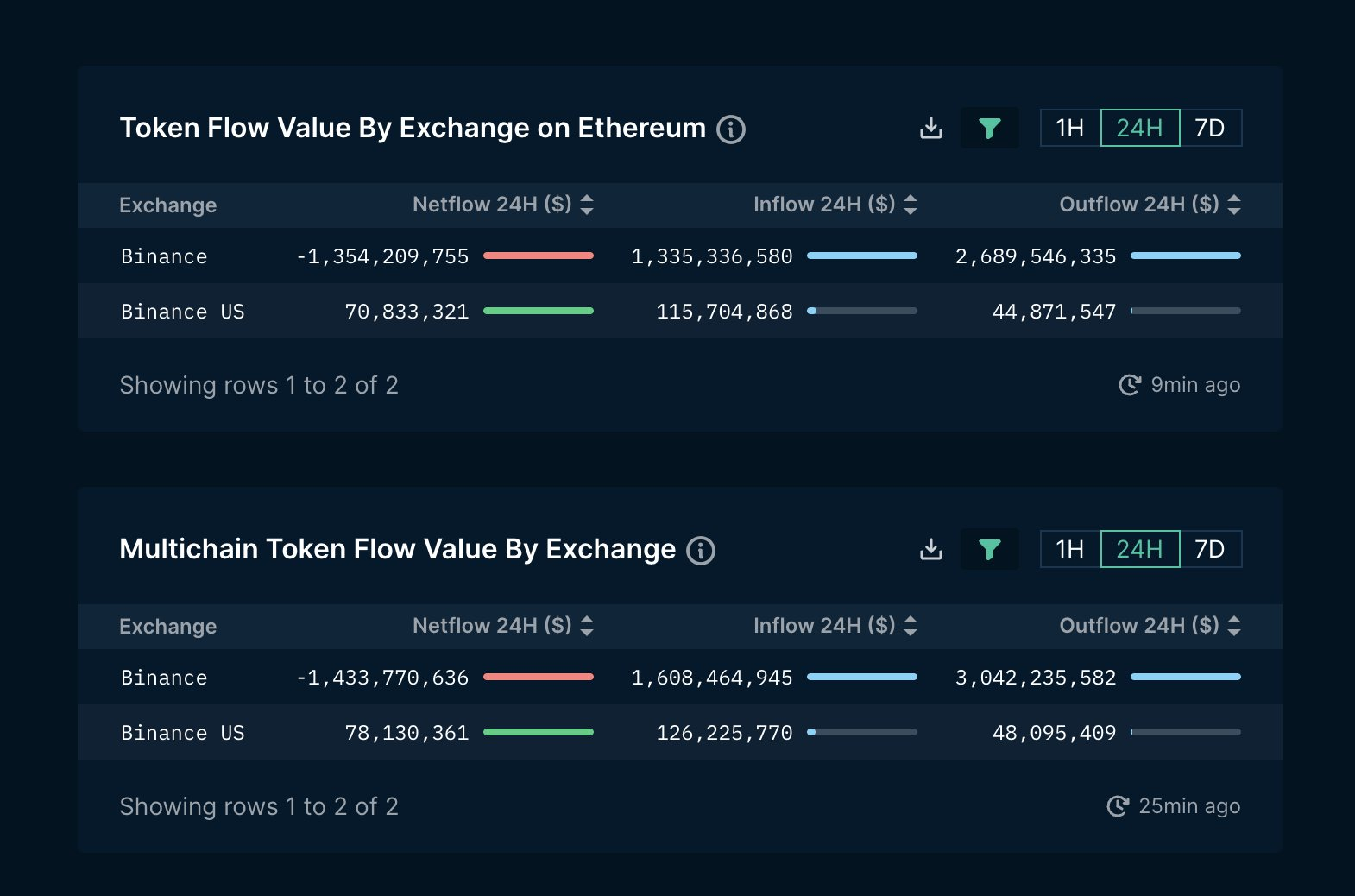
Within 24 hours of the SEC filing a lawsuit against Binance, users withdrew over $30 million in assets, resulting in a negative net flow of $143 million on the platform at one point (data from Nansen).
The battle intensified when the SEC requested a temporary restraining order to freeze assets related to Binance US.
If approved, Binance US would have 30 days to transfer all customer crypto assets to new wallets with new private keys. CZ assured users via Twitter that, even if approved, the restraining order would only affect Binance US funds and not Binance.com.
Clarification: this could only affects https://t.co/hSHrrlF7o7, IF granted by the court.
— CZ 🔶 Binance (@cz_binance) June 6, 2023
It does NOT affect https://t.co/9rMMAmc1G9. Funds are #SAFU https://t.co/Xedzc0tyuM
- June 8, 2023
The conflict took a personal turn as the SEC claimed that CZ and Binance executives transferred over $120 billion of customer funds to his own investment fund for personal use, including buying an $11 million yacht and purchasing BUSD.
Binance's lawyer argued that Gensler should recuse himself from the SEC's lawsuit against Binance, alleging that Gensler tried to become an "informal consultant" for Binance in 2019 while working at MIT Sloan School of Management. The reason for this consultancy not materializing remains unknown. In 2021, Gensler was appointed as the SEC chairman. An SEC spokesperson stated that Gensler is "very familiar with and fully complies with his ethical obligations, including any recusal obligations."
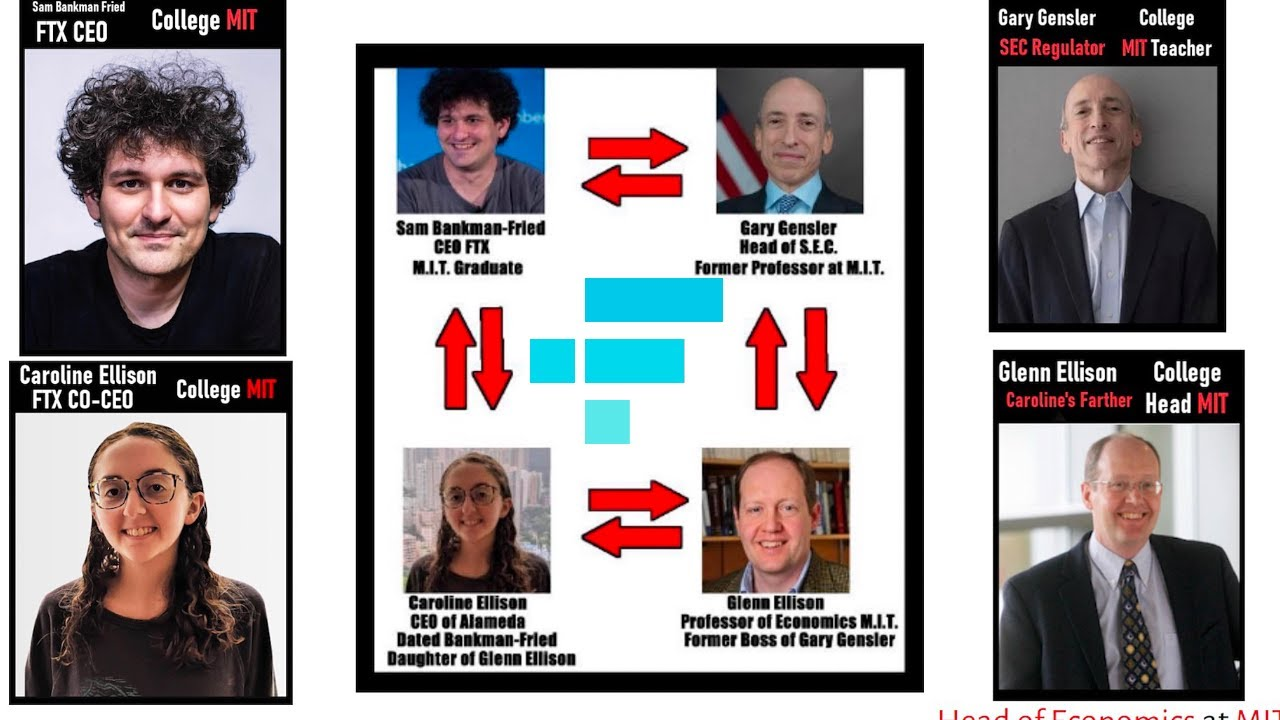
Some have accused Gensler of seeking "public revenge" against Binance, as CZ played a role in the FTX crash. Binance initially announced a complete acquisition of FTX, only to later back out, citing the "mess" being too big to handle. Gensler has close connections with FTX founder Sam Bankman-Fried and Alameda Research CEO Caroline Ellison, leading some to believe Gensler is "settling accounts" with Binance.
- June 9, 2023
In the early hours of June 9, Changpeng Zhao (CZ) responded to the allegations, denying that he transferred $120 billion of funds for personal use. CZ stated that there are currently around $2 billion in user funds on the Binance.US platform, and these funds will remain on the platform unless users withdraw them themselves.
This is simply false. Not sure if it's the journalist or the source.
— CZ 🔶 Binance (@cz_binance) June 8, 2023
To the best of my knowledge, https://t.co/hSHrrlF7o7 had in total roughly $2 billion in user funds. This number in USD equivalent fluctuates a little as crypto prices change. And declining as users withdraw due… pic.twitter.com/5dBPRaaNZN
SEC Chairman Gary Gensler escalated his criticism, targeting not only Binance but also the entire crypto industry. Gensler compared the current crypto market to the 1920s U.S. stock market, saying that it is full of “hucksters,” “fraudsters” and “Ponzi schemes.” Just as Congress cleaned up the stock market by enacting securities laws, the current SEC can also clean up the crypto market by applying these laws, he argued.
The legal battle between the SEC and Binance has evolved into a war of words. It is worth noting that the 13 charges brought by the SEC against Binance are civil lawsuits, not criminal charges like the money laundering allegations faced by the crypto exchange BitMEX. In December last year, Reuters reported that the U.S. Department of Justice (DOJ) had been investigating whether Binance violated U.S. anti-money laundering laws and sanctions since 2018. However, there is disagreement within the DOJ, with some prosecutors considering criminal charges against Binance and CZ, while others believe the evidence is insufficient. Consequently, the DOJ's charges remain pending.


All Comments