


As blockchain technology continues to evolve and gain wider adoption, people are increasingly aware of the trilemma it faces. The so-called blockchain trilemma refers to the challenge of balancing security, scalability, and decentralization.
Security entails ensuring that the blockchain network is resistant to attacks, tampering, and double-spending issues. Scalability refers to the ability of the blockchain network to handle a larger number of transactions and data with high efficiency and low latency. Decentralization involves minimizing centralized control and providing equal participation rights to all network nodes.
Solving the blockchain trilemma is a significant challenge in the current research and application of blockchain technology. Both academia and industry are actively exploring various solutions, including novel consensus mechanisms, layered designs, sidechain technologies, and lightning networks. Only by finding effective solutions can blockchain technology truly achieve scalable applications and industrial development.
BFMeta: The Secure and Open-Source Metaverse Public Chain
BFMeta is a metaverse public chain built on the globally leading open-source Bioforest Chain mobile blockchain operating system. It utilizes a secure, efficient, and highly scalable consensus protocol while incorporating native cross-chain, distributed storage, and distributed computing capabilities to support the development and experience of Web3.0 and metaverse applications for billions of users worldwide.
Initiated by FDMF based in Singapore, BFMeta brings together the largest R&D team in the blockchain industry. FDMF has multiple research centers worldwide and is founded by renowned experts in technology and finance. As a key advocate, planner, and contributor to global blockchain, metaverse, and Web3.0 technologies and applications, FDMF aims to develop and fund core original technologies in these domains and establish ecosystems to drive global digital development.
BFMeta features the following:
Mobile devices can directly connect to the blockchain, breaking the limitations of traditional blockchain technology requiring PC operations and enabling direct connection to the chain across different terminals and systems.
BFMeta achieves cross-chain interoperability of digital assets through both homogeneous and heterogeneous cross-chain technologies, facilitating the distribution, trading, and management of digital assets and DP/NFTs. The main chain, parallel chains, and evolution chains are interconnected, allowing cross-chain asset transactions among various ecological chains with the unique cross-chain technology of BFMeta.
BFMeta connects various real-world assets to the digital world through DP/NFT, continuously enriching the ecosystem types of the metaverse and expanding the boundaries of imagination. BFMeta supports DeFi for a wide range of digital assets and digital product DPs, providing new opportunities for capital acquisition and wealth creation for more people.
BFMeta establishes a complete and independent operational structure for evolutionary chains, facilitating users to customize and develop different business evolutionary chains. Terminals serve as nodes, and nodes serve as services, utilizing ultra-lightweight storage so that all terminal nodes can store data and provide data services. The BNRTC network mechanism enables interconnection among PC communication network nodes and monitoring, interconnection, and data transmission between mobile communication network nodes and PC/mobile communication network nodes.
Technological highlights
BFMeta has several technological highlights:
1. Consensus Algorithms: BFMeta utilizes a combination of TPOW (Transaction Proof of Work), DPOP (Delegated Proof of Participation), DPOS (Delegated Proof of Stake), and PBFT (Practical Byzantine Fault Tolerance) consensus algorithms. TPOW requires a certain amount of computational power to submit transactions to the blockchain, while DPOP determines forging rotation based on voting, shares, and participation. BFMeta also implements features such as distributed transaction synchronization, multi-node and multi-process block generation, checkpoints, and fragmented Merkle trees.
2. Blockchain Storage Mechanism: BFMeta employs technologies such as ROS (Relational Object Storage), multi-dimensional sharded storage, in-memory mirrored storage, crucial checkpoint storage, sharded Merkle tree storage, private data storage, and distributed storage to provide reliable data storage capabilities.
3. Protocol System: This includes miner protocols, authorized creation protocols, genesis basic protocols, consensus incentive protocols, block forging protocols, contract execution protocols, event handling protocols, proof-of-algorithm protocols, and network communication protocols.
4. Mobile Terminals as Nodes: BFMeta supports direct connection to the blockchain from mobile terminals, allowing them to function as full nodes or voting nodes. Additionally, BFMeta is the only blockchain system globally that supports large blocks, enabling efficient processing of large-scale events in a short timeframe through features such as in-memory mirrored storage, multi-process event handling, and matrix broadcasting, all signed by forgers.
5. Distributed Computing: BFMeta implements decentralized elastic distributed computing, including functions for computing task definition, task distribution, and task execution. This addresses the challenges of large-scale distributed computing and the wastage of idle resources.
6. Cross-Chain Transactions and Multi-Chain Support: BFMeta supports cross-chain transactions and enables the rapid customization and development of different business evolutionary chains based on specific requirements and application scenarios. BFMeta encompasses various forms such as parallel chains, subchains, and sidechains, allowing enterprises to select the appropriate chain type based on their specific business needs. Additionally, BFMeta incorporates techniques such as creating temporary forks and determining and executing rollback merges based on consensus rules.
7. Fully Linked Bidirectional Communication Network: BFMeta achieves a fully linked bidirectional communication network, allowing mobile terminals to directly participate in the consensus mechanism. This enables mobile devices to contribute to the blockchain network and participate in the consensus process.
BFMeta Product Ecosystem
1. Super Multi-Chain Cross-Chain Wallet COT
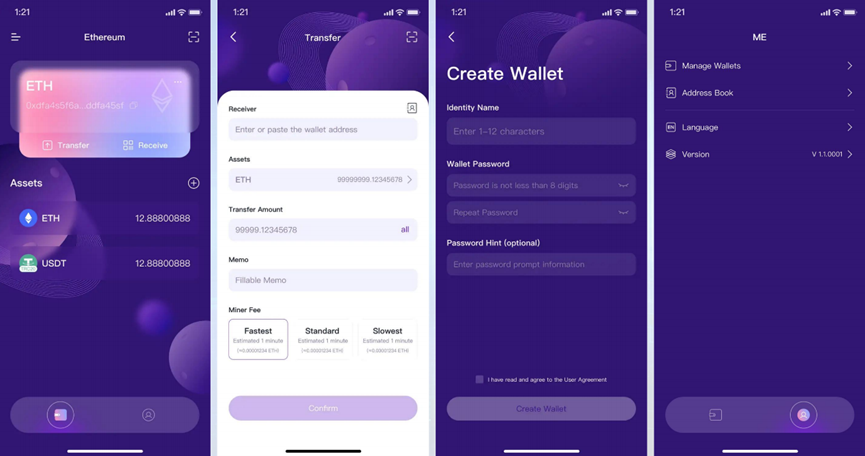
COT is a distributed multi-chain/cross-chain wallet that enables seamless interaction between Bioforest Chain DApps and mainstream DApps worldwide, thereby achieving true non-custodial cross-chain asset management.
2. Decentralized Exchange DEX
3. NFT Issuance/Trading Platform
4. DeFi/GameFi
5. BFMeta Browser (DApp Store)
6. Stablecoin
7. Web3 Platform
8. Carbon Domain SocialFi Platform (100 million registered users)
Conclusion
With the development and widespread adoption of blockchain technology, people are increasingly aware of the challenge of addressing the blockchain trilemma. BFMeta, as a metaverse public chain, combines various technological highlights such as novel consensus mechanisms, distributed storage, and distributed computing to support the development and experience of Web3.0 and metaverse applications for billions of users worldwide. BFMeta's product ecosystem includes the Super Multi-Chain Cross-Chain Wallet COT, decentralized exchange DEX, NFT issuance/trading platform, DeFi/GameFi, BFMeta Browser (DApp Store), stablecoin, Web3 platform, and Carbon Domain SocialFi platform. The innovation and application of BFMeta will contribute to the scalability and industrialization of blockchain technology, enrich the ecosystem types of the metaverse, and expand the boundaries of imagination within the metaverse.


All Comments