

In recent days, a significant voting event within the Arbitrum community has garnered considerable market attention. This vote pertains to a temperature check on the proposal for "Arbitrum's Short-Term Incentive Program," which aims to determine the allocation of a certain amount of ARB tokens from the DAO treasury as a reward to active participants of the Arbitrum protocol, thereby addressing the community's short-term needs.
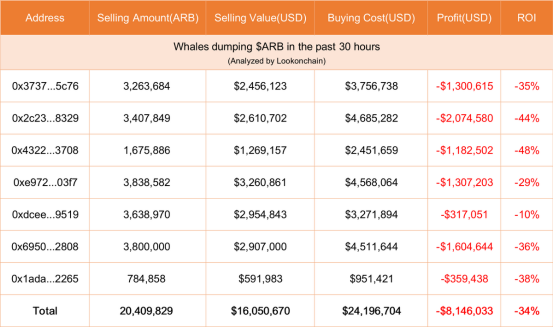
But after the corresponding incentive plan was introduced, there was a big sell-off of assets, which triggered a shakeout in the market. Well, the undercurrents are actually worth digging deeper, and the following will bring you a general understanding of the entanglement of interests.
The voting reflects the general mindset of the community's users, with motivation being the primary expectation
The results of the Arbitrum community's temperature check poll have been revealed. The option "Up to 50 million ARBs by January 2024" was the most popular choice with 65.7% support. The "up to 25 million ARBs by January 2024" option, on the other hand, received 34.3% support.
Surprisingly, the "up to 75 million ARBs by January 2024" option received almost no support, with a support rate of close to 0. This result reflects the cautious attitude of the community members towards the incentive program, who want to bring reasonable incentives to the community while ensuring the value of the tokens.
Previously, the Arbitrum Incentive Working Group submitted an AIP proposal for a "Short Term Incentive Program for Arbitrum" in the community forum. The original purpose of the proposal is to motivate community members to participate more actively in the Arbitrum ecosystem and promote its healthy and stable development.
The proposal suggests distributing incentives of up to 75 million ARBs from the DAO treasury to active Arbitrum protocols. However, the results of the vote show that community members have different opinions on this proposal, and they prefer a more robust incentive program. But underneath all the proposals, there is no hiding the fact that the confidence of some Arbitrum community users is shaken, after all, the overall environment tends to be sluggish.
Arbitrum's growth hits snag as environment cools off
As a matter of fact, as the "Year of L2", Ether's L2 track has experienced unprecedented explosive growth. Just like the previous boom period of public chains, many projects have entered the L2 track, from Arbitrum, Optimistic to the recent Base, new L2 projects have emerged as fast as the rain. However, as the track becomes more and more crowded, Arbitrum's ecological growth has also encountered a bottleneck.
Arbitrum has always been committed to providing better services for Web3 developers. From nitro to the recent stylus, Arbitrum has been launching new technology stacks. It has also seen the emergence of some high-profile projects in its ecosystem, such as GMX in the DeFi ecosystem and Treasure in the gaming segment. the success of these native projects has attracted a large number of developers and investors looking for new opportunities in the Arbitrum ecosystem. At the beginning of the year, these projects sparked a small boom in the Arbitrum ecosystem.
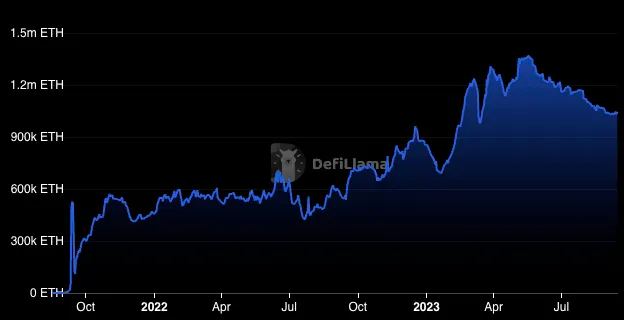
However, as the market adjusts and the sector rotates, some of the quality programs in the Arbitrum ecosystem are starting to lose their initial sparkle and are showing a trend of "snakeheads and snakes". This is mainly due to the fact that Arbitrum mainly attracts users with a preference for leverage and a high risk tolerance. After the small boom in the Arbitrum ecosystem, except for the latest release of the development environment, stylus, there are few new projects that can inspire investors again.
In short, in addition to developers who really benefit from technological advances, most of the ecological users are more "for the love of power". This also explains why there was a "giant whale sell-off" after the recent incentive program was made public. From this we can see that the pressure on the Arbitrum ecosystem is mainly due to the market adjustment, the weakness of the program and the gap between the expectations of the user base and the reality.
Arbitrum Aggressively Launches Self-Help Effort to Boost Token Price
In an effort to reverse the token's decline, the Arbitrum team has been aggressively rescuing itself and looking for a solution.
In order to stabilize the coin price, Offchain Labs has repeatedly used addresses starting with 0xb41 to conduct market operations on ARB. During the week when the coin price continued to fall, Offchain Labs took action again, urgently purchasing 1,799,000 ARBs from CoinSecurity, with a total value of about $1.4 million and an average price of $0.78. Despite these measures, the price of ARBs has recovered slightly to above $0.80, but from a macro perspective, the price of ARBs is still at a low level and shows no signs of significant increase for the time being.
In addition, in order to make greater breakthroughs in ecological growth, Arbitrum is not only limited to incentive programs, but is also actively exploring the path of innovation in L3, which is another layer of protocols or technologies built on top of the L 2 blockchain solution, aiming to provide more features and performance to meet specific needs or solve problems on L2. As such, Arbitrum is actively exploring this as well.
Back in April of this year, Arbitrum announced the formation of the Arbitrum Security Committee, a multi-signature team of 12 community representatives. In case of emergency, the participation of 9 members is required in order to implement emergency security measures.
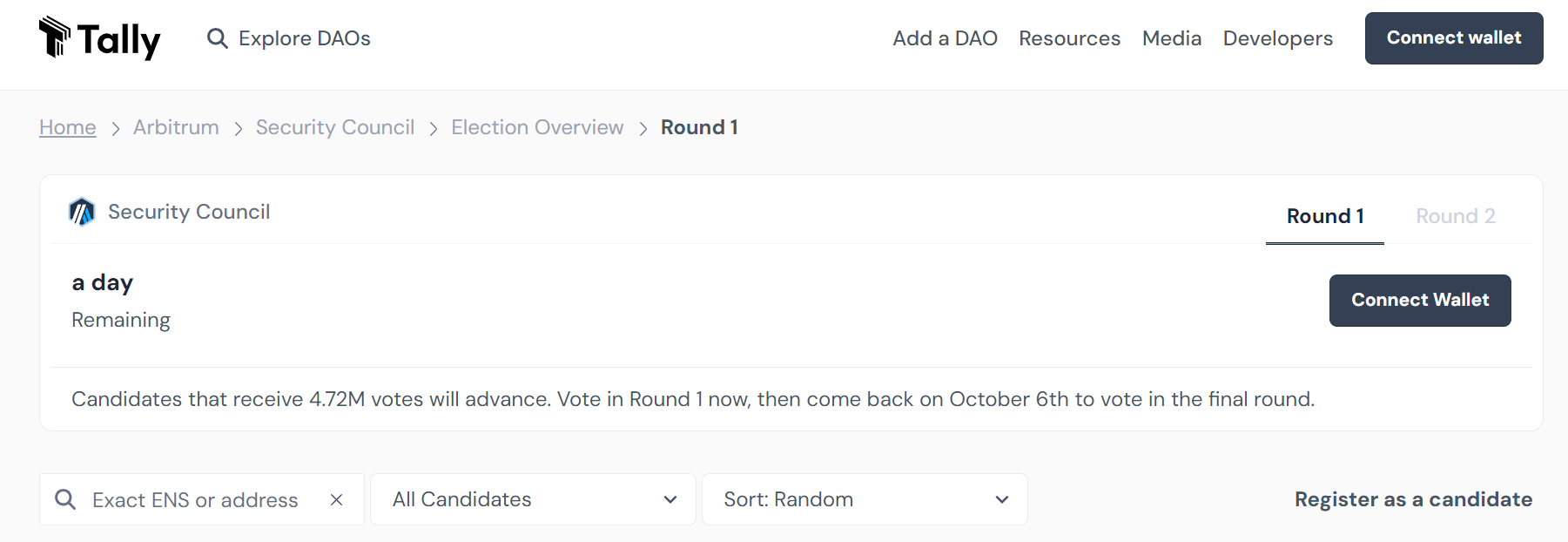
In addition, the Arbitrum DAO will serve as the decision-making body for this security committee.Arbitrum has also launched Arbitrum Orbit, an L3 blockchain for developers.L3 developers on Arbitrum One and Nova can obtain a perpetual license at no cost, allowing them to use, change, and personalize Arbitrum technology for their L3 chains. The upcoming Arbitrum Stylus will support developers programming in C, C++, Rust as well as Solidity and other EVM languages.
This move, in turn, illustrates the following two points: the launch of Arbitrum Orbit provides developers with more options and conveniences, making it easier for them to deploy and customize their own L3 blockchains; and the support of Arbitrum Stylus means that developers will be able to develop in a wider range of programming languages, which will attract more developers to join and expand the Arbitrum's ecosystem.
Conclusion: L3 Becomes a Key Point for Breaking the Game, Arbitrum's Aftermarket Performance Remains to be Determined
Putting the past aside, Arbitrum's future ecological growth will depend on a number of key factors, including the following:
1. L3 innovation: Arbitrum has started rolling out L3 innovations in its ecosystem, including XAI (Smart Contract Application Layer). This provides more diversity and scalability to the ecosystem, attracting applications from different domains. In the future, L3 innovations may drive more developers and projects into the Arbitrum ecosystem, fueling its growth.
2. Developer support: Arbitrum allows smart contracts to be built using different programming languages by providing a new development environment, Stylus. This will help attract more developers to participate and drive more projects and DApps into the Arbitrum network.
3. Incentive Programs: Arbitrum has come up with incentive programs to reward active Arbitrum protocol members, thus increasing the vitality of the ecosystem. These incentive programs can help attract more participants and improve the security and availability of the network.
4. Ecosystem Funding Program: Arbitrum has also announced the Ecosystem Funding Program, which aims to support areas such as games, developer tools, new protocol ideas, education, community development and events. This will provide financial support for projects in different areas and encourage more innovation and development.
5、Market Competition:In the L2 track, the market is highly competitive with many projects competing for users and developers' attention.Arbitrum needs to compete with other L2 solutions to provide better performance, low cost and user-friendly experience to attract more users and developers.
In summary, Arbitrum's future ecological growth will depend on its ability to continue to innovate, attract developers and projects, and remain competitive in a highly competitive market. With the introduction of L3 innovations and various incentive programs, Arbitrum is expected to play an important role in the blockchain ecosystem and provide users with more diverse options.


All Comments