


Interviewer | Presley,PANews
Author | Nancy,PANews
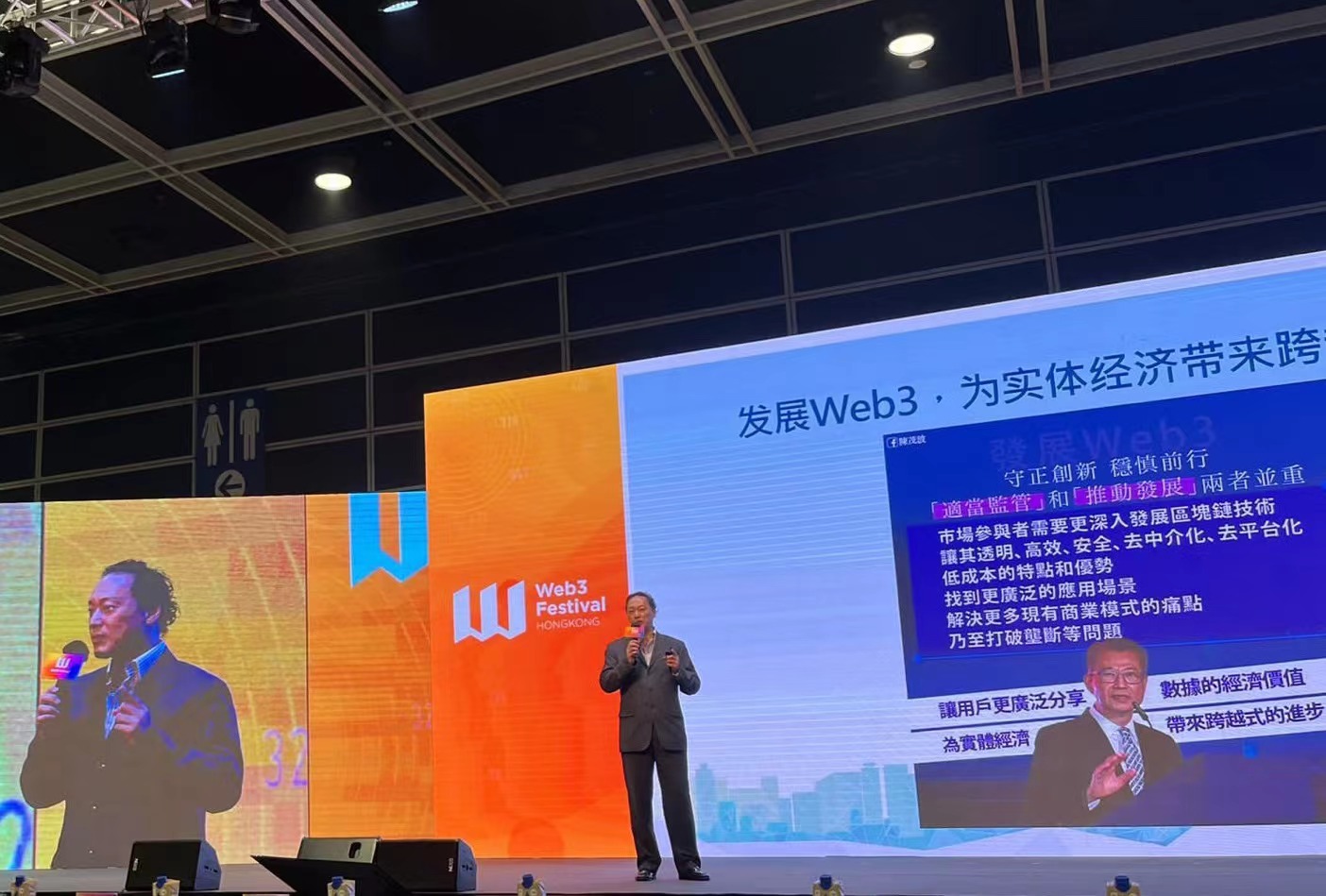
The Web3 industry has ushered in a "Hong Kong moment". From April 12 to 15, the "Hong Kong Web3 Festival 2023", co-organized by Wanxiang Blockchain Labs and HashKey Group and hosted by W3ME, was held at the Hong Kong Convention and Exhibition Center. As a guest speaker, King Leung, the technology supervisor of Invest Hong Kong, was interviewed by PANews after the conference, answering questions on Hong Kong's development opportunities, support strategies and regulatory policies, showing us Hong Kong's determination and ability to build a Web3 hub.
Why does Hong Kong need Web3?
With the unique advantage of being “relying on motherland and facing the world”, Hong Kong has become an international financial center with its continuous openness to support the innovation and iteration of financial technology. But like sailing against the tide, Hong Kong is facing severe challenges and tests at this stage, and is even starting to fall behind other major global financial markets. At this moment, Hong Kong has chosen to promote the development of the Web3 ecosystem to create its own new "business card".
"Bill Gates once said, 'People always overestimate the changes of the next two years and underestimate the changes of the next ten.' History repeats itself, and so does Web3. For Hong Kong, although it is an international financial center, no one can guarantee what it will be in 10 years? Hong Kong's economy cannot rely on one segment alone, which is very dangerous, and growth beyond finance is urgently needed." So says King Leung, Web3 is not a simple buzzword or hype, but a paradigm shift that will change the way we interact with information, value and trust interaction in the Internet or future Metaverse, and may even enable more decentralized, efficient and inclusive platforms and services that will empower users and creators, and will also create new opportunities for innovation, entrepreneurship and social impact.
"Due to the more severe crackdown by the US on the crypto market, non-US projects are facing survival problems, and the FTX thunderstorm has also caused losses to Singapore, these events provide opportunities for Hong Kong to develop Web3. The government's regulatory attitude, the traffic and the influx of talent will be the advantages of developing Web3 in Hong Kong. Hong Kong has a vibrant fintech ecosystem with over 800 fintech companies providing different kinds of innovative and convenient financial services to citizens and business people." King Leung added.
In fact, Hong Kong has spared no effort in recent months to promote the development of Web3, including attempts at NFT, tokenization of bond issuance, and e-HKD. For example, in February this year, the Hong Kong SAR Government offered the first HK$800 million of tokenised green bond, which is the first tokenised green bond issued by a government globally and one of the pilot projects announced in the policy statement on the development of Virtual Assets (VA) in Hong Kong.
King Leung said that currently there are also many financial institutions see the potential of securitization tokens, such as the capital management company BlackRock. In fact, securitization tokens have a very wide scale of application, such as real estate, intellectual property, IP and art, and Hong Kong has certain advantages in these areas, such as the art sector, Hong Kong is the world's second largest contemporary art auction market, Christie's Asia Pacific headquarters is also established in Hong Kong, the auction house's 2022 annual turnover set a new all-time high for the art market.
"Hong Kong is also working with the Mainland to test the use of e-CNY for cross-border payments in Hong Kong, and is working with a number of central banks on a number of central bank digital currency bridge projects to speed up cross-border payments."
Hundreds of companies interest in going to Hong Kong
For crypto practitioners, Hong Kong's policies are attractive.
On the one hand, the "Policy Statement on the Development of Virtual Assets in Hong Kong" issued by the Hong Kong SAR in October last year expressed its welcome and embrace of global innovators engaged in virtual asset business. In addition, in order to better gather and recruit global Web3 startups and talents, Hong Kong established the "Web3Hub@Cyberport" in early this year, the Hong Kong government has allocated HK$50 million in the new budget, and will also set up the Web3Hub Fund. For those who want to set up Web3 enterprises in Hong Kong, King Leung said that the Hong Kong government will conduct background checks on these projects, and provide support for landing, business resource introduction, and related talent recruitment for compliant projects.
In the face of the crypto signals released by Hong Kong, King Leung said that up to the end of February 2023, Invest Hong Kong has received more than 80 virtual asset-related mainland and overseas companies interested in doing business in Hong Kong. These companies include VA (virtual asset) exchanges, blockchain infrastructure companies, blockchain security companies, crypto wallets and payment companies, and other projects building the Web3 ecosystem. The main inquiries were about the implementation details of the policy statement, regulatory requirements, visa requirements for talent entry, targeted support measures for the VA and Web3 sectors, and the feasibility of setting up businesses in Hong Kong. In addition, a total of 23 companies from the Mainland, Canada, European Union (EU) countries, Singapore, the United Kingdom (UK) and the United States (US) indicated to InvestHK that they plan to set up offices in Hong Kong, with business areas including virtual asset trading, infrastructure, blockchain cybersecurity, etc.
In addition to that, King Leung also revealed to PANews that in order to help fintech companies expand their business to the mainland, Southeast Asia and other regions, Hong Kong launched a community online platform in December last year to encourage local companies to connect fintech companies with local and global users and investors. And there are already many traditional financial institutions in Hong Kong entering the market one after another, but they have very strict requirements for risk control, which also leads to very slow efficiency. However, there are still very many institutions in the market that need strong endorsement from such institutions for their business development.
Hong Kong has launched multiple measures to reduce risk and will launch a stable currency regulatory regime next year
Innovation and risk go hand in hand. In the face of the risks exposed in the Crypto space, regulation is being stepped up globally. For example, U.S. regulators have not only conducted a "clean sweep" of banks, constantly pressuring them to abandon their crypto business, which has led to the successive collapse of crypto-friendly banks such as Silvergate and Signature Bank, but also prosecuted crypto organizations such as CZ, the founder of Coinan, and Coinbase.
For the potential risks of Web3, Hong Kong will take appropriate regulation. "The premise of promoting the development of Web3 is all about not compromising the stability of the financial system and investor protection. Appropriate regulation is necessary to create a sustainable environment for a more desirable development. Under this premise, Hong Kong will follow the regulatory mindset of 'same business, same risk, same rules' to allow maximum innovation and development of virtual assets." The Financial Secretary of Hong Kong Special Administrative Region, Paul Chan noted.
At the same time, Hong Kong Monetary Authority's Clara Chan also said that while Hong Kong is realizing the potential of Web3, it must also be complemented by appropriate regulation to mitigate risks. In regulating stablecoins, considering market expectations of stablecoins as a medium of exchange, the importance of requiring stablecoins to establish a credible and robust "value stabilization" mechanism, the potential impact of stablecoins on daily economic activities, and the potential for stablecoins to act as a risk transmission medium between traditional financial markets and the virtual asset ecosystem, the Hong Kong Monetary Authority is continuing the relevant follow-up work with a view to establishing suitable regulatory arrangements for stablecoins.
The reason why Hong Kong has become an important hub for fintech innovation is that the stable international-level regulatory regime and supervisory sandboxes and measures provide fertile ground for its fintech development. To address the financial risks associated with the rapid development of fintech, the Hong Kong Monetary Authority launched a Fintech Supervisory Sandbox (FSS) in 2016 to achieve a dynamic balance between regulation and innovation.
In response to the sandbox supervision in the Web3 and virtual asset space, King Leung told PANews that the Hong Kong government has not introduced Web3 into the supervisory sandbox for the time being, but has improved the securities rules to allow supervised intermediaries to offer trading in eligible VA futures ETFs to retail investors in Hong Kong, making Hong Kong a pioneer in the Asian market. In just a few months, we have also seen three VA futures ETFs already listed and traded on the Hong Kong Stock Exchange.
Not only that, in terms of risk control, Hong Kong passed an amendment to the Anti-Money Laundering and Counter-Terrorist Financing Ordinance (AMLO) in December 2022 by the Legislative Council to introduce a licensing regime for Virtual Asset Service Providers (VASPs), which will come into effect on June 1, 2023.
Of course, for risk issues such as cyber attacks, Hong Kong will choose to work with a number of institutions for real-time monitoring. "The Hong Kong Monetary Authority is studying the regulatory regime for 'stable coins' and aims to implement the relevant regulation in 2024, with different types of institutions in the industry eligible to apply. And in order to promote an active ecosystem, the Hong Kong government or HKMA prefers to cooperate in issuing stable coins, and the number of cooperating institutions is not limited for the time being, and there will be many differentiated products launched, with the most focused track being cross-border payments, etc." King Leung also revealed that.
It is worth mentioning that Keith Choy, the interim supervisor of the Intermediaries Division of the Hong Kong Securities and Futures Commission (SFC), also recently said that DeFi projects also need to be regulated by the SFC, that automated trading services are also among those regulated by the SFC, and that decentralized exchanges also need to apply for a license if they involve virtual assets; some DeFi protocols are nominally decentralized, and in reality a small number of developers hold a large number of governance tokens, which need to be analyzed for their substance rather than superficial claims.
As crypto companies are looking for the right ground to survive in the face of an increasingly stringent global regulatory environment, it remains to be seen whether Hong Kong, an international financial center, will succeed in capturing Web3 and becoming the center of the story.
Reprinted from PANews


All Comments