


A revised privacy agreement published on November 23 says that MetaMask will collect users’ IP and Ethereum wallet addresses in on-chain transactions. What this means and what you can do to avoid getting tracked.
MetaMask is currently one of the most popular self-custody wallets on the market with over 21 million monthly active users. That’s why their decision to collect user data has wide implications.
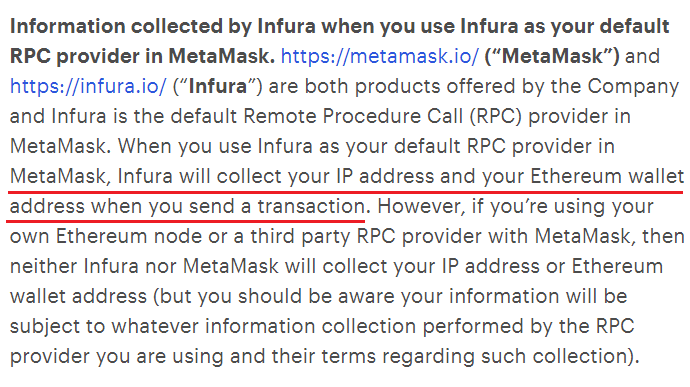
Why MetaMask Logging IPs and Wallet Addresses Is a Problem
In short: if you’re using MetaMask, your IP address and your Ethereum wallet address are getting logged with each transaction you make.
But there is more.
The moment you unlock the wallet it records ALL your addresses under the same IP. This makes it very easy to identify who you are and where you are located.
Bye bye consumer privacy and anonymity.
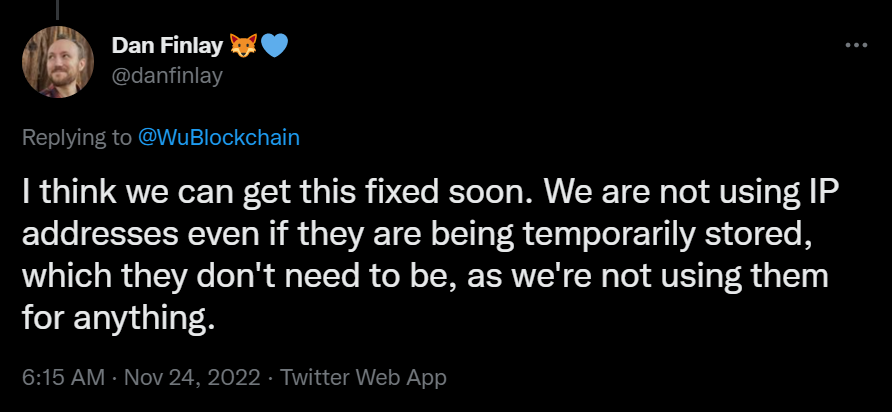
Dan Finlay, one of MetaMask’s co-founders, claims that they “are not using IP addresses even if they are being temporarily stored” — but seriously, after all the crap that just has been happening with FTX, it would be foolish to fully trust any kind of platform when it comes to your finances.
What’s more, Finlay is not telling the truth here. That’s because according to MetaMask’s parent company ConsenSys, user’s IPs and wallet addresses may be shared with affiliated companies in order to complete business transactions or to comply with identity verification and anti-money laundering requirements imposed by law enforcement authorities.
In other words, anyone who wants your data can either pay or force ConsenSys to get it.
3 Things MetaMask Users Can Do To Protect Themselves
ConsenSys says that users’ data is only collected when they are using MetaMask’s default remote procedure call (RPC) application called Infura. An RPC allows access to a blockchain and to execute programs that interact with that blockchain.
This leaves 3 options for MetaMask users to ensure their privacy and anonymity.
1. Use a different RPC
If you want to stay with MetaMask you can change the remote procedure call provider.
Here are a few options:
As there are many different RPC providers available make sure to take your time to research and find the best alternatives.
2. Use a different crypto wallet
There are plenty of crypto wallets available. Here are a couple of examples:
- Trust Wallet: One of MetaMask’s main competitors. A multi-crypto wallet that launched as an open-source project. Supports staking and trading within the app.
- BlockWallet: Anonymizes your IP and other data when you’re interacting with contracts or making transactions.
Personally, I prefer using hardware wallets such as Ledger to hot wallets for their superior security features.
3. Use a VPN
You can also use a VPN to hide your IP. Again, there are many different products available on the market.
- Tor is one of the best known free solutions for browsing privately. It is used by more than 2 million people every day.
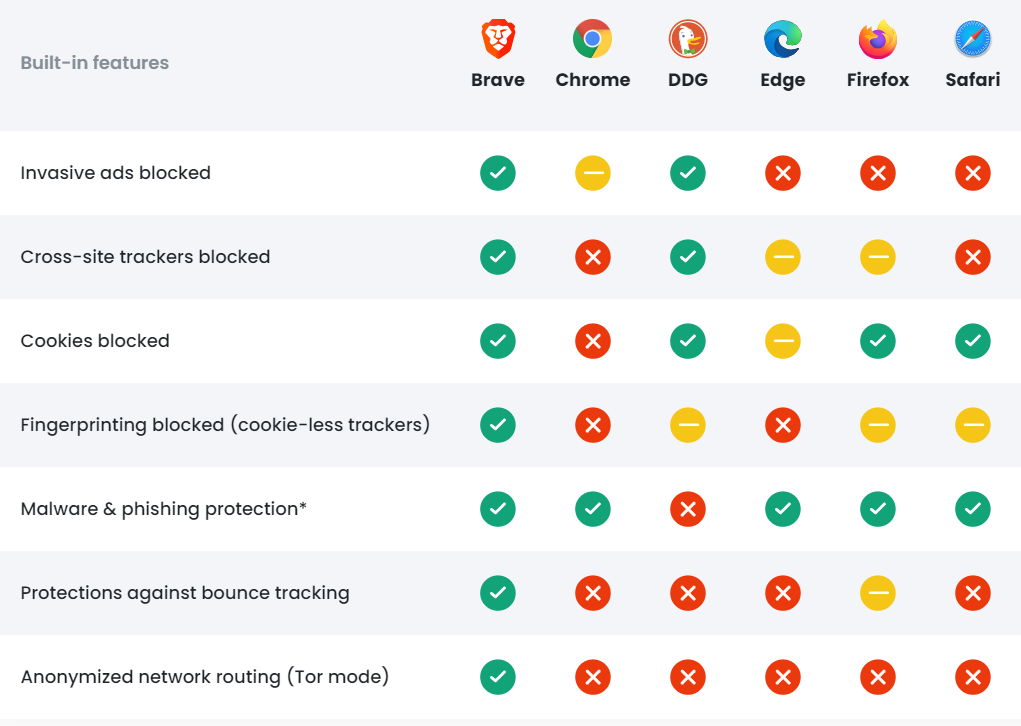
- Brave browser comes with in-built Tor-functionality as well as its own crypto wallet. Brave has about 50 million users worldwide.
- IVPN is a VPN that doesn’t log your activity and for which you can pay with an anonymous crypto such as Monero.


All Comments