

In March of this year, Ordinals emerged out of nowhere, defining a set of ordinal protocols running on the Bitcoin network, enabling tokens and NFTs to be implemented and stably operated on the Bitcoin network, marking a new chapter in the Bitcoin inscription market. Subsequently, with the emergence of various applications, including BRC20, the Bitcoin ecosystem has shown a prosperous scene.
We have witnessed a multitude of Bitcoin inscription concept tokens entering the market, such as ORDI, PEPE, OXBT, etc. Among them, ORDI and PEPE achieved thousand-fold increases quickly, with early participants even achieving ten-thousand-fold increases, creating a wave of wealth creation myths and igniting the Bitcoin inscription concept.
However, as a non-Turing complete ecosystem, the efficiency and cost issues of the underlying Bitcoin itself have become increasingly prominent. Additionally, the complexity of Bitcoin's mining mechanism and UTXO mechanism has further raised the barrier to entry for inscription, making it difficult for many people to understand the mechanisms of Bitcoin. The initial minting of inscription assets has deterred many individuals.
Comparatively, after the DeFi Summer, the rise of the Ethereum ecosystem has positioned it as the leading DeFi public chain. Whether it is browser plugins or mobile wallets, Ethereum surpasses other ecosystems regarding wallet support. In fact, Ethereum has the highest quality user base, and the security of the Ethereum chain has gained recognition. After the EIP-4844 upgrade, gas fees on the entire chain have been well controlled. Based on the same technological principles, the Ethereum inscription system is equally competitive and has the potential to break through.
- The Ethereum Inscription System
Tom Lehman, co-founder and former CEO of Genius.com, proposed the Ethereum inscription protocol Ethions, which is similar to the Ordinals protocol on Bitcoin. It allows people to engrave different types of files on the Ethereum mainnet if they do not exceed 96 KB in size. Specifically, this protocol involves adding remarks (in hexadecimal characters) to a transaction. Since the transaction occurs on the chain, it is a fully on-chain activity with characteristics such as immutability, and it shares the security of ETH.

On June 17th of this year, the Ethereum Inscription protocol, Ethscriptions, was launched. The protocol allows users to share information and execute computations on the Ethereum L1 at meagre costs. It achieves this goal by bypassing smart contract storage and execution and instead calculates the state by applying deterministic protocol rules to "dumb" Ethereum call data. The aim of Ethscriptions is to enable ordinary users to perform decentralized computations at a reasonable price.
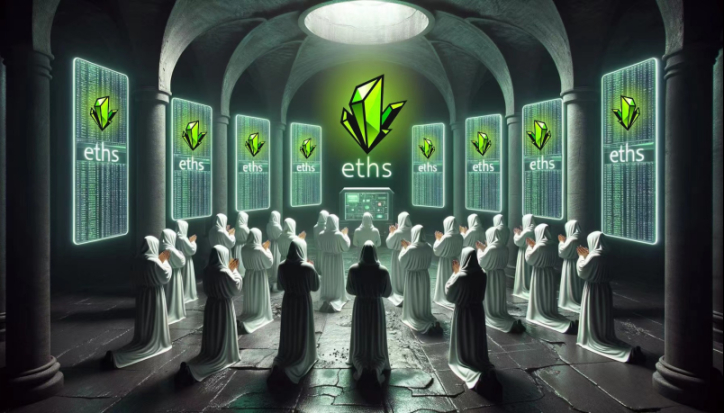
It is reported that the initial minting cost for the Ethions text token, $eths, was around 0.5 U. Still, within a few days after its creation, its over-the-counter price reached 100 U, bringing hundred-fold returns to early participants. In early August, the price skyrocketed to 500 U. After a period of silence for over two months, $eths experienced a breakout on October 8th, with the price climbing to 800 U.
Of course, Ethions itself holds broader significance. On August 8th of this year, the ESC VM (Ethions Virtual Machine) testnet went live, taking Ethions onto a new development trajectory. In the ESIP-4 proposal, Ethereum Inscription introduced the virtual machine concept and was seen as an alternative to intelligent contracts and L2. This is a new protocol built on top of Ethions. ESC VM empowers Ethions with computational capabilities. Ethions also introduces a contract system known as "Dumb Contracts," enabling users to interact with them through inscription. This opens up broader narrative directions for Ethions.
In fact, the development of the inscription field is quite similar to that of meme tokens. Initially driven by meme culture, meme tokens experienced explosive growth. However, with continuous technological breakthroughs and more long-term prospects, the significance and narrative logic of tokens like ShiB and Doge are no longer just simple meme assets driven by FOMO. The development from the Bitcoin inscription system to the Ethereum inscription system follows a similar trajectory.
As this field continues to evolve, it brings forth new technological innovations. Scorpio is currently building the first ERC20 Inscription Aggregation Trading Platform, aiming to provide infrastructure applications for the Ethereum inscription ecosystem. Scorpio is expected to become the new catalyst for the eruption of the Ethereum inscription track.
- First ERC20 Token Aggregation Trading Platform: Scorpio
Scorpio is an ERC20 token aggregation trading platform that supports all existing Ethereum-based token protocols.
ERC20 is a standard format token based on the Ethereum token protocol. Despite some differences in the usage of the protocol, it still embodies the characteristics of trading NFT assets. Due to the consistency in asset attributes, the possibility of aggregating ERC20 token transactions has been validated. Additionally, the Ethereum token protocol is an extension of the Ethereum blockchain that allows users to issue and exchange fungible digital assets on the Ethereum network.
Furthermore, Scorpio will also support the new IERC20 protocol, which belongs to the Ethereum token protocol. IERC20 is the Ethereum token protocol responsible for standardizing token creation, minting, and trading. Anyone can deploy, mint, and trade their tokens on IERC20.
Scorpio combines its team's expertise in building decentralized exchanges, quantitative trading, and order book trading systems to create the first asset-swapping platform with ERC20 token aggregation. It provides sufficient liquidity support with its robust infrastructure.
Scorpio operates as an order book trading model in an aggregated marketplace. We recognize the uniqueness of Ethereum NFT attributes, and even ERC20 tokens are a specialized form of NFT assets, making them unsuitable for AMM mechanisms. Scorpio adopts a unique order book trading system to facilitate the trading of ERC20 asset types.
Moreover, Scorpio is also the first ETH Rollup trading platform on the entire network. Currently, Scorpio supports packaging all transaction data on-chain, allowing users to complete transactions with meagre transaction fees and almost 0 Gas (no splitting or packaging fees) during actual trading. This is a significant advantage of Scorpio.
Currently, Scorpio supports trading of all ERC20 or ERC721 assets issued based on the Ethereum token protocol within the ETH ecosystem. With Scorpio, anyone can quickly launch a new ERC20/ERC721 asset or explore and purchase other assets.
As an on-chain platform, Scorpio allows users to freely list and trade any desired ERC20/ERC721 assets using their ETH wallets without the need for complex registration and authentication processes. Scorpio automatically scans and monitors assets across the network, enabling users to query and monitor the status of ERC20 asset holdings, transfers, and transactions through Scorpio.
In fact, on July 17th, the trading marketplace Ethions.com suffered a hacker attack, resulting in the theft of many listed tokens. Approximately 202 tokens were stolen from around 123 addresses. The vulnerability can be traced back to a smart contract created by two co-founders, which contained a small piece of code allowing people to withdraw tokens that did not belong to them from the marketplace. To ensure the safety of traders, Scorpio has implemented various measures to prevent hacker attacks and protect user assets, ensuring platform security.
- Platform Token SPO of Scorpio
Currently, to better promote ecosystem governance, Scorpio has launched the platform token SPO. SPO is the sole governance token of the Scorpio platform and is obtained through a special issuance mechanism. Users can acquire SPO tokens by participating in issuance or purchasing them on the secondary market. Users who hold SPO tokens can enjoy various privileges, including fee discounts and staking SPO to participate in dividend distributions from platform liquidity.
Furthermore, consuming SPO is a necessary asset for minting Ethereum tokens on Scorpio, and staking SPO grants users the privilege to participate in the platform's issuance of Ethereum tokens. As the leading Ethereum token LaunchPad platform, Scorpio requires users to use SPO for early participation in the platform's distribution of Ethereum tokens.
The SPO token itself has inherent utility, which is expected to help build its value foundation.
With the recent surge of excitement surrounding listing the ORDI token on Binance, the token ecosystem, especially the more advanced Ethereum token ecosystem, is expected to thrive again. As the first ERC20 token aggregation trading platform, Scorpio has the potential to capture users on a large scale in the early stages and become a leading ecosystem in this field. Both the Scorpio platform itself and the SPO token have promising valuation prospects in the future.

Scorpio, the first ERC20 asset aggregation trading platform.
Twitter: https://twitter.com/ScorpioWeb3
Telegram Global Community: https://t.me/ScorpioGlobal
Telegram Announcement: https://t.me/ScorpioAnnouncement
Youtube Channel: https://www.youtube.com/@ScorpioWeb3
Scprio will combine the building of decentralized exchanges, quantitative trading, order book trading systems, and other foundations to create the world’s first asset swap platform with ERC20 aggregated trading capabilities. It will provide sufficient liquidity support. Twitter: https://twitter.com/ScorpioWeb3 Telegram Global Community: https://t.me/ScorpioGlobalTelegram Announcement: https://t.me/ScorpioAnnouncementYoutube Channel: https://www.youtube.com/@ScorpioWeb3Medium: https://medium.com/@ScorpioWeb3


All Comments