

Hi friends 👋,
Happy Friday and welcome back to our 55th Weekly Dose of Optimism.
Hope everyone’s caught their breath after last week. It looks like LK-99 is more likely than not some sort of cool magnet and not a room-temperature superconductor, although the National Physics Lab New Delhi posted a promising replication attempt yesterday. Manifold has replication at 14%.
It’s most likely so over, but we’ve got stories that should bring your optimism so back.
Let’s get to it.
The Weekly Dose is brought to you by… Tegus
Have you ever spent hours of time evaluating investment opportunities only to discover that your data isn’t reliable?Tegus unites insights from credible experts with the best financial data to give you more powerful perspectives for your investment decisions. With top-notch quality across expert calls, transcripts, financial models, and easy-to-cite SEC data, you can gain a unique perspective and ultimately make bold, high-yield investment decisions.
(1) US scientists repeat fusion ignition breakthrough for 2nd time
From Reuters
U.S. scientists have achieved net energy gain in a fusion reaction for the second time since December, the Lawrence Livermore National Laboratory said on Sunday.
Scientists at the California-based lab repeated the fusion ignition breakthrough in an experiment in the National Ignition Facility (NIF) on July 30 that produced a higher energy yield than in December.
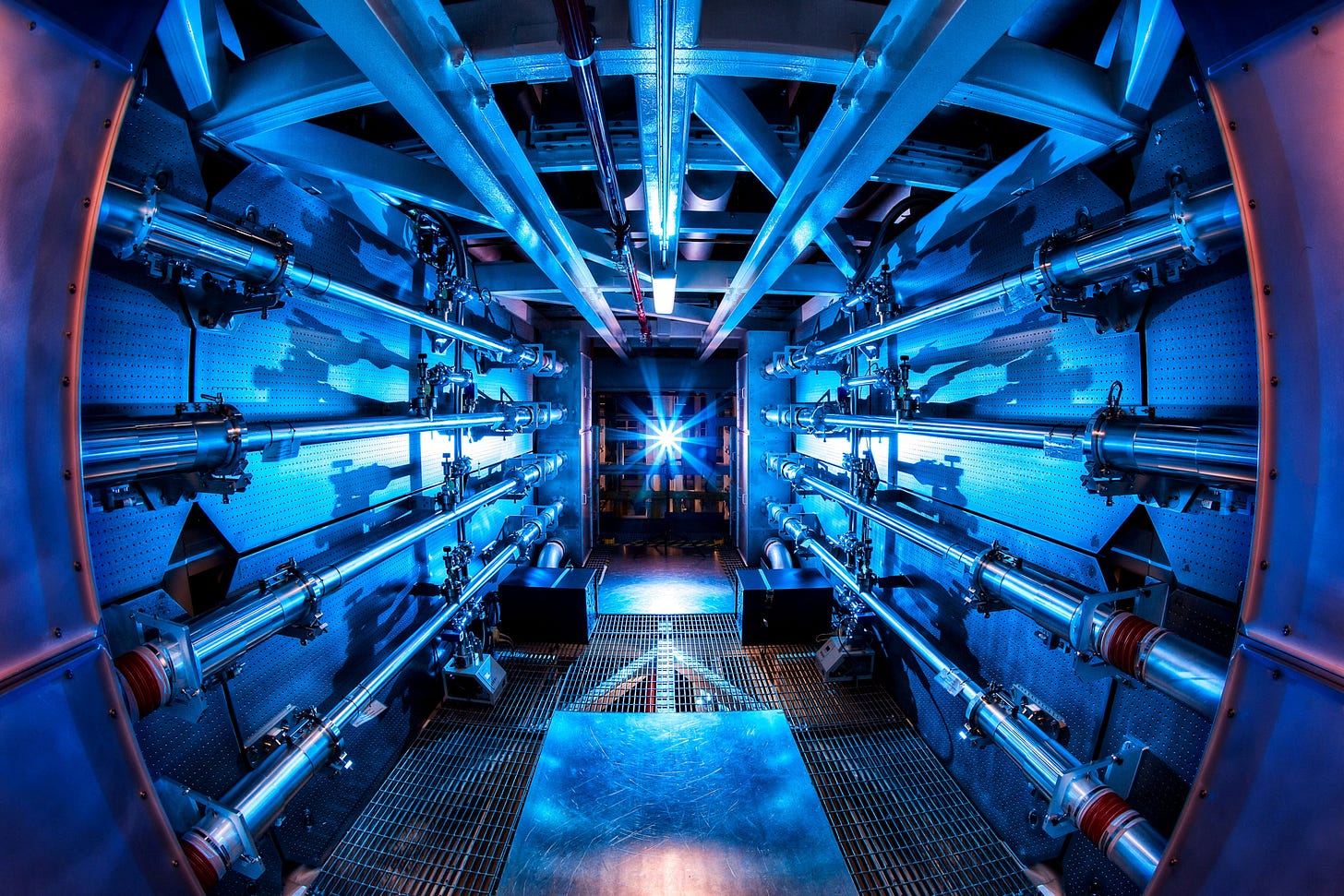
If the last few weeks have taught us anything, it’s that replication and repeatability are important! Back in December, the Lawrence Livermore National Laboratory made history with the first ever net energy gain fusion ignition event. Now, the lab has produced a second net energy gain in a fusion experiment, this time with a higher energy yield. Another “Q>1” reaction.
“Q>1” occurs when more energy is produced by a reaction than was input into it. While Q>1 experiments are important, there are still significant hurdles in scaling and commercializing nuclear fusion as a source of energy. But if we’re able to overcome those hurdles and scale nuclear fusion, energy will be cheap and infinitely abundant, leading to further breakthrough technologies, energy security, climate solutions, and major quality of life improvements. It’s one of those technological advancements that unlocks a whole wave of further advancements.
(2) Semaglutide 2.4 mg reduces the risk of major adverse cardiovascular events
From Novo Nordisk
The trial achieved its primary objective by demonstrating a statistically significant and superior reduction in MACE of 20% for people treated with semaglutide 2.4 mg compared to placebo.
Over the past couple of months, the public perception of Semaglutide seems to have shifted a bit. Is it effective long-term? Is it actually net-net good for you? Is it good for society to have a “magic drug” like this to solve your problems?
I think the jury is still out on each of those questions. Our view is that for a certain percentage of the population, weight-loss medication is really their only viable option for losing weight and improving overall health outcomes. They’ve tried everything — dieting, exercise, lifestyle changes — but nothing seems to work. They’re likely suffering from an addiction or psychological condition that makes organic long-term weight-loss excruciatingly hard. For these folks, semaglutide is a godsend.
And, according to new research from Novo Nordisk, the maker of semaglutide, the drug also reduces the risk of a major adverse cardiovascular event by nearly 20%. This is a particularly important finding for obese people, who have an increased risk of cardiovascular disease, but no medication that was both effective in weight management while also reducing the likelihood of a MACE.
(3) Ancient mud cracks on Mars point to conditions favorable for life
Phie Jacobs for Nature
The discovery of distinctive mud cracks on Mar’s surface suggest ancient Mars cycled through sustained wet and dry seasons for millions of years. Not only would the climate have been habitable, scientists say, but the cycling might have also given the basic chemistry of life a boost.
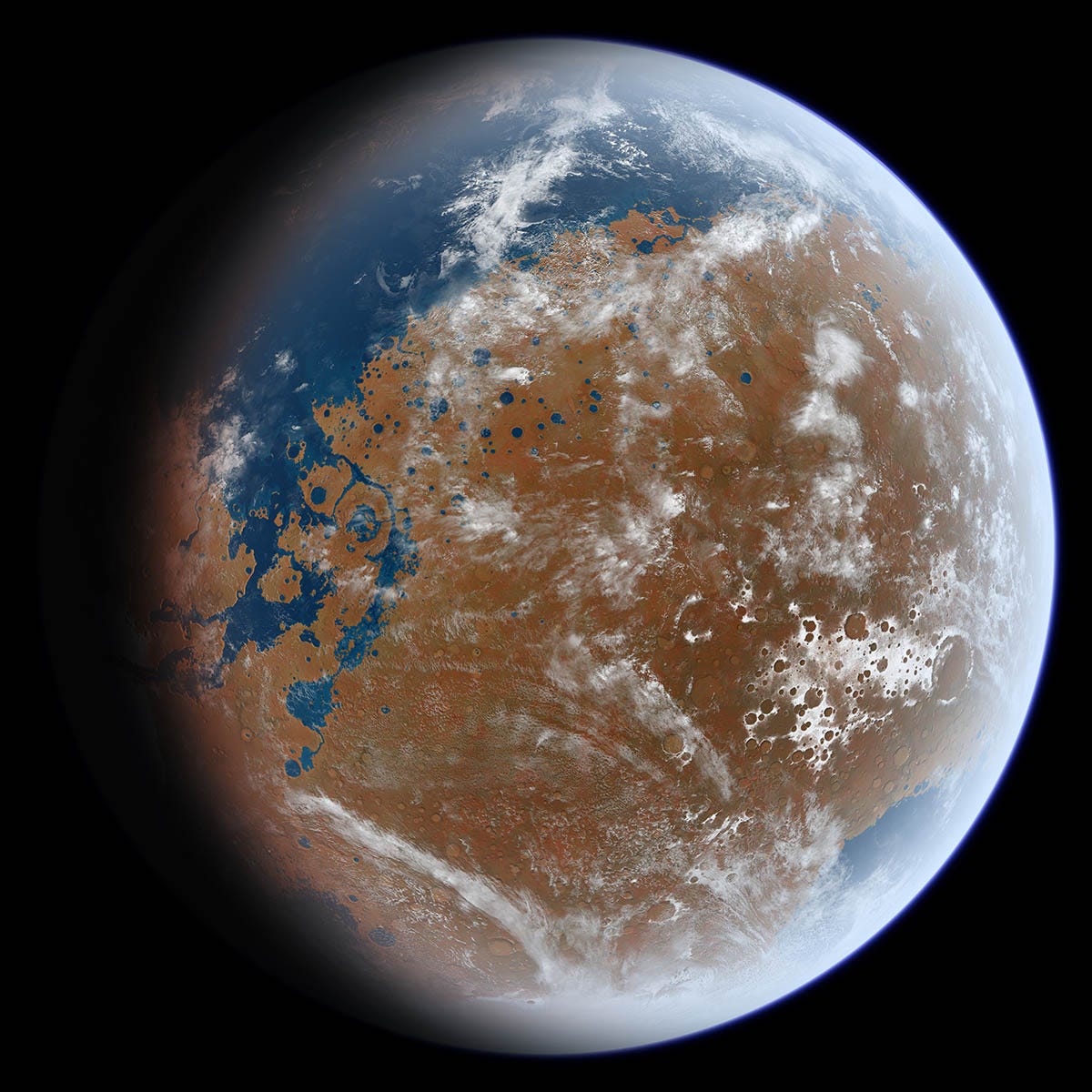
A new report, published yesterday in Nature, contains compelling evidence for an Earth-like climate on early Mars. The Curiosity rover on Mars discovered hexagon-shaped cracks in ancient rocks on Mars, that add to mounting evidence that Mars once had a warm climate with a wet-dry cycle.
So why is this important or relevant?
- Mars’ warm climate may have been conducive to life formation
- Understanding how life on Mars may have originated could give us a better understanding of how life originates in general
- Just another reminder of how vast the universe is. We barely know anything about Mars, our solar system neighbor — maybe it had life, maybe it didn’t we just don’t know. What else don’t we know about the rest of our vast universe?
(4) Joscha Bach: Life, Intelligence, Consciousness, AI & the Future of Humans
Ideally, you want to, I think, build agents that play the longest possible games. The longest possible games is to keep entropy at bay as long as possible, by doing interesting stuff.
Packy here. I tweeted the other day that I like the Lex Fridman podcast, an oddly controversial take. This conversation with German artificial intelligence researcher and cognitive scientist Joscha Bach is what triggered it.
Joscha brought the heat, touching on everything from AI to transcendence to panpsychism with a mix of logic, scientific rigor, and openness to the wisdom of old ideas.
One idea that particularly tickled my brain was that AGI is going to be substrate agnostic: it won’t just run on silicon, but on anything that can compute, including the biosphere, our bodies, and our brains. If that’s the case, instead of AI killing us all, we all connect into a global “almost holographic brain.”
It sounds bizarre and high-kid when I say it, but decidedly less so in the flow of the conversation and coming from Bach’s precise German-accented voice, so just give it a listen. It’s brainwormed me.
(5) Musk's Neuralink raises $280 mln in funding led by Thiel's Founders Fund
From Reuters
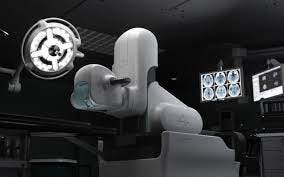
But justttt in case AGI can’t figure out how to connect directly with our brain, there’s Neuralink. The brain-computer interface (BCI) company founded by Elon Musk recently raised a mega $280M Series D led by Founders Fund. The company aims to connect the human brain with computers, which could have a range of potential applications from medical treatments to enhancing human cognition. The best overview of the company (unsurprisingly) comes from Tim Urban in his 2017 piece “Neuralink and the Brain’s Magical Future.”
The round comes just months after the company received FDA approval for its first in-human clinical trial. Neuralink will implant thin electrode threads into the brain to read and influence neural activity. These threads interface with a chip that processes, transmits, and receives data, allowing for communication between the brain and external devices. A quadriplegic Neuralink patient may, for example, be able to move a cursor and click on a screen only using her thoughts. Neuralink’s starting with medical use-cases first, but where this goes in the long-term gets even wilder…imagine having instantaneous access to all knowledge on the internet, or ChatGPT 10, embedded directly in your brain.
Bonus: Understanding Lasso and Jolt, from theory to code
By Sam Ragsdale, Michael Zhu, and Justin Thaler at a16z crypto
Our initial implementation provides roughly a 10x speedup over the lookup argument in the popular, well- engineered halo2 toolchain; we expect improvements of around 40x when optimizations are complete.
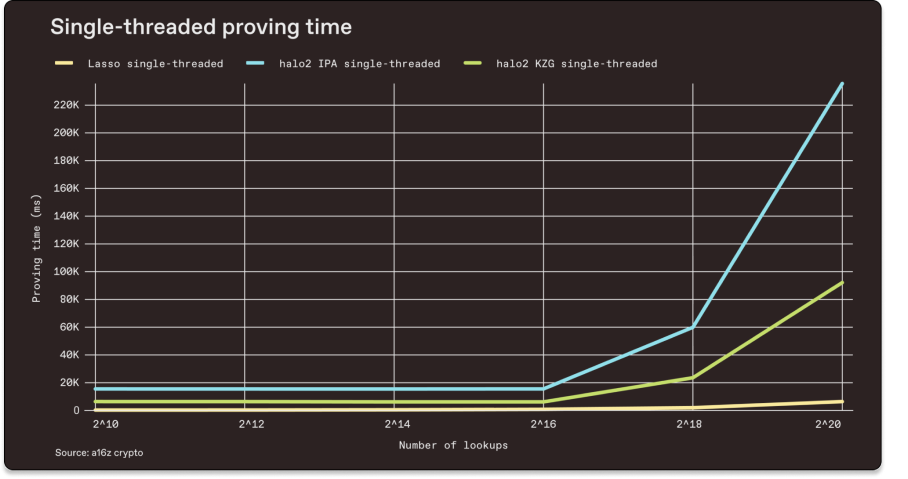
Packy again. If you remember back to the piece I wrote about Aleo last December, about 10k words in (you remember, right?), I talked about one of the biggest issues facing the zero-knowledge space: proving zkSNARKs is still really slow.
Yesterday, my friends at a16z crypto (disclosure: I’m an advisor there) released a pair of open-source projects, Lasso and Jolt, that provide three main benefits:
- Faster performance
- More accessible developer experience
- Easier auditability
If you want to read the details, they’re all in the post, plus an even deeper one from zk savant Justin Thaler. The takeaway is that Lasso and Jolt should accelerate the adoption of zero-knowledge proofs, make blockchains more scalable, and help “eliminate a major trade-off inherent in living, working, and transacting online: the convenience, speed, reach, and scale of the internet in exchange for our privacy.”
P.S. Don’t look now, but it’s been a big week for crypto. PayPal launched a stablecoin. Coinbase launched its L2, Base. Circle announced $779 million in H1 revenue. The first synthetic biology project funded by IP-NFT. friend.tech is one of the most fun crypto apps I’ve played with in a while. Now Lasso & Jolt. 🪢⚡️
That’s all for this week. We’ll be back in your inbox on Tuesday.
Thanks for reading,
Dan + Packy


All Comments