

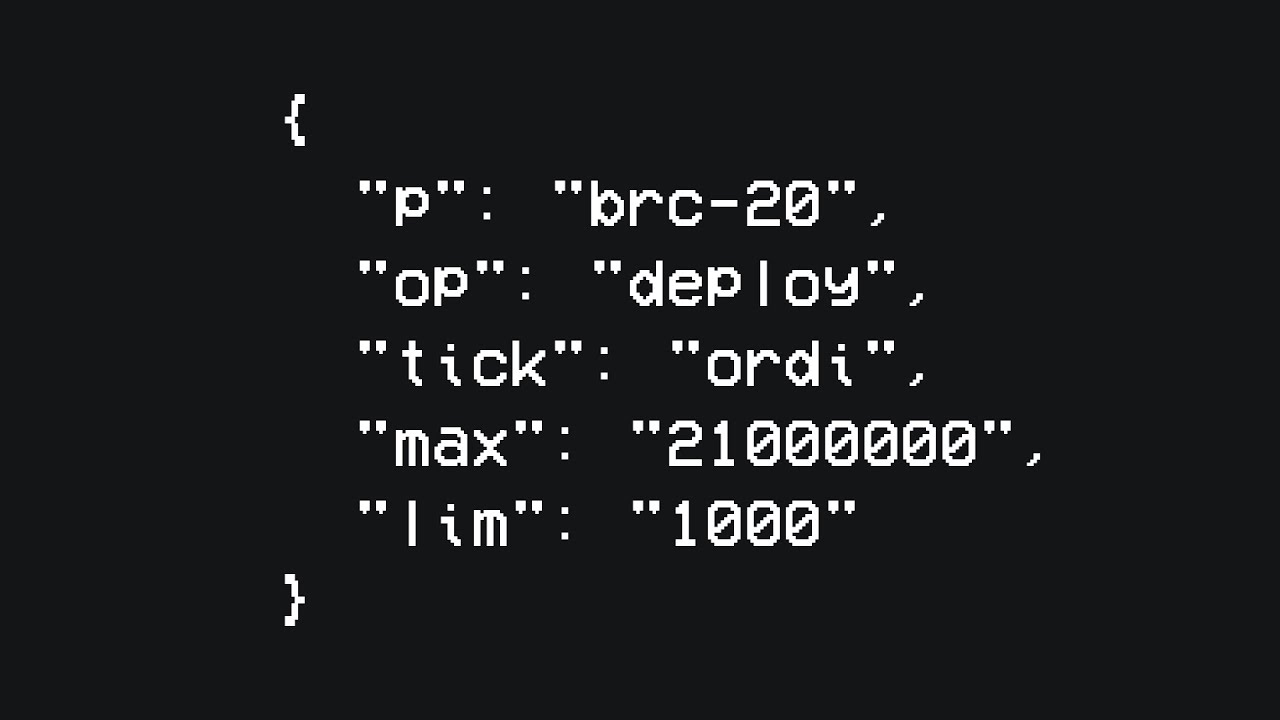
The encrypted inscription market is the hottest sector in 2023. Ordinals, with its innovative technical approach, has pioneered the opening of the gates to the inscription track. This has made it possible to issue NFTs and homogenized tokens (BRC20) based on the Bitcoin network, sparking a series of "inscription coin" frenzies.
On the other hand, with Binance successively launching ORDI and Sats, the market value of the inscription track continues to soar. Recently, Binance's newly launched SATS has seen a 140.49% increase in the last 24 hours, surpassing ORDI with a market value exceeding 1.2 billion USD, ranking 62nd in the cryptocurrency market cap list.
Many people liken the narrative logic of the inscription market to memes. In fact, the commonality between the inscription and meme sectors lies in the fact that VCs have almost no say in these areas. They are both led by long-tail investors and communities, confirming the power that communities and long-tail investors gather in the cryptocurrency market. The difference lies in the fact that the inscription track places more emphasis on technology-driven aspects, especially with the rise of the concept of inscription. Technical solutions such as the Bitcoin Lightning Network, Stacks, RGB, Atomics, Layer2 scaling, etc., have experienced a resurgence, bringing the Bitcoin ecosystem back to the center stage. The potential unleashed in the inscription field is unprecedented.
Of course, the inscription market is still in its early stages of development. Whether it is casting or trading inscriptions, traders lack a good user interface and trading experience (UI/UX). This also means that there is still a high barrier to entry in this field. Despite the desire of many to participate, it is difficult for them to get involved, indicating that the inscription track still has enormous market potential. Solutions that make inscription asset investment more diversified and user-friendly, bringing scale users into the inscription track, will be more valuable.
Bitcat is dedicated to this direction of infrastructure. It has built a Layer2 protocol called Cat non-directional asset trading protocol based on the RGB scheme. It has also constructed an on-chain derivative protocol for inscription assets, allowing inscription assets to have richer investment strategies and withstand market risks. At the same time, this protocol streamlines a series of complex operations and has a low entry threshold, providing early-stage foundations for more users to enter the inscription market.
Bitcat's Underlying Technical Logic
Bitcat is a new on-chain derivative protocol supported by Binance Labs. It is built on the foundation of the Cat non-directional asset trading protocol, which is a BRC20 asset derivative trading platform based on the RGB scheme and BTC Rollup technology. The outcome of BitCat's design is to provide derivatives trading for inscription assets in a decentralized manner, offering a CEX-like trading experience while allowing anyone to use BitCat and quickly participate in and create within the BTC ecosystem.
Through the innovative BRC-20 asset derivative trading solution, it is expected to make it easier for traders to access and facilitate low-threshold derivative trading of BRC20 assets. Built on scalability technologies such as Rollup, it is providing more possibilities for the development of the Bitcoin ecosystem, leading a new trend.
Cat Non-Directional Asset Trading Protocol
The Cat Non-Directional Asset Trading Protocol is a Bitcoin Layer2 solution built on the RGB scheme, inheriting various advantages of the RGB scheme and making improvements to adapt to inscription transactions.
Fundamentally, the core idea of the RGB protocol revolves around building consensus and off-chain data storage. In distributed systems, the most crucial value lies in maintaining consensus. Leveraging the Bitcoin consensus layer involves retaining brief encrypted commitments to ledger events, proving the existence of specific data without revealing the actual data content. This is typically achieved through hash functions, storing these commitments on-chain to ensure the authenticity and integrity of the data, thereby reducing the burden of on-chain data.
RGB designs ledger data to be stored off-chain, meaning all contract data and state transitions are kept off the blockchain. By utilizing single-use seals and state transitions to track and verify smart contract states, the protocol effectively handles and verifies the status and transactions of smart contracts without storing all data on-chain.
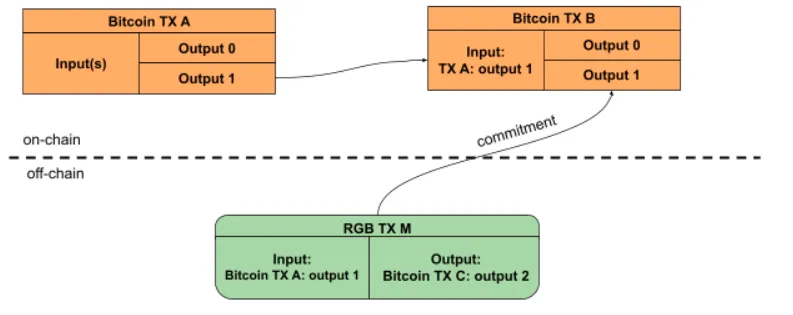
The foundational layer of RGB is the Bitcoin blockchain, including Nakamoto Proof of Work (PoW) consensus and the transaction ledger. Although no data needs to be stored on-chain, it still adheres to existing infrastructure and utilizes Bitcoin transactions as storage for these commitments.
Similarly, the core concept of the Cat Non-Directional Asset Trading Protocol is to use the Bitcoin blockchain only when necessary, employing proof-of-work and decentralized network aspects for double-spending protection and censorship resistance. All validation work for token transfers is removed from the global consensus layer and placed off-chain, verified only by the client of the party receiving the payment.
The innovative Cat Non-Directional Asset Trading Protocol excels in privacy, scalability, and the application of smart contracts.
Transfers in the Cat Non-Directional Asset Trading Protocol do not need to match Bitcoin transaction outputs. In other words, Layer2 tokens can be "transferred" from one UTXO to another without leaving any traces in the Bitcoin transaction graph.
In the Cat protocol, Bitcoin UTXOs serve as one-time containers for loading assets, and specific payment information is transmitted off-chain through dedicated communication channels from the payer to the recipient's client, verified by the latter for protocol rule compliance. This enhances scalability since you don't need to validate the entire history of these assets, and transactions are not broadcasted to the global ledger, improving both privacy and scalability.
The Cat protocol is compatible with smart contract functionality, allowing additional spending conditions to be defined in payment information during transactions. These conditions are enforced by the Bitcat node's validation program. With this, various smart contract frameworks can be proposed and implemented trustlessly.
Therefore, the Cat Non-Directional Asset Trading Protocol provides a favorable inscription transaction environment for BitCat and builds a range of feature-rich inscription transaction capabilities on top of this stack. The protocol is also expected to serve other inscription applications, allowing developers to create tools such as advanced inscription transactions and indexes based on this underlying infrastructure.
Bitcat Derivatives Trading Platform
Based on the Cat Non-Directional Asset Trading Protocol, Bitcat offers various optional inscription trading solutions. From the current developer perspective, the Bitcat team is expanding towards modular development and order book solutions.
One direction is similar to Unisat's brc20-swap solution. This solution itself does not require permission for development, making it a permissionless process to develop new modules for BRC-20. Isolated execution ensures that any issues with the execution of a single module do not affect the core protocol and the operation of other modules. When consensus upgrades and the majority of indexers recognize and implement the indexing of specific modules, it can transition from the brc20-swap module to the BRC20 module and become part of the BRC20 protocol.
Built on the underlying Cat Non-Directional Asset Trading Protocol, Bitcat itself possesses better scalability and flexibility. Through a modular framework, it will initially improve the brc20-swap solution and design a set of derivative trading modules, including features such as BRC20 asset leverage trading and contract trading. More derivative functionalities, including options, perpetual contracts, synthetic assets, etc., will be implemented in the v2 order book implementation.
In the order book solution, the ZK-rollup order book is the main model. It draws inspiration from DeGate's Batch Spot Trade solution and is developed on the underlying Cat Non-Directional Asset Trading Protocol.
The feature of this solution is that it constructs a mechanism capable of intelligently bundling and compressing many transactions, compressing data before adding it to the second-layer block. Validity proofs are then generated cryptographically and submitted to the Ethereum mainnet. To ensure the accuracy of the system, Batch Spot Trade tracks the token balances between trading users and matching trades. The detailed explanation in the figure below calculates the sum of 3 tokens (ETH, USDC, USDT) to ensure that the sum of changes in token balances for all users is always zero.
Therefore, by adopting zero-knowledge (ZK) technology, Bitcat can better build a decentralized order book trading protocol, maintaining order book trading patterns and matching orders on the second layer, and settling on the first layer through ZK rollup. For the BitCat protocol, also built on an innovative Rollup, achieving the following goals becomes easier:
- Order book-style orders (buy/sell orders)
- Gas-free transactions
- Millisecond-level transaction experience
- No splitting and packaging fees
- Transfer and use with a linked wallet
- Simplified user interaction steps
- Token selection for the token sector
This order book solution enables Bitcat's derivatives platform to easily deploy derivative products for BRC20 assets, including perpetual contract products, on-chain option minting transactions, synthetic assets based on BRC20, insurance protocols for BRC20 assets, leveraged tokens, and more.
This order book solution will be further introduced in the v2 version.
Bitcat is crucial for the development of the inscription market. While the current stage of issuing BRC20 assets in an inscription manner on Bitcoin does not pose significant technical challenges, the assets themselves still remain in the FOMO and meme stages, with weak technological driving forces and lacking trading feature highlights. Derivatives represent a promising long-term direction, as inscription assets, through derivative products, gain better hedging capabilities, encouraging more people to consider issuing tokens in the form of BRC20 (given the enhanced security of the Bitcoin network), further driving the long-term development of the inscription market.
As inscription assets, in derivative form, offer more investment directions and a better trading experience, more users will be willing and able to become inscription investors. This is crucial for the further scale development of the market.
Perhaps recognizing the development potential of Bitcat, Binance Labs has provided significant support for the early development of Bitcat. As Bitcat's technical development continues to improve, we will jointly enter a new stage in the world of inscription derivatives.


All Comments