

The Ethereum Staking Service Provider (SSV) is actively driving the development of the Ethereum staking ecosystem, accompanied by the noteworthy Distributed Validating Technology (DVT). The following text will provide a comprehensive introduction to this group of concepts.
Ever since launching its restrictive Mainnet in mid-September this year, SSV has achieved remarkable feats. The quintessence of this Mainnet lies in its ability to enable external validators to partake through collaborative applications based on DVT (Decentralized Validator Token). As it stands, the SSV Mainnet currently boasts a staggering stake of close to 22,000 Ether and sees active participation from 687 validators.

To further promote the SSV mainnet and the application of DVT technology in the Ethereum staking ecosystem, SSV has announced an exhilarating incentive program. This program, which spans over the course of a year from October 1, 2023, to September 30, 2024, consists of 12 rounds. Builders, protocols, and validators who engage with SSV will have the opportunity to receive rewards in the form of SSV tokens.
The incentive program was initiated by the DAO committee, which initially minted 200,000 SSV coins for rewards. As time passes and the number of validators grows, the bonus pool will increase, with a maximum total incentive of 1 million SSV coins. The distribution of rewards will be based on the number of participants, and the program has established five different reward levels. The top 30,000 participants will be eligible for rewards.

The reward amount for individual participants will be correlated with factors such as their active verification days, total number of participants, and SSV price. The rewards will be distributed in the second week of each month, with this design aimed at incentivizing early participants while gradually reducing the rewards over time, in order to encourage increased participation in the ecosystem of SSV.
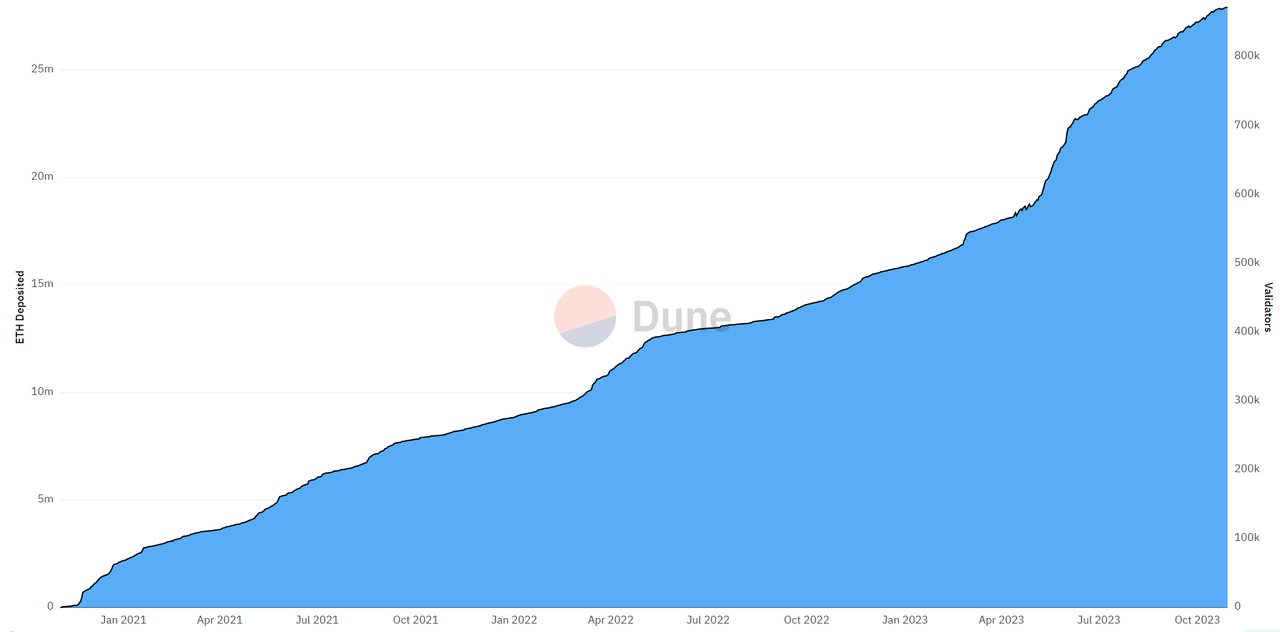
The Ethereum staking market is rapidly expanding, and SSV aims to become a significant participant in the Ethereum staking infrastructure domain by fostering widespread adoption of DVT technology. This incentivization program undoubtedly brings a fresh vitality to the development of the Ethereum staking ecosystem, providing individuals and teams actively involved with powerful motivation and invaluable opportunities. It also signifies the gradual entrance of the highly anticipated DVT technology onto the historical stage.
Distributed Validator Technology (DVT) plays a crucial role in the Ethereum staking field, as its emergence holds significant importance in achieving long-term decentralization of Ethereum. The current Ethereum staking architecture brings forth certain potential issues, such as the impact of multiple links and single-point failures, as well as a lack of sufficient decentralization. These problems may lead to the loss of user funds, which DVT aims to address.
DVT operates by simplifying the process of running Ethereum validators across multiple machines. One key technology employed is Distributed Key Generation (DKG), which enables participants to collaboratively generate private keys without the need for individual members to access the complete key. Once the private key is shared and stored across multiple nodes, a coordination mechanism is required to ensure secure verification and communication among these nodes, in order to generate complete signatures. Additionally, DVT must also address the issue of shared infrastructure for storing key shards among nodes, as this shared infrastructure may result in failures of related nodes, undermining the goal of decentralization.
Who stands to benefit from DVT? In reality, DVT brings benefits to almost all stakeholders in the Ethereum staking ecosystem. As the Assets Under Management (AUM) scale continues to grow, liquidity staking pools are trending towards diversifying staking across multiple operators rather than relying on a single validator. DVT enables them to share a validator among multiple operators, thereby reducing the risk of asset vulnerability in the event of a single operator failure. For independent stakers, they can continue to verify transactions even in the presence of intermittent connectivity issues or power outages. Institutional staking products, such as Coinbase staking or Blockdaemon, can benefit from DVT by reducing operational and hardware costs. Moreover, the reduction in risk factors associated with DVT may lower insurance costs for service providers, providing a solid foundation for the long-term healthy development of the ecosystem.
Therefore, the advent of DVT technology not only enhances the security and reliability of the Ethereum staking ecosystem but also provides a wider range of choices and stronger guarantees for all stakeholders, promoting the long-term decentralization development of Ethereum. The adoption of this technology undoubtedly brings great advantages to the Ethereum staking track, contributing to its continuous maturity and growth.
Many independent stakers face disadvantages relative to professional stakers, as creating robust and resilient staking setups is comparatively more challenging and costly for individuals. In comparison to well-capitalized companies, individual stakers have smaller advantages. This, in turn, gives professional stakers and large staking pools a noticeable competitive edge. DVT should help mitigate this gap and reduce the difference in returns between professional validators and independent stakers.
Furthermore, DVT also contributes to the advancement of what is known as “squad staking.” Squad staking refers to the scenario where a small team of independent validators collaboratively engages in staking. DVT enables this form of collaboration with minimal trust requirements and enhanced security. For example, DVT can allow a group of friends residing in different parts of the world, who individually hold less than 32 ETH, to pool their funds and reduce the risk of being slashed under a powerful system for validation.
In conjunction with modular liquidity staking protocols like the Lido V2, StakeWise V3, and Stader (further detailed in subsequent sections), this facilitates top-tier squad stakers to attract external capital and compete with professional validator companies.
In the Ethereum staking arena, collaboration and synergy play a pivotal role. The SSV network has actively engaged in partnerships with several key institutions to drive the development of the Ethereum staking ecosystem.
As the leading protocol in the Ethereum staking track, Lido announced on October 24th that it has successfully deployed the "Simplified DVT Module" to the Holesky testnet, and will conduct relevant testing with SSV and Obol. In addition, Lido V2 will further promote the application of DVT, allowing for the integration of isolated groups of validators (referred to as modules) with DVT technology. This initiative aims to further drive the development and application of DVT technology, bringing more innovation and scalability to the Ethereum staking ecosystem.
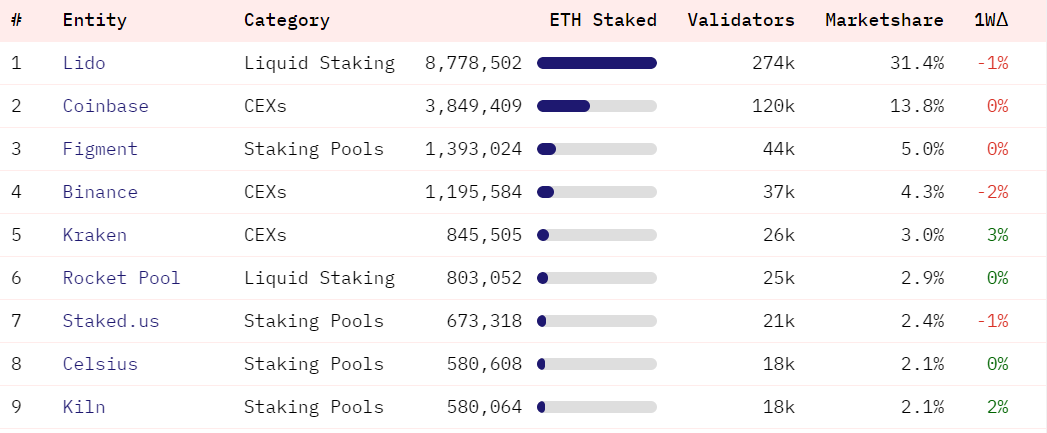
SSV has not only collaborated with Lido, but also reached cooperative agreements with notable organizations such as Rocketpool and Stakewise. Regarding Rocketpool, some members of the rETH issuer governance forum have even proposed an interesting hypothesis that the DVT technology could potentially enable the protocol to support minipools with zero ETH, eliminating the need for the current 8 ETH requirement (although this is purely speculative).
StakeWise V3 will also seamlessly integrate with DVT, as individual insurance vaults on the platform will have easy access to networks like SSV. Furthermore, other staking solutions like Diva are actively developing their own DVT solutions, aiming to gain a competitive edge in the fierce LSD market.
All indications suggest that there is significant interest in the DVT technology, and people are willing to apply it to the staking ecosystem. Simultaneously, this will contribute to the security and efficiency improvement of the liquidity staking protocols themselves.
In fact, if DVT technology becomes widely adopted due to its unique characteristics, its usage may become a prerequisite for LSD issuers who wish to attract more staking assets. This technology is driving the development of Ethereum staking and bringing forth more possibilities for the future.
The emergence of DVT technology will have a significant impact on the field of Ethereum staking. It is poised to not only facilitate fair competition between individual stakers and professional validators but also contribute to the growth of team staking.
Simultaneously, the intention to collaborate on various Ethereum staking protocols indicates the widespread future application of DVT technology. However, we need to closely monitor the practical implementation of the technology and the potential challenges it may pose.
After all, this field is still evolving, and DVT is just a part of it. In the coming days, we will witness how this technology shapes the industry landscape in the Ethereum staking arena and whether it fulfills its promised potential.


All Comments