

by:Echo,BiHelix
The RGB protocol, initially proposed by Peter Todd and Giacomo Zucco in 2016, is a Layer 2 (L2) and Layer 3 (L3) protocol based on smart contracts that aims to enhance Bitcoin transactions and provide improved transaction privacy. It is built on top of the Bitcoin Foundation Layer (LNP/BP) and Lightning network. Since mid-2019, Dr. Maxim Orlovsky and Pandora Core AG have been the main contributors to this project. Following the standards set by the LNP/BP Standards Association, a Swiss non-profit organization established by Dr. Orlovsky and Dr. Zucco in 2019, the RGB protocol was launched on the mainnet in June 2023.The RGB protocol, similar to Ethereum, is a Turing-complete smart contract platform built upon Bitcoin. This implies that developers have the capability to construct intricate smart contracts facilitating the issuance of fungible and non-fungible tokens, as well as the development of decentralized applications (DApps) and decentralized autonomous organizations (DAOs). This article will commence by presenting a representative project from various sectors with potential based on the RGB protocol.
LNP/BP stands for the "Bitcoin Protocol/Lightning Network Protocol". Based on this protocol, the RGB Protocol core team has established a non-profit organization called LNP/BP Association. This association is responsible for overseeing the development of all layers of Bitcoin in a standardized manner. Its mission is to create and maintain standards, develop libraries, nodes, and tools, implement open source parameters, provide community education, and ensure consistency with community values. The association's values include advocating against censorship, prioritizing privacy protection, and promoting layering.
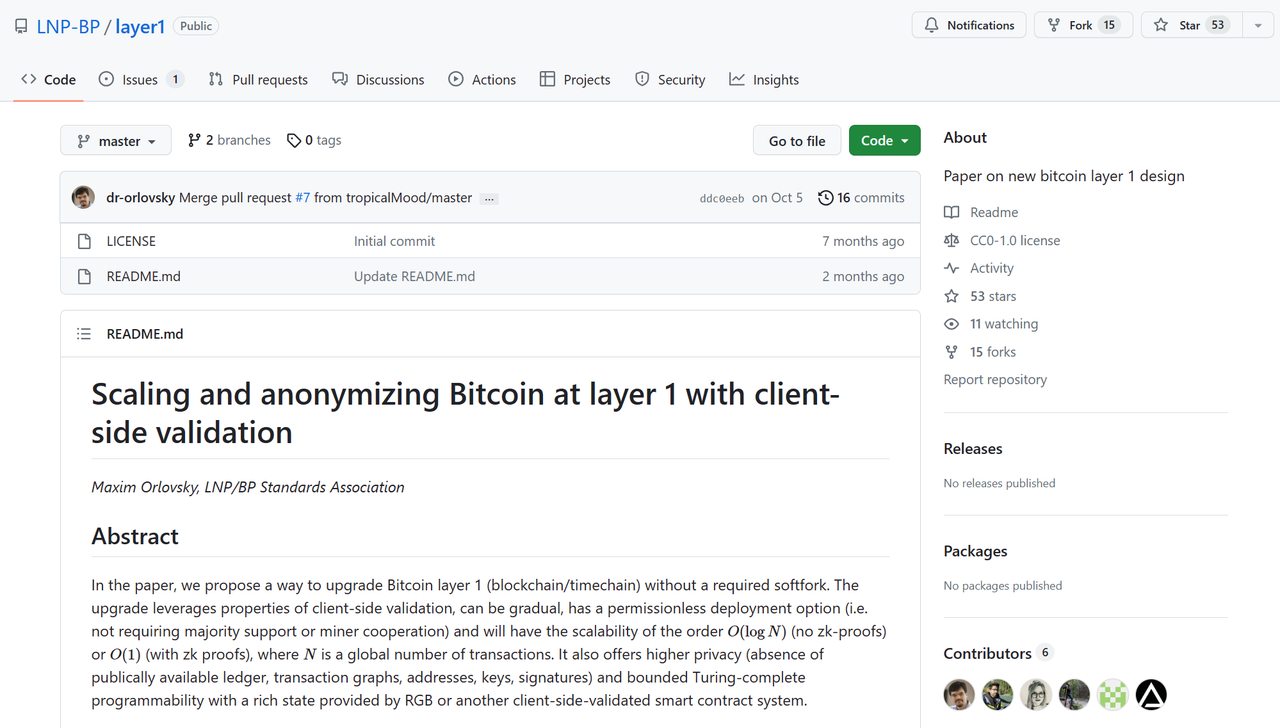
The LNP/BP Association's product portfolio encompasses three primary verticals: 1) Bitcoin Protocol (BP); 2) Client-side verification enhancements for Bitcoin components, Lightning Network Protocol (LNP); and 3) Advanced functionalities supporting the generalization of Lightning Network and smart contracts (e.g., RGB), enabling client verification of programmability. Currently, the sole official means to join is through contribution support, which extends membership eligibility to any for-profit company, non-profit organization, DAO or individual. All entities and individuals aspiring to become members are required to make contributions that may include financial support as well as contributions towards the specifications, standards, and design of the association's projects.
https://www.lnp-bp.org/
The origins of artwork and assets on the blockchain can be traced back to Bitcoin, starting from 2011's Message from the Mines to the Colored Coin Proposal. Therefore, it can be argued that Bitcoin serves as the foundation for all NFT technologies. DIBA, as the first trading market, enables direct creation, collection, and trading of NFTs on Bitcoin using the UTXO model and RGB protocol (Bitcoin smart contract protocol). It also facilitates decentralized application development on both Bitcoin and the Lightning Network. Gideon Nweze, the founder of DIBA, believes that "Bitcoin Art is a Trojan horse that will revolutionize our future financial system by driving mass adoption of censorship-resistant digital property rights." As we strive towards a decentralized, transparent, and honest future, art will serve as a universal catalyst for change. Artists are empowered to create digital assets on Bitcoin through DIBA with an aim to provide equal opportunities for everyone to own valuable unique digital assets while actively participating in economic activities by running their own Lightning node.
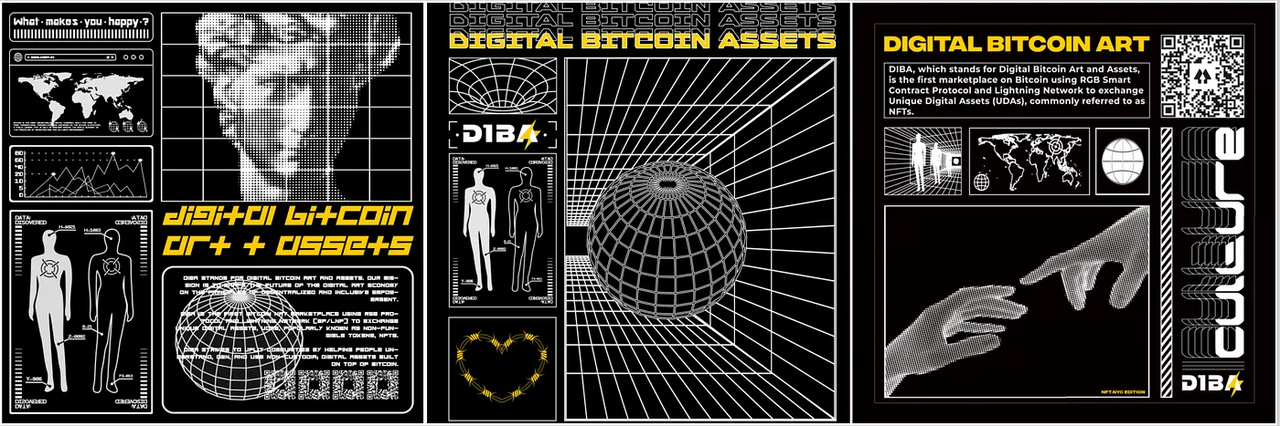
The DIBA ecosystem facilitates direct acquisition of digital artists associated with Bitcoin UTXOs via RGB's client-verified smart contract system that utilizes a tokenless Bitcoin Layer 2 extension solution. This contribution to the DIBA ecosystem was made by Dr. Maxim Orlovsky and Dr. Olga Ukolova from Pandora Core in collaboration with the LNP/BP Standards Association. Additionally, all digital assets adopt an upgraded version of Taproot (being the most significant enhancement of the Bitcoin network since 2017), thereby improving privacy, enabling advanced smart contracts, and reducing transaction costs after upgrading.
https://diba.io/
Satoshi Nakamoto stated in a private conversation with members of the Bitcoin community via email in 2010: 'I firmly believe that within 20 years, Bitcoin will either achieve widespread adoption or experience negligible transaction volume.' BiHelix is an ecological infrastructure for Bitcoin based on its native blockchain, integrating the RGB protocol and Lightning Network to establish optimized nodes. With the goal of realizing extensive application of Bitcoin, BiHelix combines the Lightning Network to introduce business models and incentive mechanisms for RGB, thereby promoting engineering implementation of the RGB protocol through building a Turing-complete application ecosystem network. By establishing a smart contract platform, it resolves the long-standing issue of "non-Turing complete" scripts in Bitcoin, enabling more applications to operate on its blockchain. As the first infrastructure built upon the RGB protocol, it aims to create a fairer decentralized cryptographic world for miners, validators, node service providers, exchanges, and users.
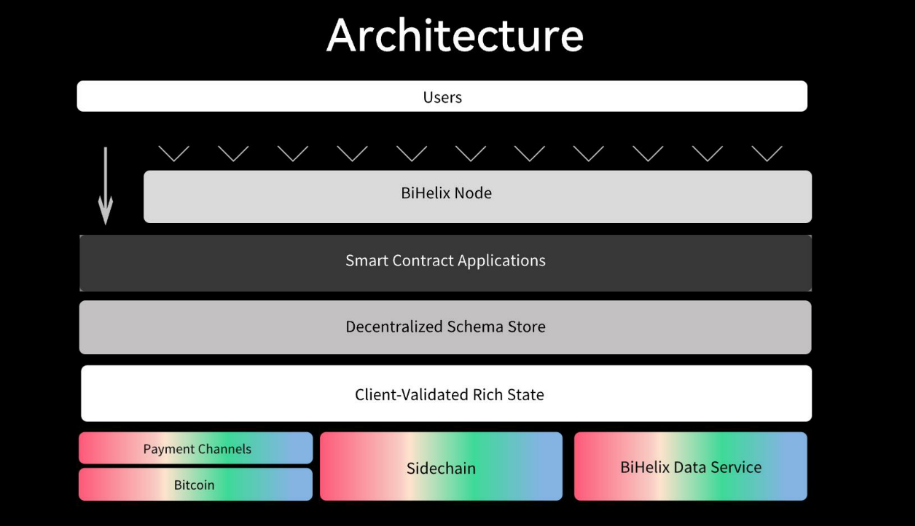
Implementation method:
- Enhance the compatibility of the RGB protocol with the Lightning network, thereby enhancing the scalability of the Bitcoin blockchain.
- Leverage native economic incentives and commerce to attract miners and developers for smart contract development at BiHelix.
- Optimize the interface between RZK (recursive zero knowledge), storage, communication, and other protocols with RGB protocols to establish a comprehensive underlying ecosystem.
https://linktr.ee/bihelix
BitMask is an open-source, multi-signature bitcoin wallet that prioritizes privacy, security, and decentralization. It enables users to maintain control over their private keys while still benefiting from the convenience of a web wallet.Main features:
- Enhanced Multi-signature Security: BitMask utilizes a 2-of-3 multi-signature setting where transactions require two signatures for validity. This ensures fund protection in case one of the keys is compromised.
- Hierarchical Deterministic (HD) Key Generation: The key derivation follows a tree structure from the root seed, enabling unlimited address generation while only necessitating backup of the seed.
- Decentralized Verification: Transactions are verified on the client side rather than relying on BitMask's servers, thereby enhancing privacy.
- Tor Integration: All traffic is routed through Tor to conceal the user's IP address.
- Open Source Code: BitMask's code is fully transparent and available for auditing purposes.
- Encryption Technology: User data undergoes AES-256 symmetric encryption and RSA-2048 asymmetric encryption.
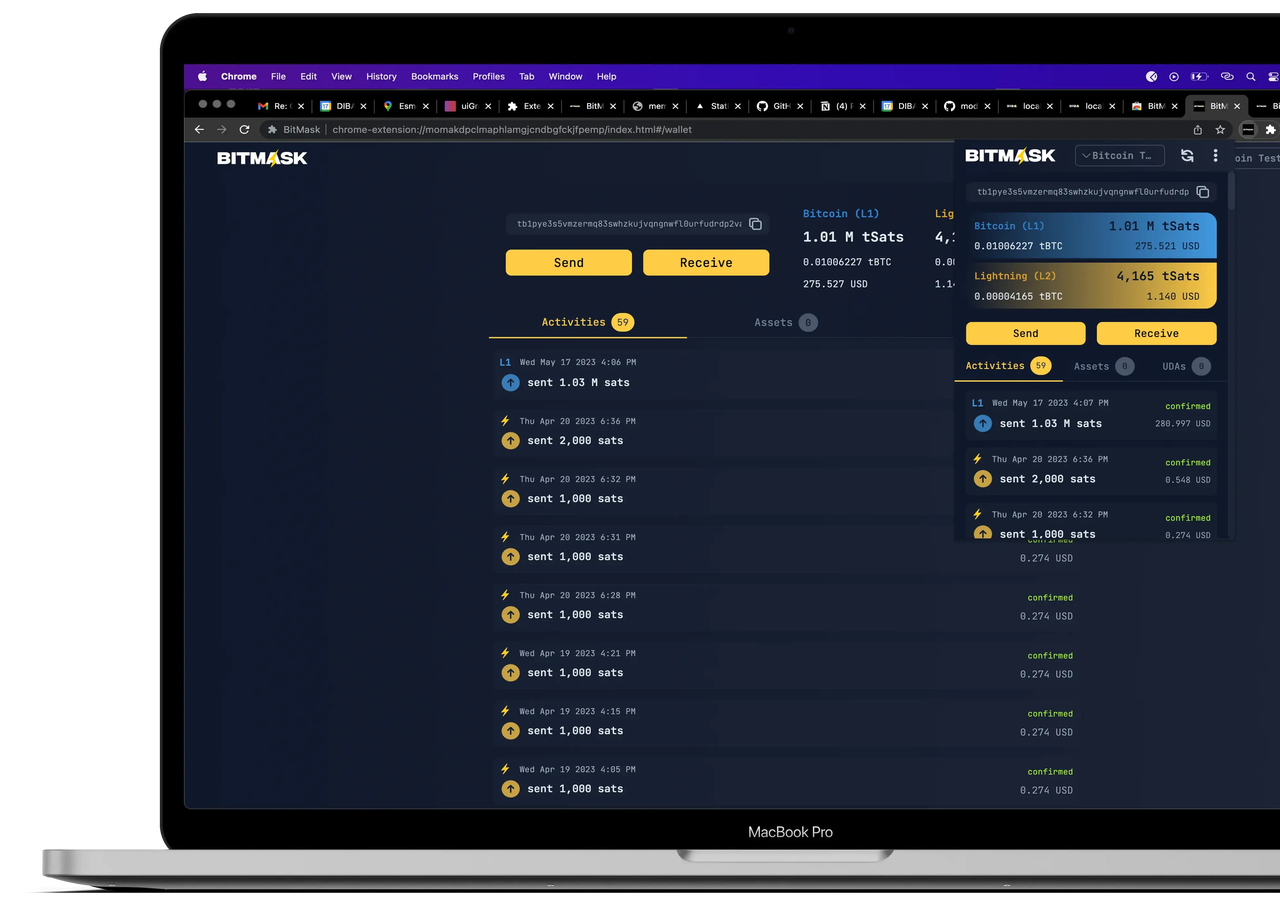
BitMask offers several benefits, including user-controlled key management, off-chain transaction verification for enhanced privacy protection, and multi-signature security to prevent theft or loss. It provides convenience without compromising on privacy or financial control. Overall, BitMask's target users prioritize higher levels of security and privacy compared to traditional centralized network wallets. Additionally, it is the earliest and largest wallet that has contributed significantly to the development of the RGB protocol.
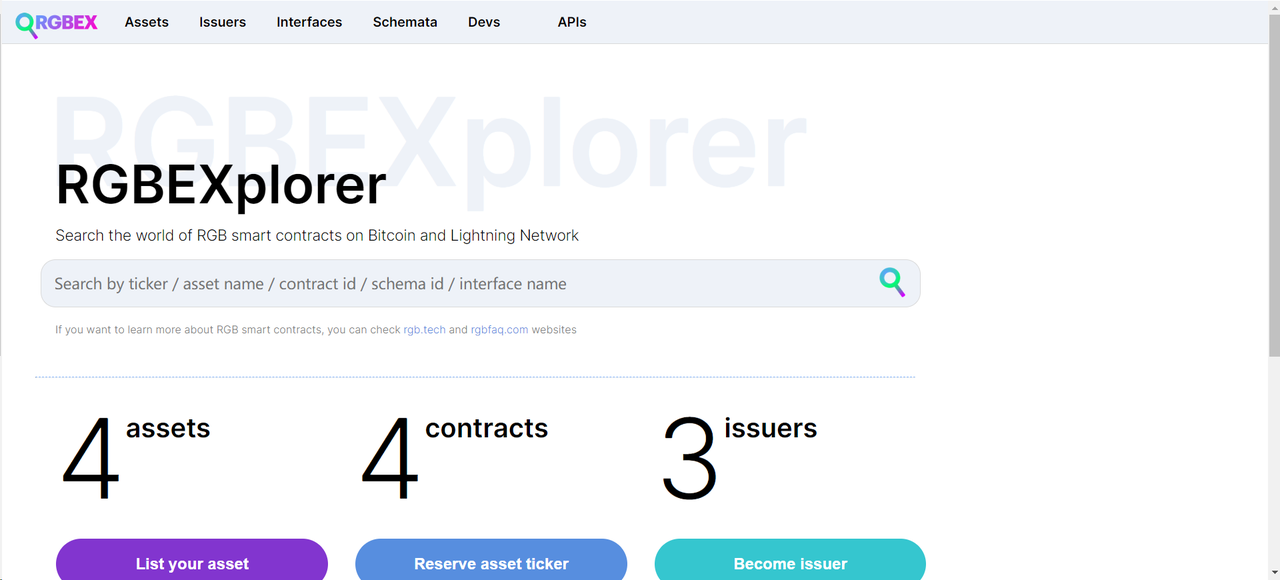
Support for searching RGB smart contracts by code, asset name, contract ID, mode ID, and interface name is available on the Bitcoin and Lightning networks. The primary functionalities include:
- an Asset interface that provides API interfaces for interaction with wallets, exchanges, and other software to define various types of assets and contracts such as tokens, NFTs, DAOs, identities etc.
- Smart Contract Schemata serves as templates for creating smart contracts and issuing assets while separating the roles of programmers from contract issuers to mitigate design risks.
- Furthermore, RGB smart contracts can be developed in Rust using the RGB standard library.
Although still in the early stages of development, the RGB protocol leverages the robust security and decentralization characteristics of Bitcoin to provide users with a more reliable solution for asset issuance compared to the widely adopted L2 smart contract-centric Bitcoin protocol. This deep integration creates a transparent and trustless process for issuing assets, promising enhanced reliability within the ecosystem. With its synergies with Bitcoin and advantages in asset issuance and DeFi, it is expected that RGB will become an integral part of the Bitcoin ecosystem, playing a crucial role in facilitating asset issuance and DeFi while bringing innovation and prosperity to this space.
https://github.com/LNP-BP/layer1


All Comments