

The current cryptocurrency market is in a bear market phase, and the enthusiasm for fundraising seems to have waned. Funding data for August this year has declined by 57% compared to the same period last year, reflecting a cautious market sentiment.
However, in July this year, a funding announcement sent shockwaves through the cryptocurrency community. DappOS, hailed as the Web3 operating protocol, announced that it had completed a seed funding round led by IDG Capital and Sequoia China, reaching a staggering valuation of $50 million. This funding round also saw participation from a range of well-known cryptocurrency venture capital firms, such as OKX Ventures, HashKey Capital, KuCoin Ventures, among others.
Dora Yue, the founder of Ventures, stated, “dappOS not only allows users to manage multi-chain assets with native chain accounts but also enables dapp projects to reach users across multiple chains quickly and conveniently. Additionally, it can enrich the application ecosystem on new public blockchains. We look forward to seeing dappOS V2 LIVE soon, and web3 users are excited to have the ability to own assets through a unified account and a single signature, making it easy to participate in web3.”
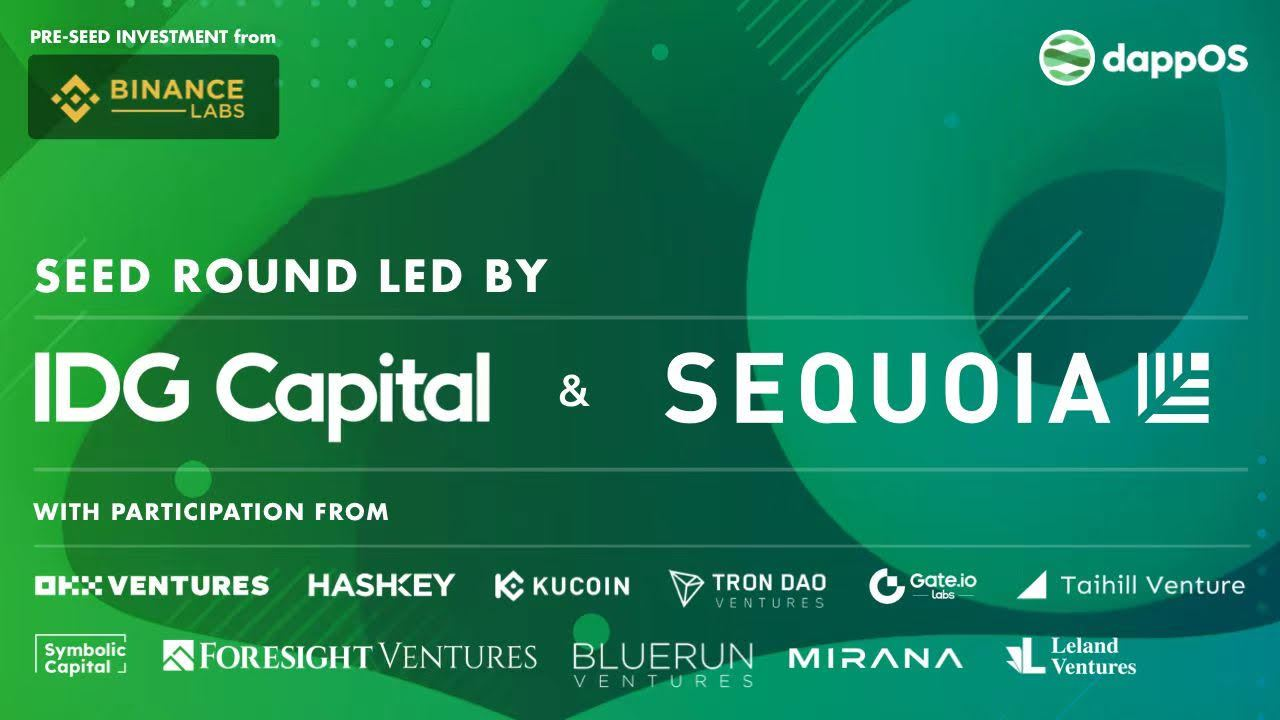
As early as November 2022, DappOS stood out from over 900 projects and was selected as one of the 12 projects for the 5th season of the Binance Labs Incubation Program.
With the success of DappOS in the capital markets, there has been a growing interest in the technology and vision behind it. Below, we will provide an introduction to this project and its associated technological concepts.
DappOS: Born to Simplify the Complexity of Web3
As a pioneering project dedicated to building an operating protocol, DappOS aims to pave a smoother path for Web3 applications. Its core philosophy is to simplify the complexity of Web3, allowing dApps to offer user experiences comparable to the familiar WEB2 applications.
The team is well aware that user experience is crucial for the widespread adoption of Web3. However, the current situation is that despite the enormous potential of dApps, their user experience remains somewhat challenging for most mainstream users. This is primarily due to the following two major challenges:
The limitations of a wallet-centric user system: Setting up and managing a Web3 account is much more complex compared to the familiar web2 accounts. For instance, users need to remember a recovery phrase composed of random English words, and once this phrase is lost, the associated account and assets become irretrievable. Furthermore, due to the fragmentation of the Web3 ecosystem, users' assets and data are often scattered across multiple chains, making management even more challenging.
The complexity of DApp operations: Most DApps have a certain level of entry barriers in terms of usage. Take liquidity mining, for instance; novice users often need to complete a series of complex operations, which are not only time-consuming but also prone to errors. Moreover, when users attempt to use DApps across different chains, this complexity is further amplified.
To address these challenges, the DappOS team has proposed an innovative solution: building an intermediary layer positioned between the user and the crypto infrastructure. This means that users only need to interact with DappOS, and DappOS will automatically handle all interactions with the underlying technology on behalf of the user, greatly simplifying the operational processes.
Based on an intent-driven operating protocol, DappOS's core focus revolves around accounts and networks
The Intent-Centric Protocol aims to alleviate the burden on users. Essentially, an intent is a set of declarative constraints that allow users to delegate transaction creation to specialized third-party participant networks while retaining full control over the process.
DappOS, built upon the intent-centric approach, consists of two main components: accounts and networks.
In the world of DappOS, the traditional concept of accounts has been redefined. Here, users no longer rely on conventional EOAs (Externally Owned Accounts) but instead shift towards a new type of contract-based account known as 'virtual wallets.' What sets these wallets apart is their support for flexible recovery methods, allowing users to reset even in the absence of a recovery phrase, and they also enable third-party nodes to assist users in interacting with public chains. This innovation brings unprecedented convenience to users and lays a solid foundation for the future development of DappOS.
The network component of DappOS is, in fact, a carefully designed decentralized order system. When users interact with a dApp, they first create an order, specifying their requirements and intentions. This order is then transmitted to the DappOS network and executed by one of its specific, permissionless nodes. To ensure precise execution of each order, DappOS has designed two types of nodes: super nodes and server nodes.
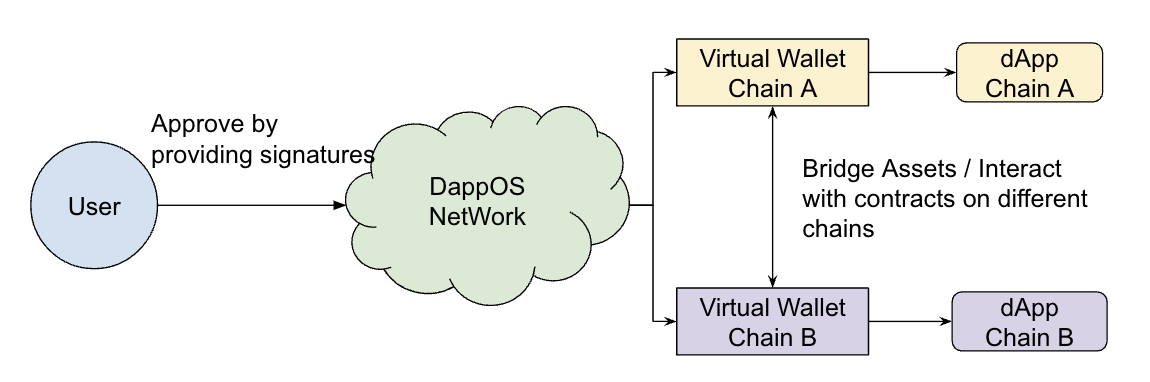
Super Nodes: The primary responsibility of these nodes is to receive and process user orders, then allocate them to the appropriate server nodes. Additionally, they monitor the execution of orders to ensure that each step proceeds as expected.
Server Nodes: These nodes are responsible for the actual execution of orders. They provide services based on their capabilities and resources, earning corresponding profits in the process.
One key concept to clarify is that DappOS is not what we typically understand as a cross-chain bridge. In reality, the DappOS network functions more like a highly specialized order system.
This design has its unique advantages. Unlike traditional bridging services, the bridging functionality in DappOS is actually part of the order execution process. This means that when a user creates an order in DappOS, the actual bridging operation is carried out by server nodes. Super nodes, as another crucial component of the network, do not interfere with or affect the way server nodes operate. Server nodes are free to choose their approach, whether it's based on CEX (Centralized Exchange), bridging technology, or any other solution, without being constrained by super nodes.
This design ensures the flexibility and efficiency of the DappOS network while providing users with a smoother and more secure experience.This design ensures the flexibility and efficiency of the DappOS network while providing users with a smoother and more secure experience.
With the launch of DappOS V2, the project aims to further enhance its interoperability
With the successful launch of DappOS V2 on September 5th, this version represents a significant leap forward in terms of functionality and user experience.
First and foremost, DappOS V2 introduces a unified account experience, allowing users to manage all their on-chain assets in a single account, achieving a seamless operation similar to CeFi (Centralized Finance). Regardless of how assets are distributed, users can achieve their universal use and interact effortlessly with any dApp on any chain, without the need for complex workflows. Additionally, users can view all transaction details in a sleek interface and achieve a seamless, CeFi-like user experience in a decentralized environment.
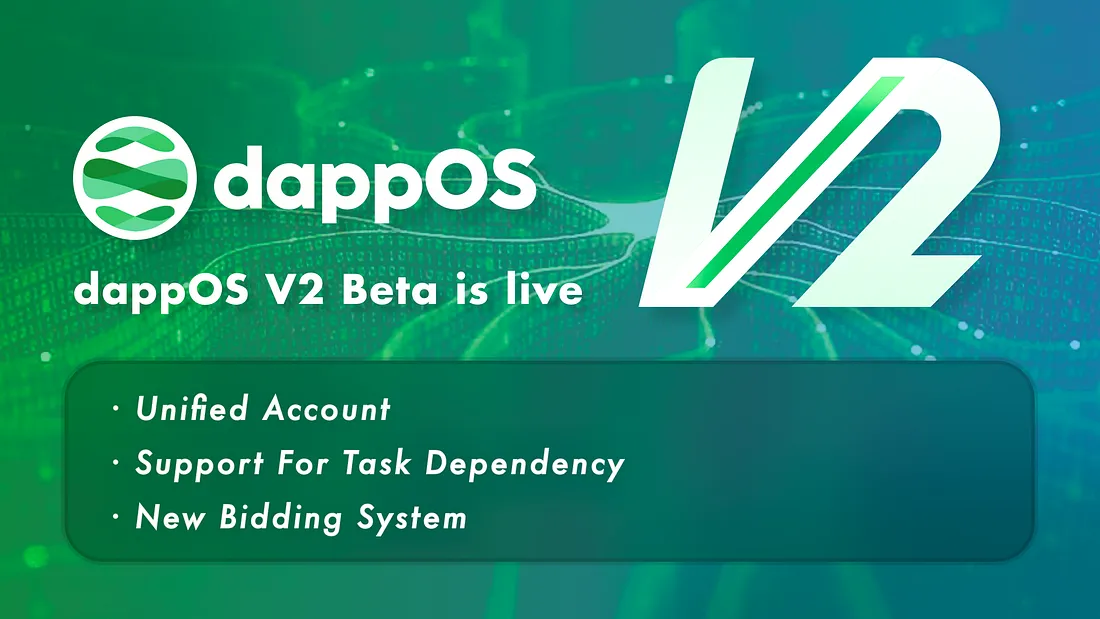
Secondly, DappOS V2 enhances task dependency, enabling users to use a single signature to confirm complex, interdependent transactions on different chains. For example, if a user's assets are on Chain A but they need to interact with Chain B, they can complete the entire complex process with just one signature. Additionally, users can view detailed information about all pending and completed transactions.
Finally, DappOS V2 introduces an innovative bidding system that integrates bidding and billing functionalities. During transactions, users can see a list of service nodes and review the fees and time required for each node to complete the transaction, enabling them to make informed choices. This new node bidding system encourages healthy competition among service nodes, where efficient and cost-effective nodes will receive more orders. This upgrade marks a significant advancement for DappOS in multi-chain operations, providing users with unprecedented convenience and efficiency.
It's worth noting that for the vast majority of users, DappOS offers a seamless experience, allowing them to effortlessly explore DApps on various chains, much like accessing mini-programs within WeChat. This is made possible thanks to DappOS's 'unified account' design, which integrates wallets for all chains, enabling users to navigate DApps on various chains with just one account.
For DApp developers and projects, the value of DappOS is evident. Its role can be likened to that of an App Store: with DappOS's DApp SDK, developers only need to deploy their DApp once to reach users on all chains. This means that even if a DApp was originally deployed on a non-Ethereum chain, once integrated into DappOS, it can easily attract ETH users, completely avoiding the hassle of users having to navigate across chains, purchase Gas, or create new wallets. This design greatly simplifies the process of promoting and acquiring users for DApps, providing project teams with significant convenience.
As DappOS continues to expand its partnerships, its network of friends and collaborators grows wider
In the DappOS ecosystem, several well-known applications such as GMX, Kyberswap, and QuickSwap have already decided to join.
At the infrastructure level, DappOS has established deep partnerships with top projects like Maker and Avalanche. This collaborative approach showcases DappOS's unique operating strategy and foresight.
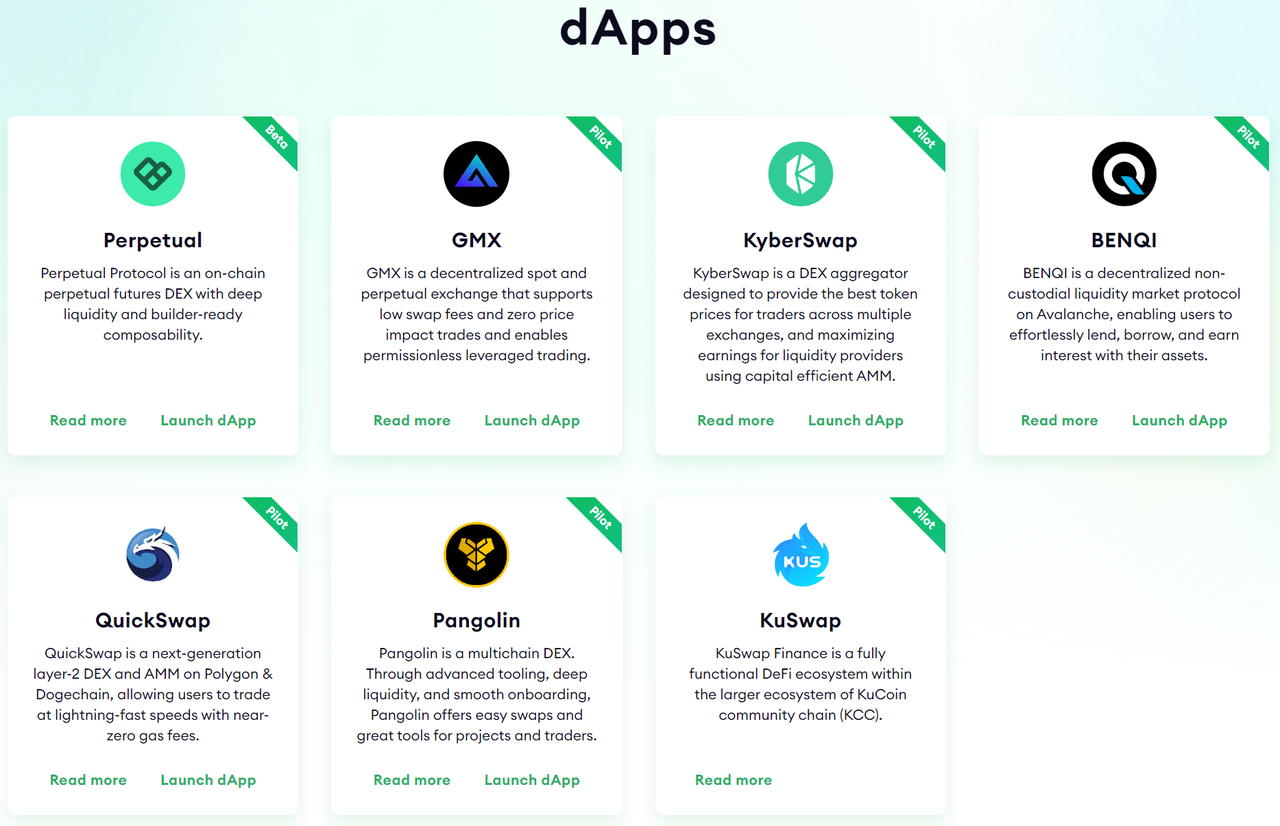
DappOS adopts a multi-chain fund integration approach based on user intent. By building a unified DappOS account, DappOS not only integrates the current mainstream chains but also forms deep partnerships with top applications. In a bear market environment, despite a significant decrease in traffic on many public chains, the user base of some top applications remains relatively stable. DappOS wisely incorporates these top DApps into its ecosystem, allowing users to interact seamlessly between various chains without the need for complex cross-chain operations.
This user-intent-based strategy not only promotes liquidity sharing but also provides a new avenue for integrated traffic to relatively less popular chains, further solidifying DappOS's leadership position in the blockchain space.
Conclusion: The optimization of user experience will be the prevailing trend in Web3 applications
The Intent-Centric Protocol is emerging in the world of Web3, offering new hope for improving the user experience. While it faces various challenges such as a lack of relevant programming languages, suitable architectures, security issues, and more, these issues are expected to be overcome with time and the continuous efforts of the developer community.
With the emergence of Intent-Centric-related protocols, the future of Web3 user interfaces will become more user-friendly and intelligent, allowing users to interact with mainstream applications as easily as ordering an Uber ride. This not only presents an opportunity to enhance the user experience but also positions Web3 DApps to surpass Web2 in terms of user interfaces. More importantly, the advent of Intent-Centric protocols puts the power back in the hands of users, enabling ordinary users to customize transactions, control their assets and data privacy, break free from passive on-chain participant roles, and become true leaders in on-chain activities.
Looking to the future, whether it's account abstraction, chain abstraction, or intent-centricity, Web3 is finally focusing on user experience, and the dawn of intelligent interaction is about to illuminate this dark forest. With ongoing technological advancements and protocol refinements, we have reason to believe that Web3 will bring users a smarter, more customizable, and fairer interaction experience, painting a hopeful picture for the future of the digital economy. Let us eagerly anticipate this vibrant future, where users will truly be at the helm, guiding the development and adoption of blockchain technology.


All Comments