

On November 1st, Gearbox Protocol, a DeFi composability leverage protocol, announced the release of its V3 version, signaling further expansion and deepening of the protocol's presence in the DeFi, NFT, RWA, and other related fields.
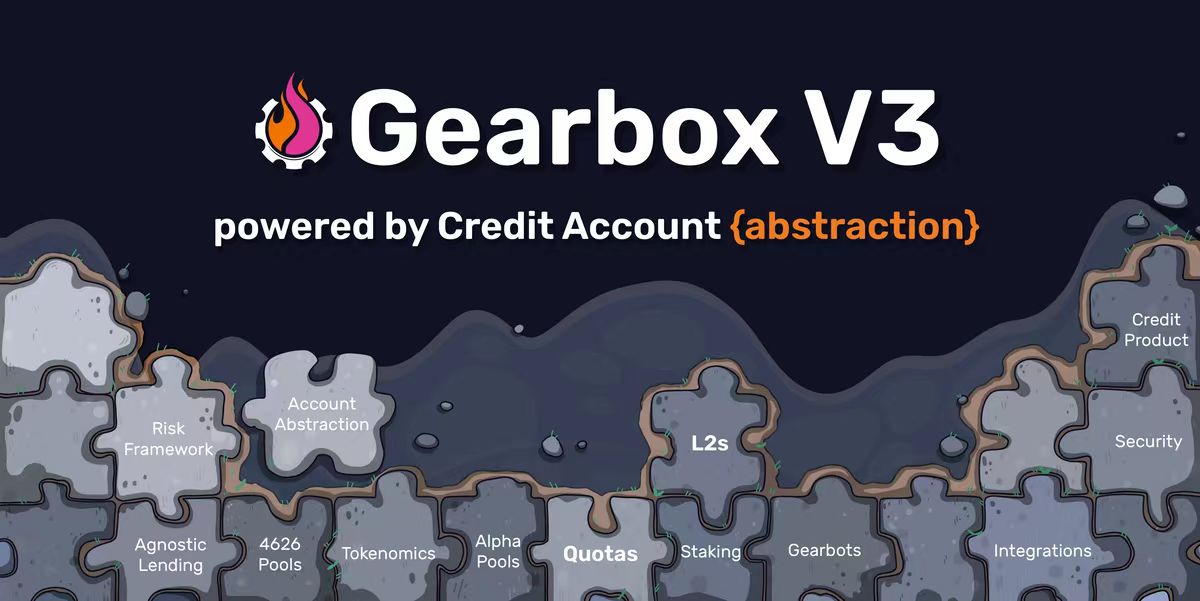
Version 3 (V3) aims to serve as the credit layer in these areas, not only improving capital efficiency but also opening up new application fields. After undergoing rigorous audits by ChainSecurity and ABDK, Gearbox V3 is about to make its official debut, attracting significant attention in the current market situation.
Let's break down this project to help users evaluate its investment value on their own.
Gearbox, as a unique leverage protocol, is gradually making its mark in the world of decentralized finance (DeFi). In traditional finance, leverage is a common tool that allows investors or traders to trade with more funds than they actually possess. However, in the DeFi space, this concept has been redefined and applied in innovative ways.
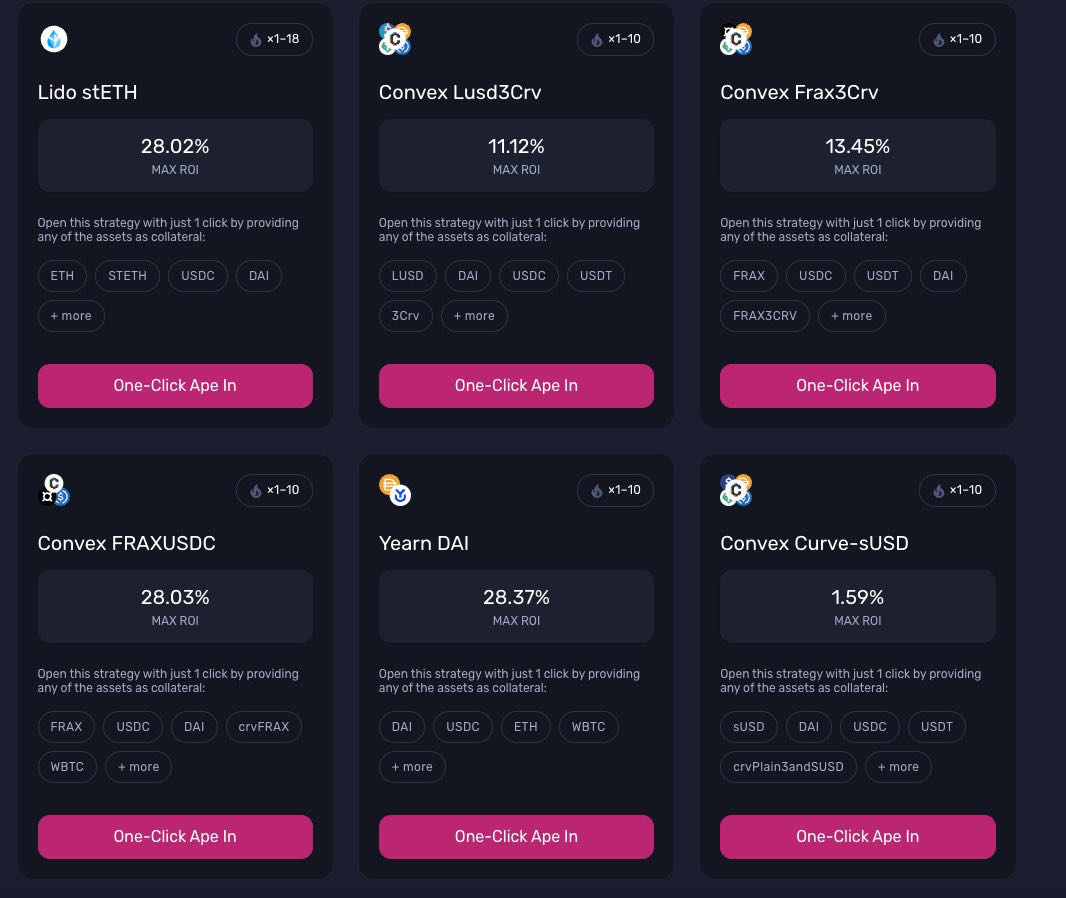
The definition and background of Gearbox are deeply influenced by its uniqueness. It is not just a simple leverage tool but a platform that allows anyone to access leverage in a DeFi-native way and use it across various DeFi protocols. This means that, compared to traditional financial markets, Gearbox offers greater flexibility and freedom. For instance, users can engage in leveraged trading on Uniswap or participate in leveraged farming on Yearn, Curve, or Convex. This cross-protocol interoperability provides users with unprecedented opportunities, enabling them to maximize their capital efficiency.
Furthermore, the emergence of Gearbox is also rooted in dissatisfaction with existing DeFi leverage solutions. Many existing solutions are either limited in functionality or suffer from user experience issues. Gearbox's goal is to provide a powerful and user-friendly solution, allowing users to easily access and use leverage on the DeFi protocols they prefer.
Gearbox is a versatile leveraged protocol designed to meet specific needs in the DeFi (Decentralized Finance) space. Here's an explanation of how Gearbox works:
1、Universal Leveraging Protocol: Gearbox allows anyone to access leverage in a DeFi-native manner and use it across various DeFi protocols. This means that users can acquire leverage on Gearbox and then utilize it on other protocols they already prefer. For example, users can engage in leveraged trading on Uniswap, participate in leveraged farming on Yearn, Curve, and Convex, devise complex delta-neutral strategies involving options and derivatives, or offer Leverage-as-a-Service for their structured products.
2、Dual Nature of the Protocol: Gearbox operates with two main user roles. On one hand, there are passive liquidity providers who earn higher APYs by providing liquidity. On the other hand, there are active traders, farmers, or even other protocols that can borrow these assets for trading or farming with leverage exceeding x4.
3、Credit Accounts: Credit Accounts are the core components of Gearbox, isolated smart contracts that contain users' funds and borrowed funds. This is where users' leverage is managed. After opening an account, all operations are conducted through this account, and assets are held within it. Essentially, a Credit Account functions like an automated DeFi wallet, where users can not only maintain positions but also program it according to their preferences. The funds in the Credit Account serve as collateral for debt, and users can manipulate these funds by sending financial orders to their Credit Account. This may involve margin trading on Uniswap or Sushiswap, leveraging farming on Yearn, or arbitraging stable assets on Curve.
Below, let's introduce the distinctive features of the project, which constitute its core advantages:
Composability: Gearbox doesn't have its own order book or trading environment. Users can utilize the leverage they obtain across multiple DeFi protocols and assets, making it fully composable.
0% Funding Rate: The provided leverage is not based on synthetic positions but is executed using real assets on third-party protocols. Because Gearbox doesn't create its own trading pairs, there's no need to maintain funding rates for long/short ratios.
Leverage as a Service: Other protocols can leverage the Gearbox protocol to provide leverage to their users without modifying their own architecture.
Permissionless Strategies: Positions and trades within the Credit Account can be extended to include complex strategies, such as short position farming in Yearn, or using LP tokens as collateral for more composable operations.
Based on the principles and functions described above, Gearbox offers a robust and flexible leverage solution for the DeFi (Decentralized Finance) sector, catering to the diverse needs of users and developers.
In the previous section, it was mentioned that the V3 version is set to be released. The goal of Gearbox V3 is to establish a credit layer protocol in areas like DeFi, NFTs, and RWA. To achieve this objective, V3 introduces a range of innovative features and improvements:
1、LP Lending Selection: Building upon V2, V3 not only allows the addition of pools, tokens, and protocols with lower liquidity but also modularizes these pools. This means that lenders can choose to continue providing liquidity in mainstream blue-chip lending pools or deposit these main pool dTokens into the higher-risk Alpha pool to earn a higher APY. The Alpha pool will integrate more DeFi and NFT protocols but will have relatively conservative LTV (Loan-to-Value) ratios and strict liquidation rules.
2、Risk Exposure Limits and Quotas: Gearbox V3 will introduce an overall risk exposure limit for assets on the whitelist. Each whitelisted asset will have a threshold. This mechanism allows for the inclusion of lower-liquidity assets like long-tail and mid-tail assets without increasing protocol risk, ensuring liquidity availability and minimizing bad debt issues.
3、Quota Interest and Tokenomics: V3 introduces a new quota interest rate tied to the quota of each asset, which will be paid out to the Alpha pool. Additionally, GEAR token holders can decide the revenue-sharing ratio between Ninjas and LPs through on-chain voting. To prevent exploits and flash-voting, GEAR token holders may face a 1 to 4-week unstaking period for their locked tokens.
4、Automated Contract Gearbot: V3 will also introduce Gearbot, allowing credit account owners to delegate certain account management tasks to third parties for automated portfolio management.
In addition, the key updates for V3 are as follows:
1、New asset and collateral limits for L2 deployment: This ensures greater security and flexibility.
2、Risk-specific lending pools: Allows users to choose pools according to their risk tolerance.
3、Diesel token upgrade: The Diesel token has now become ERC4626, providing users with more features and security.
4、Partial collateral withdrawal: This offers users greater flexibility in managing their funds.
5、Gearbots on-chain robots: Also known as intent agents, they provide users with a better experience and more features.
6、Quotas, meters, and lending rates: These new features provide users with more options and control, allowing them to better manage and utilize their funds.
Gearbox V3 has undergone comprehensive audits by ChainSecurity and ABDK to ensure its security and stability. According to the release schedule, V3 will be rolled out in two phases: the Alpha version is expected to be released in mid-November, while the full version is planned for release in January 2024. This release undoubtedly brings new opportunities and possibilities to the DeFi space.
In the field of Decentralized Finance (DeFi), leverage protocols have become a popular tool, allowing users to amplify their trades and investments. Gearbox, as one of the participants in this space, has its own unique features when compared to other leverage protocols.
1. Functionality and Interoperability: Gearbox's standout feature is its versatility and interoperability. Unlike other leverage protocols, Gearbox allows users to employ their leverage across multiple DeFi protocols, providing users with greater flexibility. For example, users can engage in leveraged trading on Uniswap and then participate in leveraged farming on Yearn or Curve.
2. Funding Rates: Many traditional leverage protocols have funding rates that are based on the short/long ratio of trading pairs. Gearbox's advantage lies in not relying on synthetic positions for leverage but executing with real assets on third-party protocols, eliminating the need for funding rates.
3. Leverage as a Service: Another unique aspect of Gearbox is that it enables other protocols to offer leverage to their users without needing to modify their own architecture. This means other protocols can easily provide leverage functionality to their users while expanding Gearbox's user base.
4. Security and Transparency: Gearbox prioritizes security and transparency in its design. Unlike some centralized trading platforms, Gearbox is completely decentralized, ensuring users always have control over their funds. Additionally, Gearbox's operations are transparent, with no hidden fees or additional conditions.
5. Community-Driven: Another distinguishing feature of Gearbox is that it's entirely community-driven. This means its development direction and decisions are based on the needs and feedback of the community, rather than being dictated by a single company or team.
Gearbox stands out in terms of functionality, flexibility, security, and community involvement when compared to other leverage protocols. This uniqueness provides users with distinct value in the DeFi leverage protocol space.
Gearbox, as a versatile leverage protocol, finds extensive applications in the DeFi (Decentralized Finance) sector. Below are some typical use cases of Gearbox:
1、Leverage Trading: One of Gearbox's core functions is enabling users to engage in leverage trading. Users can access leverage on Gearbox and then execute trades on their preferred DeFi trading platforms such as Uniswap or Sushiswap. This provides users with greater trading flexibility, allowing them to amplify their positions and potentially achieve higher returns.
2、Leverage Farming: In addition to trading, Gearbox also permits users to engage in leverage farming. Users can use the leverage acquired through Gearbox on popular farming platforms like Yearn, Curve, or Convex. This means users can borrow more funds to provide liquidity or stake assets, thereby earning higher yields.
3、Complex Strategies: Gearbox's design allows users to create complex delta-neutral strategies involving options and derivatives. This platform caters to advanced users and institutions, empowering them to leverage Gearbox's capabilities to devise and execute intricate trading strategies.
4、Leverage-as-a-Service: Another unique application of Gearbox is offering Leverage-as-a-Service to other DeFi protocols. This means that other protocols can easily provide leverage functionality to their users without making extensive modifications. This offers a straightforward way for other projects in the DeFi space to enable their users to access and utilize leverage effortlessly.
5、 Cross-Protocol Interoperability: Gearbox's design allows it to seamlessly integrate with multiple DeFi protocols. This provides users with unprecedented flexibility, enabling them to leverage assets on one platform and use them across various other protocols.
Gearbox has a wide range of application scenarios, from simple leveraged trading to complex trading strategies, offering users powerful tools and functionalities. As the DeFi space continues to evolve, we can expect Gearbox's application cases to expand and deepen further.
In the DeFi (Decentralized Finance) space, security is one of the most critical considerations, and Gearbox, as a general leveraged protocol, has taken deep care and design measures to ensure it.
1、Decentralization: Gearbox is entirely decentralized, which means that no centralized entity or individual can control or access users' funds. Unlike centralized exchanges (CEXes), Gearbox does not subjectively define leverage parameters and does not custody users' funds. Users always maintain full control over their assets.
2、Transparency: All operations within Gearbox are completely transparent. There are no hidden fees or additional conditions. All transactions and operations can be verified on-chain. Furthermore, Gearbox does not have a single EOA (Externally Owned Account) or team signature; all decisions and operations are under the control of the governance model.
3、Community-Driven: Gearbox is not controlled by any single company but is entirely community-driven. This means that the direction and decisions regarding Gearbox's development are based on community needs and feedback. This model ensures Gearbox's openness, transparency, and enhances its security.
4、DAO-First Approach: Gearbox adopts a DAO-First approach in building its protocol. This means that Gearbox is operated by a DAO (Decentralized Autonomous Organization) consisting of various contributors and advocates. The protocol and assets are never held by any single entity. This approach ensures decentralization and security.
5、Risk Foundation: Gearbox has also established a dedicated risk foundation responsible for assessing and managing various risks associated with Gearbox. This ensures that Gearbox can identify and respond to potential security threats promptly.
6、Audits and Bug Bounties: To further ensure its security, Gearbox has undergone multiple independent security audits and has established a bug bounty program to encourage community members to discover and report any potential security issues.
"GEAR" is the native token of the Gearbox protocol, and it is an ERC-20 utility token. Initially, it serves as the governance token of the protocol, and in the future, it may take on new functions based on DAO decisions. The total supply of GEAR is fixed at 10 billion tokens and cannot be changed from a technical standpoint.
Token Contract Information: Contract Address:0xba3335588d9403515223f109edc4eb7269a9ab5d Decimal Places"18 Sign:$GEAR The current market capitalization of this token is $6,865,473, with a 24-hour trading volume of $654,399. Its Fully Diluted Valuation (FDV) is estimated at $42,174,255, while the current Total Value Locked (TVL) stands at $30,310,440, resulting in a fully diluted valuation-to-TV ratio of 1.39. The current circulating supply is 1,627,882,486 (with GEAR's total supply fixed at 10 billion coins).
Distribution of GEAR Tokens: Community Allocation: Approximately 58%, with no lockup period. DAO Treasury Multisig: Initially 51.00%, managed by the DAO through a treasury multisig contract at address 0x7b065fcb0760df0cea8cfd144e08554f3cea73d1. Initial External Contributors: 1.28%, with a lockup period of over 1 year, followed by linear unlocking over the next 18 months. Initial Core Contributors: 29.20%, with a lockup period of over 1 year, followed by linear unlocking over the next 18 months. Initial Company Wallet: 11.52%, with a lockup period of over 1 year, followed by linear unlocking over the next 18 months.
All locking and unlocking actions can be verified on-chain, with the community retaining the largest allocation share and voting weight. All allocation and locking information can be viewed in the TokenDistributor contract, ensuring transparency and fairness.
Additionally, Gearbox has established a DAO Treasury multisig managed by the DAO itself, with the address being 0x7b065fcb0760df0cea8cfd144e08554f3cea73d1. The funds in the DAO Treasury multisig will be determined for use by the DAO.
As the DeFi (Decentralized Finance) sector continues to evolve and innovate, Gearbox Protocol has demonstrated its leading position in the fields of leverage and lending. With the release of its V3 version, Gearbox has not only improved capital efficiency but also introduced a new layer of credit to areas such as DeFi, NFTs, and RWA (Real World Assets). Its innovative features like risk exposure limits, quota-based interest, and token economics are robust responses to the current challenges in the DeFi space. Particularly, the healthy market performance of its tokens serves as proof of the market's confidence and expectations in Gearbox.
However, the DeFi sector remains filled with uncertainty and challenges, and Gearbox needs to continue its efforts, closely collaborating with the community, to continuously optimize and enhance its protocol. In summary, Gearbox Protocol has brought new opportunities and possibilities to the DeFi sector, making it deserving of our ongoing attention and anticipation for further innovations and breakthroughs in the future.


All Comments