

In the realm of digital currencies, Bitcoin has led a revolutionary technology - blockchain, widely recognized for its concise and efficient design. However, with the proliferation and expansion of blockchain technology, its first-generation design has exposed certain limitations. Particularly in protocols like Bitcoin, we observe a system relying on fixed time intervals to generate new blocks, limiting transaction processing speed and efficiency. This, in turn, has led to an increase in transaction fees and a trend towards centralization in mining pools.
Addressing these challenges, the blockchain community has proposed innovative solutions based on Directed Acyclic Graphs (DAG) structure. This approach involves miners performing PoW calculations to create DAG blocks, aiming to enhance transaction processing efficiency. Nevertheless, traditional PoW mechanisms still face issues, especially with the use of specialized hardware like ASICs, leading to centralization of computing resources, environmental concerns, and the risk of potential market monopolies.
Despite Ethereum's attempt to address these problems by transitioning from PoW to PoS, it still requires miners (stakers) to invest significant capital, resulting in the phenomenon of "the rich getting richer."
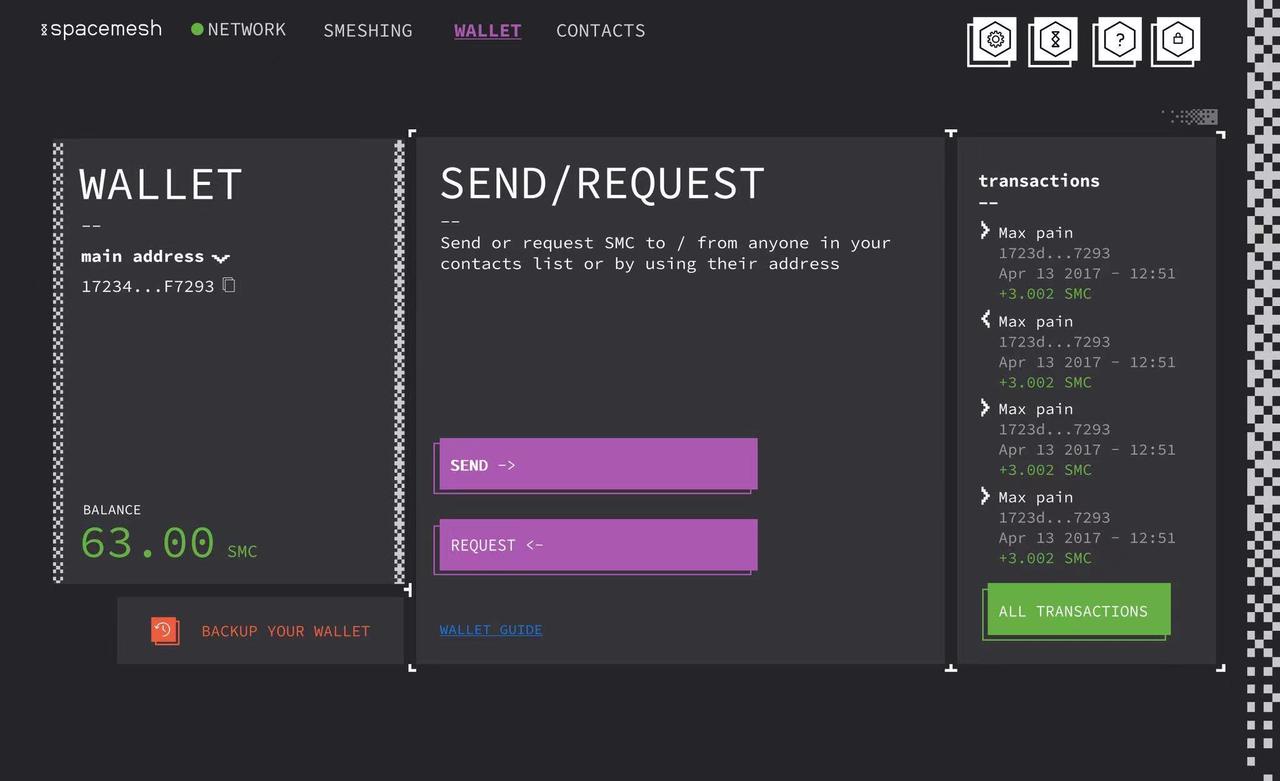
Against this backdrop, in 2017, Aviv Eyal and Tomer Afek co-founded Spacemesh in Israel. This novel blockchain network adopts a unique consensus mechanism called Proof of Space-Time (PoST). The PoST mechanism, by integrating real-world physical resources—storage space, allows any individual with hard drive space to participate in mining. Furthermore, Spacemesh employs a block mesh structure (layered DAG) instead of a single blockchain structure, providing a more efficient way for transaction ordering. Let's delve into the Spacemesh project.
Following Spacemesh's technical architecture and innovative consensus mechanism, we further explore its global impact as a decentralized protocol. Spacemesh's design not only seeks high decentralization but also focuses on increasing network throughput and security. The protocol uniquely utilizes "space-time" as a core resource and adopts a mesh structure for storing and verifying transactions. At its core is a mathematically validated new consensus protocol that replaces traditional PoW with PoST, achieving more flexible and scalable transaction processing through an efficient mesh structure.
In discussing the core features of Spacemesh, we find that it is not just a platform based on blockchain technology but a unique decentralized consensus protocol aimed at creating a network environment with high decentralization, throughput, and security. Spacemesh establishes a complex mesh structure for storing and processing transactions by introducing the innovative concept of "space-time" resources. The key to this design is its new consensus protocol, which uses Proof of Space-Time (PoST) instead of traditional Proof of Work (PoW) and significantly improves transaction processing efficiency by parallelizing multiple blocks.Spacemesh's operation mode covers several key aspects.
First is its distributed consensus protocol based on PoST, which aims to gather the computing resources of ordinary home computer users into a decentralized network, achieving network consensus while ensuring high security and decentralization. Next is Spacemesh's mining process, known as "Smeshing," where participants support network consensus by providing computing resources and receive token rewards in return. Ordinary computer users can participate by becoming network nodes, thus supporting network security and consensus mechanisms.In addition to the technical aspects, Spacemesh also emphasizes ecosystem development. It collaborates closely with developers, communities, and partners to promote the development and operation of applications and tools on its platform. In this way, Spacemesh encourages ecosystem builders to participate and provides token rewards as incentives.
In terms of team background, Spacemesh is led by several prominent figures in the industry. Professor Tal Moran is one of the project's founders, having completed his postdoctoral research at Harvard University and possessing extensive professional background in relevant fields. Aviv Eyal and Tomer Afek, as co-founders, have rich experience in full-stack system construction and advertising investment, respectively.
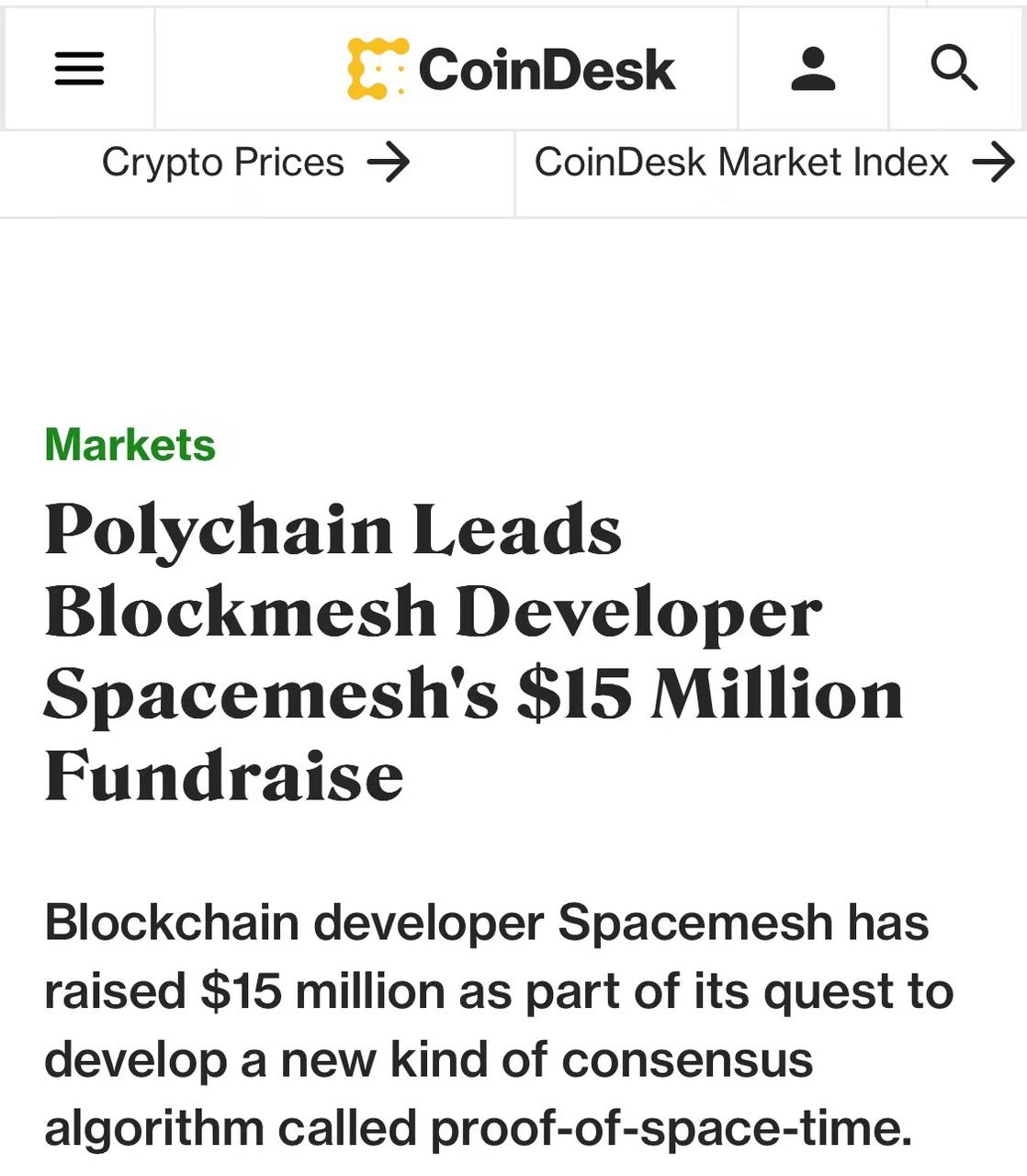
Since 2018, Spacemesh has attracted the attention of numerous investors, including BRM Group, iAngels, Alignment, Bancor, and others. In the same year, it secured a $15 million investment led by Polychain. Other investors include MetaStable, Paradigm, Coinbase Ventures, Bain Capital, indicating market recognition of Spacemesh's innovative potential. By the end of 2021, Spacemesh further raised $4 million, strengthening its market position.
From an economic perspective, based on the information provided on the official website and the current funding amount of $22.5 million, Spacemesh's market valuation is approximately $360 million. This valuation is based on the fact that ecosystem participants and investors share 6.25% of the total token supply. While this valuation to some extent reflects the market's assessment of Spacemesh's technology and future potential, it also highlights the challenges and market competition the project faces.
In terms of global community distribution, Spacemesh demonstrates its unique diversity and inclusivity. It has influence in countries and regions such as the United States, Hong Kong, Japan, Germany, China, Vietnam, the United Kingdom, Canada, and more. Compared to projects dominated by a single country or region, Spacemesh presents a more comprehensive and open international perspective. This not only reflects the global appeal of its technology and innovative ideas but also underscores its firm commitment to building a more decentralized and efficient blockchain network.
In the field of blockchain technology, the emerging consensus algorithm—Proof of Space and Time (PoST)—is gaining widespread attention. In this wave of new technology, the Kaspa project, as a focal point in the current computing power race, is notable for its uniqueness and influence. Turning our focus to Spacemesh, another novel public chain based on advanced consensus algorithms, we inevitably ask: Could Spacemesh be the next Kaspa? To answer this question, let's delve into the similarities and differences between Spacemesh and Kaspa.
The Kaspa project is renowned for its innovation, adopting a decentralized and scalable Layer-1 framework based on the GHOSTDAG protocol. This framework operates differently from traditional blockchains, allowing multiple blocks to exist in parallel and be ordered through a consensus mechanism. Kaspa's design adheres to the original principles of Bitcoin, such as proof-of-work mining, UTXO state, and deflationary policy, while also maintaining no pre-mining and decentralized governance. This unique architecture maintains high security standards while achieving fast transaction processing.
In contrast, Spacemesh employs a consensus protocol based on Proof of Space and Time (PoST) and grid technology. The goal of this protocol is to create a highly decentralized blockchain network with high throughput and robust security. Spacemesh combines the advantages of grid technology and proof of space and time to establish a decentralized, efficient, and secure network environment.
In terms of mining methods, Kaspa utilizes a proof-of-work mining mechanism for rapid transaction confirmation under its GhostDAG/PHANTOM protocol, while Spacemesh verifies transactions and generates blocks through its unique proof of space and time and grid technology. Although both projects share some commonalities in consensus mechanisms and mining methods, they exhibit significant differences in technical implementation and goal positioning. Kaspa focuses on providing fast transaction processing capabilities, while Spacemesh emphasizes decentralization and security.
While Spacemesh and Kaspa share a common goal of providing high throughput and fast transaction confirmation, they have distinct differences in consensus mechanisms and mining methods. Kaspa focuses on high throughput transaction processing, while Spacemesh places more emphasis on decentralization and security. These differences give Spacemesh and Kaspa unique positions and advantages in the blockchain space. Although they share some common technical features, such as utilizing hard drive space, computing power, or proof of work for consensus, their technical implementations and project goals remain distinctly different.
In conclusion, while Spacemesh and Kaspa share commonalities in blockchain technology, their respective characteristics and technical implementations give them unique positions and advantages in the blockchain world. Their further development will reveal the application potential and diversity of blockchain technology in different domains.
After a deep dive into the technical features of Spacemesh, it's worth turning attention to the market performance and economic model of its native token—SMH. Recently, the SMH token has demonstrated significant market activity, with its value surging from $0.55 to $2.4 in just one week. This change highlights the potential of SMH as a digital currency and the market's response.
The total supply of SMH is set at 2.4 billion tokens, and according to the plan, this quantity will be gradually distributed over almost a millennium. The majority of tokens, about 94.75% (equivalent to 2.25 billion tokens), are earmarked for distribution to Spacemesh miners, known as Smeshers, excluding any pre-mine. Additionally, 6.25% of tokens allocated to the team and early investors will be held in a "treasury," with these tokens not being released in the first year and gradually entering the market over the following three years. This means that in the initial years of the Spacemesh network, the circulating tokens in the market will mainly come from miners, but over time, the proportion of tokens held by the team and investors will gradually increase.
Unlike Bitcoin's halving cycle, Spacemesh's token issuance rate is slow, with a halving cycle of about 29 years, roughly 7.3 times that of Bitcoin's halving cycle. The last Bitcoin token is expected to be mined around 2140, while the last Spacemesh token will be issued around 2899.
In Spacemesh's tokenomics, several key elements can be identified:
1.Block rewards and miner incentives: SMH tokens are used as block rewards in the network, incentivizing miners to participate in block generation and network maintenance. Each generated block produces new SMH tokens, serving as both a reward for miner contributions and a core driver of network operation.
2.Team rewards and unlocking schedule: The reward mechanism for the team and investors aims to maintain their long-term commitment and involvement in the project. The 6.25% of tokens are planned to be released over specific time periods, ensuring the development team and investors contribute to the ecosystem's continuous growth.
3.Token scarcity and supply reduction: The fixed total supply of SMH tokens, combined with the exponentially decreasing issuance mechanism, ensures the long-term scarcity of tokens. This scarcity may generate greater demand in the market, potentially increasing the token's value as the supply gradually decreases.
4.Network activities and transaction fees: In the Spacemesh network, SMH tokens are used to pay transaction fees and participate in various network activities, increasing demand and circulation of the tokens.
In summary, SMH tokens play a crucial role in the Spacemesh network, and its economic model and incentive structure provide a solid foundation for the network's stable development and long-term success. As the network evolves and the tokenomics matures, SMH tokens may attract more attention and investment, becoming a significant player in the cryptocurrency market.
After delving into the technical features of Spacemesh, comparing it with Kaspa, and exploring the economic model of the SMH token, we can see that Spacemesh, as an emerging blockchain network, is demonstrating its uniqueness and potential. Although market volatility and continuous technological advancements bring some uncertainty to Spacemesh's future, its innovative consensus mechanism, emphasis on decentralization, and well-designed tokenomics showcase the potential value of Spacemesh as a novel blockchain solution.
Considering these factors, the Spacemesh network seems to be at the forefront of cryptocurrency and blockchain technology development. While its long-term success depends on various factors, including technological innovation, market acceptance, and competition with other projects, Spacemesh has shown the potential to become a significant participant in the blockchain space. In the future, as the network continues to develop and mature, Spacemesh may play a more prominent role in the fields of blockchain technology and digital currencies.


All Comments