

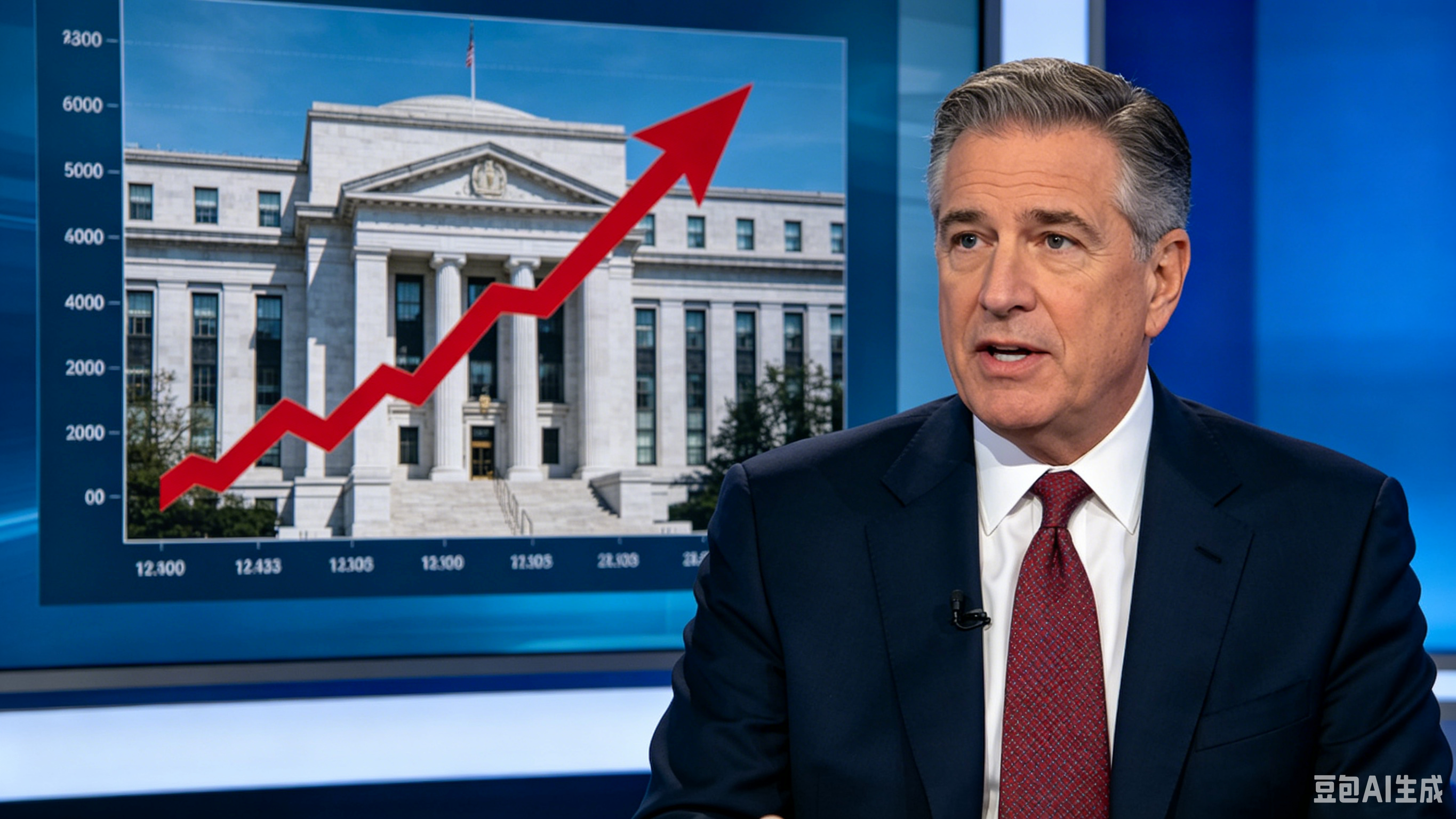
The Federal Reserve is facing a historic personnel change, with Powell about to step down and Kevin Warsh officially taking over as Federal Reserve Chairman. This change is widely seen by the outside world as the US monetary policy system entering a "repricing stage", and the focus of the capital market is fully on the policy shift that may be brought about after Walsh takes office - the previously widely predicted expectation of a Fed interest rate cut is quietly tilting towards the expectation of a rate hike, and Walsh's policy proposals and reform ideas will profoundly affect the Fed's policy direction, global financial markets, and the development trajectory of the cryptocurrency industry.
From the perspective of market leading signals, the collective upward trend in US bond yields has already released signals of policy tightening ahead of schedule. On May 18, the yield of US 30-year treasury bond bonds rose to 5.159%, the highest since May 2025; The yield of 10-year treasury bond rose to 4.631%, a new peak since January 2025; The yield of two-year treasury bond rose to 4.103%, the highest level since February 2025. As a barometer of the Federal Reserve's policy pace, short-term US bond yields closely follow the expected fluctuations in policy rates, while medium - and long-term yields adjust synchronously. This collective upward trend means that the market's expectations for the Fed's interest rate cuts have significantly cooled down. Investors generally judge that the Fed will find it difficult to start a rate cut cycle in the short term, and the high interest rate state will continue for a longer time, and even begin to reassess the possibility of resuming interest rate hikes in the future. Market interest rates are generally evolving towards tightening.
Walsh's core policy proposition: data-driven, cautious balance sheet reduction, and maintaining central bank independence
Walsh's policy inclination has long been clearly demonstrated through his past speeches and public statements, with its core ideas revolving around three dimensions: inflation control, balance sheet management, and Federal Reserve independence, which differs significantly from the policy logic of the Powell era.
In terms of inflation and interest rate policies, Walsh adheres to the principle of "data-driven" and has explicitly stated that he will maintain high interest rates until inflation significantly falls back to the Federal Reserve's 2% policy target. The current resilience of US inflation has exceeded expectations, with CPI jumping 3.8% year-on-year in April, the fastest pace in nearly two years. Coupled with the transmission effect of the Iran War driving up oil prices, inflationary pressure has further intensified. This also means that after taking office, Walsh is likely to continue the high interest rate policy and will not easily initiate a loose cycle in the short term.
In terms of quantitative tightening and balance sheet management, Walsh advocates continuing to gradually reduce the Federal Reserve's balance sheet to reduce the role of market liquidity in fueling inflation, but at the same time emphasizes the need to maintain financial market stability. He believes that the key to reducing inflation is to control the money supply rather than simply raise interest rates. The previous large-scale purchase of treasury bond by the Federal Reserve has led to excessive fiscal expansion and debt surge, thus pushing up inflation. Therefore, he advocates that interest rates can be cut simultaneously while continuing to shrink the balance sheet, which also indicates that the quantitative tightening policy will continue in the future, but the pace will be more cautious to avoid excessive impact on the bond market and financial system.
More noteworthy is that Walsh highly values the independence of the Federal Reserve, explicitly stating that interest rate decisions and monetary policy operations must be based on economic data and long-term goals, rather than serving political cycles. He once vowed to maintain the independence of the Federal Reserve, stating that he would "absolutely not" become a puppet of the president. This position will provide broader space for his policy-making and may also lead to new changes in the coordination of policies between the Federal Reserve and the government.
The profound impact of Walsh's inauguration: the Federal Reserve ushers in a 'systemic change'
Before taking office, Walsh had already clearly proposed a structural reform plan for the Federal Reserve, positioning himself as the "architect of institutional change," marking a break from the era of Bernanke, Yellen, and Powell. He criticized the Federal Reserve for its "functional expansion" and excessive market intervention in recent years, and plans to reshape the interaction between the Fed and the market from four aspects to promote policy mechanism reform.
Firstly, reduce market participation. Walsh criticized the Federal Reserve's purchase of more than $4 trillion of treasury bond bonds and mortgage-backed securities between 2020-2022, saying that it normalized tools in emergencies, not only distorted market pricing, but also created the illusion of "the Federal Reserve helping the federal government finance". In the future, the Federal Reserve may reduce the use of such emergency tools and rely more on interest rate adjustments to regulate the economy.
Secondly, reduce the disclosure of policy views to the market. Previously, the Federal Reserve frequently used "forward guidance" as a policy tool to guide market expectations by clarifying policy directions to the market (such as informing the market that there will be no interest rate hikes in the future). But Walsh believes that the market's excessive reliance on the Fed's statements is not conducive to market self pricing, and may reduce the frequency of using forward guidance in the future, allowing the market to return to rational judgment.
Thirdly, implement more ad hoc decisions and intensify internal debates. Many of the current decisions of the Federal Reserve are basically determined before officials enter the conference room, while Walsh tends to make "same day decisions", believing that this can better respond to the latest economic situation. This may lead to more flexibility in the Fed's policy decisions, but it will also exacerbate internal opinion divisions and make policy directions more difficult to predict.
Fourthly, reduce reliance on traditional inflation data. Walsh questioned mainstream inflation indicators such as CPI and PCE, believing that these retrospective data cannot truly reflect "potential inflation" and may lead to a sluggish response from the Federal Reserve due to policy lag. He suggested that the Federal Reserve pay more attention to forward-looking economic analysis, emphasizing the impact of long-term forces such as productivity improvement and technological change on the economy, rather than simply relying on past data to formulate policies, and may even turn to alternative inflation indicators (such as truncated mean inflation).
Industry evaluation: Policy changes pose risks, high interest rate expectations become consensus
Regarding Walsh's appointment, various Wall Street institutions have given different interpretations, but it is generally believed that he will drive changes in the Federal Reserve's policy mechanism, and the long-term high interest rates will become a probable event.
Morgan Stanley predicts that after taking office, Walsh will implement policies such as shrinking the balance sheet and weakening forward-looking guidance, which will bring risks of long-term mechanism change and aggravate the volatility of the US treasury bond bond market. The analyst team of the institution pointed out that the adoption of new inflation indicators, the reduction of forward guidance, and the contraction of the balance sheet may increase market volatility between each interest rate meeting.
AMP Chief Economist Shane Oliver stated that Walsh's stance on maintaining the independence of the Federal Reserve is commendable, and his policy inclination may be slightly looser than Powell's, but there will be no fundamental difference; Meanwhile, Walsh may place greater emphasis on AI transformation rather than employment, and may prioritize using truncated mean inflation indicators, which may be seen as a "selective data selection" approach.
Morgan Stanley strategists believe that Walsh tends to gradually raise interest rates and cautiously reduce his balance sheet, which may provide moderate support for the stock market and the US dollar, but technology stocks may face valuation pressure due to the high interest rate environment.
From market expectations, the long-term trend of high interest rates has become a consensus. According to CME's "Federal Reserve Watch" data, as of May 18th, the probability of the Federal Reserve keeping interest rates unchanged in June is 99.2%, and the probability of interest rate cuts is only 0.8%; The probability of keeping interest rates unchanged in July is 95%, the probability of raising interest rates by 25 basis points has increased to 4.2%, and the probability of interest rate cuts has decreased to 0.7%. Goldman Sachs has postponed its expectation of two future interest rate cuts by the Federal Reserve by one quarter, to December 2026 and March 2027, citing stronger than expected inflation resilience and the possibility of energy cost transmission leading to a core PCE inflation rate of around 3% for the year, making it difficult to achieve the 2% target.
The "New Bond King" Gunlak and Bridgewater Fund founder Dalio have also spoken out, confirming the inevitability of high interest rates. Dalio stated that the US economy has fallen into stagflation, and inflationary pressures continue to add to the slowdown in economic growth. If Walsh chooses to cut interest rates, it would be a decision mistake; Gunlak bluntly stated that if the inflation data does not match, investors will not see a rate cut at the next Federal Reserve meeting, and it is impossible for the market to expect two rate cuts within the year.
The impact on the cryptocurrency market: an open attitude cannot withstand the pressure of high interest rates
Unlike Powell's relative caution towards cryptocurrency assets, Walsh himself holds an open attitude towards the cryptocurrency industry. His personal investment portfolio includes star cryptocurrency projects such as Polymarket, Solana, Optimism, etc. He also made it clear during a Senate hearing that digital assets have "become a part of the US financial system" and supports their inclusion in the financial system to provide investors with more opportunities and protection. He even referred to Bitcoin as an "important asset for policy-making".
But it needs to be clear that Walsh's open attitude is difficult to offset the overall suppression of the cryptocurrency market by the long-term high interest rates. Zach Pandl, the head of Grayscale Research, pointed out in an article that the acceleration of inflation and significant increase in energy prices in the United States have forced Walsh to maintain high interest rates after taking office. The market generally expects the Federal Reserve to not cut interest rates before September 2027, and this environment will have three major impacts on the cryptocurrency market.
One is the pressure on "currency depreciation transactions". The holding cost of interest free assets such as Bitcoin will increase with high interest rates, and high real interest rates will increase the opportunity cost of holding zero yield encrypted assets, which will bring price pressure to mainstream cryptocurrencies such as Bitcoin in the short term. However, Pandl also stated that positive regulatory developments such as the CLARITY Act may offset some of the adverse effects.
The second is the acceleration of fixed income assets on the chain. The current fixed income products priced in US dollars generally have higher yields than similar DeFi products. If cryptocurrency investors can obtain higher returns through tokenized bonds, issuers will promote more assets to be put on the chain, thereby promoting the digitalization process of fixed income assets.
The third is the growth of revenue for stablecoin issuers. Stable coin issuers such as Circle hold a large amount of interest bearing assets. Although they cannot pay interest to token holders, an increase in interest rates will directly increase their returns. Pandl predicts that for every 25 basis points increase in short-term interest rates, Circle's annual revenue can increase by approximately $190 million.
Summary: Expectations of interest rate cuts reverse, market welcomes policy change cycle
Walsh's appointment as the Chairman of the Federal Reserve marks a new phase of change in US monetary policy. The previously widely anticipated interest rate cuts this year have largely fallen through, and there has even been a rise in expectations of rate hikes. Its data-driven interest rate policy, cautious approach to balance sheet reduction, and structural reform of the Federal Reserve will profoundly change the policy logic and market interaction of the Fed, and the long-term high interest rates will become the core tone for the coming period.
For the global financial market, Walsh's reform may aggravate the volatility of the treasury bond bond market and have a differentiated impact on the stock market, and the US dollar is expected to receive moderate support; For the cryptocurrency market, although Walsh maintains an open attitude, the rising holding costs brought about by high interest rates will still pose short-term pressure, while also promoting the development of fixed income asset on chain and stablecoin industries.
In the future, the market needs to focus on the first policy meeting after taking office, the direction of adjustment of inflation indicators, and changes in the pace of balance sheet reduction. As the Federal Reserve enters the 'Walsh era', policy uncertainty will significantly increase, and investors need to adjust their asset allocation logic in a timely manner to cope with market fluctuations and investment opportunities in a high interest rate environment.







All Comments