

Since the RWA narrative gained broad momentum two years ago, the market has gradually shifted from hype to rational execution. More builders are now focusing on developing projects with real world utility and long term viability. The acceleration of real world asset tokenization, the rapid advancement of stablecoin compliance, and the growing maturity of AI driven autonomous execution are collectively driving a structural transformation of financial infrastructure. RWA has already entered its next phase of development. The industry is no longer centered on pure technical performance, but is instead moving toward more practical, institution ready systems capable of supporting sustainable commercial operations at scale.
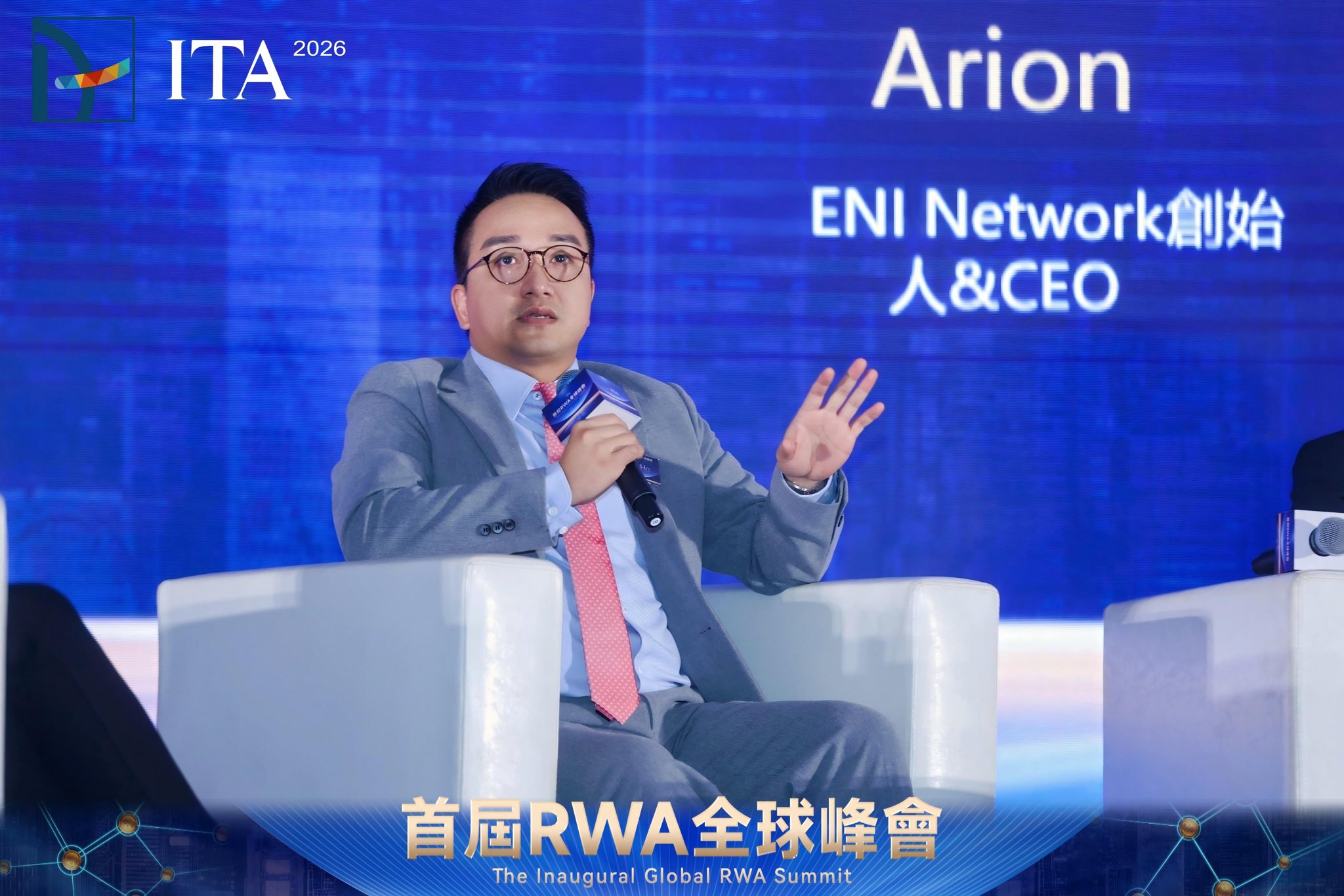
In industry summits and media interviews, ENI Founder and CEO Arion Ho has repeatedly emphasized that the true value of RWA is not asset tokenization itself, but enabling complete business systems to operate continuously onchain. He has made it clear that putting assets onchain without system level infrastructure is fundamentally unsustainable. Only a fully integrated framework built around compliance, controllability, and long term operational capability can support institutional scale adoption.
As a Web3 infrastructure provider deeply focused on enterprise use cases, ENI remains committed to one core mission: enabling business systems to run reliably onchain. By integrating technical architecture, compliance capabilities, payment infrastructure, and AI execution into a unified ecosystem, ENI is building a scalable and sustainable digital foundation for the convergence of traditional finance and Web3.
ENIPAY: A Critical Layer Connecting ENI’s System Value to Real World Commerce
ENI’s core strength lies in its full stack system architecture spanning asset registration, capital flows, business execution, and compliance auditing. As a key extension of the ENI ecosystem into real world payment scenarios, ENIPAY serves as the critical bridge between onchain infrastructure and real world financial activity. It transforms ENI from a blockchain focused primarily on ledgers and settlement into a comprehensive financial infrastructure capable of supporting enterprise operations, cross border transactions, treasury management, and automated business workflows.
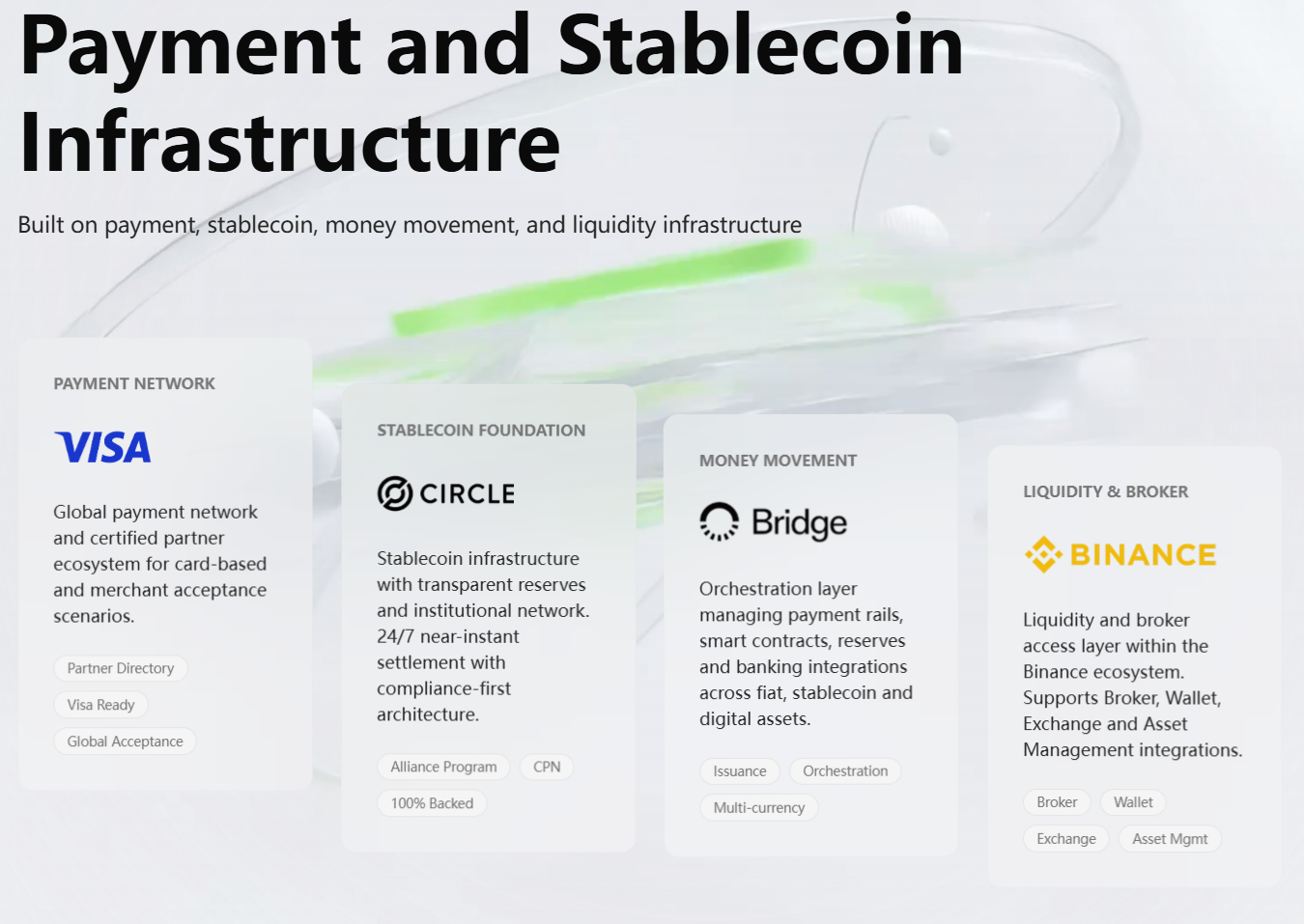
Built on top of mature global payment networks, ENIPAY enables onchain assets to move seamlessly into real world consumption and settlement scenarios. It supports Visa and Mastercard networks, while offering QR code payments, virtual cards, and physical card services across multiple countries and regions. This allows onchain assets to go beyond trading and become directly usable for procurement, settlement, subscriptions, business travel, supply chain payments, and other day to day commercial activities. By solving the longstanding limitation of systems that were able to register and settle assets but struggled to support real world payments and circulation, ENIPAY completes the operational loop of the ENI ecosystem and unlocks the full commercial value of institutional assets operating onchain.
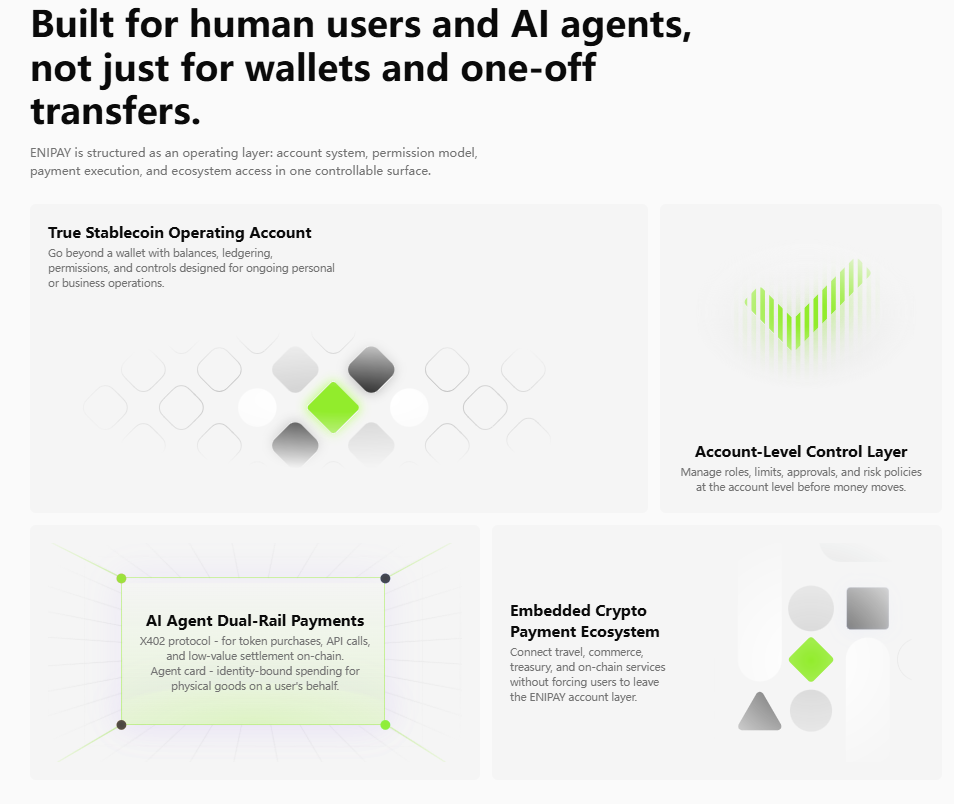
ENIPAY was designed from day one with the future of AI driven commerce in mind. As AI Agents increasingly participate in order execution, treasury coordination, service procurement, and cross platform collaboration, traditional human centric payment systems are becoming insufficient for machine to machine transactions, programmable authorization, spending controls, and compliance verification.
ENIPAY provides native payment infrastructure for AI powered entities, enabling intelligent agents to execute transactions and settlements securely, compliantly, and efficiently within predefined human governed rules. This is not simply an evolution of payment methods, but a deeper alignment between ENI’s infrastructure and the operational logic of next generation digital commerce. By embedding AI native payment capabilities into the system architecture, ENI is building a financial framework designed for the scalability and complexity of the future digital economy.
Architecture and Compliance: ENI’s Core Moat for Enterprise Grade System Reliability
The true foundation behind ENI’s institutional and global expansion lies in its enterprise focused architecture and compliance framework, both designed from the ground up around real business requirements. Unlike general purpose public blockchains that prioritize transaction throughput above all else, ENI has always focused on the issues institutions care about most: privacy protection, permission control, customizable business logic, and audit ready compliance infrastructure. To achieve this, ENI has built a layered architecture composed of the Mainnet, Hub, and AppChain framework.
Within this structure, the ENI Mainnet is responsible for global consensus and final settlement, ensuring network wide security and connectivity. The Hub layer manages coordination and communication across institutions and applications, enabling efficient interaction between different business environments. AppChains provide each enterprise with an isolated and dedicated operating environment where institutions can customize business rules, audit processes, permission systems, and compliance modules without sacrificing either transparency or privacy. This “independent but interconnected” architecture addresses institutions’ critical requirements for data security and operational control while still allowing them to share the network’s liquidity, security, and ecosystem resources.
On the compliance side, ENI leverages Hong Kong’s position as a global financial hub while closely aligning with evolving stablecoin regulations and RWA policy frameworks. By working alongside licensed financial institutions, legal professionals, and asset management operators, ENI has established a fully traceable and verifiable framework covering asset ownership, legal structuring, capital flows, and operational processes. For enterprises, moving onchain is no longer just about efficiency gains. It also means reducing compliance costs, lowering trust friction, and improving operational coordination. What ENI provides is not simply a blockchain, but a mature infrastructure layer capable of integrating directly with real world regulatory standards and traditional financial workflows.
At the technical level, ENI’s high performance parallel execution engine supports processing capacity at the scale of tens of thousands of TPS, meeting the demands of high frequency enterprise operations and multi workflow execution. This ensures system stability and predictable latency under large scale commercial environments. From foundational technology to compliance architecture, from system design to performance guarantees, ENI continues to strengthen the core capabilities required for enterprise grade RWA infrastructure, transforming commercial adoption from experimental exploration into scalable operational reality.
Ecosystem and Strategy: ENI’s Evolution from Public Blockchain to Enterprise Standard Infrastructure
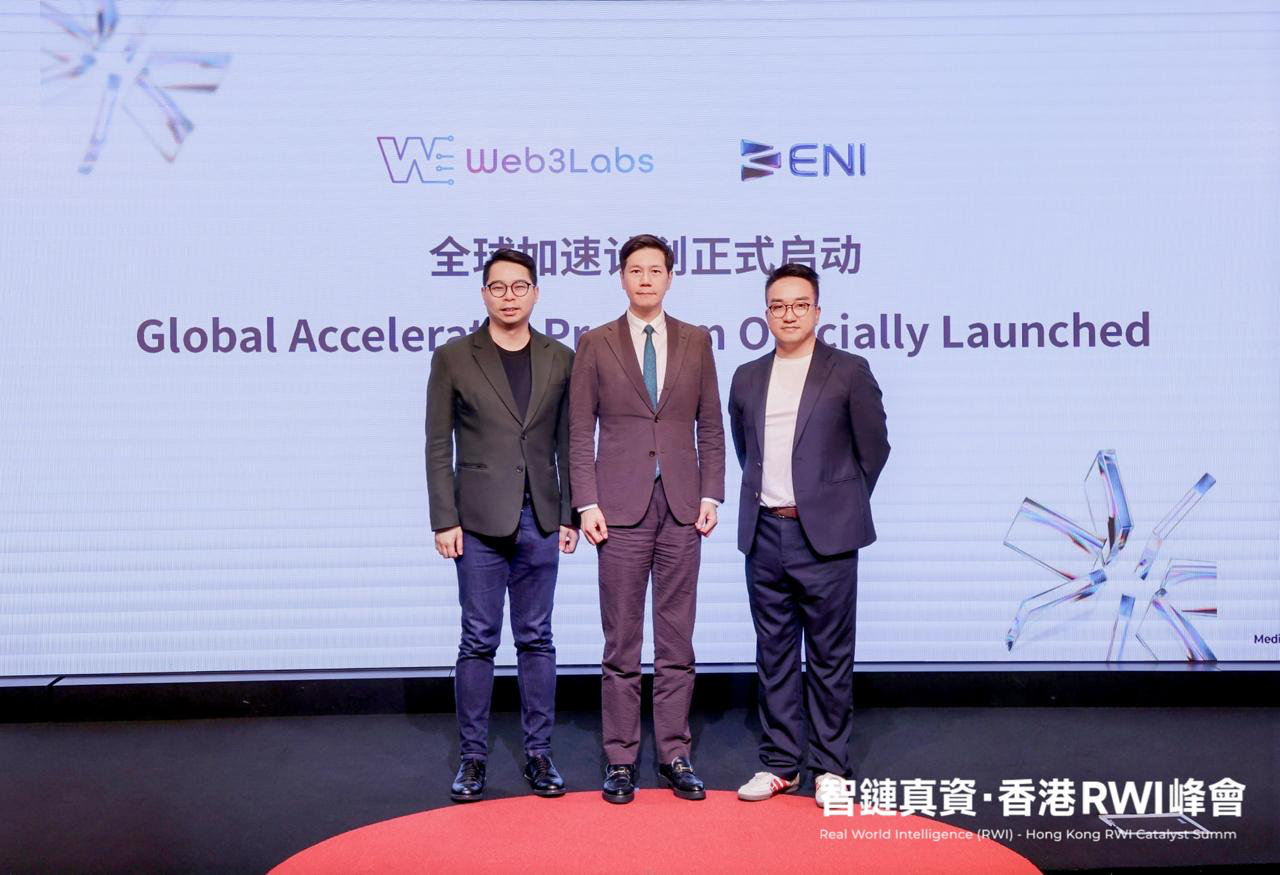
On April 20, Arion Ho officially announced at the Hong Kong Web3 Festival that ENI had completed a full upgrade of its brand identity, official website, and visual system. This milestone marks ENI’s transition from a foundational public blockchain into an enterprise focused BaaS platform, positioning the project to serve global businesses with a more mature, institutional, and internationally oriented approach. During the event, ENI also strengthened its market presence through large scale onsite engagement campaigns and offline ecosystem activities, further expanding industry awareness and ecosystem influence.
For large institutions, ENI provides deeply customized architectural solutions that allow enterprises to seamlessly integrate their existing business systems, treasury operations, risk management frameworks, and onchain infrastructure. This enables companies to move beyond isolated blockchain applications toward the migration of entire operational systems onchain. For small and medium sized enterprises, ENI offers a standardized BaaS matrix and lightweight integration tools that significantly reduce development, deployment, and maintenance costs, allowing a broader range of businesses to quickly benefit from the efficiency gains enabled by Web3 infrastructure. This differentiated service model enables ENI to address diverse market demands while accelerating the mainstream adoption of digital financial infrastructure.
On the ecosystem side, ENI continues to collaborate with high quality global partners across the asset, capital, compliance, technology, and operations sectors to build an open, collaborative, and sustainable RWA ecosystem. From traditional asset management firms and licensed financial platforms to global capital networks and infrastructure providers, ENI acts as the connective layer linking every participant within the ecosystem. By reducing trust friction and improving coordination efficiency, ENI enables real world assets, commercial projects, and cross border capital flows to operate within a compliant, transparent, and highly efficient environment.
Looking ahead, the deep integration of AI and the real economy will further accelerate the migration of commercial systems onchain. Stablecoins are set to become a critical layer for global cross border settlement, while RWA will continue evolving beyond simple asset tokenization toward fully operational onchain business systems.
ENI will continue building with technology as its foundation, compliance as its core principle, and payments as the connective layer of its ecosystem. Focused on enterprise grade RWA infrastructure, ENI aims to help global institutions transition into the digital economy in a secure, stable, and highly efficient manner. By bridging traditional finance with the next generation value internet, ENI is positioning itself as a foundational infrastructure layer for the future of global commerce and digital financial systems.



All Comments