

Cointime

Download App
iOS & Android

Blockchain: The Future of Secure Supply Chains and Transparency Transactions

Validated Media

Blockchain technology is a game-changing innovation that has the ability to change the way we conduct transactions and manage supply chains. The technology has gained popularity in recent years as a result of its relationship with cryptocurrencies, but its applications are far-reaching.

Photo by Leeloo Thefirst

At its core, blockchain technology is a distributed ledger system that enables safe and transparent transactions without the need for a centralized authority. In a blockchain network, transactions are verified and recorded by a decentralized network of computers rather than by a single centralized authority. This strengthens the system’s resistance to fraud, corruption, and hacking.

Cryptocurrency is one of the best-known implementations of blockchain technology. The first and best-known cryptocurrency, Bitcoin, uses blockchain technology to allow peer-to-peer transactions without the use of a financial institution. This has the potential to lower transaction costs and increase financial inclusion for those who might not otherwise have access to traditional banking services.
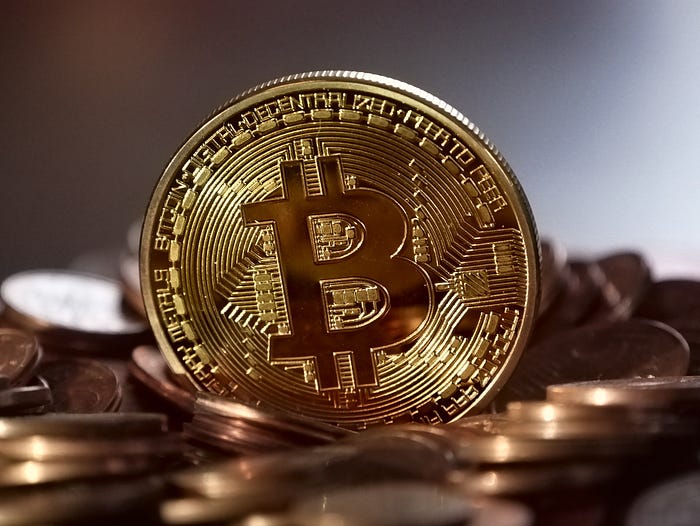
Photo by Pixabay

But blockchain technology is not restricted to bitcoin. In fact, the technology is being used in a wide range of industries, from logistics to healthcare. One area where blockchain holds great promise is supply chain management.

Supply chains are intricate networks of suppliers, manufacturers, distributors, and retailers that are in charge of delivering goods and services to customers. When it comes to following the movement of goods and confirming their legitimacy, supply chain monitoring can be challenging. Here is where blockchain technology comes into play.

Photo by Tom Fisk

Supply chain players can follow the passage of commodities from the point of origin to the point of consumption using a blockchain-based system and verify their legitimacy along the way. This can assist in keeping counterfeit items out of the market and guaranteeing that products are obtained ethically and sustainably.

Walmart, for example, has put in place a blockchain-based system to trace the transportation of produce from farms to stores. With the technology, the corporation can rapidly identify the source of any food safety issues and remove affected items from the market, decreasing customer risk.

In addition to supply chain management, blockchain technology is being used in a wide range of other applications, such as voting systems and digital identity management. The technology has practically limitless potential applications, and its effects on society and the economy could be profound.

Photo by Cottonbro Studio

However, there are worries about the environmental effects of blockchain technology, particularly in the case of cryptocurrencies. On a blockchain network, transaction verification requires a significant amount of processing power, which consumes a significant amount of energy. As the technology spreads, it will be critical to develop ways to reduce its environmental impact.

As blockchain technology develops and matures, it becomes more and more clear that it has the potential to revolutionize various systems and industries outside of transactions and supply chain management. The decentralized nature of blockchain networks, with its applications ranging from decentralized energy trading and decentralized finance to digital identity management and voting systems, has the potential to create a society that is more open, transparent, and equal. Solving problems like scalability, interoperability, and regulatory frameworks will be crucial as technology grows and becomes more and more ingrained in our daily lives. The potential benefits of blockchain technology, on the other hand, are too large to ignore, and it will almost certainly continue to be a major driver for innovation and disruption in the years ahead.


Comments

All Comments

Recommended for you

  • American Bitcoin's Bitcoin reserves have increased by approximately 623 BTC in the past 7 days, bringing its current holdings to 4941 BTC.

    Emmett Gallic, a blockchain analyst who previously disclosed and analyzed the "1011 insider whale," posted on the X platform revealing updated data on the Bitcoin reserves of American Bitcoin, a crypto mining company supported by the Trump family. In the past seven days, they increased their holdings by about 623 BTC, of which approximately 80 BTC came from mining income and 542 BTC from strategic acquisitions in the open market. Currently, their total Bitcoin holdings have risen to 4,941 BTC, with a current market value of about 450 million USD.

  • The US spot Ethereum ETF saw a net outflow of $19.4 million yesterday.

    according to TraderT monitoring, the US spot Ethereum ETF had a net outflow of 19.4 million USD yesterday.

  • Listed companies, governments, ETFs, and exchanges collectively hold 5.94 million Bitcoins, representing 29.8% of the circulating supply.

    Glassnode analyzed the holdings of major types of Bitcoin holders as follows: Listed companies: about 1.07 million bitcoins, government agencies: about 620,000 bitcoins, US spot ETFs: about 1.31 million bitcoins, exchanges: about 2.94 million bitcoins. These institutions collectively hold about 5.94 million bitcoins, accounting for approximately 29.8% of the circulating supply, highlighting the trend of liquidity increasingly concentrating in institutions and custodians.

  • The Bank of Japan is reportedly planning further interest rate hikes; some officials believe the neutral interest rate will be higher than 1%.

    according to insiders, Bank of Japan officials believe that before the current rate hike cycle ends, interest rates are likely to rise above 0.75%, indicating that there may be more rate hikes after next week's increase. These insiders said that officials believe that even if rates rise to 0.75%, the Bank of Japan has not yet reached the neutral interest rate level. Some officials already consider 1% to still be below the neutral interest rate level. Insiders stated that even if the Bank of Japan updates its neutral rate estimates based on the latest data, it currently does not believe that this range will significantly narrow. Currently, the Bank of Japan's estimate for the nominal neutral interest rate range is about 1% to 2.5%. Insiders said that Bank of Japan officials also believe there may be errors in the upper and lower limits of this range itself. (Golden Ten)

  • OKX: Platform users can earn up to 4.10% annualized return by holding USDG.

    According to the official announcement, from 00:00 on December 11, 2025 to 00:00 on January 11, 2026 (UTC+8), users holding USDG in their OKX funding, trading, and lending accounts can automatically earn an annualized yield of up to 4.10% provided by the OKX platform, with the ability to withdraw or use it at any time, allowing both trading and wealth management simultaneously. Users can check their earnings anytime through the OKX APP (version 6.136.10 and above) - Assets - by clicking on USDG. Moving forward, the platform will continue to expand the application of USDG in more trading and wealth management scenarios.

  • The Federal Reserve will begin its Reserve Management Purchase (RMP) program today, purchasing $40 billion in Treasury bonds per month.

     according to the Federal Reserve Open Market Committee's decision on December 10, the Federal Reserve will start implementing the Reserve Management Purchase (RMP) program from December 12, purchasing a total of $40 billion in short-term Treasury securities in the secondary market.

  • Bitcoin treasury company Strategy's daily transaction volume has now surpassed that of payment giant Visa.

    according to market sources: the daily trading volume of Bitcoin treasury company Strategy (MSTR) has now surpassed the payment giant Visa.

  • The US spot Bitcoin ETF saw a net outflow of $78.35 million yesterday.

    according to Trader T's monitoring, the US spot Bitcoin ETF had a net outflow of $78.35 million yesterday.

  • JPMorgan Chase issues Galaxy short-term bonds on Solana network

     JPMorgan arranged and created, distributed, and settled a short-term bond on the Solana blockchain for Galaxy Digital Holdings LP, as part of efforts to enhance financial market efficiency using underlying cryptocurrency technology.

  • HSBC expects the Federal Reserve to refrain from cutting interest rates for the next two years.

    HSBC Securities predicts the Federal Reserve will maintain interest rates stable at the 3.5%-3.75% range set on Wednesday for the next two years. Previously, Federal Reserve policymakers lowered rates by 25 basis points with a split vote. The institution's U.S. economist Ryan Wang pointed out in a report on December 10 that Federal Reserve Chairman Jerome Powell was "open to the question of whether and when to further cut rates at next year's FOMC press conference." "We believe the FOMC will keep the federal funds rate target range unchanged at 3.50%-3.75% throughout 2026 and 2027, but as the economy evolves, as in the past, it is always necessary to pay close attention to the significant two-way risks facing this outlook."