

Since the breakout of “crypto art” in 2021, NFTs (non-fungible tokens), as unique digital assets on the blockchain, have rapidly swept across global markets. In just four years, more than 2 billion NFTs have been issued across major blockchain networks, with a global market capitalization reaching hundreds of billions of dollars.
However, the narrative surrounding NFTs is quietly changing—NFTs are evolving from mere digital collectibles into functional core assets with real-world applications. Along this path of evolution, the potential of NFTs is being continuously unlocked, redefining the decentralized digital future.
The origin of NFTs lies in a revolution in digital asset ownership. In the traditional internet era, digital content could be copied indefinitely. NFTs leverage blockchain technology to assign a unique identity to digital works, granting them scarcity and ownership. This feature quickly ignited enthusiasm across the art, collectibles, and creative cultural sectors.
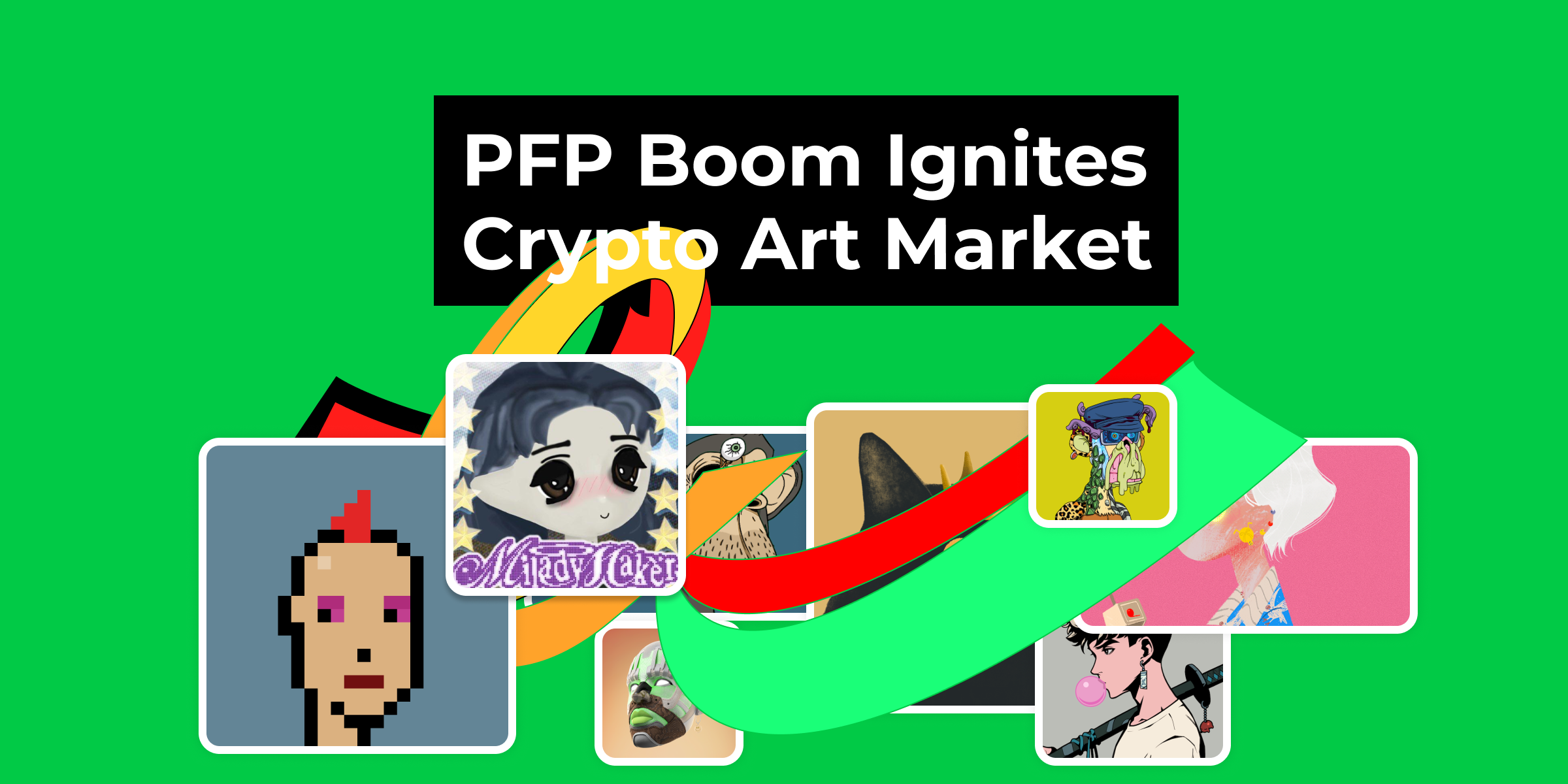
More importantly, this stage gave rise to a brand-new bottom-up model for IP creation. While traditional IPs rely on major media institutions and brand capital, PFP (profile picture) projects build global influence through decentralized community governance and consensus.
CryptoPunks, launched in 2017, were among the first on-chain verifiable digital collectibles. They were followed by CryptoKitties, which sparked widespread interest. In 2020, the DeFi boom pushed the crypto market into a new wave of growth, and NFTs rose alongside it. The emergence of Bored Ape Yacht Club marked the frenzy around PFP NFTs. Trading volumes surged as the market chased scarcity and uniqueness, turning NFTs into a new financial phenomenon.
This period of prosperity was largely driven by market sentiment, collective belief, and liquidity, leading to high price volatility.
As the market matured, the narrative of NFTs shifted from pure collectibles to functional applications, demonstrating richer value.
The ENS domain system was one of the first large-scale use cases, simplifying complex blockchain addresses into easy-to-read domains. This enabled decentralized identity authentication and helped standardize on-chain identities.
Meanwhile, NFTs found a breakout use case in gaming. Game items as NFTs in Stepn allowed players to truly own their in-game assets. Axie Infinity popularized the "play-to-earn" model, enabling players to generate real economic value through gaming—significantly boosting NFT liquidity and value consensus.
The exploration of NFT utility has also extended to real-world scenarios. NFT-based tickets and memberships enable anti-counterfeiting and rights transfer via blockchain verification. Web3-native brand membership cards have begun to emerge, offering holders unique social and experiential privileges.
At the same time, PFPs are no longer limited to profile pictures. They have become community identities and social symbols—supporting airdrops, verification, and decentralized governance. Community-driven IPs are now demonstrating powerful vitality.
Even more noteworthy is that NFTs are no longer confined to the Ethereum network. The Ordinals protocol brought NFTs to the Bitcoin chain through “inscriptions,” enabling decentralized digital asset storage and creating a new paradigm for the Bitcoin ecosystem.
As the market continues to develop, the NFT narrative is shifting further—from digital collectibles to real-world asset (RWA) mapping and verification. The concept of Real World Assets (RWA) has emerged, leveraging NFT technology to tokenize real estate, luxury goods, tickets, and other physical assets. This enables decentralized ownership and trading, expanding the boundaries of NFT applications and driving deeper integration between digital assets and the real world.
While traditional NFTs focus on digital art, collectibles, and virtual environments, RWAs represent a new application model: the digitization of real-world assets. Increasingly, projects are exploring how to record and trade physical goods on-chain through NFTs, breaking the limitations of conventional asset management.
RareShop is the world's first consumer-facing RWA NFT product launch platform. It utilizes an innovative asset protocol—ERC-7765—to support large-scale adoption of RWA NFTs. RareShop not only enables on-chain ownership and trading, but also offers rich interactive scenarios, including crypto payments, privacy protection, product pre-sales, gifting, and physical delivery. With Mint Blockchain as its technical foundation, RareShop provides global brands and enterprises with comprehensive Web3 digitization solutions—accelerating the Web3 transformation of the real economy.
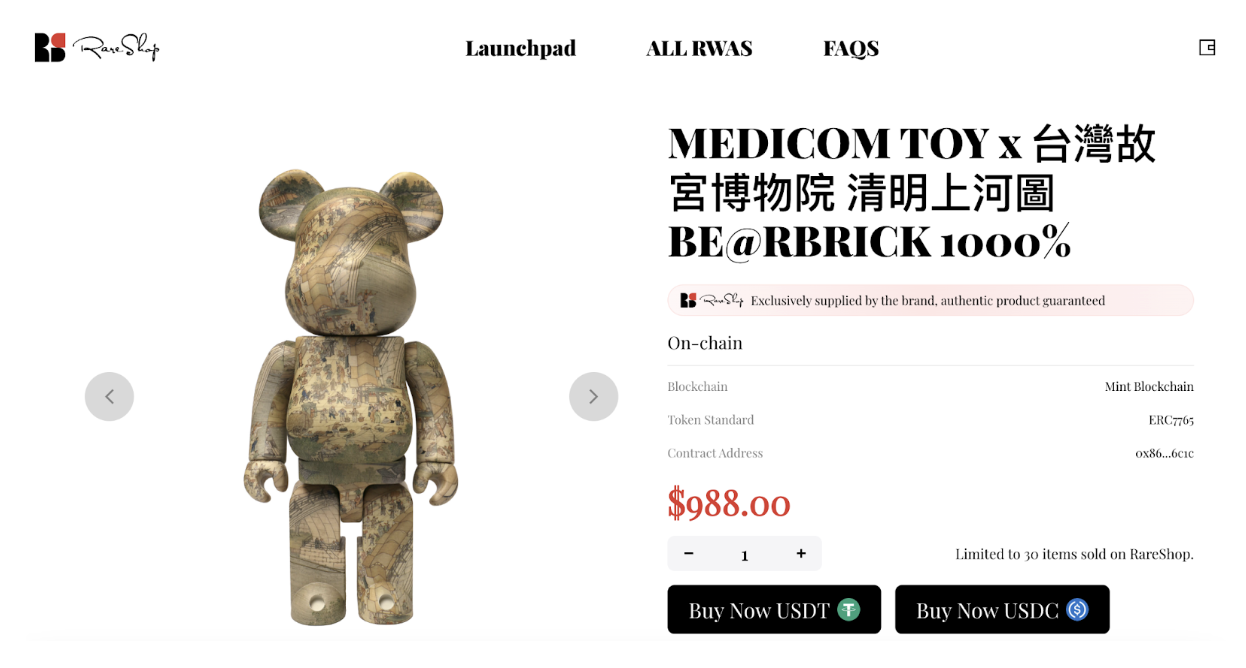
The ERC-7765 Asset Protocol was proposed by the Mint Blockchain team to the Ethereum community as a standardized RWA NFT protocol. It aims to establish industry norms, making RWA issuance and circulation more transparent and efficient. This protocol allows NFT holders to perform specific on-chain operations, such as redeeming physical goods and services via on-chain credentials—directly linking blockchain assets with real-world value.
NFTs are undergoing a profound transformation—from static digital assets to decentralized intelligent assets. Interoperability across platforms and chains is becoming a key breakthrough. In the future, NFTs will not only be static assets stored on-chain but intelligent entities capable of autonomous interaction and cross-ecosystem liquidity.
Decentralized intelligent assets will become the dominant theme of the next stage. The combination of AI Agents and NFTs gives on-chain assets the ability to self-interact and execute smart contracts. For instance, AI based on on-chain data could automate value assessment, liquidity management, and even trading strategies—enabling true intelligent asset management.
At the same time, cross-platform interoperability is rapidly advancing, breaking down blockchain silos and enabling seamless asset flow across different ecosystems. In the future, in-game NFT items could be shared across multiple games, and asset exchanges between marketplaces will become more convenient. Asset liquidity and value capture will improve significantly, and NFTs will no longer be limited to one platform—they will flow freely across ecosystems.
NFTs are continuously evolving toward diversity, with increasingly rich applications on the horizon. As underlying technology, NFTs will gradually fade into the background of our daily digital experiences—serving as foundational infrastructure in the digital world. What will drive innovation and progress are the real-world value and use cases powered by this technology.
Mint Blockchain is dedicated to expanding the diverse use cases of NFTs and building a holistic ecosystem that integrates NFTs into every aspect of digital life. Mint aims to create a multifaceted NFT-centered world where NFTs go far beyond collectibles, penetrating areas such as payments, identity, social, gaming, and asset management—demonstrating limitless potential.
Mint Blockchain’s vision and mission: To connect global users and AI Agents through NFTs—so that every individual in society can freely own NFT assets, and NFTs become the most liberated and versatile carriers of value in the crypto world.
This grand narrative of NFTs is only just beginning.


All Comments