


Shortly before Ethereum’s shock 50% price surge earlier this month, when bearishness about its roadmap was reaching its zenith, Real Vision founder Raoul Pal was asked on a podcast if he thought Ethereum was cooked.
The former Goldman Sachs executive said he’d heard that narrative a lot, but it was wrong — not least because TradFi considers Ethereum to be the “Microsoft” of blockchain.
“It clearly works very well for what the financial markets need,” he said.
If the finance system comes, they’ll go there. There’ll be stablecoins and SOL and SUI and all of this stuff — but is Goldman going to build in Solana? Highly unlikely. Is JPMorgan? Highly unlikely. And will they build their own Layer 2s? Highly likely.”
The growing awareness that TradFi has already tokenized billions worth of US Treasurys and commodities in the Ethereum ecosystem was cited by Bernstein analysts as a big factor in ETH’s recent price recovery.
And TradFi has plans to tokenize billions — if not trillions more — of real-world assets (RWAs) using custom-built L2s.

The biggest tokenization firm in the world, Securitize, is collaborating with DeFi protocol Ethena to build an RWA-focused L2 called Converge. Alibaba affiliate Ant Digital has just announced its own RWA-focused rollup called Jovay, and last week, Robinhood bought WonderFi, which has just launched the Wonder L2 as part of ZKsync’s Elastic chain network. The Bernstein analysts suggested the L2 may become Robinhood’s new tokenized stock trading platform.Converge and Ethena founder Guy Young tells Magazine that institutions believe Ethereum is the most censorship-resistant and secure base layer for settlement, and its appeal is only enhanced by a sophisticated DeFi ecosystem of protocols like Aave and Pendle. Ethereum L2s offer the chance to make these protocols more suitable for TradFi requirements.“It’s hard to imagine an alternative layer 1 coming close to gaining the trust of issuers at scale,” he says. “When Converge launches, those financial primitives and apps will have permissioned versions where institutions can deploy assets in a regulatory-friendly manner, and that’s a key differentiator that could see L2’s gain more market share of RWA’s.”As Young suggests, Ethereum’s base layer is the undisputed leader for RWAs, accounting for 58% of the total $22.6 billion tokenized real-world assets. But surprisingly enough, in second place is zero-knowledge proof L2 ZKsync Era with $2.19 billion. That’s more than 8x the value of the entire ZKsync market cap.
Why TradFi is using Ethereum L2s for RWAs
So what are the advantages for using Ethereum L2s for RWAs over competing L1s like Stellar, Aptos and Solana? And why are TradFi firms using a scaling solution widely derided by Ethereum’s critics as a mistake?
Although L2s aren’t as uncensorable or decentralized as Ethereum itself, they are relatively cheap to spin up and can be easily configured to comply with privacy and regulatory requirements. They also generate revenue via sequencer fees, and can theoretically enable speeds of 100,000 TPS or more — though only MegaETH on testnet has demonstrated anything within sight of that throughput to date.

Marco Cora, director of the zkSync Foundation (LinkedIn)
ZKsync is also focused on scaling this year with a view to making the sequencer capable of 10,000 TPS by the end of the year. Criticized on social media recently for flagging retail user numbers, ZKsync’s tech clearly holds appeal for big names in finance.
Tradable has tokenized a couple of billion dollars worth of private credit on zkSync Era, UBS has piloted a gold tokenization project there, and Fidelity, Sygnum, Blockchain Capital and Securitize all use the chain. Deutsche Bank has even used ZKsync’s tech to build its own rollup called the Memento ZK Chain Project, which is a core component in Singapore’s massive Project Guardian tokenization effort.
“We’ve been more effective on Enterprize than they have been,” says ZKsync Foundation director Marco Cora, referring to other L2s like Base, Optimism and Arbitrum. “We have been less effective on consumer — but we totally want to be more effective there.”
Cora explains that L2s are faster and cheaper and they can also offer the ability to keep transactions private — which has been a key impediment to institutions adopting blockchain to date. Companies that create their own L2s in the ZKsync Elastic Network can elect to store their data in a company-controlled validium, enabling them to protect their trading strategies and commercially sensitive info, and to comply with regulations like the EU’s GDPR.
For a bank, if you don’t have privacy, it’s pretty much game over straight away,” says Cora. “There’s no, no way in which they’re going to do anything without privacy.”
In April, Sam Kazemian, founder of stablecoin project Frax Finance, told Magazine that the only way for Ethereum to win the RWA tokenization race was to insist assets were minted on the L1, making it the single source of truth.Cora says that tokenizing assets on the L1 and using them on ZKsync Era would be “totally compatible with what we are doing. And we are having many conversations along these lines.”But Young says that Converge aims “to be the primary default option for the tokenization of Ethena and Securitize’s institutional partners going forward.”
Creating a bespoke Ethereum L2 for RWAs: Converge
While ZKsync Era is a general-purpose rollup, big players in the corporate world are betting that the future for RWA tokenization is creating bespoke L2s.Securitize and Ethena first teamed up to create USDtb, a stablecoin backed by BlackRock’s BUIDL fund. Their new collaboration, Converge, is due to launch this quarter. It features a mix of permissioned DeFi apps for TradFi to trade RWAs, alongside permissionless versions of Aave, Morpho and Pendle. Converge is designed to be resistant to MEV.The announcement of the L2 attracted acres of publicity due to reports that Ethena would shift $6 billion in stablecoins and RWAs to the chain, while Securitize would transfer $2 billion in RWAs, but neither claim is true.
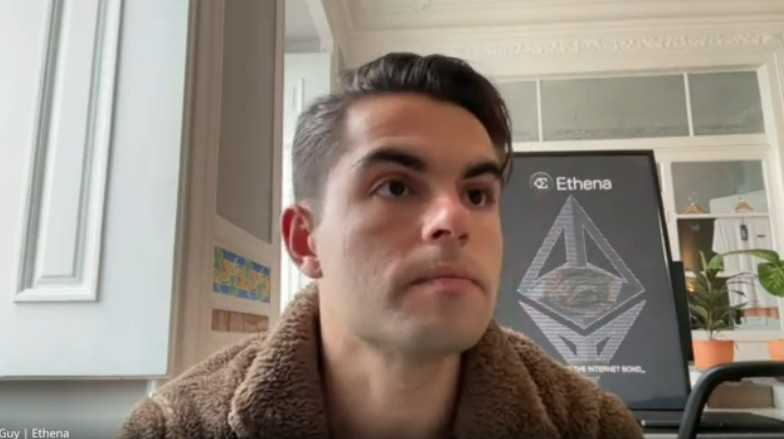
Ethena founder Guy Young tells Magazine that the protocol is not going to “abandon ship” on its thriving DeFi ecosystem on the Ethereum L1 for Converge but expects a lot of inflows from institutions attracted by permissioned and permissionless DeFi applications.
The new Ethereal DEX will also drive $1.2 billion in stablecoins to Converge on Day 1, having been accepting USDe deposits in exchange for Ethereal Points since February.
Securitize CEO Carlos Domingo says Converge is designed to be a meeting point between the decentralized world of DeFi and the highly regulated world of TradFi. Securitize will help vet and whitelist DeFi applications such as Aave Horizon and Pendle Institutional for security, transparency and compliance.“When you’re interacting with regulated financial products, like tokenized securities, such as Treasurys or private credit funds, there needs to be clarity around how and where those assets are being used,” he explains.

“The goal is to responsibly unlock DeFi’s efficiency benefits for real-world assets, without compromising compliance or investor protection.”
Like MegaETH, Converge sacrifices some decentralization for speed and configurability. It will launch with 100 millisecond blocktimes and up to 100 Mgas/s, with Young claiming there is “a clear path to 50ms and up to a Gigagas/s in the year post-launch.”He adds that the ability to customize the L2 for TradFi was why they chose to create a rollup rather than use an L1 like Solana or a general-purpose L2 like Arbitrum. The custom sequencer and validator set allows Converge to offer “a highly performant EVM with additional security features not present in an existing solution.”
The Converge Validator Network has the power to intervene to pause user activity in the event of bugs or hacks. “In extreme scenarios, the CVN could dispute finality or coordinate community signaling around fork choice,” explains Young, adding this provides “protection” for users of the network.
So the greater centralization of L2s is actually a feature rather than a bug when it comes to TradFi.
He concedes, “This might go against some individual’s ideals for crypto,” but the only way to attract institutional capital is to come up with solutions that solve their pain points.
Rather than continue to shuffle the same chips around DeFi between protocols, Ethena and Securitize are taking proactive steps to attract the next trillion dollar injection of capital into the industry with Converge.”
Alibaba-affiliate Ant Digital’s Jovay RWA Ethereum L2
Another big player, Hong Kong-based Alibaba affiliate Ant Digital recently announced the Jovay L2 at a tokenization summit in Dubai.The firm has been tokenizing physical renewable energy assets like solar panels and battery swapping stations, and Jovay will enable trading in these RWAs to help with supply chain finance and liquidity. Chinese EV battery recycling firm Eagoal has already used its infrastructure to generate tens of millions of Hong Kong dollars in financing via tokenized battery swapping physical assets. With 14 million green energy devices onchain, Ant Digital is already the world’s largest tokenized renewable energy platform.
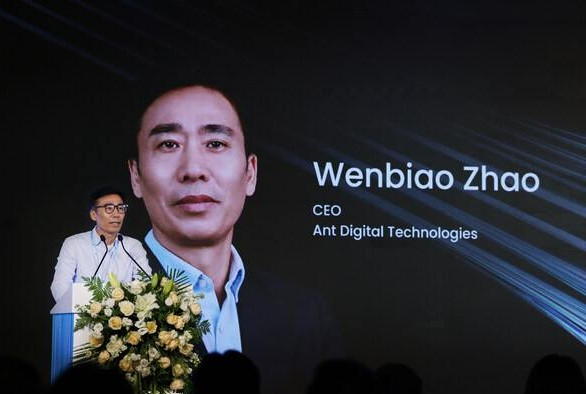
The L2 is targeting 100,000 TPS and 100ms onchain response times. Ant Digital chief scientist Dr. Ying Yan explains that Jovay is built on an optimised version of the Ethereum Virtual Machine using WebAssembly technology to double the speed of smart contract execution. An AI toolkit called SmartCogent improves efficiency by helping generate, deploy and audit smart contracts.
“The seamless integration within the Ethereum ecosystem also assures flawless contract execution across all Ethereum-based platforms,” he says.But Jovay may not remain exclusively an Ethereum L2 for long, says Cobe Zhang, head of product.“We recognize the growing emphasis on RWAs by other public chains like Solana, Sui and Pharos, so the team is actively exploring collaborations with these chains to enrich RWA assets and ecosystems on a broader scale,” he says.
Should we choose to operate Jovay as an L2 for multiple public chains, we anticipate encountering several hurdles that will require careful navigation.”
TradFi are profit maxis, not ETH maxis, so RWA race has a long way to go
Domingo says Securitize is also chain-agnostic and will mint assets wherever issuers and users want them. On May 13, the firm teamed up with VanEck to launch the VBILL treasuries fund on Ethereum, Avalanche, BNB Chain and Solana, with Wormhole facilitating interoperability.
BlackRock’s tokenized treasuries fund BUIDL is available on seven different chains. While much has been made of the fact that Ethereum’s L1 accounts for 93% of AUM, only 73 wallets hold BUIDL, so it’s not an industry-wide endorsement just yet.Despite Wall Street ETH promoter Etherealize’s best efforts, TradFi firms will no doubt go wherever the money and users are, meaning the Ethereum ecosystem still has a long way to go before it can claim victory in the tokenization race.Competitors are already snapping at their heels, including Solana, which recently released a paper detailing possible upgrades to make the chain more suitable as a “decentralized Nasdaq.”And a new RWA L1 called Ondo Chain hit the headlines recently after it teamed up with Chainlink and JPMorgan for a crosschain test transaction.The RWA sector may have doubled in the space of a year to $22.4 billion, and tokenized treasuries have grown 800%, but Securitize CEO Carlos Domingo tells Magazine the race has a long way to run yet.
“We actually still believe we’re still in the earliest innings of growth of this ecosystem,” he says. “With a more welcoming regulatory regime… and new use cases like utilizing tokenized treasuries as collateral for various trading strategies, the sector could see even more growth. 2025 will be looked at as the year tokenization took off.”
We are confident that in the long term a majority of the world’s financial systems will come on-chain. That’s still years, maybe decades away for that type of comprehensive overhaul though.”


All Comments